
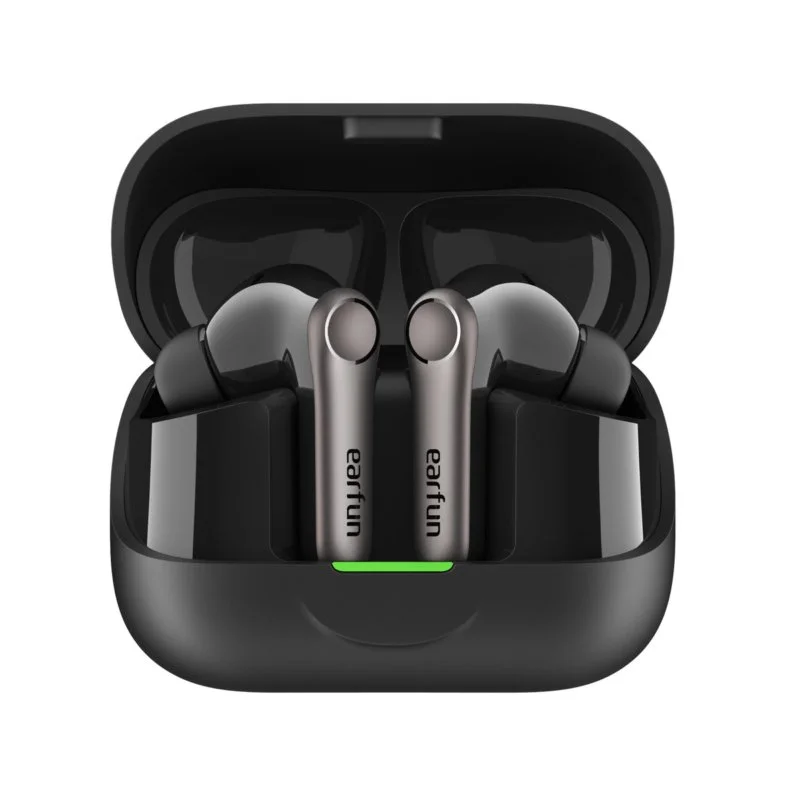


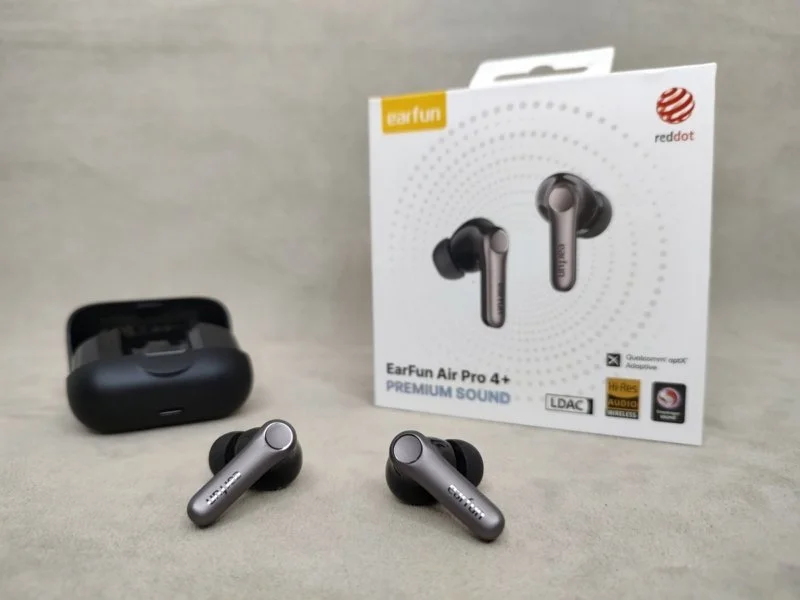
The EarFun Air Pro 4 Plus are the BEST in-ear earbuds for sound quality under $100. They come with LDAC and aptX codecs. Last year, we tested the EarFun Air Pro 4. Those earbuds surprised us with their sound quality for the price. The Plus version sounds way better, even out of the box. With a super simple 15-second EQ tweak, you can get the most out of these earbuds.
Otherwise, these Bluetooth earbuds now have a translator for 166 languages and dialects. They also include a couple of new EQ presets from influencers. The Pro 4 Plus is otherwise the same as the Pro 4. Only the battery life is shorter.
The EarFun Air Pro 4 Plus are 2025 wireless in-ear earbuds. They cost $80-100 at the time of this review.
- Detailed sound
- Sound settings include a 10-band EQ, a selection of presets, and a personal tuning option.
- Translator for 165 languages and dialects
- LDAC and 3 aptX audio codecs
- Highs are a bit harsh
- Sometimes the armature driver resonates
- Playback time is less than advertised
Sound
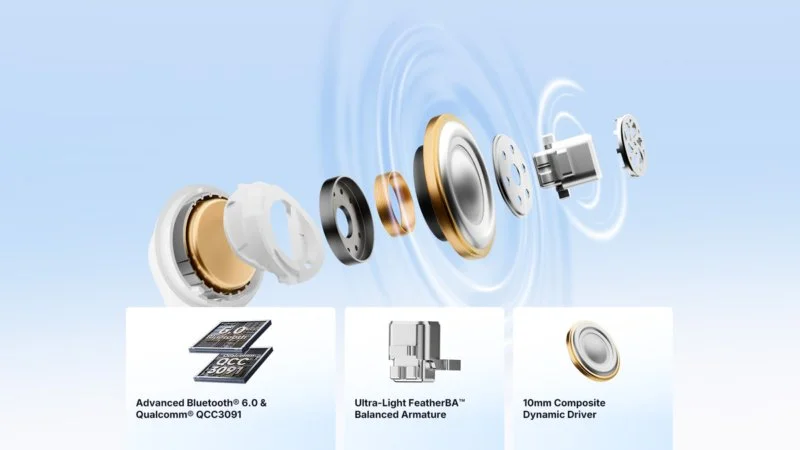
Sound. These earbuds have a dual-driver system. It includes a 10mm dynamic driver plus a proprietary FeatherBA™ balanced armature driver. Out of the box, the sound quality and balance are noticeably better than the EarFun Air Pro 4 with its single dynamic driver. However, you’ll need to tweak the EQ. That’s because the highs are overly emphasized and a bit harsh out of the box. Firmware 1.2.8 partially fixes this, though.
Codec. The earbuds support aptX Lossless, aptX Adaptive, aptX, LDAC, AAC, SBC, and LC3 (for LE Audio). You can switch codecs in the app.
Source. The requirements for your audio source are minimal. You’ll get good sound with devices running Snapdragon and MediaTek mobile platforms. On MediaTek, the sound seemed less detailed and rich. Snapdragon offers better sound, so a device with that platform is preferred.
Features. All features work regardless of your phone’s manufacturer. This includes the translator for 146 languages and dialects. Audio codecs are the only exception if you have an iPhone. The concentration and relaxation sounds in the app work with any earbuds or speakers.
Testing parameters
Audio codec: LDAC — 32 bit/96 kHz, turns on automatically.
Audio source: Motorola EDGE 20 Pro with Snapdragon 870 / Motorola G72 with MediaTek Helio G99.
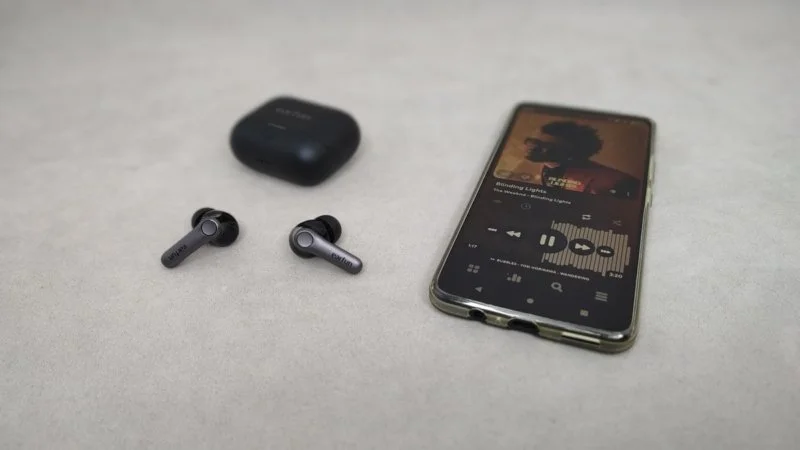
Music source: Local files, PowerAMP player.
Sound evaluation: No EQ, no ambient modes, and no extra sound settings.
Earbud software version: 1.1.8.
EQ tuning potential: Yes.
Tests are performed with a OnePlus 11 phone (Android) and iPhone 14 Pro (iOS), via streaming Deezer HiFi (about this subscription) in FLAC (1411 кбит/c) format.
My playlist – for testing earbuds:
- Michael Jackson – P.Y.T. (Pretty Young Thing). Pop-funk.
✅ Checking low-end and natural timbre – the timbre of the main bass synth should sound natural and be audible. The bass here is powerful, but shouldn’t overpower other frequency ranges.
✅ Checking detail retrieval and soundstage width – background vocals and percussion in the right channel should be clearly audible.
✅ Checking highs and natural treble timbre – the cymbals in this track should sound soft and natural, without grain. The drums in this song are recorded and mixed simply wonderfully (Jonathan Moffett – drum virtuoso). - Oasis – Don’t Go Away. Alternative rock, Brit Pop.
✅ Natural timbre check – the acoustic guitar sound should be natural.
✅ Low-end check – the kick drum, toms, and snare are quite recessed in this track, and with poor bass, drum fills will simply be inaudible.
✅ Mids check – Liam’s voice should sound open and not get congested; this track has a lot of live instruments that can easily overpower the mids and vocals, adding muddiness or a closed-in feel to the voice.
✅ Highs and natural timbre check – at the end of the song, there’s my favorite instrumental break with acoustic guitar and tambourine; they should be distinct from each other and sound natural, without grain or artificial timbre. - Twenty One Pilots – Backslide. Hip-Hop, Alternative Pop.
✅ Detail retrieval check. In this track, Tyler (as always) did a lot of background vocals with and without effects; they should be clearly separated from each other and audible.
✅ Soundstage width check – The shaker that appears and disappears, flowing from channel to channel, perfectly demonstrates the soundstage width. Same for the background vocals, which are well-separated across the channels. - Adele – Rolling in the Deep. Pop, Soul, Blues.
✅ Mids and vocal check – Adele’s voice here should be distinct, with a sense of presence, without veiled sound or muddiness. - Eagles – Hotel California (Live on MTV, 1994). Rock, country-rock. God bless whoever recorded and mixed this live performance.
✅ Soundstage width check – crowd sounds, background effects, instrument placement.
✅ Highs check – 2 shakers in the left and right channels should be clearly audible and not sound artificial.
More tracks I use for testing:
- Modern Talking – You’re My Heart, You’re My Soul. Europop.
Vocals shouldn’t be masked by the bassline, and the shaker should sound natural, without grain. - Eminem – Ass Like That. Hip-hop and Rap.
The heavy bassline shouldn’t overpower the vocals. Secondary ethnic instruments and backing vocals should be audible. - Bob Marley – Could You Be Loved. Reggae.
Cymbals shouldn’t have grain, vocals and backing vocals shouldn’t be masked by the lows, and the bassline should be clearly distinguishable. - Disturbed – Stricken. Alternative Metal and Heavy Metal.
The distorted guitar shouldn’t overpower the drums and vocals.
Cymbals shouldn’t get lost in the overall mix. - System of a Down – Radio/Video. Alternative Metal and Nu Metal.
The shaker should sound natural, without grain. The distorted guitar shouldn’t overpower the drums and Serj’s and Daron’s vocals.
The score is given according to our “Scores 3.0” methodology.
Sound — 50% of the score:
- Frequency balance in sound — how harmoniously the earbuds reproduce lows, mids, and highs.
- Soundstage — the ability of earbuds to create a sense of 3D volume and space in music.
- Detail retrieval or resolution — the ability of earbuds to convey the smallest nuances of sound with high precision.
- Naturalness or timbre balance — this is preserving the natural sound of instruments, sounds, and vocals.
Features and design — 50% of the score:
- Microphone quality.
- Active noise cancellation (ANC) and transparency mode.
- Battery life, controls, app, and other features.
- Build quality: wear comfort, durability, and design + available colors.
- Learn more about how, how we test and rate earbuds.
Sound rating:
Buy Earfun Air Pro 4 Plus
What genres are the EarFun Air Pro 4 Plus best for? The sound is versatile. These earbuds handle vocal, acoustic, and rock tracks best.
Musical engagement? 7.5/10 — more for background listening.
The EarFun Air Pro 4 Plus volume is loud at 70%. On MTK, it’s 80-85%. If you need more volume, here’s how to increase the volume.
Sound improvement
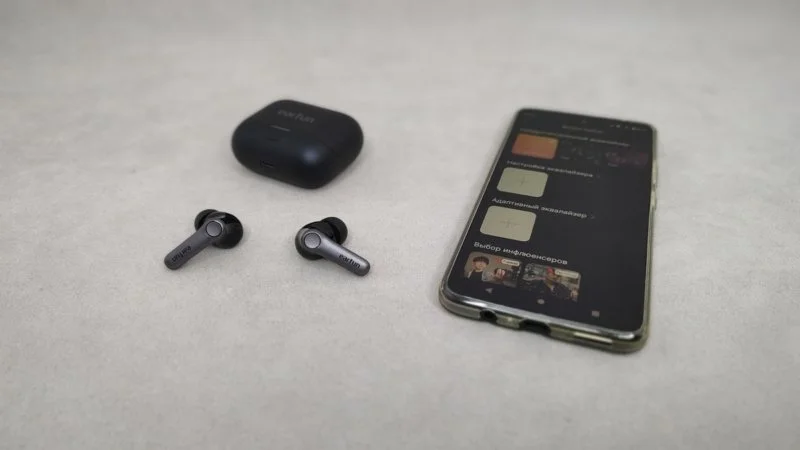
Sound with EQ – this is the sound rating after improvement, often with EQ tuning. For each model, we try to find a setting with the best sound output and without complicated steps for the user.
. 8.25 You should definitely do this. Just set the EQ to the ‘Rock’ preset. You’ll instantly get a +0.5 boost to overall sound quality. I recommend boosting the lows and lowering the highs in the EQ. Or you can create your own preset.More details.
Sound with AAC – sound rating with the basic Bluetooth codec and without sound tuning.
. 7.38 About a 10% drop in quality.More about codecs.
Sound in games – This is how we rate sound quality in games. We check how much the sound pulls you into the game.
. 7.5 Good for mobile games.More details.
Comparison with competitors
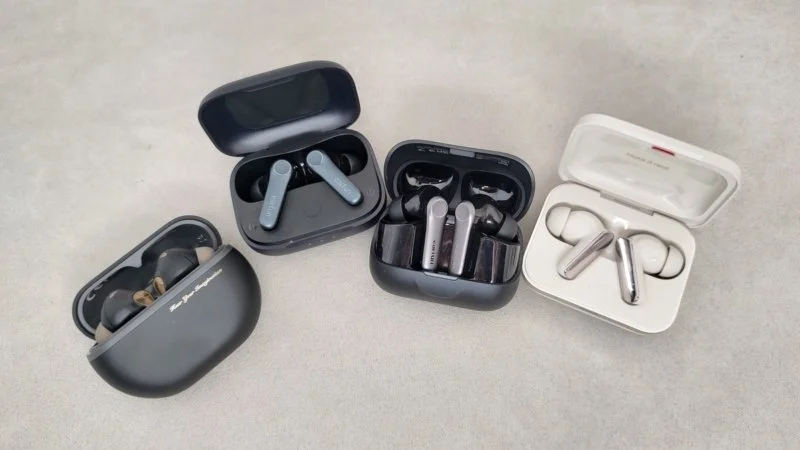
Comparing the sound to the previous EarFun Air Pro 4 on default EQ, the EarFun Air Pro 4 Plus is way better. It’s like a 1-point jump out of 10, which is huge. You get more transparency, more detail, and better highs. Vocals are clearer, closer, and more emotional. There’s more bass too. Seriously, the sound improvement is massive. MyChooz pick here is the EarFun Air Pro 4 Plus. If you have the EarFun Air Pro 4 Plus, there’s almost no reason to buy the regular Pro 4.
Comparing the EarFun Air Pro 4 Plus with the Realme Buds Air 7 Pro. The Realme has better bass quality and a wider soundstage. But the EarFun Air Pro 4 Plus is like looking through a slightly smaller window, but it’s super clear. It’s cleaner and nicer than the Realme Buds Air 7 Pro. For sound, I slightly prefer the EarFun Air Pro 4 Plus, especially with the “rock” EQ preset. The sound quality is a bit higher class.
Neither model is top-tier for features or build quality, but the Realme is slightly better. It’s more comfortable, transparency mode is better, and controls are better. I used the model for about 4 weeks and still haven’t gotten used to the controls. They’re terrible, only working on the 2nd or 3rd try. MyChooz pick for sound is the EarFun Air Pro 4 Plus. For features and build, the Realme Buds Air 7 Pro wins by a small margin. Overall, between the two, I’d choose EarFun. The Realme got a bit boring, and EarFun definitely offers a slightly more interesting sound.
Comparing with the Huawei FreeBuds 4 Pro. Right away, you notice an even more closed-in, narrow soundstage. The bass is super cool, probably the best among wireless earbuds. Mids are a bit distant, and highs are bright. The EarFun Air Pro 4 Plus sound is better in all aspects except for the bass. For features and build, Huawei wins across the board. My pick for daily outdoor use is Huawei. For home or the gym, purely for sound, it’s EarFun.
Comparing with the Technics EAH AZ 100, you immediately feel the difference in class. It has a wider soundstage, perfect highs without any artificial timbre, moderate bass, and vocals are a bit further back. EarFun almost reaches the Technics level, but the soundstage and detail retrieval aren’t quite there, though still very good. For sound and features, MyChooz picks Technics.
And the reference model, Samsung Galaxy Buds 4 Pro, is better in all sound aspects except for the mids. Highs are on par. For features, the Samsungs absolutely crush it.
The Noble FoKus Rex 5 sounds better, but it loses on features. The Nobles have reference-quality mids and detail retrieval. Purely for music, my choice is the Noble FoKus Rex 5. For outdoor use or the gym, I wouldn’t risk taking the Nobles. I’d rather go with EarFun, Huawei, or definitely Samsung.
Alexander Moiseenko’s comparison:
Comparing the lineup: EarFun Air Pro 4 Plus vs EarFun Air Pro 4.
More detailsEarFun Air Pro 4 Plus vs EarFun Air Pro 4
Drivers are the drivers in your headphones that are responsible for creating sound.
DD + PM + BA – means that there are several different types of drivers in these headphones.
DD – “Dynamic Driver” dynamic driver (deep bass, natural sound).
PM – “Planar Magnetic Driver” planar driver (wide soundstage and fast response).
BA – “Balanced Armature Driver” armature driver (accuracy and detail retrieval).
BC – “Bone Conduction Driver” or bone-conduction driver, which transmits vibration to the body of the headphones, transmitting sound through the bone/cartilage to the inner ear.
LDAC – high quality, high speed (Sony).
SBC is the basic Bluetooth standard, low quality.
AAC – Apple standard, good quality, low latency.
aptX – Qualcomm standard, good quality, low latency.
LC3/LC3plus – new Bluetooth LE Audio codecs, efficient compression.
Codecs are audio compression formats that affect sound quality and latency.
Headphone battery life is the playback time without recharging, measured in hours. Manufacturers measure without active noise cancellation (ANC), at medium volume (50-70%) and usually with the AAC codec, as these parameters affect battery consumption. Actual time may vary from 1% to 50%, depending on volume, active noise cancellation features enabled, codec (LDAC or other) and environmental conditions (cold, hot). It is important to consider not only the claimed playback time, but also the charging time and fast charging support.
Bluetooth is a wireless data transmission standard.
Support for new audio technologies.
Improved connection stability.
Reduced power consumption.
Drivers are the drivers in your headphones that are responsible for creating sound.
DD + PM + BA – means that there are several different types of drivers in these headphones.
DD – “Dynamic Driver” dynamic driver (deep bass, natural sound).
PM – “Planar Magnetic Driver” planar driver (wide soundstage and fast response).
BA – “Balanced Armature Driver” armature driver (accuracy and detail retrieval).
BC – “Bone Conduction Driver” or bone-conduction driver, which transmits vibration to the body of the headphones, transmitting sound through the bone/cartilage to the inner ear.
LDAC – high quality, high speed (Sony).
SBC is the basic Bluetooth standard, low quality.
AAC – Apple standard, good quality, low latency.
aptX – Qualcomm standard, good quality, low latency.
LC3/LC3plus – new Bluetooth LE Audio codecs, efficient compression.
Codecs are audio compression formats that affect sound quality and latency.
Headphone battery life is the playback time without recharging, measured in hours. Manufacturers measure without active noise cancellation (ANC), at medium volume (50-70%) and usually with the AAC codec, as these parameters affect battery consumption. Actual time may vary from 1% to 50%, depending on volume, active noise cancellation features enabled, codec (LDAC or other) and environmental conditions (cold, hot). It is important to consider not only the claimed playback time, but also the charging time and fast charging support.
Bluetooth is a wireless data transmission standard.
Support for new audio technologies.
Improved connection stability.
Reduced power consumption.
The EarFun Air Pro 4 falls short in all sound aspects. Though last year, these earbuds were a pleasant surprise for their sound quality, considering the price.
The Pro 4 emphasizes lows in its sound. The sound is warmer and less transparent. Percussion isn’t as emphasized and sounds muffled. There’s less detail, especially in the highs, and less soundstage space and depth. The sound is less natural.
ANC, transparency mode, build quality, and fit are all the same. No noticeable changes there. But for battery life, the Pro 4 is better by 1-2 hours on average, depending on the codec. The biggest difference is with the LDAC codec: 2 hours and 10 minutes more.
MyChooz – EarFun Air Pro 4 Plus.
Full review of EarFun Air Pro 4
Comparing with price competitors: EarFun Air Pro 4 Plus vs Soundpeats Capsule 3 Pro Plus.
More detailsEarFun Air Pro 4 Plus vs Soundpeats Capsule 3 Pro Plus
Drivers are the drivers in your headphones that are responsible for creating sound.
DD + PM + BA – means that there are several different types of drivers in these headphones.
DD – “Dynamic Driver” dynamic driver (deep bass, natural sound).
PM – “Planar Magnetic Driver” planar driver (wide soundstage and fast response).
BA – “Balanced Armature Driver” armature driver (accuracy and detail retrieval).
BC – “Bone Conduction Driver” or bone-conduction driver, which transmits vibration to the body of the headphones, transmitting sound through the bone/cartilage to the inner ear.
LDAC – high quality, high speed (Sony).
SBC is the basic Bluetooth standard, low quality.
AAC – Apple standard, good quality, low latency.
aptX – Qualcomm standard, good quality, low latency.
LC3/LC3plus – new Bluetooth LE Audio codecs, efficient compression.
Codecs are audio compression formats that affect sound quality and latency.
Headphone battery life is the playback time without recharging, measured in hours. Manufacturers measure without active noise cancellation (ANC), at medium volume (50-70%) and usually with the AAC codec, as these parameters affect battery consumption. Actual time may vary from 1% to 50%, depending on volume, active noise cancellation features enabled, codec (LDAC or other) and environmental conditions (cold, hot). It is important to consider not only the claimed playback time, but also the charging time and fast charging support.
Bluetooth is a wireless data transmission standard.
Support for new audio technologies.
Improved connection stability.
Reduced power consumption.
Drivers are the drivers in your headphones that are responsible for creating sound.
DD + PM + BA – means that there are several different types of drivers in these headphones.
DD – “Dynamic Driver” dynamic driver (deep bass, natural sound).
PM – “Planar Magnetic Driver” planar driver (wide soundstage and fast response).
BA – “Balanced Armature Driver” armature driver (accuracy and detail retrieval).
BC – “Bone Conduction Driver” or bone-conduction driver, which transmits vibration to the body of the headphones, transmitting sound through the bone/cartilage to the inner ear.
LDAC – high quality, high speed (Sony).
SBC is the basic Bluetooth standard, low quality.
AAC – Apple standard, good quality, low latency.
aptX – Qualcomm standard, good quality, low latency.
LC3/LC3plus – new Bluetooth LE Audio codecs, efficient compression.
Codecs are audio compression formats that affect sound quality and latency.
Headphone battery life is the playback time without recharging, measured in hours. Manufacturers measure without active noise cancellation (ANC), at medium volume (50-70%) and usually with the AAC codec, as these parameters affect battery consumption. Actual time may vary from 1% to 50%, depending on volume, active noise cancellation features enabled, codec (LDAC or other) and environmental conditions (cold, hot). It is important to consider not only the claimed playback time, but also the charging time and fast charging support.
Bluetooth is a wireless data transmission standard.
Support for new audio technologies.
Improved connection stability.
Reduced power consumption.
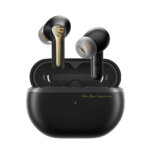
Soundpeats delivers comparable sound quality, with a slight edge. These earbuds have more bass and deeper bass. The presentation reminds me of the Bowers & Wilkins Px8 S2, which also has amazing, deep bass. The mids are a bit muffled, while EarFun has noticeably more transparency. Highs are bright and quite emphasized, even more so than EarFun. Also, the xMEMS driver’s detail retrieval in Soundpeats is better than the balanced armature in EarFun. The sound is more pleasant, richer, and a bit more natural. There are no resonances like with balanced armatures.
The Soundpeats Capsule 3 Pro Plus has more sound potential. But you’ll need to spend more time tuning these earbuds. Without EQ, the earbuds will quickly cause fatigue with percussion and high-frequency effects. EarFun is easier to tune, and offers more customization options. The app has presets, personalized sound tuning, and influencer presets.
ANC is pretty similar. The Soundpeats’ mode feels like it works better, but finding the right ear tips is key. Transparency mode is also about the same. Both models offer good awareness of your surroundings.
MyChooz – Soundpeats Capsule 3 Pro Plus.
Full review of Soundpeats Capsule 3 Pro Plus
Comparing with the reference: EarFun Air Pro 4 Plus vs Realme Buds Air 7 Pro.
More detailsEarFun Air Pro 4 Plus vs Realme Buds Air 7 Pro
Drivers are the drivers in your headphones that are responsible for creating sound.
DD + PM + BA – means that there are several different types of drivers in these headphones.
DD – “Dynamic Driver” dynamic driver (deep bass, natural sound).
PM – “Planar Magnetic Driver” planar driver (wide soundstage and fast response).
BA – “Balanced Armature Driver” armature driver (accuracy and detail retrieval).
BC – “Bone Conduction Driver” or bone-conduction driver, which transmits vibration to the body of the headphones, transmitting sound through the bone/cartilage to the inner ear.
LDAC – high quality, high speed (Sony).
SBC is the basic Bluetooth standard, low quality.
AAC – Apple standard, good quality, low latency.
aptX – Qualcomm standard, good quality, low latency.
LC3/LC3plus – new Bluetooth LE Audio codecs, efficient compression.
Codecs are audio compression formats that affect sound quality and latency.
Headphone battery life is the playback time without recharging, measured in hours. Manufacturers measure without active noise cancellation (ANC), at medium volume (50-70%) and usually with the AAC codec, as these parameters affect battery consumption. Actual time may vary from 1% to 50%, depending on volume, active noise cancellation features enabled, codec (LDAC or other) and environmental conditions (cold, hot). It is important to consider not only the claimed playback time, but also the charging time and fast charging support.
Bluetooth is a wireless data transmission standard.
Support for new audio technologies.
Improved connection stability.
Reduced power consumption.
Drivers are the drivers in your headphones that are responsible for creating sound.
DD + PM + BA – means that there are several different types of drivers in these headphones.
DD – “Dynamic Driver” dynamic driver (deep bass, natural sound).
PM – “Planar Magnetic Driver” planar driver (wide soundstage and fast response).
BA – “Balanced Armature Driver” armature driver (accuracy and detail retrieval).
BC – “Bone Conduction Driver” or bone-conduction driver, which transmits vibration to the body of the headphones, transmitting sound through the bone/cartilage to the inner ear.
LDAC – high quality, high speed (Sony).
SBC is the basic Bluetooth standard, low quality.
AAC – Apple standard, good quality, low latency.
aptX – Qualcomm standard, good quality, low latency.
LC3/LC3plus – new Bluetooth LE Audio codecs, efficient compression.
Codecs are audio compression formats that affect sound quality and latency.
Headphone battery life is the playback time without recharging, measured in hours. Manufacturers measure without active noise cancellation (ANC), at medium volume (50-70%) and usually with the AAC codec, as these parameters affect battery consumption. Actual time may vary from 1% to 50%, depending on volume, active noise cancellation features enabled, codec (LDAC or other) and environmental conditions (cold, hot). It is important to consider not only the claimed playback time, but also the charging time and fast charging support.
Bluetooth is a wireless data transmission standard.
Support for new audio technologies.
Improved connection stability.
Reduced power consumption.
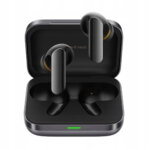
Realme is better in every way, except for detail and mids. The EarFun sound is clearer, cleaner, and has better detail in the highs. Instruments sound more well-defined. With more clarity, the soundstage feels better developed too. But Realme’s highs sound softer. There’s no resonance, and the sound isn’t metallic. Low-frequency detail is better in Realme. The sound is more dynamic, and you can really feel it. The driver pushes air well. The bass in these earbuds doesn’t hide behind the highs. Everything is upfront.
It’s important to note: Realme sounds better with the LHDC 5 codec. The LHDC 3 codec is cut in half. It doesn’t unlock the earbuds’ full potential. If you don’t have LHDC, the EarFun Air Pro 4 Plus will be better. That’s thanks to their LDAC and aptX codecs.
Both models have similar battery life. The difference is up to 20 minutes, depending on the codec. Realme is only better by 1 hour with the LHDC 3 codec.
The active noise cancellation (ANC) is comparable. In transparency mode, you hear your surroundings better with EarFun. But your own voice sounds weird in both models. It’s not comfortable to talk like that.
MyChooz – Realme Buds Air 7 Pro.
Full review of Realme Buds Air 7 Pro
Features
Microphone – We assess speech transmission quality by testing the microphone in two main scenarios: quiet and noisy environments.
Quiet environment – This involves recording indoors with minimal background noise. Noisy environment – This means recording outdoors near a six-lane road with maximum traffic noise.
. 7.50 In quiet conditions: 8 In noisy conditions: 7Microphone – We assess speech transmission quality by testing the microphone in two main scenarios: quiet and noisy environments.
Quiet environment – This involves recording indoors with minimal background noise. Noisy environment – This means recording outdoors near a six-lane road with maximum traffic noise.
. 9.75 In quiet conditions: 9.5 In noisy conditions: 10Active noise cancellation (ANC) lets headphones use microphones and signal processing to cut out external noise like traffic, street hum, or office chatter, so you can hear your music or calls better without cranking the volume. Good ANC significantly cuts low-frequency hum from things like engines or air conditioners, barely presses on your ears, and minimally distorts the sound. Weak ANC, on the other hand, only removes some of the noise or creates an unpleasant “vacuum” effect and artifacts.
. 7.5 Quality-wise, it’s like the EarFun Air Pro 4. Outdoors, it noticeably adds comfort, especially in transport or near a road. Suppresses up to 40-50% of low-frequency noise. Does not press on eardrums, slight white noise present. The app features manual and 2 automatic modes. Each mode selects the best noise-cancellation parameters considering the environment. Manual mode features 4 levels of noise cancellation intensity.Transparency mode uses the earbuds’ microphones to pipe in ambient sound, letting you hear announcements, conversations, or traffic without removing them. A good implementation sounds natural and clear, without adding noise or echo, whereas a poor one makes the outside world sound flat, metallic, or unnervingly quiet.
. 8 Quality-wise, like the EarFun Air Pro 4. There are 2 modes, I liked the “natural” one, surroundings sound like you’re not wearing headphones with some digital processing. But your own voice echoes inside your head and talking is unpleasant.Battery life is the actual playback time you get from the earbuds and their charging case on a single charge during typical volume and usage scenarios (music, video, calls), not just the marketing numbers. Good battery life means you can easily get through a day or several without needing an outlet, and it doesn’t drop significantly with noise cancellation and high-quality codecs enabled. Poor battery life, on the other hand, requires frequent recharging and noticeably decreases when you crank up the volume.
. 8 Claimed – 54 hours of playback – 12 hours for the earbuds + 42 hours with the case. In our tests, the headphones ran for 10 hours and another 30 hours with the case. Wireless charging is included.Learn more.
Controls — how easily and reliably the headphones respond to your presses and gestures for pausing, adjusting volume, switching tracks, changing modes, and activating your voice assistant. Good controls feel intuitive, work without fail, and avoid accidental inputs; bad controls will miss commands, lag, or simply ignore your gestures.
. 6.5 Touch-based – 4 actions per earbud: single, double, triple click, and press-and-hold. You can manage calls, remap controls in the companion app, disable controls for one or both earbuds. Controls are inconvenient, often triggering on the 2nd-3rd try, frequent missed touches. After 4 weeks of testing, I never got used to it. Accidental single-tap actions can happen if you brush against the touch area of the earbud.Learn more.
The app, which is the proprietary software you use to tweak sound, controls, noise cancellation, firmware updates, and other features. A good app is stable, well-organized, and actually lets you customize things; a bad one glitches, lacks features, or feels like it’s just there for show.
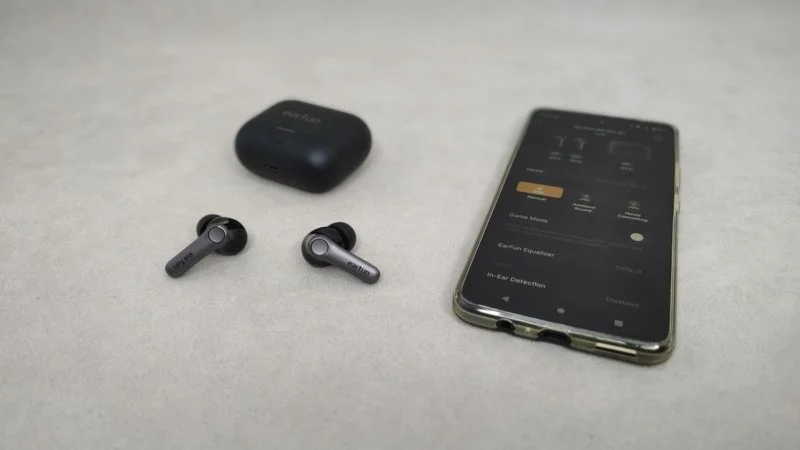
. 8 EarFun Audio. Available for Android and iOS. The app is useful for customization: controls, noise cancellation, and transparency. You can select LDAC or aptX audio codecs, tweak sound via ready-made presets or personal tuning. Live, synchronous translation is available for 146 languages including regional dialects.Learn more.
Connection stability — how well the headphones hold onto their Bluetooth signal without dropping out, lagging, or glitching in everyday situations like busy streets, public transport, or even at home with a Wi-Fi router nearby. Good stability means the audio won’t stutter when you turn your head or cut out in crowded areas. Poor stability, on the other hand, will show up as frequent dropouts, stuttering, audio-video sync issues, and problems reconnecting.
. 8 Within 10m — the signal holds steady with the LDAC codec. Audio dropouts can occasionally happen at distances under a meter. Headphones drop out more often with quality bitrate. Bluetooth version 6.0.Key features and sensors:
- Multipoint – yes.
- Auto-pause when taking off the headphones – yes.
- Google Fast Pair support – yes.
- Swift Pair support for Windows – no.
- Auracast – yes.
Functions verdict
Overall feature score — this is the overall score for all device features. This score comes from individual feature ratings (battery life, controls, app, connection stability, and others) and shows how easy and smart the device is for daily use.
. 7.63 Noise cancellation works — suppressing about 40-50% of low-frequency noise. In transparency mode, audibility is good. When talking on the headphones, it feels like your ears are plugged and your own voice echoes strongly inside your head via bone conduction. Battery life in our tests is up to 10 hours factoring in the codec + 30 hours with the case. Touch controls feature 4 taps per earbud. The companion app is convenient, featuring a translator for 146 languages and dialects.Design
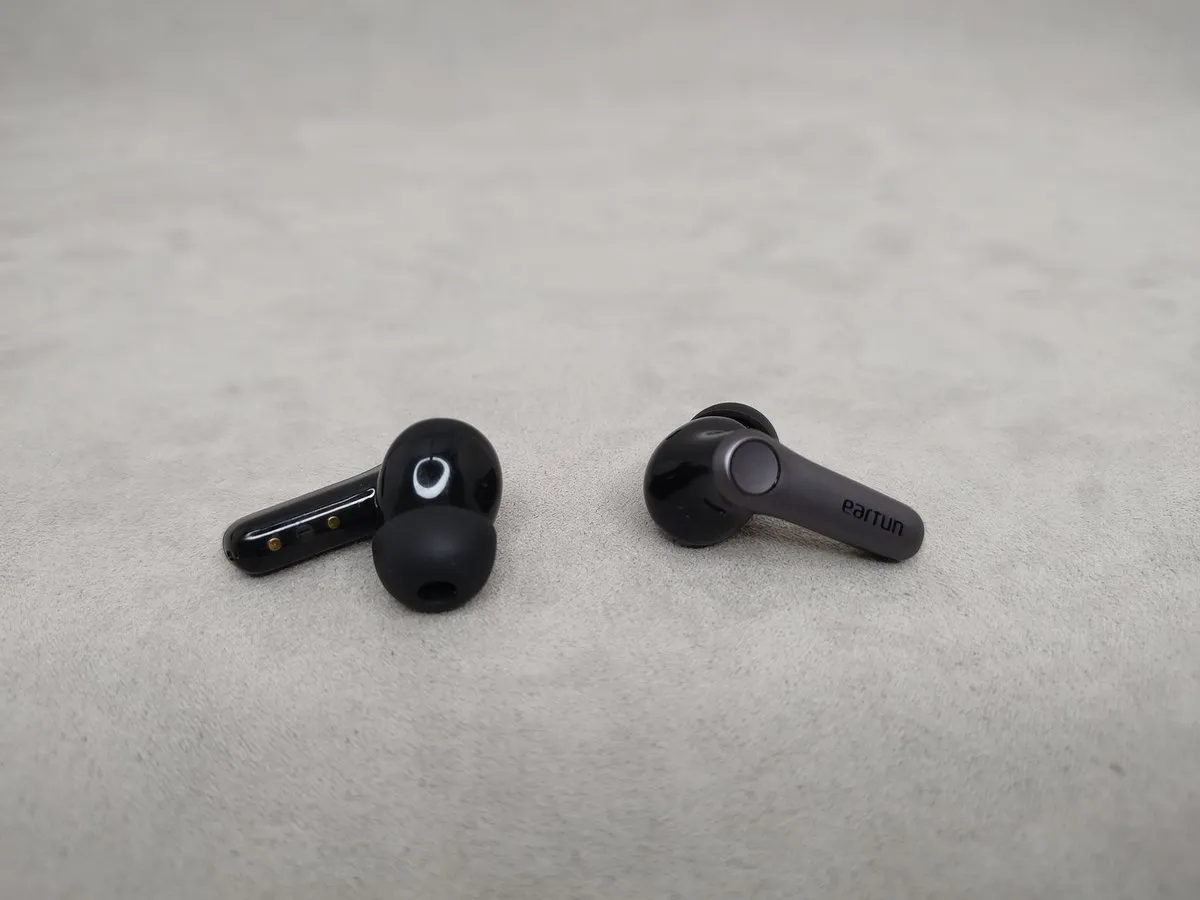
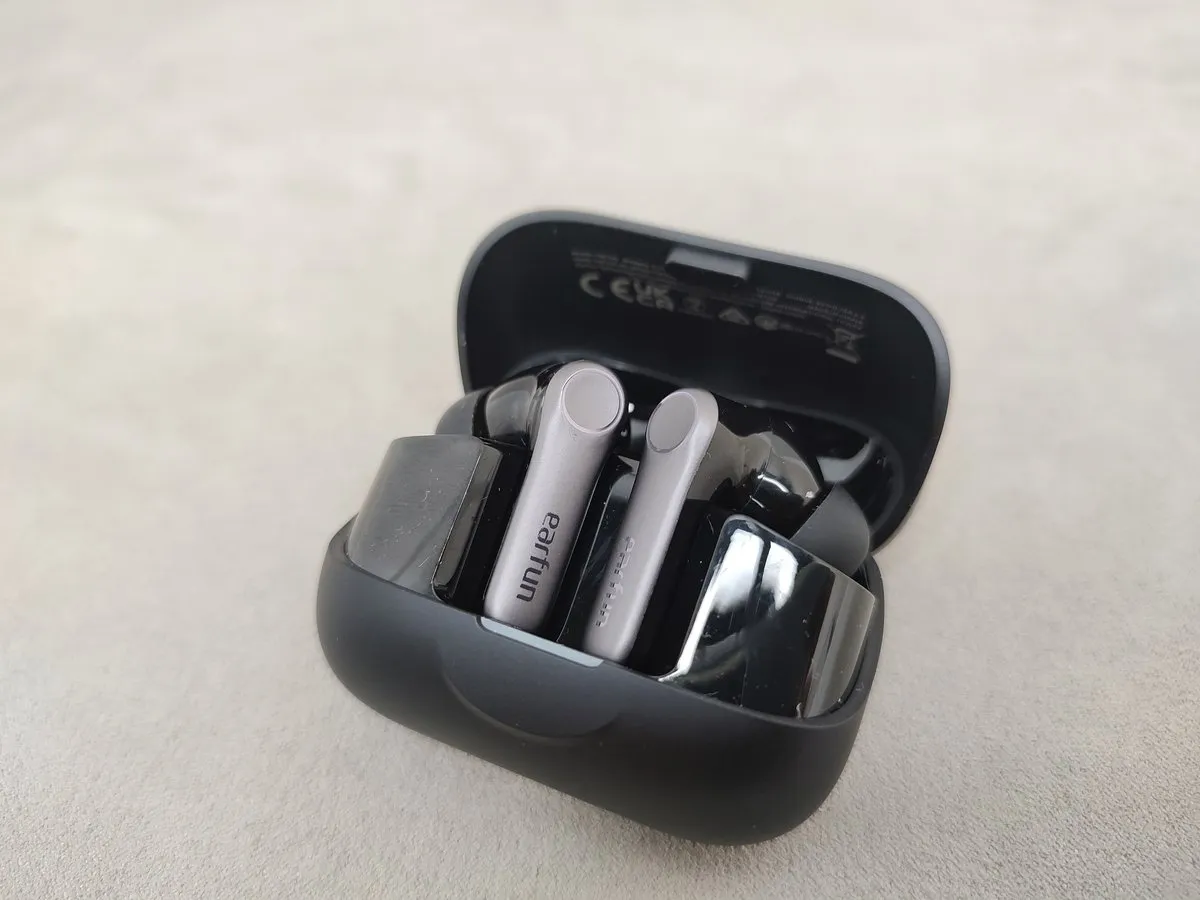
Comfort is how the earbuds feel during extended wear: ear pressure, fit, weight, and ventilation. A comfortable model doesn’t chafe, squeeze the ear canal or head, and doesn’t cause fatigue even after a couple of hours; an uncomfortable one quickly reminds you of itself through pain, heat, or a “plugged” feeling in the ears.
. 8.5 They’re light and comfortable, and the default stock ear tips fit fine. After a couple of hours of use, standard minor fatigue sets in.Durability — how well the earbuds and charging case hold up to daily use: This includes the quality of the plastic and hinge, water resistance, wear on the ear tips, and the reliability of connectors and buttons. High durability means nothing is loose, peeling, or cracking after a year or two. Conversely, low durability means you’ll see cracks, looseness, hinge noise, or connection issues after just a couple of months.
. 8 Dust and water resistance is rated at IP55, offering protection against limited amounts of dust and water. They handle light rain splashes. Build quality is free of defects, and the plastic is sturdy. The coating tends to attract fingerprints and dust, but otherwise I have no complaints.Design – This covers how the earbuds look and how well-thought-out their shape is. I’m talking about how they appear in your ears, how versatile they are with different outfits, and whether they look cheap. A good design blends a neat appearance with a comfortable shape and practical touches, like non-marking plastic or a well-designed charging case. Conversely, a bad design will snag on your clothes, scratch easily, and just look out of place.
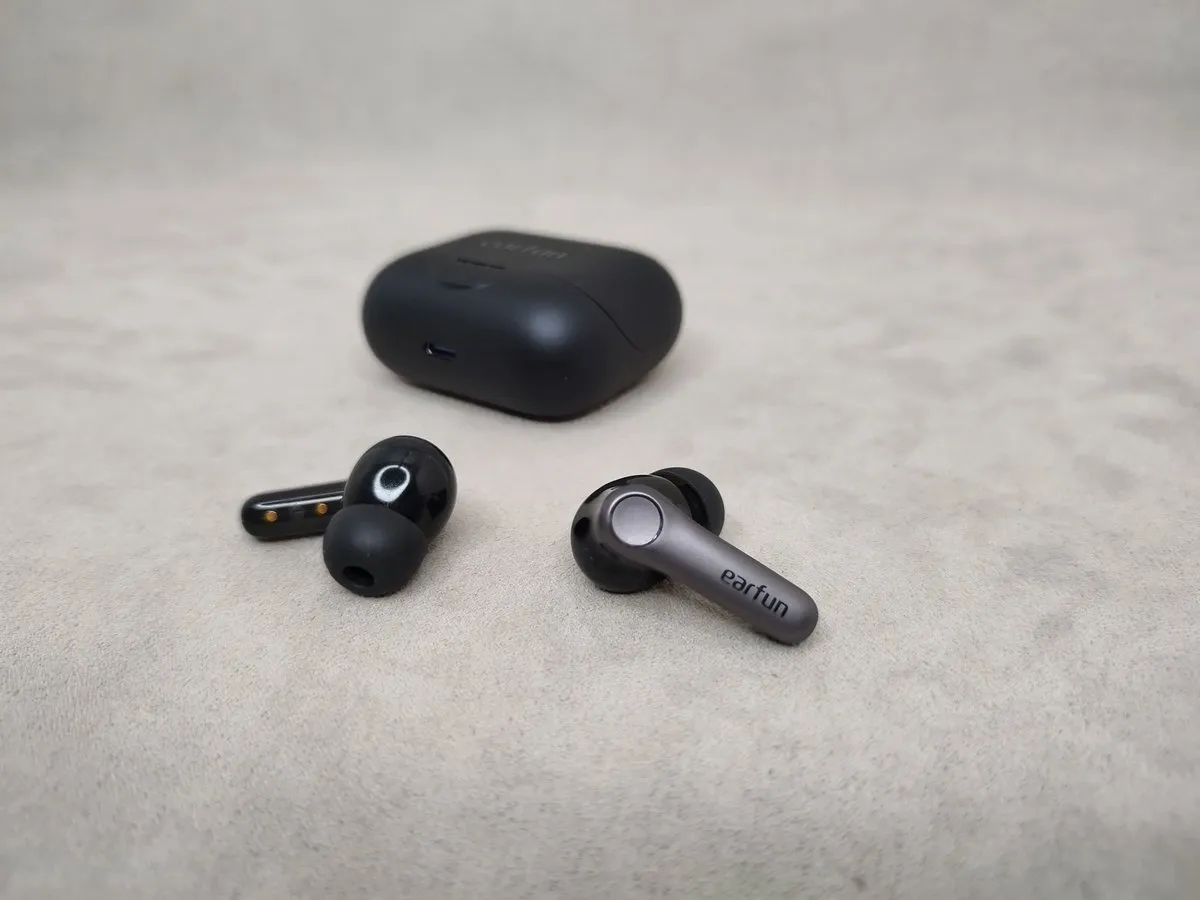
. 8 The EarFun Air Pro 4 Plus come in three colors: black, blue, and white. They look identical to the Air Pro 4. You can tell them apart only by color and nozzle shape. The Air Pro 4 charging case isn’t compatible due to reversed magnetic polarity. The charging case on the Pro 4 Plus looks good without being particularly exciting.Build verdict
Final build quality score is the overall score for build quality and materials: comfort, durability, and design. It shows how nice the device is to hold and use, and how long it will last.
. 8.17 The headphones are comfortable, though minor fatigue sets in after a couple of hours of use. Build quality and materials are solid. They look good, even if they aren’t anything to write home about. You have 3 colors to choose from.Summary
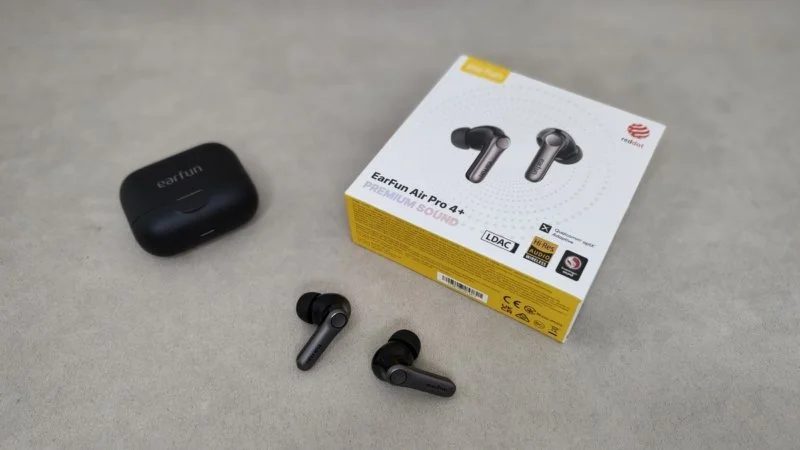
Are the EarFun Air Pro 4 Plus at $80 a MyChooz pick? Yes, I liked these earbuds. I can recommend buying them.
Buy Earfun Air Pro 4 Plus
Main reason to buy: detailed sound with great vocal presentation and excellent natural timbre. The app has sound settings. It has LDAC and three aptX codecs. There’s a translator for 146 languages and dialects. The earbuds are sensitive to EQ adjustments. So, you should tune the sound. These earbuds beat the Realme Buds Air 7 Pro in many ways. That’s a big deal. Downsides: average ANC and transparency. You might not like the controls.
Otherwise, the microphone and ANC are good. Average transparency and terrible controls are the model’s weakest points. The build quality is decent for comfort and ergonomics. The charging case is quite large.
The app has ready-made EQ presets and three influencer settings. There’s also individual sound tuning and a 10-band EQ for manual adjustments. It has LDAC and three aptX codecs. There’s a translator for 146 languages and dialects. The model has no critical flaws. The downsides are occasional armature resonance and somewhat harsh highs.
The EarFun Air Pro 4 Plus are earbuds for enthusiasts. The app has plenty of sound settings. You can get a pleasant sound with the EQ. But you’ll need to spend some time finding the best setup. That’s because out of the box, the highs are too emphasized. They grab all the attention. And the punchiness of the armature driver quickly causes ear fatigue.
Compared to the EarFun Air Pro 4, there’s an improvement in sound. It has a translator. Battery life is worse. Everything else is the same. Upgrading to the EarFun Air Pro 4 Plus makes sense if you’re ready to tweak the EQ. Otherwise, you should look at other options.
Use cases for EarFun Air Pro 4 Plus. Street, gaming, calls – yes. For sports – with reservations. For audiophiles – with reservations.
What are the alternatives?
- Under $50 – Realme Buds Air 8. A successful budget model. Good sound, even with the AAC codec.
- Under $65 – Realme Buds Air 7 Pro. The best option with the LHDC 5 codec.
- Under $75 – Soundpeats Capsule 3 Pro Plus. Better bass and detail retrieval. Excellent sound after EQ adjustments. It has LDAC.
- Under $150 – CREATIVE Aurvana Ace3. Better out-of-the-box sound in every way. It has LDAC and aptX codecs. But the app might not work.
Definitely let me know what you think about the new EarFun Air Pro 4 Plus. I’d love to chat with you in the comments. Enjoy your sound, and I’ll see you on MyChooz. Bye!
EarFun Air Pro 4 Plus – Specs:
- EarFun Air Pro 4 Plus release date — 27.10.2025
- EarFun Air Pro 4 Plus launch price – $99.99
- Build: in-ear wireless earbuds
- Drivers: hybrid dual-driver system — 10mm dynamic driver + FeatherBA™ armature driver
- Codecs: aptX, aptX Lossless, aptX Adaptive, LDAC, AAC, SBC, LC3 (for LE Audio)
- Bluetooth: 6.0 + Qualcomm® QCC3091 chip with Snapdragon Sound™ technology
- Active noise cancellation: QuietSmart™ 3.0 — adaptive hybrid up to -50dB
- Transparency mode: yes, 2 ambient modes.
- Controls: touch controls with 8 actions.
- Battery life: up to 12 hours on a single charge (without ANC), up to 54 hours total with the charging case (12h + 42h from the charging case)
- Charging
Port: USB-C + Qi
Fast charging: 10 minutes = 3 hours playback - App: EarFun Audio
- Additional features: real-time AI translation, Auracast technology
- Dust and water resistance: IP55 (earbuds — protection against dust and water jets/sweat)
- Materials: matte plastic (earbuds and charging case), silicone ear tips
- Earbud weight: ~5–6g
Charging case: ~54g (with earbuds ~65–70g) - Microphone: 6 microphones + cVc™ 8.0 technology
What’s in the box
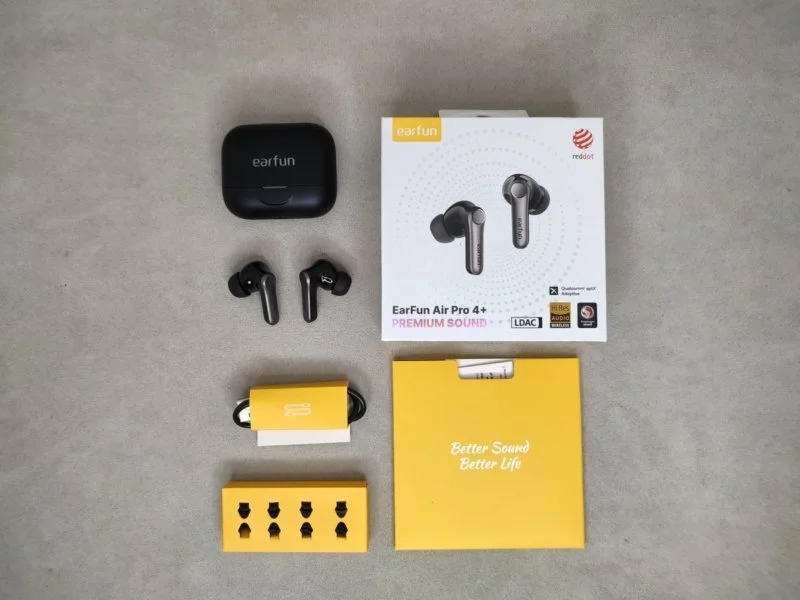
- EarFun Air Pro 4 Plus earbuds
- Charging case
- 5 pairs of silicone ear tips
- USB-C charging cable
- Quick start guide / manual
- Warranty and support card
Popular Questions:
EarFun Air Pro 4 Plus – how to connect wireless earbuds?
1. Open Bluetooth settings on your phone. Select “add new device.”2. Open the charging case. The earbuds might automatically enter pairing mode the first time. If not, press and hold the button on the case for 3-5 seconds with the lid open.3. Wait for the earbuds to appear and select them.
Do you still have a question about the EarFun Air Pro 4 Plus?
Ask your question in the comments, and I’ll answer it.
