
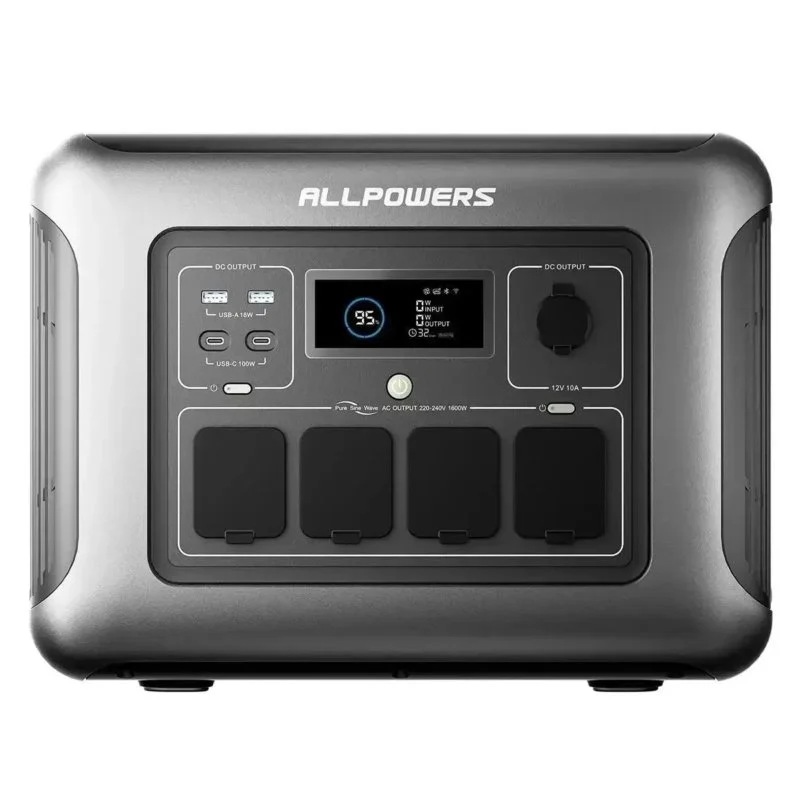

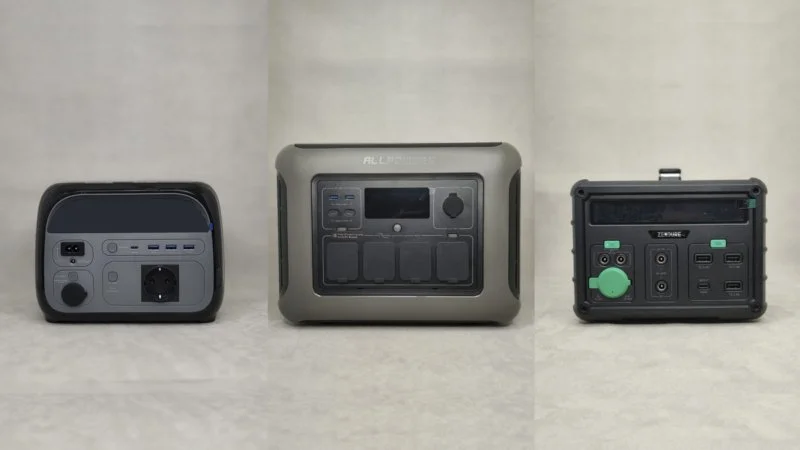
This is my 1 kW Zendure SuperBase 1000M Power Station ($450-500), which I have used for 3 years during blackouts. My parents have one, I have another, and our editor Igor has had one for almost a year. My experience using it with a gas boiler, PC, monitor, home appliances, a hairdryer, and so on is huge. And this is the ALLPOWERS R1500 LITE, a charging station also 1 kW, for about the same $500 price. And spoiler, the ALLPOWERS is better than my Zendure in most ways, but there are also things where the Zendure wins.
If you are looking for an affordable Power Station for home or country house use, you are in the right place. This is a review of the ALLPOWERS R1500 LITE power station, and I will compare it with the Zendure SuperBase 1000M and the more affordable CTOLITY AP400 for $300. This station belongs to Alexander Moiseenko, our expert at MyChooz.
You can buy ALLPOWERS from the official store in Ukraine, and make sure to use the promo code I got from the maker, “MyChooz10” for 10% off, so the price becomes $537 $484 (-$53) at the current exchange rate (44). This is better than any store in Ukraine, where prices start from $550, and better than on Aliexpress, where it costs $639. The maker gives a 5-year warranty. Anyway, here are all the prices you can get:
Buy ALLPOWERS R1500 LITE
ALLPOWERS R1500 LITE – the most interesting part
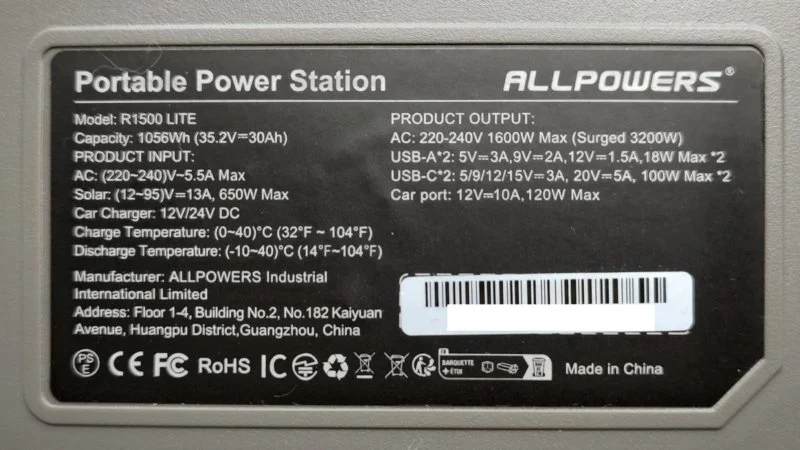
The battery capacity is 1056 Wh. It has 4 flexible ways to charge: AC power, solar power, car, or generator. You can get 8 different bundles, with no solar panels, and 7 bundles with solar panels of different power, from 100 W to 600 W. And the best part is, you can check charging or discharging with the ALLPOWERS app, which is truly handy and something my Zendure does not have.
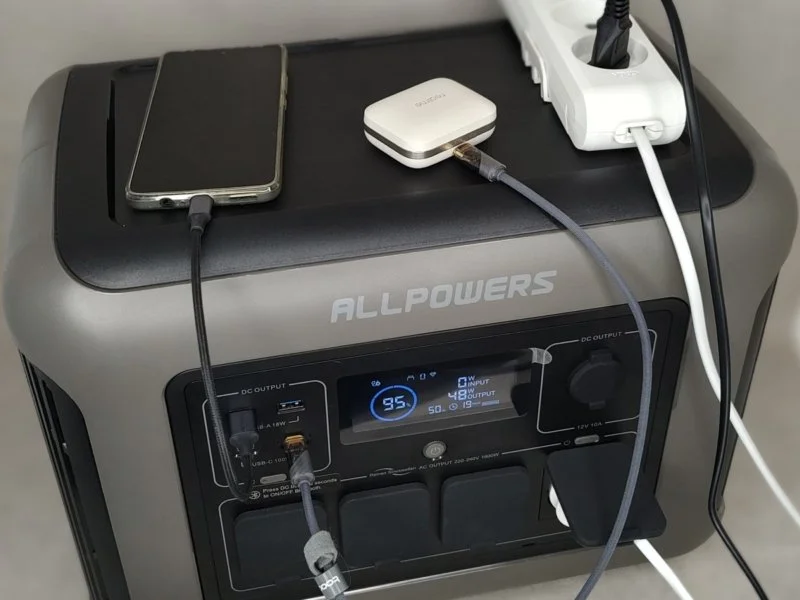
The station is powerful, and its 1600 W output power is enough to run most home electrical appliances at the same time or separately, like a fridge, coffee maker, kettle, hairdryer, and so on. You can even turn on a washing machine, and it will last for almost 2 hours, or an AC unit for an hour. The station is also perfect for a workspace, PC, laptop, monitor, and charging mobile devices. The station has no big flaws, and its weakest point is the app, which many other stations do not even have.
The ALLPOWERS R1500 LITE charging station came out in July 2025 and costs $426-636 at the time of this review.
Use cases
The charging station is good for many uses, and it works well for home and travel. It is good for backup power for home appliances when there is no electricity, or as a power source in places without electricity access: at a country house without power, in the forest, by the sea or a river, on a car trip, and so on. There are many ways to use it.
I mostly used it in my basic setup, connecting a router, a laptop, a 27-inch monitor, and a floor lamp, and all together they use about 80-120 watts, and it lasted me for more than a day of active use from 100% to 0%. It is great to use, and I have no complaints.
Sasha Moiseenko tested it hard with a fridge and other home appliances. I will talk more about that soon.
Power. You can get up to 1600 W of power from one or more outlets. This is enough for most home devices like a fridge, TV, coffee maker, and so on, including some tools like drills, saws, and so on. The peak power is 3200 W for 3-5 seconds for devices that need high starting current. After that, a safety feature turns on, and the power shuts off. I overloaded the station 5 times in a row, and I had no problems turning it back on. The charging power is up to 1200 W, and it has 3 power modes that you can set in the app.
Battery. In our tests, the station worked for 7.5 hours with a load of about 100 W through a 220V outlet. Another 5% was left. How long will the battery last? Here are some common ways to use it:
- Fridge (50-120 W) – up to 7-15 hours.
- 43-inch TV (30-40 W) – up to 25 hours.
- PC with background load (90-110 W) – up to 7 hours.
- 2 MikroTik routers (10 W) or a 10 W lamp – 60-65 hours.
Playback time is approximate and changes with each use. Because device power use is not linear, it has ups and downs. The same fridge usually runs for an hour using 50-70 W with peaks up to 120 W. Add conversion losses and inverter work to this.
UPS mode. The station can work as an uninterruptible power supply, charging and giving power at the same time. Simply put, you have power, everything is plugged into the station, and electricity flows through it from the grid. When the power goes out, the station switches to its internal batteries, and power comes from them. This is very handy if you have a desktop PC and do not want to lose your work progress. We checked, and laptops and PCs do not restart.
Noise. It uses four 60-mm fans for cooling. They start when the load is 30+ W. Up to 200 W, the noise is like PC case fans. This means you can barely hear it, which matches my workspace use. When the load is higher or the station is charging, the fans run at full speed, and it is not comfortable to sit near the station. The same happens when it charges. It is better if you and the station are in different rooms at this time.
Test settings:
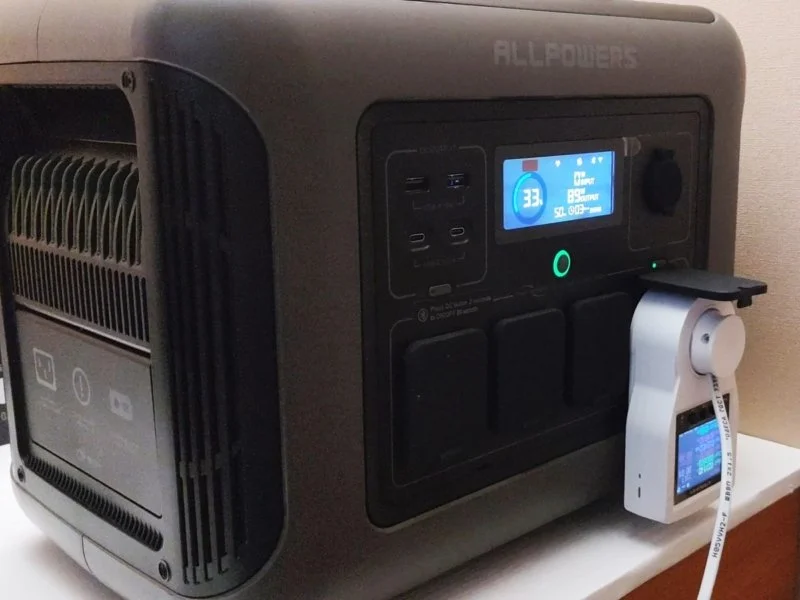
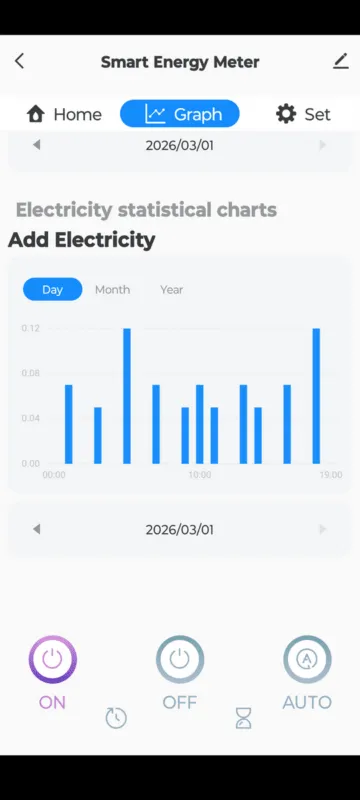
- AC test: discharge through a PC with 90-110 W power. We measured it with Atorch S1W.
- DC test: discharge through a power bank with 100 W throughput. We measured it with the FNIRSI FNB58 USB tester.
All ratings in the review follow our testing method V0.1 – 30.04.2026.
Learn more about how we rate charging stations.Rating V0.1 – 30.04.2026.
We rate each parameter on a 10-point scale. The highest score is 10 points, and the lowest is 0.1 points. For each criterion, the station can get 10 points. For a fair rating, each criterion includes extra points, from 1 to 3. So, in the first testing stage, some parameters might score 1-2 points above the maximum rating. In that case, the rating stays at 10 points. This helps avoid overly strict rating rules. More stations can aim for the highest rating, not just possible prototypes on paper or premium models tested in perfect lab settings.
Also, we consider “port value” for several same ports. The idea is simple: people use 1-2 ports more often than 4-6 ports. So, the fewer USB ports and outlets, the higher the rating. But a large number of ports will still get a higher rating, just with a smaller difference in score. This way, there will not be a huge gap in ratings between stations with one 220V outlet and, say, a station with 5-6 such outlets.
As we test new charging stations and get new info, we will adjust the rating system. We plan to correct and review the rating at the start of January each year. Then, we use the rating system for a year until the next review.
If you do not agree with the rating system and want to suggest a better way to score, leave your ideas in the comments.
Performance rating.
The performance rating comes from five points:
- Battery
- Battery type
- AC output power. (AC ports)
- DC output power. (DC ports)
- Input power. (Station charging power)
1. Battery. We rate 2 parameters:
Amount of stored energy. We check how much energy the battery stores. We take off 0.1 points for every 1% less than the stated amount. We check the remaining charge after discharge.
Conversion efficiency. We check how much energy the battery gives out with a 100W load through a 220V outlet. We take off 0.1 points for every 1% below 80%.
2. Battery type:
We rate the battery chemistry and cycle count:
- 1-2 points: for lead-acid and lithium-cobalt.
- 3-4 points: for nickel-cobalt-aluminum.
- 5-6 points: for nickel-manganese-cobalt.
- 7-10 points: for sodium-ion, lithium-iron-phosphate, and lithium-titanate. The score changes based on the stated lifespan.
3. AC output power:
A station with one outlet gets 2 points. Each next outlet loses 25% of the previous score.
| 1st outlet | 2.00 | 2.00 |
| 2nd outlet | 1.50 (2.00 – 25%) | 3.50 |
| 3rd outlet | 1.12 (1.50 – 25%) | 4.62 |
| 4th outlet | 0.84 (1.12 – 25%) | 5.46 |
| 5th outlet | 0.63 (0.84 – 25%) | 6.09 |
| 6th outlet | 0.47 (0.63 – 25%) | 6.56 |
Outlet power rating:
+0.1 points for every 100 W of output power for 220V outlets. The maximum is 4 points. Stations over 4000 W do not get extra points yet.
4. DC output power:
Each port gets 1 point. Each next port of the same type loses 25% of the previous score.
The DC block includes 4 groups of ports:
- USB.
- Car cigarette lighter.
- Special ports: DC5521, Anderson, RV (48 V / 8 A).
- Wireless charging.
| 1st port | 1.00 | 1.00 |
| 2nd port | 0.75 (1.00 – 25%) | 1.75 |
| 3rd port | 0.56 (0.75 – 25%) | 2.31 |
| 4th port | 0.42 (0.56 – 25%) | 2.73 |
| 5th port | 0.27 (Limit) | 3.00 (Ceiling) |
| 6th port and beyond | 0.00 | 3.00 |
We calculate the power score based on 0.01 points for each stated 1W. We do not yet include the power of special ports in the total score.
5. Input power:
+0.25 points for every 100 W through the 220 V network.
+0.2 points for every 100 W through the solar panel.
+1 point for 12/24V charging. +1 point for charging with multiple methods at the same time.
Feature rating
The feature rating comes from four items:
- Screen and controls
- The app
- Safety
- More info
Screen and controls:
Screen information gets 0.5 points each: remaining charge, active modes, error code, charging/discharging power, remaining charging/discharging time. Maximum 2.5 points.
Screen quality:
- 2.5 points – OLED display.
- 1.5 points – LCD.
- 0.5 points – segmented display.
Screen usability:
- 1 point – backlight turns off.
- 1 point – readable in sunlight.
- 0.5 points – brightness adjustment.
Buttons:
- 1 point – physical button.
- 1 point – separate control for groups: USB, 220V, 12V, and so on.
- 1 point (+0.5 if partly) – buttons are large and you can hit the button with work gloves on.
- 1 point (+0.5 if partly) – buttons with backlight.
- 1 point (+0.5 if partly) – prevents accidental presses.
- 1 point off if the buttons beep and you cannot turn it off.
The app:
- 2 points for usage graphs or consumption stats.
- 1 point for runtime calculation and load (+1 point for separate power for 220V and USB).
- 1 point for remote control, 0.25 points if the connection drops.
- 1 point if there is a power-on timer and +1 point for custom power-off time settings.
- 1 point for active cooling control.
- 1 point for setting charge/discharge limits.
- 1 point for controlling the charging station’s power (+2 points for manual setting).
- 1 point for temperature control.
Safety:
- 0.6 points for each protection setting. 0.5 points if there are 10 or more protection settings.
- 0.5 points for showing an error code on the station screen. +1 point if it shows in the app and has a description with a solution.
- 0.5 points if you can see the battery status on the screen or in the app.
- 1 point if there is a fuse button.
Additional:
- 3 points for working in UPS mode (uninterruptible power supply), with no power loss during switching.
- 1 point for the battery capacity expansion feature.
- 0.5 points for a flashlight. +1.5 points if it comes with a separate light.
- 1 point for a cable storage compartment.
- +0.5 points for each fast charging protocol for USB ports. Protocols from different ports add up, repeated protocols do not. The maximum score is 5 points.
Build quality score
Three main factors make up the build quality score:
- Comfort
- Durability
- Design
Comfort:
We rate how easy the station is to use. The author gives this score individually. The maximum score is 10 points.
- General: 0-3 points – how easy it is to access the connection ports.
- Transport: 0-3 points – if it has hidden handles, an extendable handle, a strap, or wheels.
- Noise: 0-3 points – the noise level at maximum load. The more noise it makes, the lower the score.
- Size and weight: 0-3 points – how easy it is to store.
Durability:
We rate how strong the station’s build is. The author gives this score individually. The maximum score is 10 points.
- Material quality: 1-3 points – the materials used for building it.
- Dust and water resistance: 0-3 points – how well the whole build resists dust and water. You get +1 point for rubber covers on the ports. You get +1 point for dust filters.
- Assembly: 1-3 points – the quality of how it is put together. You get +1 point for reinforced parts in the assembly.
- Maintenance: 1-3 points – how easy it is to clean and replace parts.
Design:
We rate how it looks. The author gives this score individually.
Performance score:
More details.
More details.
More details.
More details.
More details.
More details.
Comparison with Competitors
We compare the models: ALLPOWERS R1500 LITE vs ALLPOWERS R1500.
More detailsALLPOWERS R1500 LITE vs ALLPOWERS R1500
Both stations look the same, and the Lite version is only worse in a few ways: it has 100 Wh less battery, 200 W less rated power, and it has 2 wireless charging pads at 15 W each.
The main reason to pick the R1500 version is its expandable capacity. You can buy 3 more B1000 units at 1152 Wh each and increase the battery capacity from the first 1152 Wh to 4,608 Wh.
| Battery capacity | 1152 Wh | 1056 Wh |
| Battery type | LiFePO4 (3500+ cycles) | LiFePO4 (3500+ cycles) |
| AC rated power | 1800 W | 1600 W |
| Peak power | 3600 W | 3200 W |
| Wireless charging | 2 zones at 15 W each | none |
| Max AC input (charging) | Up to 1500 W | Up to 1200 W |
| Solar charging (MPPT) | 650 W (12-60V, 13A) | 650 W (12-60V, 13A) |
| Capacity expansion | Yes, up to 3 B1000 batteries | No |
| UPS function | Yes (<15 ms) | Yes (<15 ms) |
| USB-C outputs | 2 × 100 W | 2 × 100 W |
| USB-A outputs | 2 × 18 W | 2 × 18 W |
| Control | Buttons, Wi-Fi / Bluetooth app | Buttons, Wi-Fi / Bluetooth app |
| Weight | ~16.7 kg | ~15.2 kg |
MyChooz – ALLPOWERS R1500.
We compare it to a price competitor: ALLPOWERS R1500 LITE vs OUKITEL P1000 Plus.
More detailsALLPOWERS R1500 LITE vs OUKITEL P1000 Plus
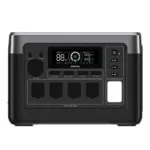
OUKITEL P1000 Plus wins in features and performance. The output power is 200 W more, at 1800 W. It has two DC5521 ports at 12 V. You can adjust the charging power with a switch on the body, and you can set the charging power manually in the app. It also has a grounding connector, which you might need for some boilers.
The cooling turns on only when it overheats, so the station works better in UPS mode. If you improve the cooling and add a PC fan to the charging lid, you can lower the temperature and noise. This is because the built-in 80-mm fan makes an unpleasant sound.
The OUKITEL station is smaller and 3 kg lighter, and with a handle, the station is easier to carry, but the build quality and materials look cheaper because the plastic is simpler and thinner, and it has one 80mm fan for cooling compared to four 60mm fans in the ALLPOWERS, so visually, the OUKITEL looks worse.
MyChooz – OUKITEL P1000 Plus. For a similar price, it has more good points.
We compare it with a budget competitor: ALLPOWERS R1500 LITE vs CTOLITY AP400.
More detailsALLPOWERS R1500 LITE vs CTOLITY AP400
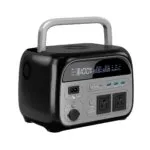
The CTOLITY AP400 is the best affordable charging station on AliExpress, and you should consider it if you need a small station with a 220V outlet and up to 500W output power, because it works for powering low-power home devices like a router, PC, laptop, TV, or refrigerator, but this station is not a competitor for the ALLPOWERS R1500 LITE, even if you have three AP400s to balance the total battery capacity.
MyChooz – ALLPOWERS R1500 LITE.
We compare it with a competitor: ALLPOWERS R1500 LITE vs Zendure SuperBase 1000M.
More detailsALLPOWERS R1500 LITE vs Zendure SuperBase 1000M
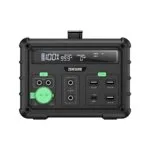
This is the best charging station for UPS, travel, and home use, because it has two 220V outlets with 1000W output power and 1500W peak power, and it has four USB ports for charging small electronics, a flashlight, and ports for power through a car lighter and a solar panel.
The station has no fans, only passive cooling through its aluminum body, so the station is good for use as an uninterruptible power supply or for night use.
By the end of April 2026, they stopped selling the station, and you can only find leftover stock, but the station has worked well for Vladimir Papazov for 2 years and for our editor Igor for one year, so you should get the station if you find a model at a good price.
MyChooz – ALLPOWERS R1500 LITE.
Features
More details.
More details.
More details.
More details.
More details.
Important features and sensors:
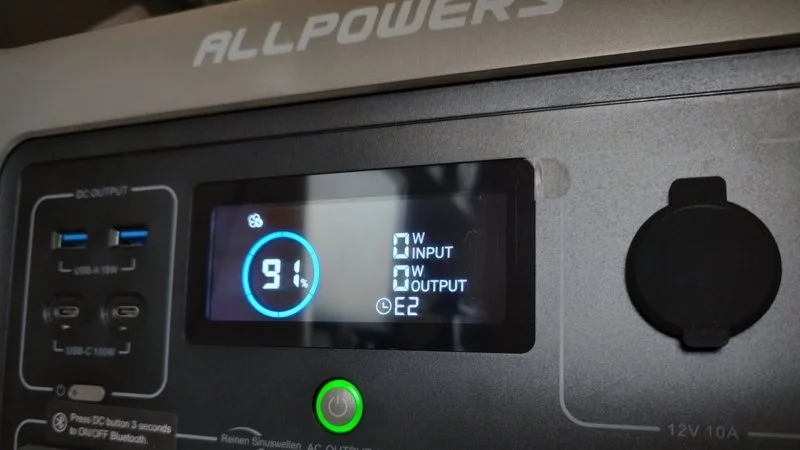
- Remote control works, yes, with Wi-Fi and Bluetooth, but it is not stable.
- UPS – yes.
- Capacity expansion – no.
- Fast charging – yes, up to 1200 W.
- Pure sine wave – yes.
- Wireless charging – no.
- Auto-shutdown – yes, up to 6 hours.
- Fan control – no.
Build quality
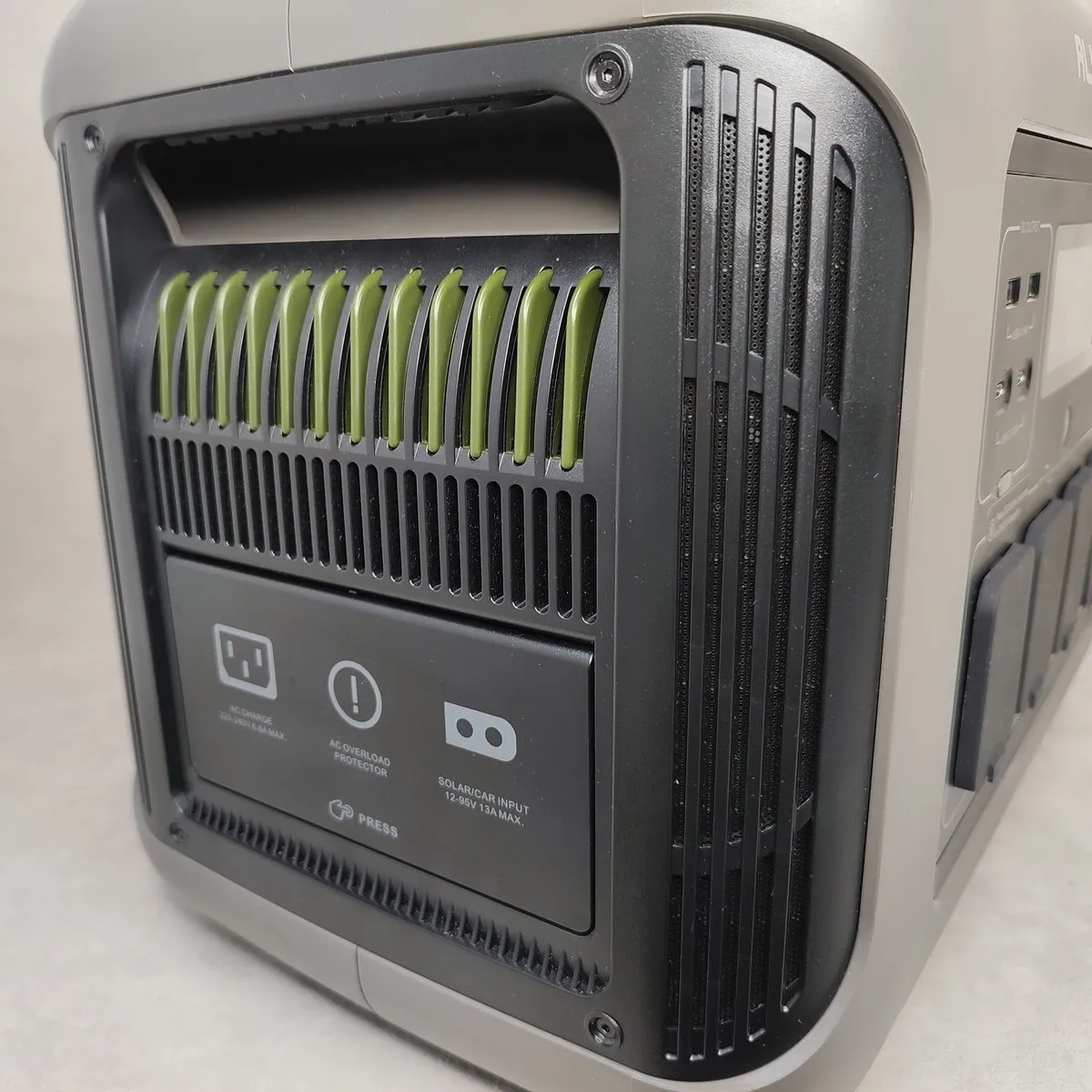

More details.
Summary
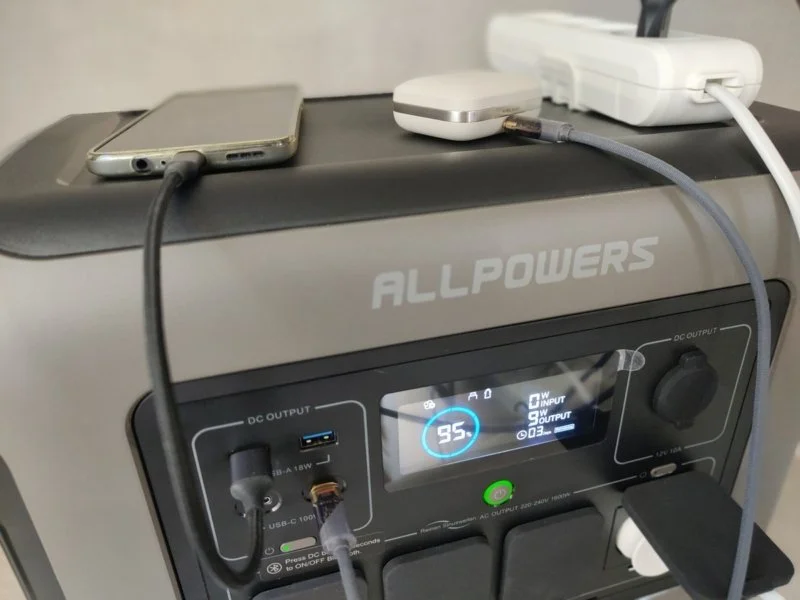
Is the ALLPOWERS R1500 LITE a MyChooz pick or not? Yes, I recommend buying the station, but the R1500 version looks better, and if you have the budget to buy it, paying more is worth it.
Buy ALLPOWERS R1500 LITE
The main reason to buy it is the 1056 Wh battery, and it has fast charging up to 1200W with three power levels, four 220V outlets with 1600W output power, four USB ports, and four ways to charge the station, but reasons not to buy it include the weak app, and it does not have capacity expansion with extra batteries, and it is not comfortable to be near the station while charging and when it has a load of 200W or more, and this is important to remember, but for how I use it, everything is just perfect, and you can consider the older ALLPOWERS R1500 version, which is $100 more expensive but more powerful at 1500W, and it has 4 times more capacity expansion with extra units, or you can consider the ALLPOWERS R2500 version with 2016 Wh, which is 2 times more powerful and 2 times more expensive, for 1500W.
I liked the station, and it fits my main uses, like emergency power at home when there is no electricity, because the battery capacity and output power are enough to power a refrigerator, router, PC, or laptop, and you can power all these devices at the same time for about 4 hours, and you can take the station on vacation or a trip if you have a car, but the station is not good for walking trips or light hiking and camping, and if you do not have a cart, then it is better to look at smaller options, like the CTOLITY AP400 from the review.
It is not the best option for working as a UPS, because even at the lowest charging power of 400W, the fan noise becomes tiring after about half an hour, and you cannot increase the charge capacity like in the older R1500 or R2500 versions, and it is not good for remote control because you need to connect to the station manually after each time you turn it on.
ALLPOWERS R1500 LITE use cases: backup power at home, outdoors, in nature – yes; hiking and camping – no; UPS – with some limits; remote power control – no.
What are the alternatives?
- The ALLPOWERS R1500 or R2500 are models with 1156 Wh and 2016 Wh, and they support battery capacity expansion with extra units, and they have higher output power.
- The Anker Solix C800X has 768 Wh, and it has less battery capacity, 500W less output power, and no support for battery capacity expansion, but it has smaller sizes, 5 kg less weight, and it comes with extra lights.
Please write what you think about the ALLPOWERS R1500 LITE, because I would really like to talk with you in the comments, and have good sound, and I will see you on MyChooz, bye!
- 1056 Wh battery, charging up to 1200 W
- 4 220V outlets with 1600 W power
- 4 USB ports and 4 ways to charge the station
- No capacity expansion
- Noise when charging and with a load of 200+ W
- Useless app
ALLPOWERS R1500 LITE – Specs:
- ALLPOWERS R1500 LITE release date – July 2025.
- ALLPOWERS R1500 LITE launch price – $799.
Battery and lifespan
- Battery type: LiFePO4 (Lithium Iron Phosphate).
- Capacity: 1056 Wh.
- Cycle life: 3500+ cycles until 80% capacity remains.
Output ports
- 4 × AC Outlets: 1600W total (3200W peak). Pure sine wave.
- 2 × USB-C (PD): Up to 100W per port.
- 2 × USB-A: 18W.
- 1 × Car outlet: 12V / 10A.
Input ports
- From wall outlet (AC): Up to 1200W. Charges from 0% to 80% in about 45 minutes.
- From solar panels: Up to 650W (via XT60 port, 12-95V).
- From car outlet: 12/24V.
- Combined charging: You can charge from the wall outlet and solar panels at the same time.
Features:
- UPS mode.
- Control and settings via Wi-Fi and Bluetooth.
Dimensions and weight:
- Weight: about 15 kg.
- Dimensions: 413 x 312 x 265 mm.
What’s in the box
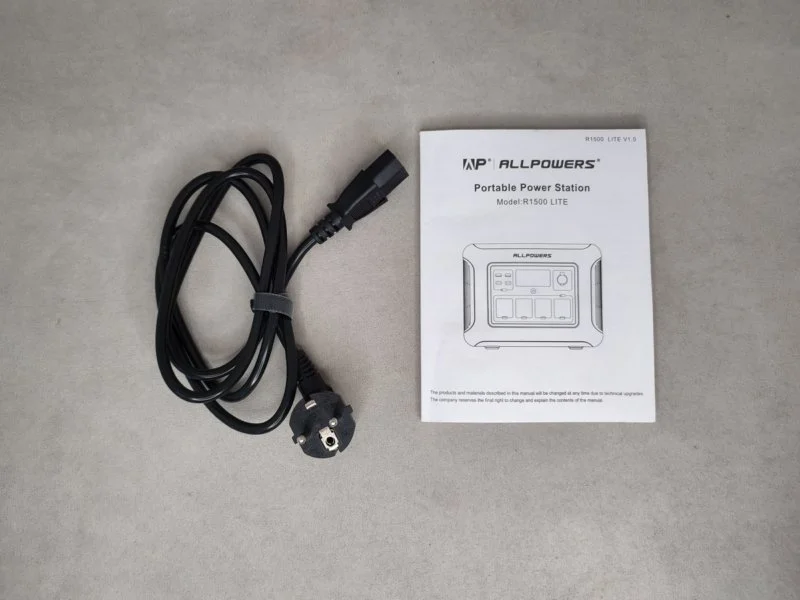
- charging station
- charging cable
- Manual
Popular Questions:
Do you still have a question about ALLPOWERS R1500 LITE?
Ask your question in the comments and I will answer you.
