
Skip to content
RU UA
EN RU UA
Press Enter to search or Esc to close

Best In-Ear Headphones 2026 – TOP 15

bews iem

The best in-ear headphones that made it into this TOP-15. These are the best WIRED in-ear headphones from Aliexpress, priced from $10 to $1000. The TOP of wired in-ear headphones 2026 includes models that have a detailed review on MyChooz.

If you’re looking for the best wireless in-ear headphones, then this TOP is for you.

How to choose good in-ear headphones – what’s important to know?

– Source + cable + ear tips = key to success. To choose the best wired in-ear headphones for yourself, it’s important to immediately consider a good source: amplifier, player, portable amplifier, sound card. The source is the key to how the headphones will sound; it’s the foundation of everything. You should already have one or need to buy one – read about it below. To adjust the sound to your liking and get the best wired in-ear headphones for YOUR EARS, I recommend using a quality cable and quality ear tips. This is also described in detail below.

Why you can trust us. Rating spots are never for sale — to anyone. We buy 90% of models ourselves, 10% are sent by partners for testing. Models in this rating are tested under the EMMA 0.1.8 system?

EMMA — Experts + Methodology + MyChoozers + Algorithm.

Every model goes through identical tests; the score is calculated automatically with fixed weights — a spot in the rating cannot be bought.

How we test →

TOP 15 Best Wired Headphones 2026 — Rating:

This ranking is alive — models change places in it.

1. BQEYZ WIND 9.41The best in-ear headphones under $200 – best sound
Drivers
1DD+1BC  
Impedance
33 ohms
Sensitivity
113 dB
Frequency response
5 Hz-40 kHz.
BQEYZ WIND

BQEYZ WIND – the best in-ear headphones under $170, combining a traditional dynamic driver with a bone conduction driver. This combination provides palpable bass and adds depth to the sound. The in-ear headphones sound quite balanced, with an emphasis on detail and airiness, especially in the treble range. Excellent soundstage with good instrument separation.

Reasons to buy:
  • Best sound under $170 among wired in-ear headphones
  • Tactile bass
  • Premium build
Reasons not to buy:
  • Harsh highs
Sound. 9.22 The headphones offer a balanced, bright sound with good detail retrieval and soundstage. The mids are well-defined, and the highs can be slightly harsh at high volume. The bass is punchy, but the sub-bass lacks just a bit of depth. Overall, the headphones offer high-quality and balanced sound suitable for most music genres.
Read more.
Build quality. 10.00 The headphones feature a premium build with a carefully thought-out design. The metal headphone housings ensure reliability and durability, and the ergonomic shape guarantees comfort even during long listening sessions. Build quality is top-notch.
Read more.

2. QoA Cloud Scape 9.38Hybrids with an Unusually Spacious Soundstage and Clear, Free Sound.
Drivers
1DD + 1Planar
Impedance
32 ohms
Sensitivity
102 dB
Frequency range
20 Hz-20 kHz.
QoA Cloud Scape

QoA decided not to chase the number of drivers but to keep it simple – and much better for it: a regular hybrid 1DD (10mm dynamic driver) + 1 micro-planar sounds as if it has the soundstage of very good open-back over-ear headphones. Excellent driver crossover and fine-tuning, thanks to which the sound practically completely extends beyond the head. The manufacturer promises an ‘adult’ spacious presentation where you forget you’re listening to in-ear headphones – and all this for $130.

Reasons to buy:
  • High detail retrieval
  • What’s in the box
Reasons not to buy:
  • Shortened highs air
Sound. 9.13 QoA Cloud Scape impress with an unexpectedly “mature” presentation for in-ear headphones. The main trumps are high resolution, easy reading of micro-details, and one of the most voluminous soundstages in the class: the sound confidently goes beyond the head, the space is wide, natural and airy, and the instruments are placed very plausibly. But for the sake of comfort and long listening, the macrodynamics are slightly smoothed out: contrasts don’t hit sharply, and the attack is not lightning-fast. The planar on the highs is clean and rapid, but the extreme reverb tails and air are slightly shortened. As a result, the sound turns out a bit “groomed” and relaxed — incredibly musical and non-fatiguing, although someone might miss the last spark of energy and complete transparency.
Read more.
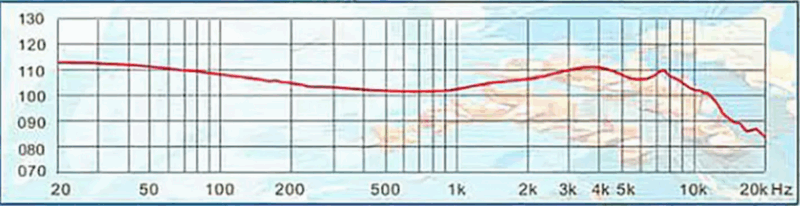
Frequency balance. 9 The presentation is slightly warm and musical, with a small emphasis on the lower mids and sub-bass, but without obvious overdoing. The general tonal balance is very pleasant and versatile.

Frequency response 👇

QoA Cloud Scape frequency response
Lows. 9 Deep, textured, with good density and control. The sub-bass is felt by the body, speed is decent, not smudged.
Mids. 9 Clean, slightly warm, vocals and instruments are presented closely and emotionally. No recession, timbres are alive and “real”. A slight lift in the upper mids adds expressiveness to female vocals.
Highs. 9 Clean, fast, completely devoid of sibilance and harshness. The planar driver gives excellent cymbal and string attack, but the very last reverb tails and air are slightly muffled — for the sake of comfort and long listening.
Detail retrieval. 9.5 One of the main trumps of the model. Micro-nuances, vocalist’s breathing, string rustles, room echoes — everything reads surprisingly easily for the price. In resolution, Cloud Scape easily compete with models twice as expensive.
Natural timbre. 8.5 Timbres are generally correct and alive, especially on vocals and acoustic instruments. A slight loss in naturalness falls on the highest overtones (cymbals sound a bit “groomed”).
Soundstage. 9.5 Wide and deep for in-ear headphones. Distances between sources are handled almost perfectly, the sound almost completely goes beyond the head. In terms of volume feel, it is one of the leaders in the class.
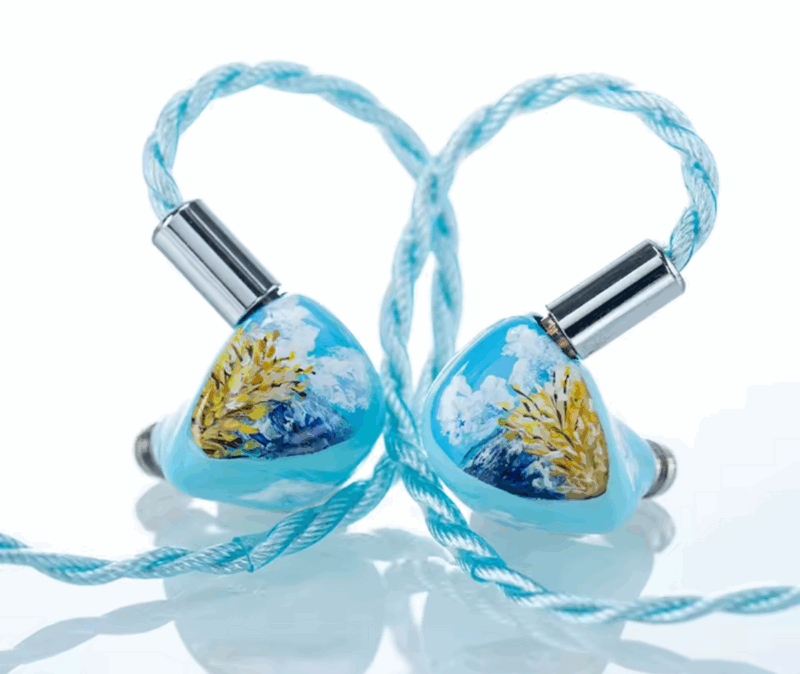
Build. 10 The construction of the QoA Cloud Scape is made of medical resin with hand-painted art — light, durable and completely seamless. The housing is small, but perfectly repeats the anatomy of the ear, which makes the fit one of the most comfortable in the class.
Read more.
Comfort. 10 Comfort is reference-grade. Despite the tight fit and good isolation, the headphones can be worn for 4–5 hours in a row without the slightest pressure and fatigue. Low weight (~5 g) and competent shape work wonders.
Durability. 10 Durability is top-notch: the resin is resistant to scratches and impacts, the pattern is sealed under a layer of lacquer and does not erase. The stock cable is one of the most reliable in the segment under $150, it doesn’t stiffen, yellow, or break at bends.
Design. 10 One of the most beautiful designs of 2025. Each pair is a unique painting in the style of a “cloud sky” (light Cloud or dark Scape). From the first glance it is clear that these are not just headphones, but a small premium art object.
QoA Cloud Scape
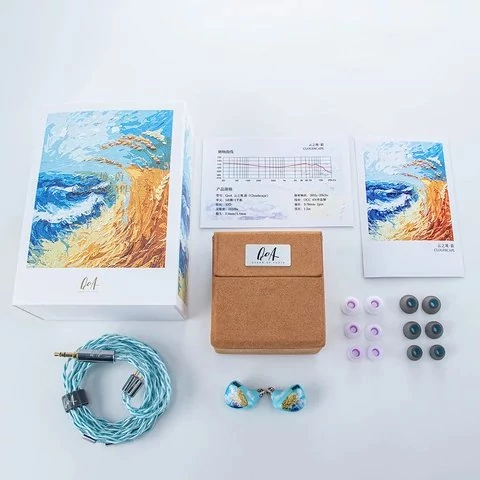
What’s in the box. 10 The packaging is ideal for its money: the headphones themselves, a gorgeous 6N silver-plated cable with a 3.5/4.4 mm modular plug, 6 pairs of high-quality wide-channel silicone ear tips (S/M/L × 2 types), a stylish suede case, and documentation. Everything is packed neatly and expensively — nothing needs to be bought separately.

3. SIMGOT SuperMix 5 9.29Best in-ear headphones by sound
Drivers
1DD+2BA+1BC+Micro Planar
Impedance
19 Ohms
Sensitivity
120 dB
Frequency range
20 Hz–20 kHz.
SIMGOT SuperMix 5

Main reason to buy: this is our new benchmark for sound in in-ear headphones. Therefore, if you need a cohesive, dense, and truly musical sound with a sense of physicality and immersion, that doesn’t tire or overwhelm with aggression – this is exactly what you need.

Reasons to buy:
  • Cohesive sound
  • Sonic physics
  • Musical engagement
Reasons not to buy:
  • Smoothed presentation
  • Lack of micro-contrast
  • Lack of transparency
Sound. 9.22 The sound profile comes across as balanced and tonally accurate. The presentation is mature, dense, and full-bodied. This is not your typical Asian tuning with recessed mids and screaming highs. Five different drivers are integrated so smoothly that you do not feel a single crossover point—you get a cohesive, continuous soundstage without the slightest gaps between instruments. Resolution is very high, and the bone conduction driver plays a noticeable role here. It adds not just depth, but a sense of physical vibration and weight to the sound. The presentation extends beyond the head, forming a large, populated soundstage with good volume and vivid physical imaging—this is no longer just a collection of sounds, but a cohesive musical picture in front of the listener. This is where the model’s main strength shines through: density, energy, and a “live” sound effect. The main pro is cohesion, physicality, and comfort. The main con is a slight loss of transparency and micro-contrast due to the smoothed-out presentation.
Read more.
Build quality. 9.50 Built surprisingly well and without unnecessary pretension. The shells are large, deep, with metal elements and neat assembly—it feels like a solid, well-thought-out item rather than cheap plastic meant to cut costs. A standard 2-pin connection is used, which immediately gives you freedom for cable experiments. The sound nozzles are wide with a perforated mesh—everything works as intended. Despite the dimensions, the fit is good: the earbuds stay securely in place, but your ears might get tired over time, so there are compromises here. In the end, the build feels mature and practical—without showy luxury, but with minor comfort quirks.

The fit is comfortable, 2 hours without discomfort, durability is great. The design is unique, but looks better in person than in photos.
Read more.

4. AFUL Explorer 9.22Best wired in-ear headphones under $120 – balanced and monitor-like sound

Drivers
1DD+2BA
Impedance
26 ohms
Sensitivity
108 dB
Frequency range
20 Hz-30 kHz.
AFUL Explorer

AFUL Explorer – the best wired in-ear headphones with detailed and balanced sound among models under $120. These are hybrid headphones with excellent sound for their price. These wired in-ear headphones are beautiful and have a comfortable build, without mesh on the sound tubes. Therefore, the sound wave transmits maximum information without obstruction.

Reasons to buy:
  • Natural sound
  • Wide soundstage
Reasons not to buy:
  • Lack of low-end mass
Sound. 9.05 The sound is distinguished by comfort and naturalness, allowing you to focus on music without distractions. Each element sounds balanced and clear: vocals are conveyed expressively, instruments are detailed, and the bass has good texture. This is a quality immersion in music where every detail of the sound is presented harmoniously and without excessive harshness.
Read more.

The main plus of the AFUL Explorer sound is an incredibly natural, comfortable, and detailed sound with clean vocals and a wide voluminous soundstage. The main minus is the lack of weight and density of lows, because of which basshead tracks and heavy genres lose part of the drive and power.
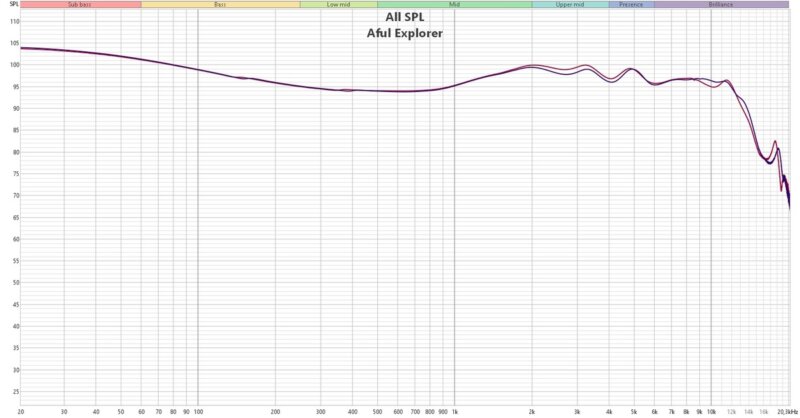
Frequency response 👇

Aful Explorer frequency response
Frequency balance. 8.9 Aful Explorer have a balanced frequency response where no frequency range stands out. However, this can lead to some “flatness” of sound, because of which a “twist” and dynamics may be lacking in some genres.
Lows. 8.7 In the track Onyx – “Shut ‘Em Down” (Hardcore hip-hop / Rap) the bass is quite even and controlled. It conveys lows well in most genres, but may lack “density” and “weight” in bass-demanding compositions.
Mids. 9 Vocals and instruments sound clean and natural. In Teddy Swims – “Bad Dreams” (Soul / R&B) the Explorer emphasize vocal nuances, conveying their emotionality. Vocals sound very good, but in complex arrangements a slight loss of clarity can be observed.
Highs. 9 Highs are clean, detailed, and non-fatiguing. In Christopher Cross – “Sailing” (Pop / Soft rock) they create a sense of lightness and serenity. But in some genres, for example, in electronics or metal, one would like a bit more brightness to emphasize details and give tracks greater “airiness”.
Detail retrieval. 9 Aful Explorer demonstrate good detail retrieval in most compositions. However, in very fast and dense arrangements, for example, in drum and bass, a slight smearing of details is possible.
Natural timbre. 9 The sound is quite natural, especially in acoustic genres. However, in electronic music and other genres with synthetic instruments, naturalness can be reduced.
Soundstage. 9.3 A quite wide and voluminous soundstage is created. Christopher Cross – “Sailing” (Pop / Soft rock) sounds spacious, and Madis – “Phobos and Deimos” (Electronic / Indie) – grandly. However, in some genres, for example, in progressive metal, the soundstage could be deeper to create a sense of “presence” in the composition.
Build. 9.63 They have a light, durable construction with a comfortable fit and a stylish textured housing providing excellent sound isolation. However, it is worth noting that the sound nozzles of the headphones are a bit short. This can lead to the fit not being as deep as one would like.
Read more.
Comfort. 9.5 Excellent thanks to light construction and good fit. However, problems with ear tips can arise, as there is no lip on the sound nozzles for their fixation, which can slightly reduce comfort during long sessions. Otherwise, the headphones provide a pleasant feeling when worn, but this flaw reduces the comfort score by 0.5 points.
Durability. 9.5 The use of quality materials and cable inspires confidence. However, the lack of protective meshes on the sound nozzles creates the risk of dust and dirt getting inside the housing, which can affect durability. This flaw, in my opinion, is significant and reduces the construction score by 0.5 points.
Design. 10 The headphones have an ergonomic housing with glossy and matte textures, and the faceplate with a “starry sky” effect gives them uniqueness.
AFUL Explorer packaging
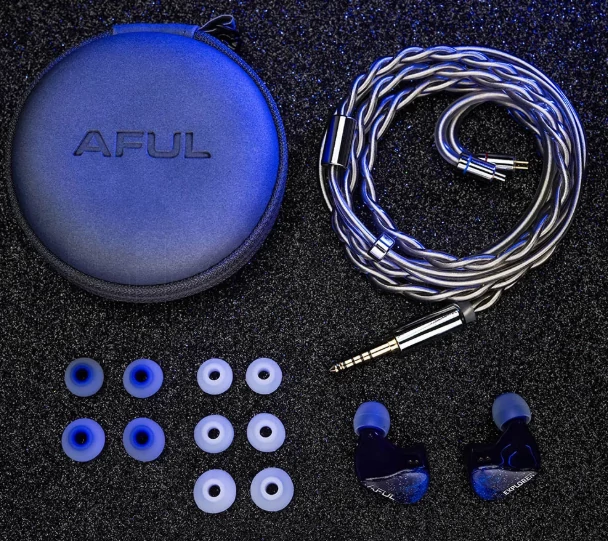
What’s in the box. 9.5 The package includes the headphones themselves with a detachable cable (2-pin 0.78 mm, available with 3.5 mm or 4.4 mm plugs), several pairs of basic silicone ear tips, and a rigid but tight case. The cable is distinguished by a silver-plated conductor and quality hand-braiding; nevertheless, the overall score reduction by 0.5 points is due precisely to the lack of modularity.

5. Kefine Quatio 9.16Best wired in-ear headphones under $130 – HiFi sound price/quality
Drivers
2DD + 2BA
Impedance
32 ohms
Sensitivity
107 dB
Frequency range
20 Hz-20 kHz.
Kefine Quatio

Kefine Quatio for their price – the best wired in-ear headphones under $130 and Kefine’s first hybrid model. The company is known for successful single-driver solutions (Klean, Klanar, and Delci). In the Quatio, the engineers decided to go further and built the best wired in-ear headphones with 4 drivers: a combination of two dynamic drivers (10mm and 8mm) and two balanced armature drivers is used. This approach was intended to provide a balanced, spacious sound with lively bass, well-developed mids, and clear highs – a versatile yet precise sound with Hi-Fi potential.

Reasons to buy:
  • Best sound under $130 among wired in-ear headphones
  • Reference-grade packaging
  • Stylish and minimalist design
Reasons not to buy:
  • Lack of aggression in sound
  • Non-critical minuses: highs may seem slightly prickly, but this is rather an exception than a rule. The soundstage lacks height, the sound nozzle thread is vulnerable to damage.
Sound. 8.96 Kefine Quatio is the best option for those looking for headphones capable of delivering clean and non-fatiguing sound, where detail retrieval and instrument separation come first. The main sound plus — Quatio is a real celebration of clarity, detail, and precise imaging. They sort music onto shelves as if: guitar – here, vocals – here, backing vocals – strictly in three rows. Everything is in its place, everything reads perfectly!
Read more.
Build. 9.75 Comfortable construction with practically no flaws. Sturdy construction. Beautiful minimalist design and reference-grade packaging which includes an ear tip set, interchangeable sound nozzles, and a 4.4 mm interchangeable plug.
Read more.

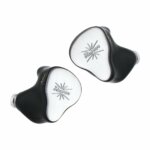
6. Kiwi Ears KE4 9.13Best wired in-ear headphones 2025 under $200 – among bass models
Drivers
2 DD+2 BA
Impedance
28 ohms
Sensitivity
102 dB
Frequency range
20 Hz-40 kHz.
Kiwi Ears KE4

Kiwi Ears KE4 – the best wired in-ear headphones with a pleasant, warm, and enveloping sound. These are hybrid wired in-ear headphones (2DD + 2BA), with an isobaric arrangement of dynamic drivers for bass control. Knowles balanced armature drivers are responsible for detailed mids and highs. The headphones feature a balanced sound, with a slight emphasis on the lows and good detail.

Reasons to buy:
  • Best bass sound under $200 among wired in-ear headphones
  • Powerful bass
Reasons not to buy:
  • Harsh highs
Sound. 8.93 Kiwi Ears KE4 reinforced my consistently favorable attitude toward the brand. These headphones impress with their balance and careful tuning across all frequency ranges. Lows are powerful and accurate, mids are clear and natural, and highs retain their transparency despite slight losses in the very highest registers. The soundstage could be a bit deeper, but overall they provide a pleasant and detailed musical immersion.
Read more.

The primary advantage of the Kiwi Ears KE4 sound signature is a powerful, textured, and well-controlled bass combined with clean, natural, and emotional mids. The main drawback is a lack of sub-bass depth and slight harshness/smoothing of upper overtones at high volumes, which causes some air and micro-details to be lost.
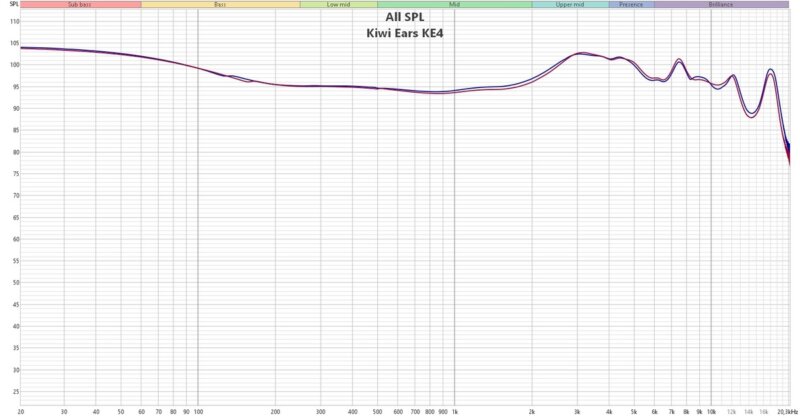
Frequency response 👇

Kiwi Ears KE4 frequency response
Frequency balance. 8.8 The headphones offer a fairly balanced sound signature. Lows are quite powerful and textured. Mids stand out for their naturalness and good separation of vocals and instruments, although a slight lack of “air” may be felt in the upper mids. Highs are clean and reasonably transparent, but the finest overtones may be slightly smoothed out, especially at high volumes.
Lows. 8.9 In the track Onyx – “Shut ‘Em Down” (hardcore hip-hop), the Kiwi Ears KE4 provide a powerful and well-defined bass with good texture that adds drive and energy to the track. Transient response and decay are handled competently, giving the sound a natural and dynamic feel. The bass integrates well into the overall mix without drawing attention to itself. However, in the lowest registers, the sub-bass lacks a bit of depth and weight, which slightly limits the full immersion effect.
Mids. 9 In the track Teddy Swims – “Bad Dreams” (soul), the headphones demonstrate an excellent balance between vocals and instruments, maintaining clarity and precision for every element. Vocals sound rich and emotional, and the accompaniment supports the overall sense of warmth. However, there is a slight lack of “air” in the upper mids, which limits the depth and detail of complex arrangements, making the sound slightly simplified.
Highs. 8.5 In the track Christopher Cross – “Sailing” (soft rock), the highs are overall clean and transparent, creating a sufficient sense of airiness. However, minor peaks can appear at high volumes, making the sound a bit harsh. Also, the finest overtones may be slightly smoothed out.
Detail retrieval. 8.9 In the track Sleep Token – “Chokehold” (alternative/prog), the Kiwi Ears KE4 demonstrate good rendering of small elements and micro-dynamics. However, in complex and multi-layered arrangements, especially during dense moments, a slight loss of instrument separation can be felt.
Natural timbre. 9 In the track Michael Jackson – “Man in the Mirror” (pop), the Kiwi Ears KE4 handle vocals well, generally preserving the recognizable timbre of the voice. Live instruments sound quite plausible. Despite a slight boost in the lows that can slightly alter the timbres of certain instruments, the overall impression of natural sound remains positive. Minor roughness in transitions between frequency ranges does not significantly affect the integrity of perception.
Soundstage. 9 In the track Madis – “Phobos and Deimos” (electronic/ambient), the headphones demonstrate quite good soundstage width and depth for in-ear earbuds, creating a decent sense of space and sound source localization. However, the dynamics of the soundstage development could be better, which somewhat limits its expressiveness during moments of changing intensity.
Build. 9.63 The Kiwi Ears KE4 feature an elegant and durable shell with an attractive design. The headphones are made of quality materials, giving them not only a stylish look but also comfort during extended use. The ergonomic shape ensures a good fit in the ears, and the variety of ear tips helps achieve optimal isolation and convenience.
Read more.
Comfort. 10 The headphones offer great comfort for long listening sessions. Their light and ergonomic build ensures a secure fit without causing discomfort even after several hours of use. I spent about three hours straight wearing them and felt no unpleasant sensations—they remain convenient and comfortable the entire time.
Durability. 9.5 Housings feel sturdy and well-made, it seems they will withstand daily use without problems. Materials look durable and reliable, not a hint of fragility in sight. The only nuance for which I will still deduct 0.5 points is the potential vulnerability of the sound nozzle thread. It seems to me that with careless handling there is a small risk of damaging it, but this is more of a warning than a real problem with careful use.
Design. 10 I have always been impressed by the company’s style, and these headphones are no exception. The appearance of the headphones is neat and strict, and the shape, while substantial, features exceptional ergonomics, ensuring comfort even during extended wear. The finish and use of epoxy resin emphasize durability and high quality, once again confirming my respect for Kiwi Ears design.
Kiwi Ears KE4 package contents
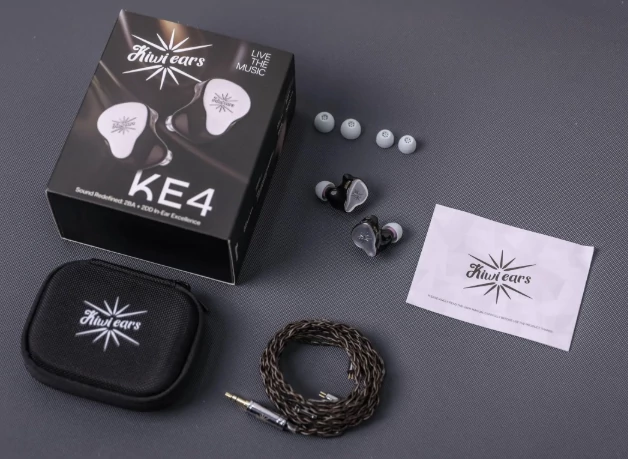
What’s in the box. 9 The Kiwi Ears KE4 package includes the headphones themselves, a detachable cable, several pairs of silicone ear tips, a storage case, spare acoustic mesh filters, and documentation. I am deducting a point for a very weak selection of ear tips. The included detachable cable with 0.78 mm 2-pin connectors is good and high quality. However, minus one point for not being modular.

7. TRN Whale Shark 9.09In-ear headphones with reference bass
Drivers
3DD + 1Planar
Impedance
16 ohms
Sensitivity
110 dB
Frequency range
10 Hz-40 kHz.
TRN Whale Shark

Main reason to buy: top-tier sound – a massive soundstage, powerful, physical bass, and cinematic sound. Large package contents. Beautiful and unusual design.

Reasons to buy:
  • Massive soundstage
  • Powerful, bodily bass
  • Cinematic sound
  • Package contents
Reasons not to buy:
  • Controversial design
  • Smoothed-out textures
Sound. 8.92 The TRN Whale Shark is not about dry analysis and monitor-like accuracy, but rather about cinematic scale and pure dopamine. These headphones are built to pump music with body and weight: lows are fundamental—the bass is deep, massive, enveloping, it doesn’t just hit, it vibrates in your chest; mids are thick and bodily, vocals are presented warmly and intimately, intentionally smoothing out rough corners for the sake of comfort; highs are clean and clear, but delicately “tamed” to deliver detail without the slightest hint of harshness.

The main pro of the sound signature is the scale and “cinematic feel”: the combination of deep fundamental bass and a huge, voluminous soundstage creates a sense of presence, while the dense, warm midrange makes the sound incredibly comfortable, engaging, and completely non-fatiguing even during long sessions. The main con stems from the tuning philosophy itself: the sound is warm, dense, and monolithic. This reduces the sense of aggression and sharpness on fast genres, while micro-details and the highest overtones take a back seat in favor of comfort and integrity.
Read more.
TRN Whale Shark build quality. 9.63 feature premium liquid metal shells with a sapphire crystal faceplate and a biometric whale shark skin pattern, creating an unusual, expensive look and play of light; despite the heavy weight (~15 g), the ergonomic shape based on 3D ear scan data ensures a comfortable fit, and the build quality is high—metal and sapphire create a sense of durability.
Read more.

8. MYER-AUDIO CKLVX D41 9.04Best in-ear headphones under $170 – ideal mids and vocal intimacy
Drivers
1DD+4BA
Impedance
32 ohms
Sensitivity
110 dB
Frequency range
20 Hz-40 kHz.
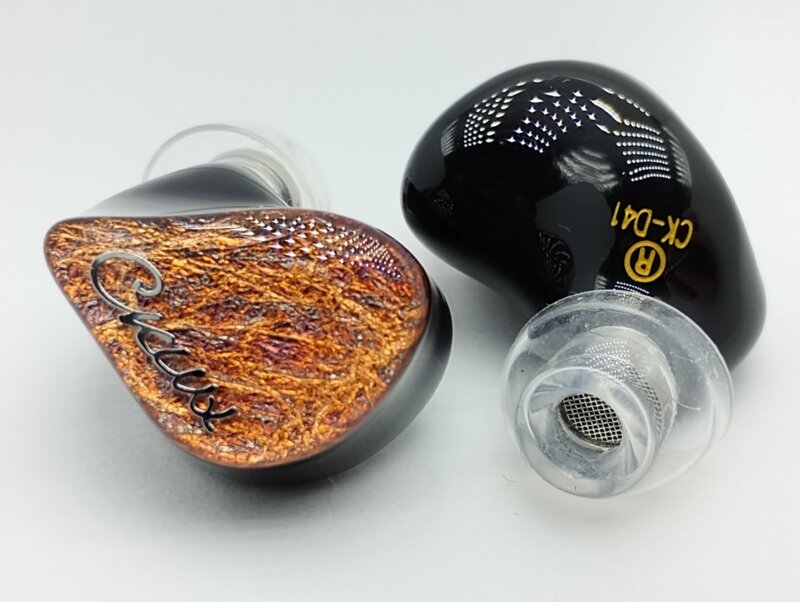
MYER-AUDIO CKLVX D41

MYER-AUDIO CKLVX D41 – the best in-ear headphones with expressive and deep sound, among models under $170. This is a hybrid model (1DD+4BA), with a balanced and detailed sound emphasizing accuracy. It’s also the best wired in-ear headphones with good technical implementation, comfortable fit, and a replaceable cable.

Reasons to buy:
  • Beautiful design
  • Wide soundstage
Reasons not to buy:
  • Harsh highs
Sound. 8.71 The sound is bright and engaging, with natural mids and well-rendered highs, although their sharpness is sometimes excessive. Bass is energetic, but lacks depth in the sub-bass, which slightly limits the fullness of the sound. The headphones are great for listening to detailed music, but long sessions can be fatiguing due to accented highs and a lack of sub-bass.
Read more.

The primary advantage of the MYER-AUDIO CKLVX D41 sound signature is a wide, precise soundstage and bright, rich detail with natural mids. The main drawback is weak, shallow sub-bass and harsh, fatiguing highs at volumes above medium.
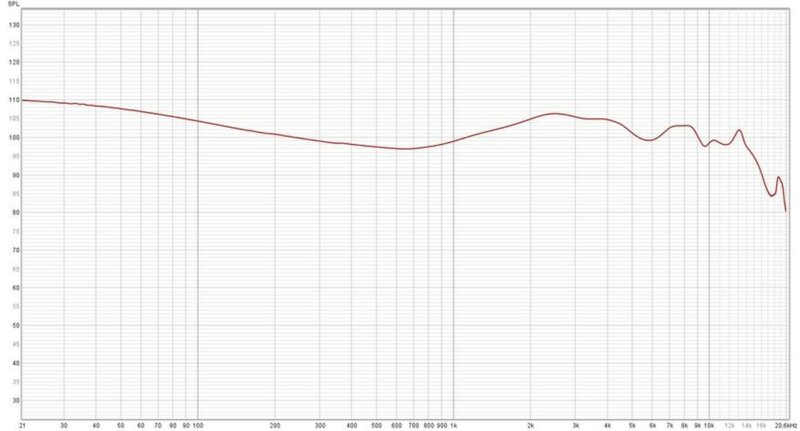
Frequency response 👇

MYER-AUDIO CKLVX D41 frequency response
Frequency balance. 8.63 The CKLVX D41 provide sound with minor boosts that give character to their presentation. Mids sound rich and textured, but a slight blending of instruments can occur in complex moments. Highs boast excellent detail, but at times can be harsh and slightly “piercing,” which requires caution when adjusting volume. Lows provide a good foundation with prominent bass, but the sub-bass lacks amplitude and dynamics to achieve maximum depth and punch.
Lows. 8.6 In the track Onyx – “Shut ‘Em Down” (hardcore hip-hop), the CKLVX D41 demonstrate good bass texture and energetic sound. However, they lack the amplitude and depth to fully unleash the power of the sub-bass, limiting the immersion effect, especially in bass-heavy genres.
Mids. 8.7 In the track Teddy Swims – “Bad Dreams” (pop/soul), the CKLVX D41 excel at conveying vocal details and instrument richness. Vocals sound natural and emotional, but in the chorus, where the sound is busier, instruments blend a bit, reducing separation.
Highs. 8.6 In the track Christopher Cross – “Sailing” (soft rock), the CKLVX D41 show good detail and transparency, giving the sound airiness and refinement. Highs are bright and clear, highlighting the nuances of instruments and vocals. However, they are sometimes harsh and “piercing,” which can disrupt listening comfort at times.
Detail retrieval. 8.6 In the track Sleep Token – “Chokehold” (alternative), the CKLVX D41 expertly convey all nuances and textures, creating a sense of acoustic richness. However, in more complex and multi-layered compositions, a slight loss of micro-detail is observed, which somewhat diminishes the overall impression of the track. This is because the headphones sometimes struggle with details in dense arrangements and can lose precision in more complex, multi-layered moments.
Natural timbre. 8.7 In the track Michael Jackson – “Man in the Mirror” (pop), the CKLVX D41 accurately reproduce vocals and instruments with a high degree of realism; vocals sound lively and emotional, and the acoustics are natural. However, synthesizers lose a bit of their naturalness, sounding synthetic, which reduces the overall naturalness of the sound.
Soundstage. 8.9 In the track Madis – “Phobos and Deimos” (electronic music), the CKLVX D41 impress with the width and depth of the soundstage. Clear instrument separation and precise positioning create a concert hall presence, revealing the atmosphere and details of the track. However, at times the soundstage can feel somewhat constrained, especially in busier arrangements where the space does not always feel as voluminous.
Build. 9.88 The MYER-AUDIO CKLVX D41 shell construction is made of quality materials, providing excellent strength and durability. Even though the shell is quite large, it is very ergonomic and sits comfortably in the ears.
Read more.
Comfort. 10 Headphone comfort is at a high level. Despite the rather large shells, the headphones sit comfortably in the ears without causing discomfort even after 3–4 hours of listening. The ergonomic design and appropriate ear tips provide a secure fit and comfortable placement for long sessions.
Durability. 10 The durability of the headphones inspires confidence thanks to high-quality shell materials that provide excellent strength and wear resistance. The cable, in turn, is reference-grade—it is durable, flexible, and reliably protected from damage, guaranteeing a long service life for the headphones.
Design. 10 One of the most attractive designs, drawing attention at first glance. The pattern on the faceplates is mesmerizing in its detail and uniqueness, adding style and elegance to the headphones. Combined with quality assembly, they create the impression of a premium product.
MYER-AUDIO CKLVX D41 package contents
What’s in the box. 9.5 The CKLVX D41 package includes headphones, a detachable cable, a set of silicone and foam ear tips, a storage case, and documentation. The cable stands out for its high-quality braiding and materials, but loses 0.5 points due to the lack of a modular connection. The case is executed perfectly: it is sturdy, compact, and protects reliably. The included sizes (S, M, L) ensure a comfortable fit and good sound isolation.

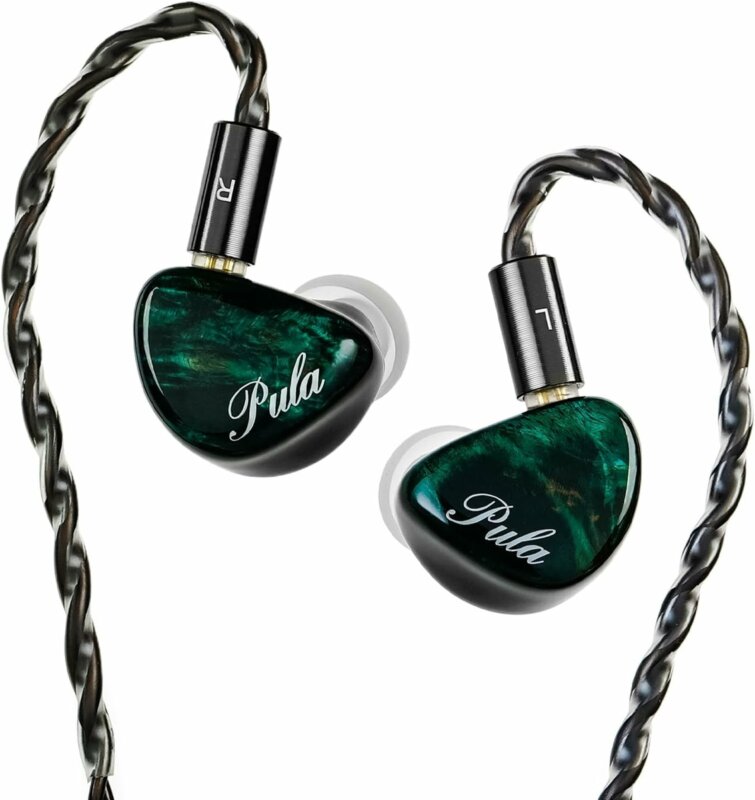
9. Pula Audio Unicrom 9.01Dynamic in-ear headphones with a cozy, musical sound and powerful warm bass.
Drivers
10mm DD 
Impedance
32 Ohms
Sensitivity
101 dB
Frequency range
20 Hz–20 kHz.
Pula Audio Unicrom

Juzear x Z Reviews Defiant — the best budget in-ear headphones under $100, built on a hybrid four-driver configuration: one 10mm dynamic driver and three balanced armature drivers.

Reasons to buy:
  • Powerful bass
  • Vivid mids
Reasons not to buy:
  • Narrow soundstage
Sound. 8.61 The Pula Audio Unicrom deliver a warm, V-shaped sound with a powerful, tactile bass that does not overpower other frequencies, vivid mids, and smooth highs—ideal for emotional listening. The smoothed highs slightly lose airiness and detail in busy tracks, and the soundstage compresses in dense mixes, but the music stays lively.
Read more.

The warm, natural signature with powerful, tactile bass and vivid timbres creates a cozy atmosphere. The downside is the smoothed highs and lack of airiness, causing subtle details and the sense of presence to get lost in busy tracks.
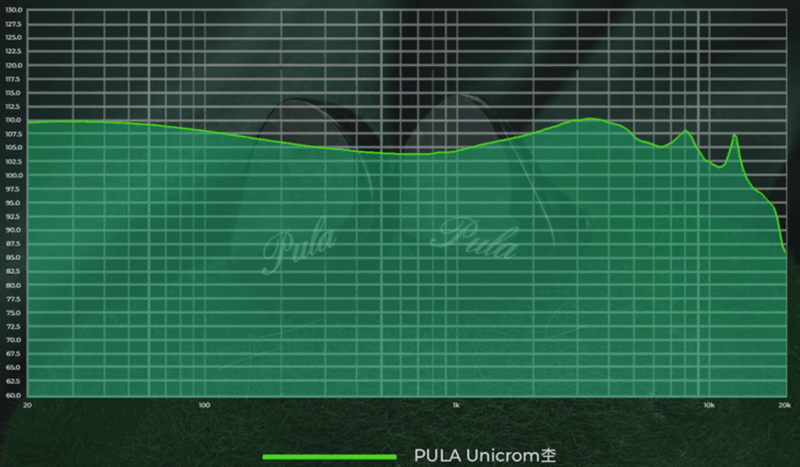
Frequency response👇

Pula Audio Unicrom frequency response
Frequency balance. 8.83 The bass is powerful and tight, but slows down slightly in fast tracks. The mids are warm and clean, and vocals are vivid, albeit slightly recessed. The highs are smooth and comfortable, without harshness, but lack a bit of air. The sound is balanced with an emphasis on musicality and coziness.
Lows. 9 Powerful, with deep sub-bass and vibration, it doesn’t drown out the rest, but loses definition in fast tracks.
Read more.
  • In action Michael Jackson – P.Y.T, the bass guitar in the intro (0:10) hits with a tight punch, adds weight in the chorus (0:45), but in fast passages (1:30) the notes blur together with imperfect ear tips, and background effects are smeared (-0.5 points).
  • In the track The Weeknd – Blinding Lights, the intro (0:00–0:10) delivers a pulsating synth bass that brings the track to life, but in the chorus (0:50) at high volume the bass is excessive, smearing the pulsations and losing detail in the echo (-0.5 points).
Mids. 9 Warm, clean, with vivid vocals, slightly recessed due to the V-shaped signature.
Read more.
  • Oasis – Dont Go Away, the guitar in the intro (0:00–0:17) is juicy with natural body, Liam’s vocals in the verse (0:17) are emotional with his signature raspy texture, but in the chorus (1:00) the voice is slightly pushed back, and backing vocals blend with the guitars, losing clarity (-0.5 points), which reduces analytical performance.
  • Michael Jackson – Man in the Mirror, the piano in the intro (0:10) is full-bodied, the choir in the chorus (1:20) is layered, but at the climax (3:00) the vocal echo and keyboard nuances are smoothed out, and instruments compress, losing separation (-0.5 points).
Highs. 8.5 Smooth, detailed, without aggression, with a slight roll-off past 4-6 kHz.
Read more.
  • Eagles – Hotel California, the guitar fingerpicking in the intro (0:00–0:30) sounds transparent with signature clarity, cymbals in the chorus (1:30) are distinct without harshness, but the guitar solo (2:50) loses its metallic sheen, as if covered by a cloth, stripping away airiness and chilling sibilance (-0.5 points).
  • Daft Punk – Get Lucky, Lose Yourself to Dance, the cymbals in the Get Lucky verse (0:20) and percussion in the Lose Yourself chorus (1:10) sparkle, the synthesizers (1:00) sound airy, but the faint noise of analog synths disappears, and the highs produce a slight hiss, smoothing out nuances (-1 point for both tracks).
Detail retrieval. 8.6 They clearly convey micro-nuances and textures, especially in the mids, but smooth out background details in busy tracks.
Read more.
  • Oasis – Dont Go Away, the intro (0:00–0:20) is a treat: the acoustic guitar sounds with a soft attack, the rustle of strings is distinct with signature warmth, but in the chorus (1:20) backing vocals and cymbals blend, losing clarity due to the subdued highs, which steals air and the sense of presence (-0.5 points).
  • Johnny Cash – Hurt, the intro (0:10) conveys the crunch of strings and Cash’s breathing in an intimate way, amplifying emotion, but at the climax (2:30) the dense arrangement compresses details—background noises and light string hits become indistinct, reducing the sense of liveness (-1 point).
Natural timbre. 9 Warm, analog, with vivid timbres, free of artificiality, but male vocals are sometimes a bit thin.
Read more.
  • Sting – Englishman in New York, Sting’s voice in the verse (0:30) sounds warm with signature emotion, as if he is singing right next to you, and the saxophone (1:10) flows in layers with a realistic timbre, but in the chorus (1:40) the percussion and Sting’s breathing are subdued, losing airiness and subtle nuances, which reduces the sense of liveness (-0.5 points).
  • Lenny Kravitz — Low, the bass guitar in the intro (0:10) creates a powerful rhythm, the drums (0:40) hit with punch, but synth parts and background effects in the chorus (1:30) are smeared, pushing into the background, weakening brightness and texture.-0.5 points).
Soundstage. 8 The soundstage of the Pula Audio Unicrom is moderate in width and depth, with precise imaging, but not ultra-spacious.
Read more.
  • Michael Jackson – Man in the Mirror, backing vocals in the chorus (1:20) layer clearly, creating a space behind the head with signature layering, but at the climax (3:00) the soundstage narrows, and the choir and keys blend, losing depth and volume, which weakens the impact of busy mixes (-1 point).
  • Yosi Horikawa – Bubbles, the bubbling sounds in the verse (0:30) bounce from left to right with precise panning, as if flying around the ears, but in the middle of the track (1:50) the low register makes instruments flat, without pronounced volume, stealing openness (-1 point).
Build quality. 10 The build of the Pula Audio Unicrom earbuds uses high-end materials that provide excellent durability and reliability. The shell features a well-thought-out shape and clean lines, making the earbuds look modern and feel quite premium. Despite the metallic elements, the model does not feel heavy and is well-balanced.
Read more.
Comfort. 10 Comfort with the Unicrom is high. The ergonomic shell easily adapts to the shape of the ear, ensuring a secure fit even during long listening sessions. No fatigue or pressure builds up during 3 to 4 hours of listening, and correctly chosen ear tips create a tight seal and stable fit.
Durability. 10 Durability inspires confidence: the manufacturer used robust shell materials and reliable joints. The cable also deserves a separate mention—it is flexible, high-quality, and wear-resistant, ensuring stable performance over a long time. This combination of durability and convenience makes the Unicrom a great choice for daily use.
Design. 10 Maple wood inserts in four colors (black, blue, green, yellow) make each pair unique and give them a premium look that punches above their price segment.
Pula Audio Unicrom package contents
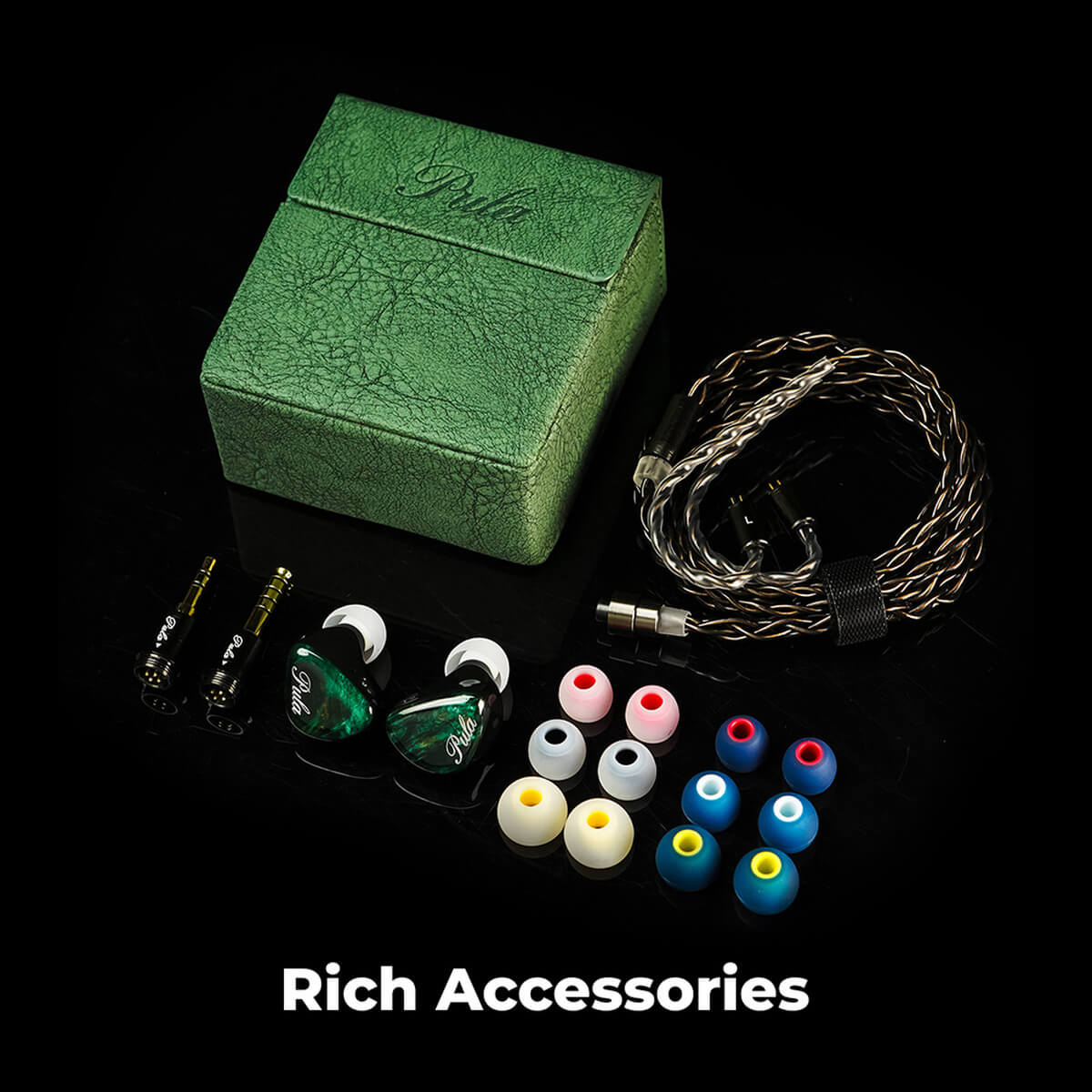
What’s in the box. 10 The Pula Audio Unicrom package contents are great for the money: a silver-platinum modular cable (3.5/4.4 mm plugs), several pairs of ear tips, a manual, and warranty. A special shout-out to the leather case—the best in this price segment, you couldn’t ask for more.

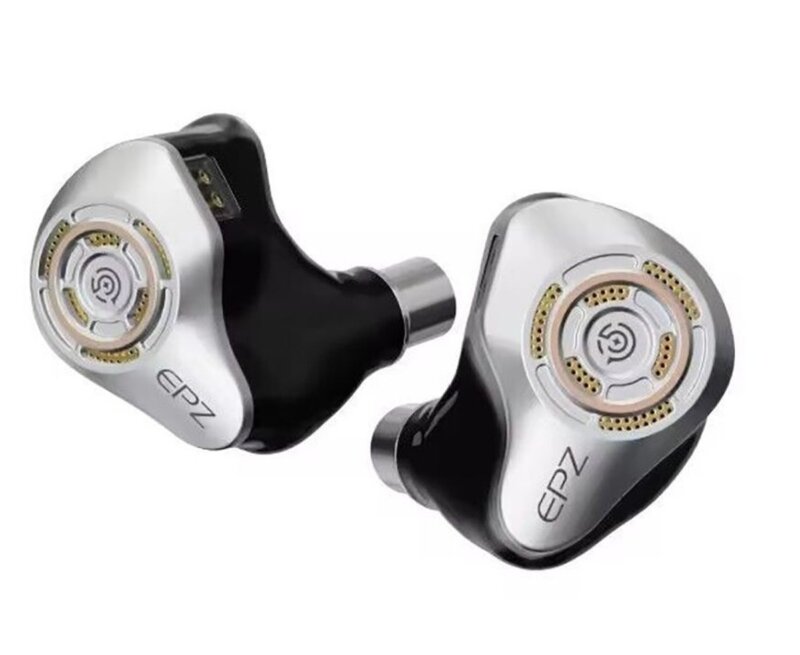
10. EPZ P50 8.78Futuristic Design and Monitor-like Sound Character with Nuances
Drivers
1DD + 2BA + 2Planar
Impedance
20 ohms
Sensitivity
106 dB
Frequency range
20 Hz-20 kHz.
EPZ P50

EPZ P50 $160 — excellent technical in-ear headphones under $170 with a truly mature soundstage and air. At the same time, they are the ‘calmest’ and most relaxed headphones in the segment: attacks are smoothed, dynamics are soft, tempo is slightly slowed down – ideal for those seeking analysis without fatigue, but not for lovers of drive and impact.

Reasons to buy:
  • High resolution
  • Wide soundstage
Reasons not to buy:
  • Smoothed dynamics
Sound. 8.29 The EPZ P50 surprise with contrasts. I’ll start with the strengths: resolution is genuinely high—details are audible, the soundstage provides volume and transparency, and air is palpable. But nuances appear even at this stage. Rhythm and tempo presentation is softened. Transients are smoothed out, and dynamics are not as lively and energetic as you’d expect from hybrids.
Sometimes it feels as if the music is slightly “slowed down.”
Read more.

The main pro of the sound signature of the EPZ P50 is very high resolution and a spacious soundstage: details flow in abundance, and the music sounds wide and airy, like in expensive headphones.
The main con is a complete lack of liveness: transients are soft, micro-dynamics are weak, the music is pretty but sterile and fails to hook you emotionally.
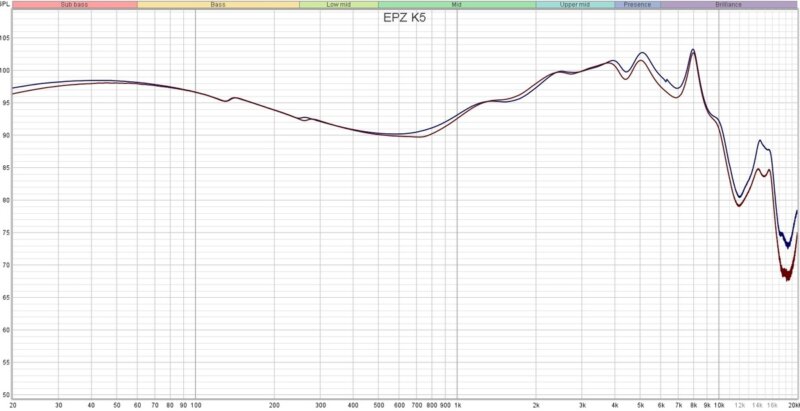
Frequency response 👇

EPZ P50 frequency response
Frequency balance. 8.17 Tonal balance is fairly flat, without prominent bumps or dips, but the overall presentation is slightly softened and “damped,” so it isn’t perfectly neutral.
Lows. 8 Depth and volume are present, the impact is noticeable, but control is average: the bass blooms a bit, causing boominess and smearing instead of clean textures. I would like more juiciness, a sense of the physical physics of sound from the dynamic driver.
Mids. 8.5 Transparent and clean, but noticeably lacking body and weight. Vocals and instruments sound somewhat detached, as if behind a thin veil, lacking physical density.
Highs. 8 Well-extended, detailed, with a pleasant natural sheen at medium and lower-than-medium volumes—everything is pretty and airy. As soon as you start turning the volume above medium, harshness immediately arises: the top end becomes shouty and a bit fatiguing.
Detail retrieval. 9 Resolution is indeed very high for the price, and micro-nuances and textures are heard excellently. The complaints aren’t about the quantity of details, but about how they are presented—slightly detached and lacking proper energy.
Natural timbre. 7.5 The sound is pretty and technically competent, timbres are generally accurate and recognizable, but a light veil and noticeable damping slightly muffle transparency—causing the sense of “breathing” and living airiness to disappear. Different driver volumes and crossover operation yield a somewhat monitor-like, sterile presentation devoid of extra warmth and emotion. The biggest sacrifice is made in the name of a flat, balanced, and “correct” sound signature.
Soundstage. 8.5 Volume rendering is indeed very good, with palpable width, but depth layering could be better: you can feel that instruments slightly crowd each other and are not always fully separated in space. The soundstage is spacious and comfortable, but falls just a bit short of true holography and ideal plane separation.
Build. 10 The EPZ P50 are built at a level that surprises for the price. A futuristic hybrid of metal and resin looks like a device from 2030 rather than $160 headphones. Build quality is flawless: perfect seams, smooth transitions, no play or creaks. Despite their visual massiveness, the shells remain ergonomic and sit securely in the ears thanks to a thoughtful shape and correct nozzle angle.
Read more.
Comfort. 10 The EPZ P50 are at a high level. The headphones are light, create minimal pressure, and fit remains stable even after 5–6 hours of continuous listening. A large selection of ear tips (including wide-bore ones) allows you to precisely dial in the fit for any ear, ensuring reliable hold and great sound isolation for long sessions.
Durability. 10 The shells are resistant to scratches and wear, retaining their look even after a month of active use. The stock cable deserves special attention—one of the best in the sub-$200 segment. The 4-core braided 6N OCC silver-plated copper cable features flexibility, zero microphonics, reliable metal splitters, and a transparent insulation that neither yellows nor stiffens over time. The 3.5/4.4 mm modular plug fastens securely with a tight bayonet mechanism without the slightest play, guaranteeing a long service life.
Design. 10 The EPZ P50 are some of the most striking in their class. Faceplates look like miniature technological art pieces: the combination of metal and resin creates that impression. The visual and tactile level of execution leaves the impression of a premium product, noticeably surpassing its stated price segment.
EPZ P50 package contents
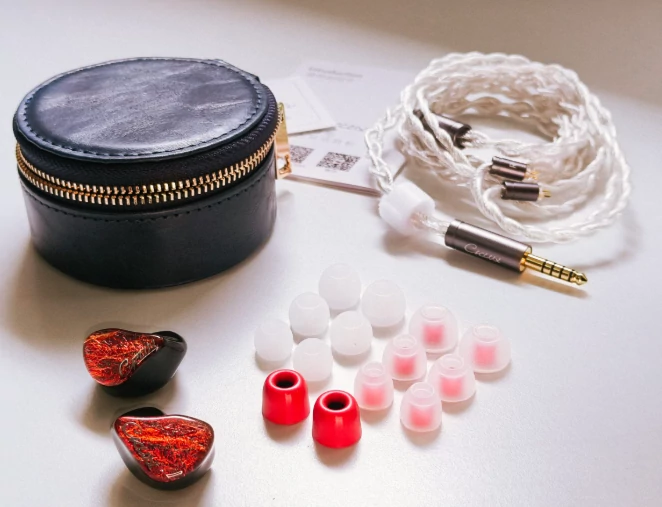
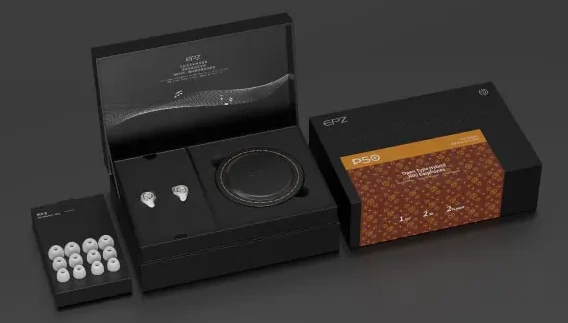
What’s in the box. 10 6 pairs of quality silicone ear tips in three sizes + wide-bore ones, one pair of foam tips, a hard round zippered case with soft lining and a mesh pocket, plus a metal nozzle cleaning tool. Everything is packed neatly, accessories do not rattle, and the case genuinely protects while remaining compact. The cable deserves top marks—functional, reliable, and fully matching the level of the headphones.

11. Juzear x Z Reviews Defiant 8.74Best budget in-ear headphones under $100 – hybrid headphones
Drivers
10 mm DD + 3BA
Impedance
32 Ohms
Sensitivity
109 dB
Frequency range
20 Hz–20 kHz.
Juzear x Z Reviews Defiant

Juzear x Z Reviews Defiant — the best budget in-ear headphones under $100, built on a hybrid four-driver configuration: one 10mm dynamic driver and three balanced armature drivers.

Reasons to buy:
  • Musical tuning
  • Comfortable bass
Reasons not to buy:
  • Weak detail retrieval
Sound. 8.38 They deliver an enveloping sound with a musical W-shaped frequency response and controlled bass. However, due to the safe tuning, they sacrifice ultimate detail retrieval, sparkling highs, and aggressive punch, favoring overall immersion and comfort.
Read more.

The Juzear x Z Reviews Defiant sound features a musical, enveloping W-shaped presentation with tight, comfortable bass and natural timbres, ideal for long, enjoyable listening sessions. The downside is smoothed-out detail retrieval and soft, non-sparkling highs, which causes a loss of micro-dynamics, air, and aggressive punch in complex tracks.
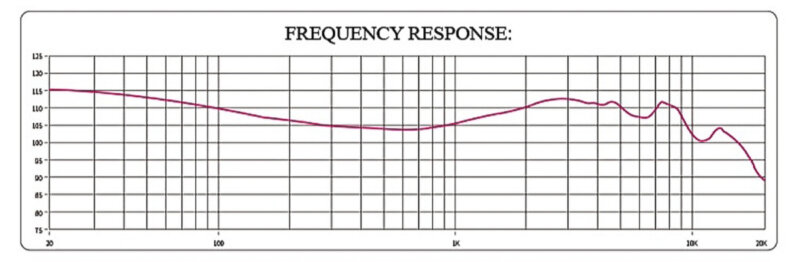
Frequency response👇

Juzear x Z Reviews Defiant frequency response
Frequency balance. 8.5 The earbuds feature a smooth W-shaped profile built specifically for long and enjoyable listening sessions.
Lows. 9 Dense, energetic, and boasting great body, providing a deep yet boomy-free foundation for any track.
Read more.
  • In action Michael Jackson – P.Y.T, the smoothness of the bass does not always deliver the sharpest and hardest punch required for a pronounced transient response, for which I am deducting 0.5 points. However, these nuances do not ruin the overall impression, and the lows sound very decent overall.
  • In the track The Weeknd – Blinding Lights, it lacks ultimate sub-bass depth and lightning-fast speed for aggressive drive, for which I am deducting0.5 points.
Mids. 8.5 Vocals and instruments are conveyed with body, great clarity, and engagement, thanks to a very comfortable and safe presentation.
Read more.
  • Oasis – Dont Go Away, the safety of the sound may fail to extract the tiniest microphone nuances or vocal grain inherent to more analytical earbuds—for this I deduct 0.5 points.
  • Michael Jackson – Man in the Mirror, the smoothness of the mids slightly dampens maximum impact and sharp dynamic contrasts during vocal climaxes, making them a bit less explosive—here I deduct 1 point. Despite these slight compromises, the earbuds still deliver a pleasant and comfortable sound.
Highs. 8 They are clean, transparent, and free of sibilance, allowing you to listen to music for hours. This is a safe zone where harshness and aggression are absent, making them ideal for long listening sessions.
Read more.
  • Eagles – Hotel California, the highs are safe and clean, but since they lack sparkle, they lack airiness, cymbal shimmer, and the signature electric guitar bite on high notes, which is important for this track. The sound is comfortable rather than lively—for this I deduct 1.5 points.
  • Daft Punk – Get Lucky, Lose Yourself to Dance, the energy and groove of the tracks are conveyed well, with highs free of harshness. However, the safe tuning smooths out sharp digital detail and aggressive effect sparkle, making the sound slightly less sharp and dynamic than intended by the artists—for this I deduct 0.5 points.
Detail retrieval. 7.5 Sufficient for the comfortable perception of the overall instrumental canvas and vocal clarity.
Read more.
  • Oasis – Dont Go Away, the finest nuances of micro-dynamics, light rustles, or barely perceptible layers in dense arrangements may be lost, and transparency might not be the highest—for this I deduct 1.5 points.
  • Johnny Cash – Hurt, I deduct 1 point Despite the track’s intimacy, the Defiant may fail to reveal all the tiny background noises, barely audible echoes, or subtle timbre shifts that create a full sense of presence.
Natural timbre. 9 One of the strong points of the earbuds. Instrument and vocal timbres are conveyed naturally, smoothly, and musically, creating an organic impression.
Read more.
  • Sting – Englishman in New York, I deduct 0.5 points The safe tuning smooths out the rawest or most lifelike micro-details that could give the sound even greater studio authenticity.
  • Lenny Kravitz — Low, I deduct 0.5 points The lack of a maximum drum attack and multi-layered decay. Despite the subtle smoothing of micro-details and raw dynamics, the overall playback impression remains top-notch.
Soundstage. 8.5 They build a good soundstage, making it immersive and voluminous.
Read more.
  • Michael Jackson – Man in the Mirror, being a bit intimate, the soundstage may not be as wide, lacking depth and layering—for this I deduct 1.5 points.
  • Yosi Horikawa – Bubbles, the earbuds handle this well, conveying a realistic 3D soundstage and providing an immersive effect; I deduct 0.5 points A lack of aggressive sharpness and clarity of effects that could make the soundstage even sharper and more etched in space.
Build quality. 9.63 The build of the Juzear x Z Reviews Defiant provides excellent comfort: high-grade resin shells and a well-designed 2Pin cable angle allow for hours of listening. Materials and hardware are reliable, and the modular cable is quite good. The appearance in Rainbow and Jade Green colors with milled faceplates looks stylish and recognizable. The only, albeit minor, remarks: personally, the cable color scheme does not pair perfectly with Jade Green, and the abundance of design details might feel slightly excessive.
Read more.
Comfort. 9.5 The Defiant are certainly good in this aspect. Their shells, made of high-grade and skin-friendly resin, combined with a very successful 2Pin cable connection angle, allow you to use these earbuds for hours, ensuring complete immersion in the world of music. However, personally, the stock cable’s color scheme does not quite hit the mark for the Jade Green version, which is why I am deducting 0.5 points.
Durability. 10 The Defiant also prove to be quite solid. Let’s start with the cable: it is modular and quite good, although I must admit I have my questions about its color—but that’s pure personal preference. All the hardware also gives the impression of being high quality and reliable.
Design. 9 The Juzear x Z Reviews Defiant offer two striking design variants—the shimmering Rainbow and the cool Jade Green—with signature milled faceplates and nickel accents, which confirms the brand’s recognizable style, but an excess of details and a flashy color scheme slightly overload the overall impression, resulting in a deduction of 1 point.
Juzear x Z Reviews Defiant package contents
What’s in the box. 10 Simply excellent! In addition to the earbuds themselves, the box contains a solid modular cable, a stylish leather case, and a good variety of ear tips for fit. A 6.35 mm adapter and a cleaning cloth are also present.

12. ZiiGaat Horizon 8.67Wired headphones with powerful sub-bass and a wide soundstage
Drivers
1DD 10 mm + 2BA + 2Planar
Impedance
24 Ohm
Sensitivity
102 dB
Frequency response
20 Hz — 35 kHz
ZiiGaat Horizon

Main reason to buy: you get a ready-to-go solution ‘out of the box’ with rich package contents, deep sub-bass, and a comfortable fit. The five-driver tri-hybrid construction and modular cable eliminate the need to buy accessories. Main reason not to buy: the sound lacks transparency, emotion, and speed due to overly stiff driver damping. Instead of musical delight, the headphones deliver a congested, muffled picture that becomes harsh at higher volumes.

Reasons to buy:
  • Deep sub-bass
  • Comfortable fit
Reasons not to buy:
  • Compromised transparency
  • Poor scaling
  • Flat soundstage
Sound. 8.39 The ZiiGaat Horizon feature a specialized hybrid tuning geared toward dry studio performance. Their main plus is deep low-end response with massive sub-bass extension and a decent sense of space, stretching the soundstage noticeably wide while giving bass a flavorful, prominent punch. Their main minus is that slow transients cause this bloated low-end to bleed right into the thin mids, robbing vocals of body and warmth. Treble drivers are clearly choked by dampening filters, leaving highs sounding muffled and note tails harshly clipped. As a result, the sound lacks natural fluidity; it’s easy to listen to at low volumes, but it feels flat, lacks transparency and audiophile flair, and falls apart when you push the volume, turning aggressively harsh.
Read more.
Build quality. 9.50 The build is solid and completely monolithic. The housings use 3D-printed medical-grade resin, making them fairly large yet surprisingly lightweight. They keep the signature anatomical bump on the inside, and the manufacturer went with classic, reliable 2-pin connectors so you can swap out cables safely. The hand-poured faceplates look remarkably like an icy starry landscape, and they look much more expensive in person than in studio shots. Durability isn’t a concern here. The stock cable uses a handy swappable plug system, and they feel great for two hours straight with zero build or comfort complaints. The design is unique, but definitely shines more in person than in photos.
Read more.

13. Hifiman RE800 Silver 8.46Best in-ear headphones for detail and transparency in their class
Drivers
1DD
Impedance
33 ohms
Sensitivity
105 dB
Frequency range
20 Hz-20 kHz.
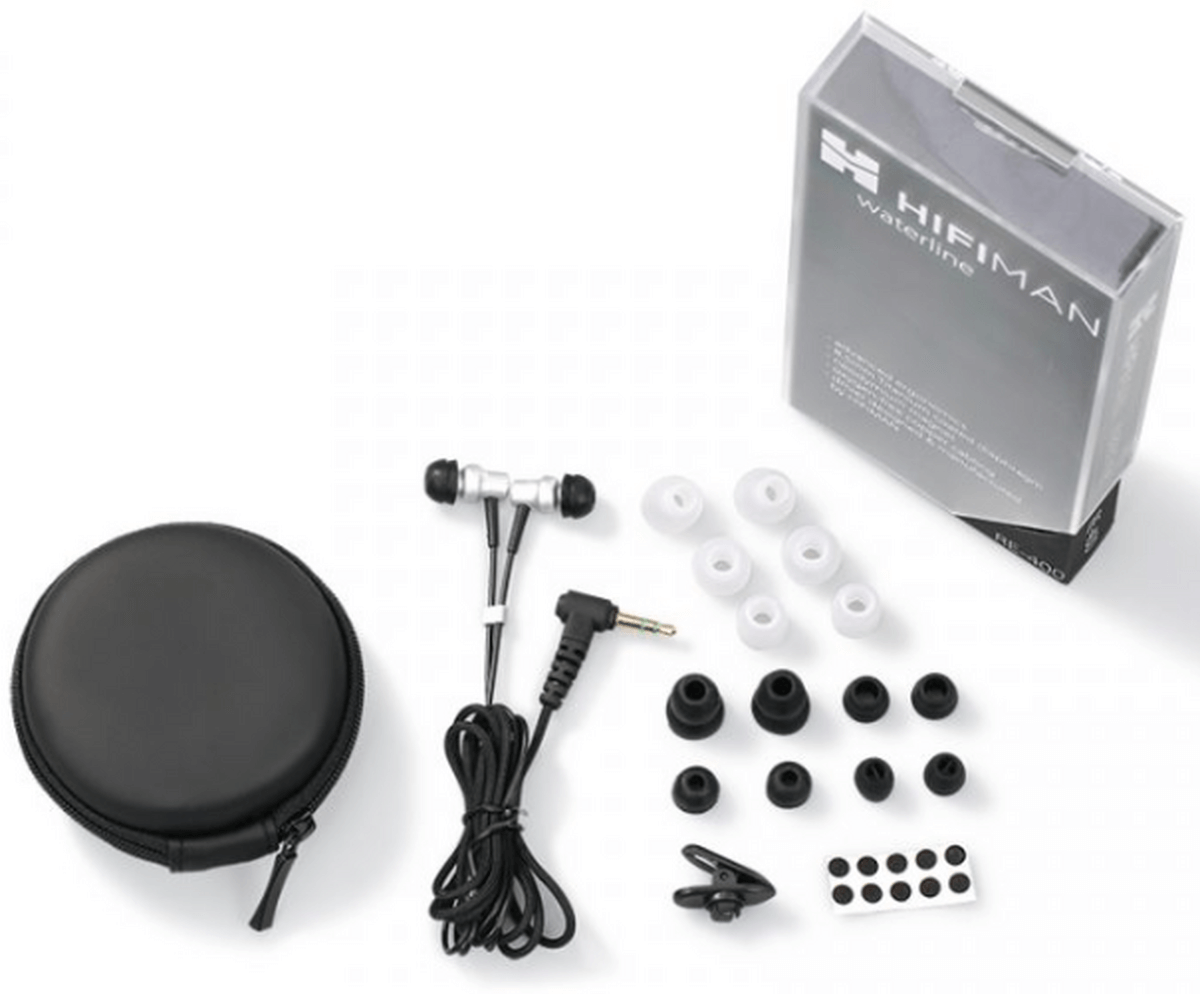
Hifiman RE800 Silver

Hifiman RE800 Silver — headphones with a 9.2mm dynamic driver and innovative Topology Diaphragm, which provides high detail and minimal distortion, a brass alloy body with silver galvanic coating for durability and improved acoustics, as well as a sound with a transparent midrange, clear highs, and fast, controlled bass.

Reasons to buy:
  • Clean details
  • Lively mids
Reasons not to buy:
  • Weak bass
  • Bright highs
Sound. 8.54 The RE800 Silver deliver a bright and detailed sound with a fairly wide soundstage. Thanks to Topology Diaphragm technology and a single dynamic driver, the headphones reveal micro-details well and create a sense of space.
Read more.

The main advantage of the sound of the Hifiman RE800 Silver is crystal clear, almost studio-grade detail retrieval and a wide, airy soundstage with stunning instrument separation and a sense of space.
The main drawback is weak, thin bass without physical impact and weight + overly bright and sometimes fatiguing highs at volumes above medium.
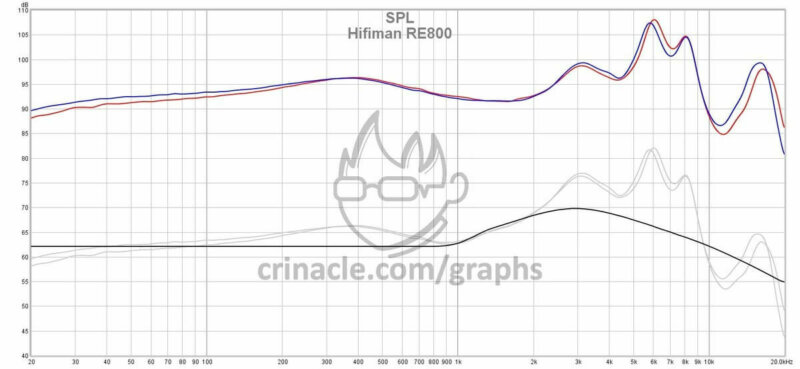
Frequency response 👇

Hifiman RE800 Silver frequency response
Frequency balance. 8.67 The headphones demonstrate a bright, detailed, and airy sound signature with an emphasis on highs. Lows are precise and tight, but may seem insufficiently powerful for fans of rich bass. The mid-range is an absolute trump card: vocals and instruments convey naturally and cleanly, although in individual tracks they may lose a bit of body. The upper register impresses with detail and transparency, but excessive brightness sometimes leads to fatigue, especially at high listening volumes.
Lows. 8.5 This isn’t about brute power, but about refinement and control. Here the bass is precise, excellently textured, and surprisingly tight; it doesn’t push forward, doesn’t try to dominate the mix, but rather elegantly supports the overall sound.
Read more.
  • In action Michael Jackson – P.Y.T, the bass guitar is revealed magnificently: its fingerpicking and characteristic woody tint are felt tactibly and naturally. It dances in the mix, giving funky elasticity, but never drowns out vocals or other instruments. You will be able to clearly track each of its notes, enjoying delicate articulation, which makes the bass intellectual rather than massive. However, due to the refined nature of the bass and the lack of pronounced punch, I am docking 0.5 points.
  • In the track The Weeknd – Blinding Lights, in the intro, the pulsating synthesizer bass is delivered clearly and rhythmically. You will hear every pulse of it, how it drives the track, while it remains dry and articulated, without a hint of smear or rumble. However, the lack of a powerful sub-bass impact might not appeal to fans of deep bass. Due to this lack of power and depth, I am docking 1 point.
Mids. 9 This is their strong point. Vocals and strings sound natural and clean, as if pushed slightly forward so as not to miss a single detail.
Read more.
  • Oasis – Dont Go Away, already in the intro I hear how the acoustic guitar opens up with stunning clarity: literally every string sounds separately, and its reverberations create a sense of real volume. When Liam Gallagher enters, his voice is not just heard — it sounds weighty and expressive, with that signature rasp that makes him so recognizable. True, I am a bit saddened: in this track, there is a lack of overall volume and space, because of which the sound loses part of its liveness. For this, I am docking 0.5 points.
  • Michael Jackson – Man in the Mirror, in the chorus, the RE800 demonstrate wonderful holographic vocals. Michael’s voice is not just centered; it is surrounded by airy space, and towards the end of the track, as the choirs swell, I literally hear how the vocal layers are well separated, creating the effect of a live performance in a large hall. However, at times the vocals sound a bit distant, making the delivery of the track’s mood less deep — for this, I am docking an additional 0.5 points.
Highs. 8.5 They’re well detailed and possess lightness, adding airiness and transparency to the music. This creates a sense of clarity, but can sometimes feel overly bright.
Read more.
  • Eagles – Hotel California, in Don Felder’s famous solo, the high guitar notes sound clean and detailed, with a light sparkle — as if the strings are vibrating right in front of you. Cymbals add energy: their hiss dies away quickly, supporting the rhythm excellently. But if you are sensitive to highs, these bright peaks might seem annoying or even piercing — for this I am docking 0.5 points.
  • Daft Punk – Get Lucky, Lose Yourself to Dance, hi-hats and percussion are the main heroes of the highs. The RE800 Silver convey them clearly and energetically, creating that very funky groove loved in disco. In Lose Yourself to Dance, shakers sound bright and ringing, adding pulsation and sparkle to the track. But sometimes the treble component crosses the line between lively and harsh — at high volume this can be fatiguing. For excessive aggression in the highs, I am docking 1 point.
Detail retrieval. 9 The RE800 Silver convey sound with good detail — it feels like in familiar tracks I hear slightly more nuances.
Read more.
  • Oasis – Dont Go Away, in quiet fragments (for example, the intro with guitar and vocals) arrangement nuances are clearly audible — light fret noise, vocalist’s breathing, reverberation echoes. However, in dense sections (like the second verse when drums, bass, and rhythm guitar kick in), the instruments start to sound overly separated. For this — I am docking 0.5 points.
  • Johnny Cash – Hurt, the RE800 convey not just the music, but the entire atmosphere of the recording: breathing, finger slides on strings, quiet studio noises are audible. This creates a presence effect, as if the performer is nearby. But at the same time, Cash’s voice sounds a bit dry: as if it lacks rounded warmth and body, for this slight degreasing of emotions — I docked 0.5 points.
Natural timbre. 8 The RE800 convey sound naturally: voices and acoustic instruments sound lively and believable. This is especially noticeable on vocal and chamber compositions. True, sometimes increased brightness in the highs can slightly disrupt this naturalness of sound.
Read more.
  • Sting – Englishman in New York, Sting’s voice is conveyed with characteristic rasp and warmth, the saxophone sounds expressive. All nuances feel lively, natural, and with good space. But the cymbals and hi-hats in this track can sound a bit piercing and dry — on the verge of harshness, especially at elevated volume, for this, I docked 1 point.
  • Lenny Kravitz — Low, the headphones again demonstrate excellent delivery of vocals and guitars, with great separation and body. But even here, on fast percussion elements, especially in the hi-hat area, the same excessive brightness is heard — a slight feeling of artificiality arises, which spoils the integrity of the funky groove. In total, this draws a minus 1 point.
Soundstage. 8.5 You get a very interesting sense of space for such small headphones. The sound isn’t locked inside your head, but unfolds around you. You can clearly hear the location of instruments — for example, guitar on the left, drums on the right, and vocals right in the center.
Read more.
  • Michael Jackson – Man in the Mirror, vocals in the center, backing vocals slightly further and wider, and instruments well separated — as if I’m listening to a concert from a good seat in the hall. True, when everyone plays at once, the sound becomes too disjointed: each instrument is clear on its own, but together they do not merge into a single whole, like live musicians. Because of this, the sense of a live ensemble is slightly lost — of how elements interact organically in space. For this — I docked 0.5 points.
  • Yosi Horikawa – Bubbles, in these headphones, it feels as if sounds literally surround me from all sides — clicks, trills, and rustles move not only left-right, but also front-back, creating a volumetric effect. But there is a nuance: at moments when sounds overlap or interact, you feel that the stage draws each sound separately rather than building a single sound canvas. For this, I am docking 1 point.
Build. 8.25 They’re made of quality materials and give the impression of a reliable, well-thought-out product. The shells are small, neat, and light — you can feel that classic Hifiman approach to compact dynamic in-ears. Despite the minimalist shape, they’re solidly assembled, and the insertion angle is designed so that the shell fits into the ear without extra effort and fixes securely. The only controversial point is the thin non-detachable cable, which requires the most careful handling.
Read more.
Comfort. 9 Truly impressive. The headphones are practically weightless and have a universal shape, which makes them great for long listening sessions. They sit stably in the ears, and don’t press or cause fatigue even after several hours. I easily fell asleep with them in my ears — this is the best characteristic of ergonomics. But there’s a nuance: due to the thin cable, you might encounter microphonic noise during movement, so I’m docking 1 point. Otherwise — this is one of the most comfortable options among classic form factors.
Durability. 8.5 leaves a dual impression. The shells themselves are made with quality: the metal is durable, lightweight, and wear-resistant — you definitely don’t have to worry about them. But the cable is their weak point. It’s too thin, especially at the junction with the shell, and is non-replaceable, which reduces the overall reliability of the construction. The 3.5 mm plug looks solid, but the vulnerability remains right at the top of the chain. For all this I’m docking 1.5 points, although overall materials and build are decent, and with careful handling they’ll last a long time.
Design. 8 This is an example of classic minimalism. No design delights or wow effect, just neat metal shells in silver color. They look clean, strict, and functional — without extra pretension. However, considering their starting price of $599, you expect a more expressive and premium design. For the lack of outstanding elements and too simple appearance at such a cost, I’m lowering the score to 8 points. Nevertheless, the aesthetics here are honest and universal — suitable for those who appreciate neatness without showiness.
Hifiman RE800 Silver package
What’s in the box. 7.5 Includes the headphones themselves, a hard case, a cable fixing clip, two pairs of foams, ten pairs of silicone tips of various sizes, a cleaning tool, and a small Hifiman catalog. By today’s standards, especially for $40, this is a decent and even generous set. But if you recall their original price of $599 — such a kit looks modest and doesn’t match the premium segment. Therefore I’m giving 7.5 points: everything needed is there, the quality of the case is excellent, there are many tips, but the expected wow level is absent.

14. CVJ Shadow Blade 8.26In-ear dynamic headphones with enveloping V-shaped sound and powerful bass
Drivers
10mm DD + 1 Vibration
Impedance
32 Ohms
Sensitivity
101 dB
Frequency range
20 Hz–20 kHz.
cvj shadow blade
cvj shadow blade

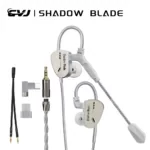
CVJ Shadow Blade — these are versatile in-ear headphones under $100 that can really do it all. It’s a hybrid (1DD + 2BA) with incredible flexibility: from crushing, thunderous bass to a subtle, almost imperceptible presentation when you just want to dissolve in music. They are also the most agile and ‘omnivorous’ wired in-ear headphones in their class with an excellent soundstage, comfort, and interchangeable tuning nozzles.

Reasons to buy:
  • Powerful bass
  • Vivid mids
Reasons not to buy:
  • Narrow soundstage
Sound. 8.17 As for the sound, the CVJ Shadow Blade offer a warm, enveloping V-shaped signature that lets you dive deep into music and listen for hours without fatigue. You get powerful, tactile, and deep bass that makes every track dynamic and lively. The wide soundstage that extends beyond the head and creates a volumetric presentation will also pleasantly surprise you.
Read more.

The sound’s main pro for the CVJ Shadow Blade is powerful, tactile, and deep bass combined with a warm, enveloping presentation and a surprisingly wide soundstage that extends beyond the head. The main con is muted and insufficiently bright highs, which causes a loss of air, sparkle, and micro-details, making the sound too soft and lacking a spark.
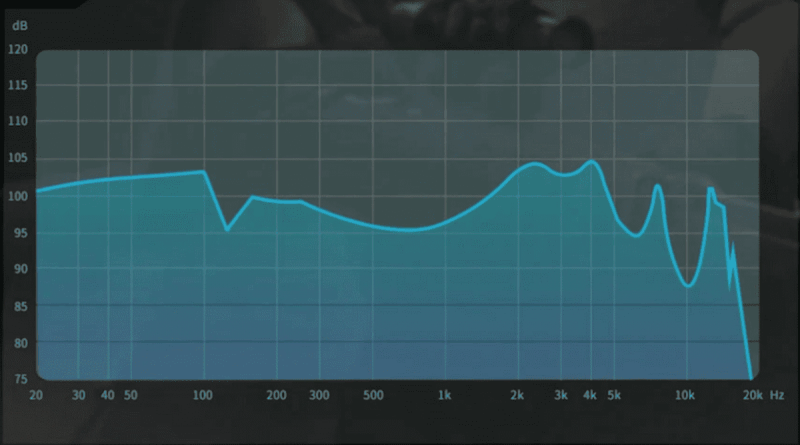
Frequency response👇

CVJ Shadow Blade frequency response
Frequency balance. 8.17 Warm V-shaped sound signature, which is generally very pleasant and non-fatiguing for listening. It leans toward a balanced and warm tonal balance.
Lows. 8.5 The earbuds Provide deep immersion thanks to their low-end tactility. However, their dominant character and sometimes excessive physical impact can be both an advantage and a significant drawback, depending on personal preference.
Read more.
  • In action Michael Jackson – P.Y.T, the bassline played by the bass guitar sounds tight and distinct, with every hit felt as a physical punch. Nevertheless, sometimes excessive bass density can blur fast and complex basslines, reducing their separation and micro-details, for which I am also deducting 0.5 points.
  • In the track The Weeknd – Blinding Lights, from the very first seconds of the track when the powerful synth bass kicks in, you will feel its depth and pulsation, like the heartbeat of the track. In most cases, the bass remains tight, but at high volume, the vibration sensation can become too intense, distracting from overall sound purity, for which I am deducting1 point.
Mids. 8.5 The earbuds offer a comfortable, warm presentation of vocals and instruments. But if you expect analytical dissection of every note, this warm wrapping might seem a bit smoothed out to you.
Read more.
  • Oasis – Dont Go Away, Liam Gallagher’s vocals sound clean, with pleasant warmth and naturalness, without being intrusive. Likewise, the vocal position, especially in the verses (for example, from 0:17 onwards), might feel slightly detached, as if slightly drowning in the overall warm sound, for which I deduct 1 point.
  • Michael Jackson – Man in the Mirror, Michael’s vocals sound voluminous and expressive, without harshness. Backing instruments, especially the choir and piano, are well separated while maintaining arrangement richness. But there is a nuance: the warm sound with boosted bass slightly masks the finest details—such as a light vocal echo or quiet percussion nuances, for which I deduct 0.5 points.
Highs. 7.5 The highs sound clean and open enough, without harshness. There is plenty of detail, but no special brightness or wow factor. A good balance between gentleness and clarity—nothing pierces the ears, yet it doesn’t force you to strain to listen.
Read more.
  • Eagles – Hotel California, strings ring transparently here, but I miss their metallic sheen. The guitar solo in the middle of the track: it is clean, yes, but without that soul-chilling sibilance that makes hair stand on end—as if the guitar is slightly covered by a cloth, for which I deduct 1.5 points.
  • Daft Punk – Get Lucky, Lose Yourself to Dance, in my opinion, the faint noise of analog synths that adds life to electronic music is nearly unnoticeable—I deduct 1 point for this.
Detail retrieval. 7.5 Feels above average—especially in the midrange. Instruments are conveyed clearly, vocals are vivid, but the highs are slightly subdued, which on one hand removes sibilance and fatigue, but on the other hand slightly blurs airy details.
Read more.
  • Oasis – Dont Go Away, the intro sounds pleasant: the acoustic guitar has body and a soft attack. The voice in the verses is clearly distinguishable, but when backing vocals and drums kick in during the chorus, the soundstage gets slightly blurred, cymbals sound muted, and the highs lack air—I deduct 1.5 points.
  • Johnny Cash – Hurt, it sounds emotional and intimate, preserving the intimacy of the performance. However, at the climax where a denser arrangement emerges, the earbuds lose part of their separation—the soundstage narrows, and instruments blend—minus 1 point.
Natural timbre. 8.5 Instruments are conveyed naturally, without overshoots or coloration. However, the upper part of the spectrum is slightly smoothed out, resulting in a loss of tiny nuances and a sense of air.
Read more.
  • Sting – Englishman in New York, Sting’s voice sounds warm and vivid, especially in the verses—timbre and emotion are well conveyed. The saxophone and backing vocals sound layered and atmospheric. However, in the chorus and quiet moments, the air is lost: percussion, breathing, rustles sound subdued. The bass is soft, but slightly smears drum attacks, for which I deduct 1 point.
  • Lenny Kravitz — Low, main drums and bass guitar create a powerful rhythmic foundation. But details in the electronic backing and synth parts become less distinct, as if pushed into the background—minus 0.5 points.
Soundstage. 8.5 A pleasant surprise—it is wider and more voluminous than expected from earbuds in this segment. In width, the sound extends beyond the head, creating a spacious feel, especially in atmospheric or live tracks.
Read more.
  • Michael Jackson – Man in the Mirror, backing vocals sound in layers, which is immediately noticeable. In the middle of the song, when drums and keys are added, the soundstage narrows slightly, and depth becomes less noticeable—I deduct 0.5 points.
  • Yosi Horikawa – Bubbles, bubbling sounds move clearly from left to right, jumping across the panning, especially in the middle of the track where the low register adds in. However, the sub-bass, while lifting and densifying the soundstage, can slightly overshadow upper details, causing individual instruments to often sound flat without pronounced individual volume, despite overall spatial depth—for this I deduct 1 point.
Build quality. 8.5 The build of the CVJ Shadow Blade uses all-metal materials, ensuring excellent shell strength and a monolithic feel. Despite the fully metallic execution, the shape of the earbuds is well-thought-out and ergonomic—they fit really well and feel reliable. However, the design has quirks: the cable ear hooks require careful adjustment and breaking in, which reduces overall user comfort.
Read more.
Comfort. 7.5 The earbuds sit securely in the ears and cause no discomfort on their own, but the cable adds complexity: the stiff ear hooks need shaping, for which 1.5 points are deducted. When installing the additional microphone, which attaches directly to the ear hooks, the setup becomes noticeably bulky, degrading ergonomics—another minus 1 point. As a result, despite the high-quality shells, overall comfort depends on keeping connected accessories to a minimum.
Durability. 8 The metal shells give an impression of reliability, and the cable in a tight fabric braid looks resistant to damage. Nevertheless, upon close inspection, potential risk points are noticeable: tiny microphone connectors and modular cable contacts are easy to damage—minus 1 point. The glossy inner surface of the shells and matte faceplates are prone to scuffs—minus 0.5 points. The most critical point is the threading on the nozzles, which wears out with frequent filter changes, potentially ruining the earbuds—minus 0.5 points.
Design. 8.5 Color options—classic black and elegant silver metallic—look strict and stylish. The 1.2-meter cable provides convenience when watching movies or gaming, allowing you to settle in comfortably. However, when using all available accessories—microphone, filters, adapters—the setup becomes noticeably bulky, losing aesthetic appeal. For this clutter, 1.5 points are deducted. Otherwise, the Shadow Blade looks solid and modern.
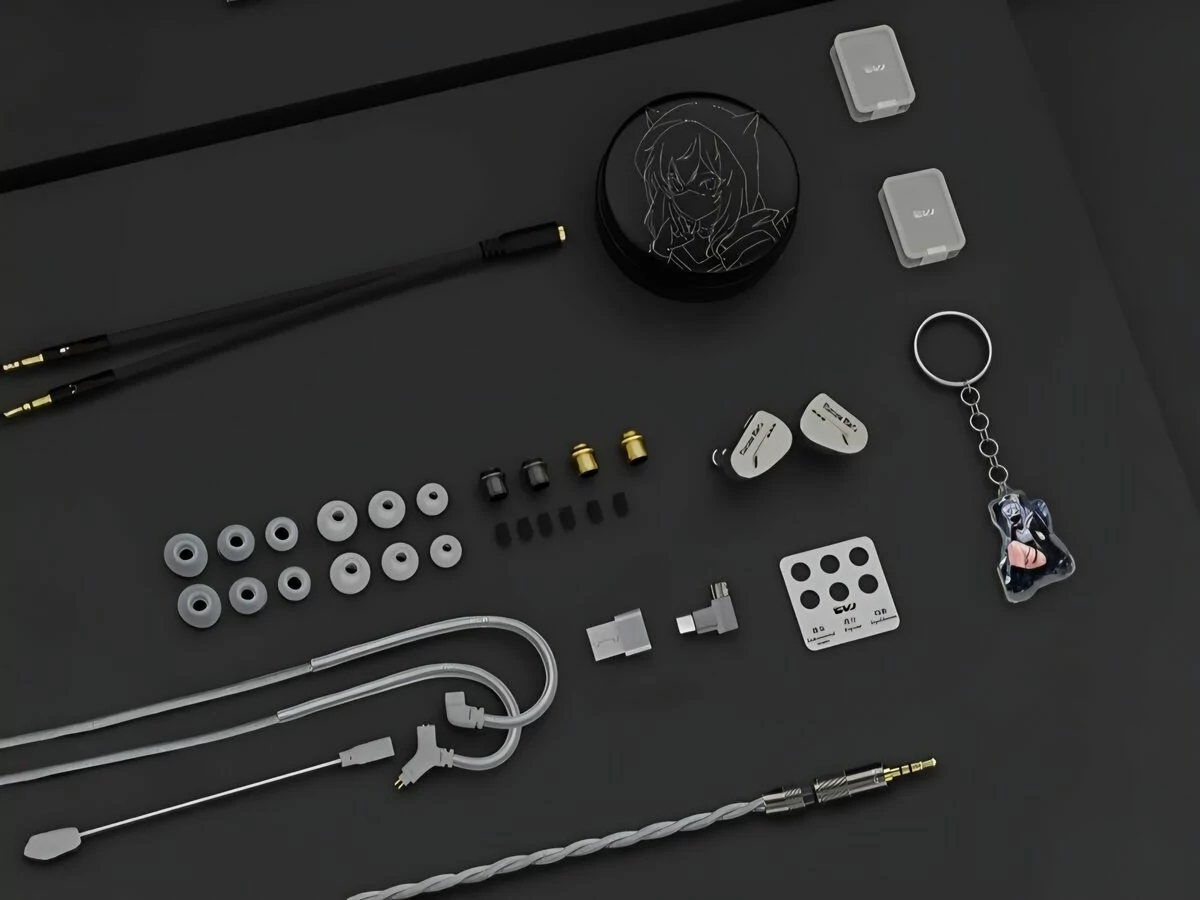
CVJ Shadow Blade package contents
What’s in the box. 10 The box offers the earbuds themselves, a braided detachable cable, a removable microphone, three pairs of interchangeable acoustic filters, a set of ear tips, USB Type-C, USB Type-A adapters, a classic 3.5 mm plug, a metal case, a branded keychain, a splitter, and all necessary documentation. The kit is impressive in its completeness, quality, and thoughtfulness—it literally has everything a user might need.

15. Kiwi Ears Cadenza 8.26Comfortable in-ear dynamic headphones with melodious sound and good frequency response
Drivers
10 mm DD
Impedance
32 ohms
Sensitivity
110 dB
Frequency range
20 Hz-20 kHz.
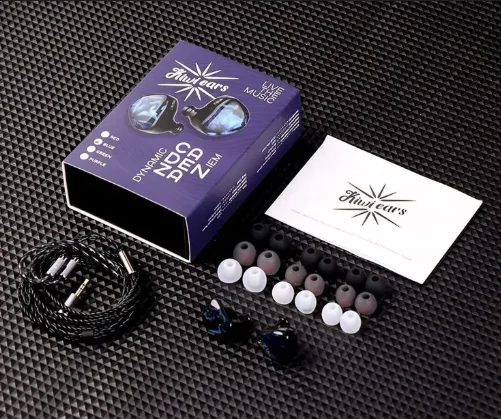
Kiwi Ears Cadenza

Kiwi Ears Cadenza – these are in-ear headphones with a 10mm beryllium dynamic driver, providing high response speed and sound detail. Thanks to the 3D-printed body made of medical resin, they offer a balanced audiophile sound with fast bass, rich mids, and natural highs.

Reasons to buy:
  • Natural mids
  • Reference comfort
Reasons not to buy:
  • Weak lows

Sound.
8.06 The sound of the Kiwi Ears Cadenza can be described as balanced, with an emphasis on detail retrieval and airiness. Vocals and instruments convey with high clarity, making them suitable for listening to various musical genres.
Read more.

The main advantage of the sound of the Kiwi Ears Cadenza is clean, natural mid-range and detailed highs that provide a transparent and non-fatiguing presentation.
The main drawback is weak, insufficiently powerful and deep bass, because of which energetic genres lack drive, impact, and physical weight.
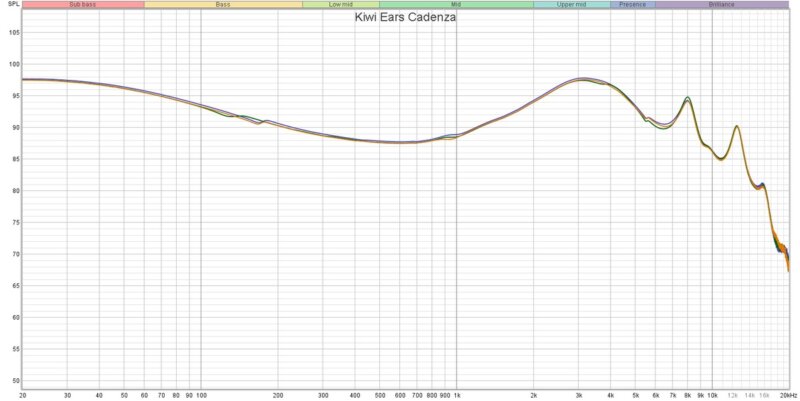
Frequency response 👇

Kiwi Ears Cadenza frequency response
Frequency balance. 8.43 The frequency balance of the Kiwi Ears Cadenza can be described as close to neutral, with a slight emphasis on the upper range. Lows have sufficient flatness while retaining mass and depth. Mids convey cleanly and in a balanced manner, without obvious recessions or boosts. Highs are slightly boosted, adding airiness, but you might feel a slight accent in some tracks.
Lows. 8.5 The bass in Dr. Dre – “Still D.R.E.” (hip-hop) sounds clear and controlled, free of boominess and smearing. It’s present in sufficient quantity, but doesn’t dominate, making the sound balanced. Bass depth is sufficient for most genres, but fans of powerful and massive sub-bass might find it lacking. In hip-hop and electronic music, lows feel clean, but not as punchy as in models with pronounced V-shaped tuning.
Mids. 8.6 In Chris Stapleton – “Tennessee Whiskey” (country), vocals convey cleanly and naturally, without extra emphasis or dips. Mids are flat and linear, ensuring a balanced sound of instruments, especially guitars and piano. Timbres convey quite accurately, retaining naturalness and depth, making the headphones a good choice for vocal and instrumental music.
Highs. 8.2 In Radiohead – “Paranoid Android” (alternative rock), the 5-10 kHz emphasis gives the sound sparkle and good detail, especially in cymbals and guitar picking. Highs possess airiness, making the sound more open and detailed. However, at times you can feel a slight harshness, especially if you’re sensitive to highs. Overall, this range is well elaborated, but individual susceptibility to it may vary.
Detail retrieval. 8.5 In Metallica – “Enter Sandman” (metal), Kiwi Ears Cadenza convey tiny nuances like drum attack, string buzz, and guitar riff texture. Thanks to the emphasis on highs, details sound clear and legible, which is especially noticeable on cymbals and percussion. However, in complex overloaded sections, detail retrieval can be slightly lost, but overall the elaboration level of micro-elements remains high.
Natural timbre. 7.5 The sound of the Cadenza can be described as quite natural, especially in the mid-range. A small emphasis on highs can give the sound some brightness, but overall instrument timbres convey quite authentically. In the track Johnny Cash – “Hurt” (country), Cash’s voice sounds natural and convincing, conveying all emotional richness, though highs slightly add extra clarity without causing discomfort.
Soundstage. 7.8 The soundstage in the headphones is well elaborated and wide, letting you distinguish instruments in a track well. For example, in “Money” by Pink Floyd (rock), the stage demonstrates good sound separation despite its average depth. Sounds are located in separate positions, creating a sense of spatiality, though without obvious depth. Nevertheless, for most genres, the stage will be satisfactory and sufficiently detailed.
Build. 8.75 The construction of the Kiwi Ears Cadenza headphones is made with quality and thought. A durable shell with neat assembly ensures comfort and reliability. The headphones have an ergonomic shape, and sit well in the ears without creating discomfort during long wear. Despite compact dimensions, they look stylish and solid, making them suitable for daily use.
Read more.
Comfort. 10 The headphones sit ideally in the ears without causing discomfort even during prolonged use. Ergonomic shape and light weight make them practically unnoticeable, letting you enjoy music for hours without fatigue. For me, these are one of the most comfortable headphones.
Durability. 8 Kiwi Ears Cadenza give the impression of a reliable device thanks to the use of epoxy resin for the shell. However, the shell is prone to scratches, which can affect the appearance of the headphones in the long term (minus 1 point for the shell). In addition, the cable feels insufficiently durable and can wear out quickly with active use (minus 1 point for the cable).
Design. 10 The design of the Kiwi Ears Cadenza conquered me with its elegance and refinement. Every detail is thought out to the smallest detail, creating a harmonious and attractive image.
kiwi ears cadenza komplektacija
What’s in the box. 7 The Kiwi Ears Cadenza kit includes the headphones, a detachable cable with 2-pin 0.78 mm connectors, and several pairs of silicone ear tips of various sizes, which is sufficient, however the set is minimalist — no case or other accessories are present. The cable draws complaints: it tends to tangle, looks simple and insufficiently durable, and has mediocre insulation, which can lead to interference. The quality of the ear tips: they’re made of quality, soft, and durable silicone, and the size set lets you choose an ideal fit for any ear.

⚖️ Which in-ear headphones to choose?

MEM - Do you still have questions?

My first main piece of advice for choosing the best in-ear headphones for yourself. If your budget is, say, $500, don’t buy $500 wired headphones and plug them into your phone’s 3.5mm jack. Your phone likely won’t be able to drive them to their full potential.

The best option: buy a good source for $250, buy good ear tips for $20, a good cable for $80, and headphones for $150. All my recommendations are below.

1. Choosing a playback source:

Sony NW-WM1A, Shanling M5s, and Hifiman HM-801 players and Shure Aonic 5, Shure Aonic 4, Shanling ME200, and Sennheiser IE 300 headphones

  • Mobile players: If you plan to use headphones with a mobile device, it’s important to choose a player with a good DAC (digital-to-analog converter) and amplifier. Mobile players often offer good sound quality but may have limitations in output power and support for high-quality audio formats. Good examples of mobile players include models from Sony, FiiO, Astell&Kern, Cowon, Onkyo, Hiby, Lotoo, Xduoo, iBasso, Hidizs, Luxure & Prestige, Shanling, Hifiman, Chord Electronics, LUXMAN, Campfire Audio, Hama, Tempotec, and Questyle.
  • Stationary audio players and DACs with amplifier: Stationary solutions can offer higher sound quality and power. They are suitable for home use and can support higher audio formats and provide better amplification. Devices like audiophile DACs and amplifiers are often used to achieve the best sound quality. Examples include DACs from Chord Electronics, dCS, Ayre Acoustics, Schiit Audio, RME, Mytek, and Benchmark, etc.

I recommend considering these sources:

  • Portable player rankings
  • Portable amplifier rankings
  • Stationary amplifier rankings

2. Choosing ear tips
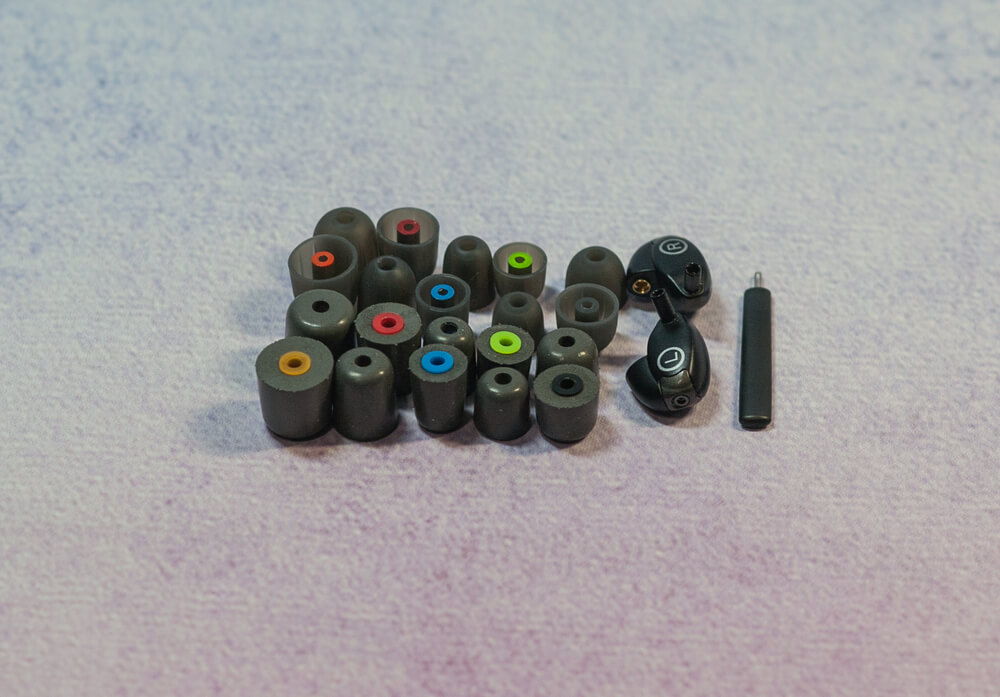
Westone W80 v3 ear tip set

Ear tips affect comfort and sound quality in headphones. The effectiveness of external noise isolation depends on how tightly they fit in the ear, and the shape of the sound tube in the ear tips affects sound transmission. For example, JVC SpiralDot with point indentations in the sound channel expand the perception of the frequency response. SpinFit ear tips can change the fit angle while keeping the sound tube diameter unchanged, which positively affects the sound. The ear tip material also plays a role: silicone provides good isolation and comfort, while foam tips adapt better to the ear shape and provide better noise isolation.

I recommend considering these ear tips:

  • 🟢 Get “Neutrality” – Spiral Dot Ear Tips – ALIEXPRESS
  • 🟢 Get “Airiness and Atmosphere” – TANGZU Tang Sancai Wide Bore Ear Tips – ALIEXPRESS
  • 🟢 Get “Density and Definition” – Divinus Velvet Silicone Earphones
  • 🟢 Get “Soft and Comfortable Presentation” – EPZ M100 Ear Tips

3. Cable Selection

ISN Hi-Fi Audio Cable – for table

The cable quality directly impacts sound and usability. Conductor materials like copper, silver, graphene, and others are important. The cable’s construction, including the number of strands, cross-section, and Litz technology, is crucial. Connectors must match your device (2.5mm, 3.5mm, 4.4mm, 6.3mm), and the cable should be flexible and durable.
 
I recommend considering these cables:

  • 🟢 XINHS 8 Core Pure Silver Cable
  • 🟢 iVIPQ 44 Cable ($66) – on Aliexpress
  • 🟢 iVIPQ 34 Cable ($124) – on Aliexpress
  • 🟢 iVIPQ 96 Cable ($171) my reference – on Aliexpress
  • 🟢 EPZ DP5 Cable (copper) – on Aliexpress

4. Design, comfort, package contents – the least important parameter, but it can ruin everything else
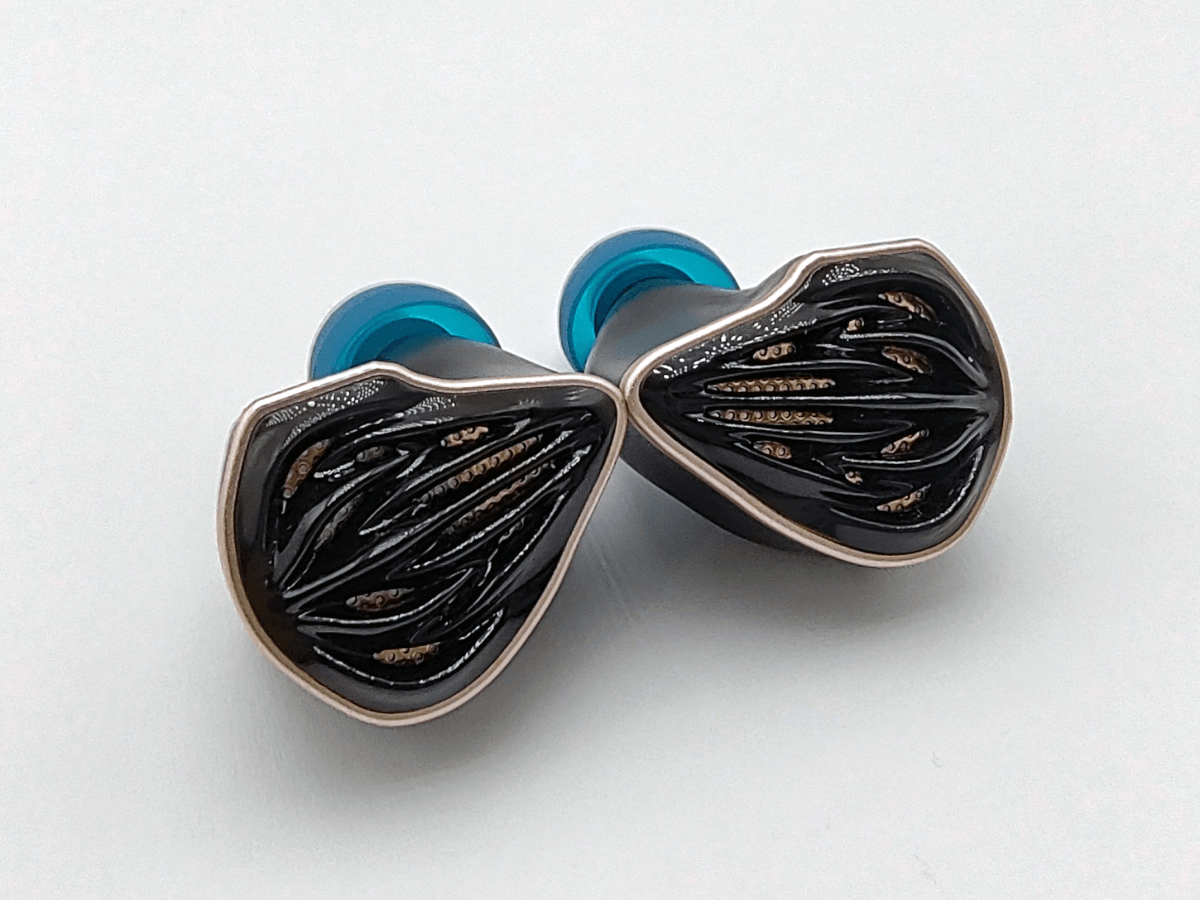
HIDZS MS5

The design of headphones should combine aesthetic appeal and ergonomics, ensuring a comfortable fit and stylish appearance. Comfort depends on the shape and materials of the housing, ear tips, and the weight of the headphones, allowing them to be worn for extended periods without discomfort. The package usually includes interchangeable ear tips, a cable, a storage case, and additional accessories for headphone care, adapters for different connectors, etc.

5. Sound / Price
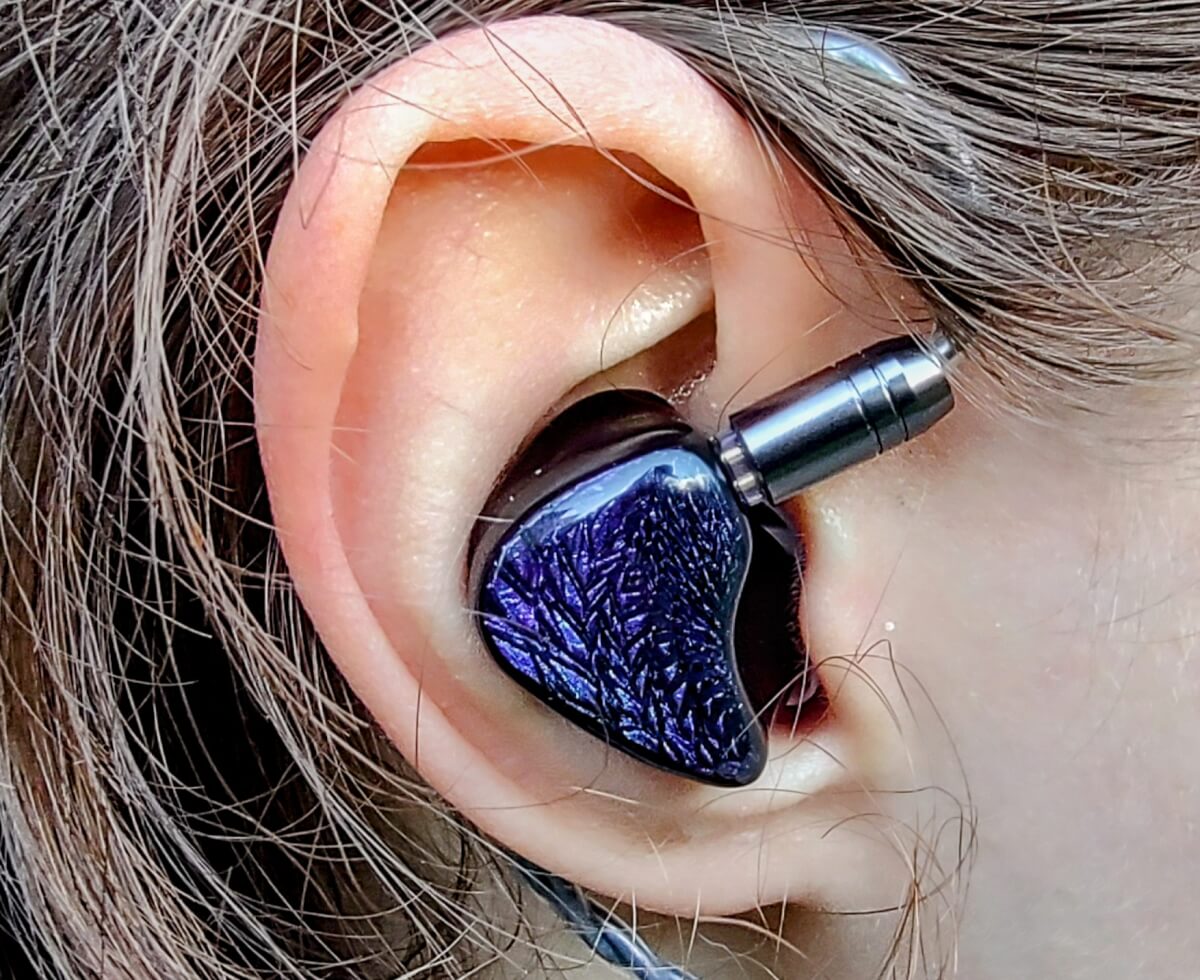
Kinera Celest Wyvern Abyss

Sound quality is the key parameter when choosing headphones. As the price increases, the sound often improves. After $200-300, the sound quality curve on the graph becomes more horizontal.

  • Up to $50: in the budget segment, don’t expect revelations in sound, although there are exceptions. These models are designed for everyday use, so their role in shaping the sound perception should not be underestimated.
  • $50-100: mid-price range, where interesting models with good value for money are already found. They are also mainly used for everyday wear.
  • $100-200: in this price category, you can find headphones with quite high-quality sound, as well as more thoughtful materials and package contents.
  • $200-400: near-flagship segment, where headphones typically feature high sound quality, although there can be exceptions here too.
  • From $400 and up: there should be no bad headphones in this segment, and it is the most desirable for audiophiles.

Driver Type:

It is also important to consider the type of drivers that convert the electrical signal into an analog one. Here is a list of the most commonly used drivers in in-ear headphones and their impact on sound:


  • Dynamic drivers: provide powerful and deep bass, good overall dynamic characteristics, but can be less precise in the mids and highs.
  • Balanced armature drivers: are characterized by high precision and detail, convey mids and highs well, but may have less pronounced bass. Best armature headphone rankings.
  • Planar magnetic drivers: offer excellent detail and control, especially in the bass and mids, and are often found in more expensive models.
  • Piezoelectric drivers: use the piezoelectric effect to create sound, providing high accuracy and a wide frequency range, but may be less common in the mass market segment.You can read more on Wikipedia.
  • Electrostatic drivers: provide exceptional detail and accuracy, require a special amplifier, have very clean sound, but can be expensive.
  • Hybrid drivers: combine dynamic and balanced armature drivers, providing rich bass and clear mids and highs.

The TOP 5 important characteristics of in-ear headphones are discussed in detail in our separate article.

What are the pros of in-ear headphones?

Мем - Круто

1. Sound isolation — the main advantage of in-ear buds. You won’t hear the roaring sound of the subway, sirens, or the howl of street motors.
2. Ears don’t get hot in the summer;
3. They fit in your pocket;
4. In-ear headphones are well-suited for an active lifestyle (sports, running, swimming).
5. Comfortable, lightweight, and they don’t fall out of your ears. If you feel discomfort, any normal model’s package must include a set of interchangeable ear tips (nozzles), usually 3 pairs or more.
6. Spacious and powerful bass. No open-fit earbuds can surpass in-ear headphones in terms of volume and depth of sound. Of course, this is due to the driver’s proximity to the eardrum and the soundproof design.
7. Hygiene and replaceable ear tips. Most in-ear headphones come with several sets of ear tips in different sizes, allowing you to choose the most comfortable option for each user. They can be easily replaced as they wear out.

What are the cons of in-ear headphones?

Мем - Нет

1. Relatively harmful to hearing. To be more precise, to reduce harm, you need to control the volume more carefully than with over-ear headphones. A detailed article on how to listen to your favorite music and not damage your hearing;
2. Minor issues: discomfort due to ear canal peculiarities, problems with falling out, cable microphonic effect, connection strength, and wire tangling (this problem is becoming less common in newer models);
3. Some people are simply physiologically unsuited to in-ear headphones. For such people, the best choice is open-fit, on-ear, or over-ear headphones.
4. Hygiene issues: since these headphones are inserted deep into the ear canal, they can contribute to the accumulation of earwax on the headphone surfaces. This requires regular cleaning to avoid possible infections and keep them in working order.

Should I choose wired or wireless in-ear headphones?

МЕМ - Думать

If you need freedom from wires and prefer to listen to music outside the home – wireless. If wires don’t bother you, you’re looking for the maximum sound quality, and you mainly listen to music at home – wired!

How to correctly name in-ear headphones?

МЕМ - Думать

Correct:✅ In-ear headphones✅ IEMs (In-Ear-Canalphone) — the abbreviation is rarely encountered, literally translates as “in-ear”;

Jargon terms:
🗣 In-ear headphones (lit. vacuum headphones)
🗣 Earplugs
🗣 Droplets — debatable, as visually open-fit earbuds are also “droplets” 😀 .

Incorrect:
✖️ Open-fit earbuds — this is a different type of headphone;
✖️ Tablets — jargon for open-fit earbuds;
✖️ Insertable — a debatable term, as in-ear are physically also insertable

Write in the comments what you think about all this mess 🙂

Wired in-ear headphones, in-ear headphones, or in-ear headphones – what’s correct?

– It’s correct to say ‘in-ear headphones’. The best in-ear headphones, best earplugs, and best in-ear headphones are the 3 most common search queries people use on Google in 2026. Therefore, I apologize in advance for using such jargon. For example, ‘best wired earplug headphones’ are searched by over 3000 people per month. Nothing personal, just SEO 🙂 . The TOP of wired in-ear headphones hasn’t gotten worse because of this. The more people on MyChooz, the more often this rating of in-ear headphones will be updated, meaning it will be of higher quality for the reader.

No need to come back and check — we will write when the ranking changes.

Audio Equipment Expert, Wired Sound & Audiophilia
MyChooz on Telegram13+ readers · fresh reviews and ratings about sound
Your rating for the model
—/10
Rate in detail (optional):
Sound
Features
Build quality