
Skip to content
RU UA
EN RU UA
Press Enter to search or Esc to close

Best Over-Ear Wired Headphones (2026) – Ranking (TOP-15)

photo 2025 12 25 22 43 14

What does “good” over-ear headphones really mean? For everyone, it’s a personal answer – that moment when music truly comes alive, when the bass gives you goosebumps, the vocals hit you right in the soul, and the soundstage opens up like you’re at the center of a concert. I’ve spent a long time putting this ranking together, but let me tell you upfront: this isn’t a battle where some models obliterate others. No, there’s no absolute “better” or “worse” here. This is the league of the strongest – those wired over-ear and on-ear models that genuinely moved me, made me stop and say, “This is it.”

The Mychooz team always approaches them with one crucial consideration: can they be improved? Because if there’s a chance to extract even more emotion, depth, or air, it’s a shame not to. But only if the right hands are involved. If not, give them to a master; they’ll do it with care. This isn’t just a technical gimmick – it’s an opportunity to transform good headphones into ones you can settle down with and truly live with.

This top list isn’t a strict hierarchy where first place is miles ahead of fifth. It’s a gallery of worthy contenders – each with different drivers, sound signatures, and price points. Every model carries its own unique spark, its own special something, which for someone will become that “wow” moment, the one that makes their heart beat in time with their favorite song.

In the descriptions, you’ll find a note about moddability. If it’s not mentioned, it means either the model is already perfect, or it’s simply not worth messing with.

Stock sound is often just a hint of what could be. We’re evaluating the real potential – after burn-in and modding, when the headphones finally sing at their absolute best.

Here it is – my top 15. I hope it helps you find your ideal headphones. May your music sound as it should – alive, powerful, and goosebump-inducing.

Testing was conducted using the following setup:
Sources: portable DAC/amp COLORFLY CDA-M1P AK4493SEQ Ultramod by 4ernov, tube amp PJ.MIAOLAI D2 mod by 4ernov, and portable DAC/amp xDuoo XD-05 Basic mod by 4ernov.

Why you can trust us. Rating spots are never for sale — to anyone. We buy 90% of models ourselves, 10% are sent by partners for testing. Models in this rating are tested under the EMMA 0.1.8 system?

EMMA — Experts + Methodology + MyChoozers + Algorithm.

Every model goes through identical tests; the score is calculated automatically with fixed weights — a spot in the rating cannot be bought.

How we test →

This ranking is alive — models change places in it.

1. Sivga Audio Luan 9.84   Best over-ear wired headphones – the benchmark of versatility
Drivers
50mm DD
Impedance
38 Ohm
Sensitivity
100 dB
Frequency response
20 Hz-40 kHz.
sivga audio luan

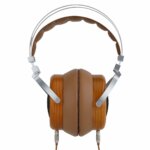
Sivga Audio Luan $250–300 – the best over-ear wired headphones with a versatile, spacious, and natural sound. These headphones feature large 50mm dynamic drivers with a composite diaphragm (nickel plating + carbon fiber), providing excellent dynamics and control across the entire range. The natural wood housing adds organic timbre.

Reasons to buy:
  • Best versatile headphones
  • Soundstage scale
  • Moddability
Reasons not to buy:
  • Unwillingness to mod
Sound. 9.78 The Sivga Audio Luan are those wired over-ear headphones you can truly stop at once and for all: after burn-in and a slight mod, they offer perfect versatility with spacious, textured, and controlled lows without boominess, full, lively, and corporeal mids where vocals sound right in the room, sparkling, extended, and completely non-aggressive highs with plenty of air, and a huge, precise, and deep soundstage that handles chamber classical music and heavy rock equally well – a pure 10/10 for musicality and balance.
Read more.
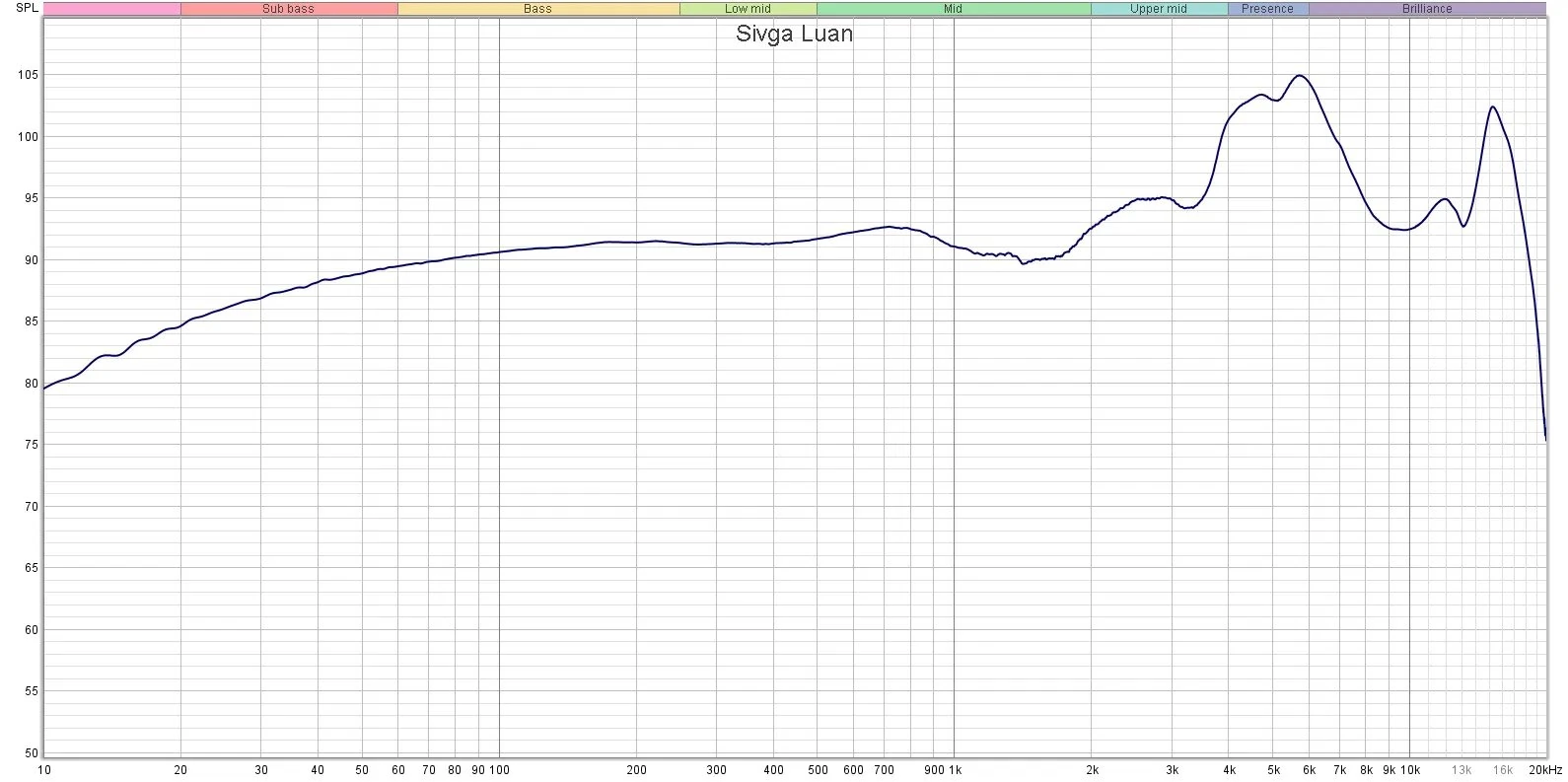
Frequency balance. 9.8 The headphones offer a perfectly balanced and versatile sound. The lows are spacious and textured with excellent depth and control. The mids stand out with their corporeality, naturalness, and lively separation of vocals and instruments, creating a sense of real presence. The highs are sparkling, extended, and full of air, but in stock form, they might seem slightly less open, fully revealing themselves after burn-in and a simple mod.

The main advantage of the Sivga Audio Luan sound is the spacious, textured, and perfectly controlled bass combined with full, corporeal, and incredibly natural mids, where vocals and instruments sound lively and emotional.

The main drawback is the slightly less sparkle and air in the highs in stock form, as well as the dependence on burn-in and a simple mod to fully unlock the huge soundstage and micro-details.
Sivga Audio Luan Frequency Response
Low frequencies. 9.8 Luan exhibit a spacious and textured bass with excellent depth and control, adding weight and body to the sound without the slightest boominess or bleed into the mids. The attack is fast, decay is natural, giving the lows dynamism and realism even in complex genres. The bass integrates perfectly into the mix, emphasizing the composition’s foundation without dominating.
Mid frequencies. 9.8 They demonstrate excellent balance between vocals and instruments, maintaining clarity and precision for each element. Vocals sound rich, corporeal, and emotional, while the accompaniment adds warmth and body, creating a sense of real presence. Instruments are perfectly separated, with natural timbre reproduction.
High frequencies. 9.8 Luan present clean, sparkling, and extended highs, creating an excellent sense of airiness and brilliance without any aggression, even during extended listening. The highs add openness and detail to the soundstage, integrating perfectly into the overall mix. However, in stock form, the finest overtones might be slightly subdued, and full transparency and sparkle are only revealed after burn-in and a simple mod.
Detail retrieval. 9.7 They show excellent rendering of small elements and micro-dynamics – after burn-in and a slight mod, the subtlest nuances, string textures, vocalist’s breaths, and afterglows become audible. In complex and layered arrangements, instruments maintain clear separation and positioning. However, in pure stock form, the detail retrieval is slightly more restrained, and the subtlest micro-details are not immediately revealed – the full potential is only unlocked after modding and several dozen hours of burn-in.
Naturalness. 9.8 They excellently reproduce vocals, preserving their corporeality, emotionality, and recognizable timbre. Live instruments sound plausible and organic, with natural reproduction of textures and afterglows thanks to the wooden housing. Despite a slight warmth in the presentation that adds body to the timbre, the overall impression of natural sound remains at the highest level.
Soundstage. 9.8 Luan demonstrate excellent width and depth for open dynamic headphones, creating a spacious sense of environment with precise localization and positioning of sound sources. Instruments and vocals are placed naturally, with good body and air between elements.
Build quality. 10 Sivga Audio Luan feature an elegant and mature natural wood housing with impeccable build quality. The headphones are made from premium materials, giving them not only a stylish and solid look but also outstanding comfort during extended use.
Read more.
Comfort. 10 The headphones offer outstanding comfort for long listening sessions. Their lightweight and ergonomic design with soft ear pads and moderate clamping force ensures a perfect fit, causing no discomfort even after many hours of use.
Durability. 10 They feel premium and very well-made – natural wood, high-quality metal, and flawless assembly inspire full confidence that they will easily withstand years of daily use without any issues. The materials look reliable and durable, with no hint of fragility or cheapness. Everything is done at a level that commands respect and the feeling of “a lifetime item” – with normal care, these headphones will outlast many other models without a single scratch or structural weakening.
Design. 10 Sivga’s style has always impressed me, and the Luan are no exception. The headphones have a mature, sophisticated, and elegant look, with natural wood earcups that give them a premium and solid character.
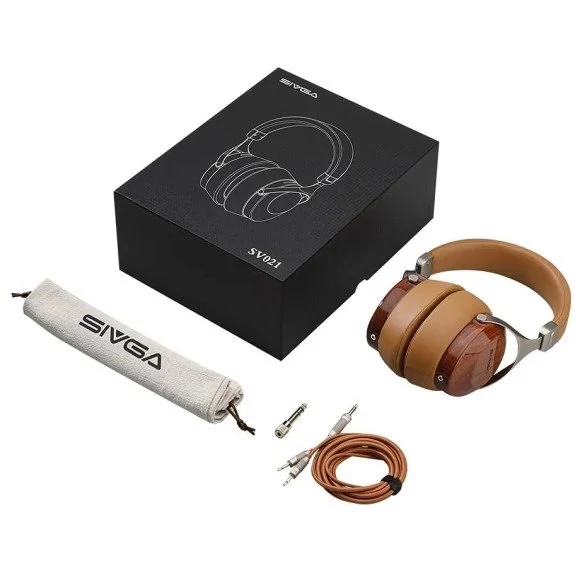
sivga audio luan accessories
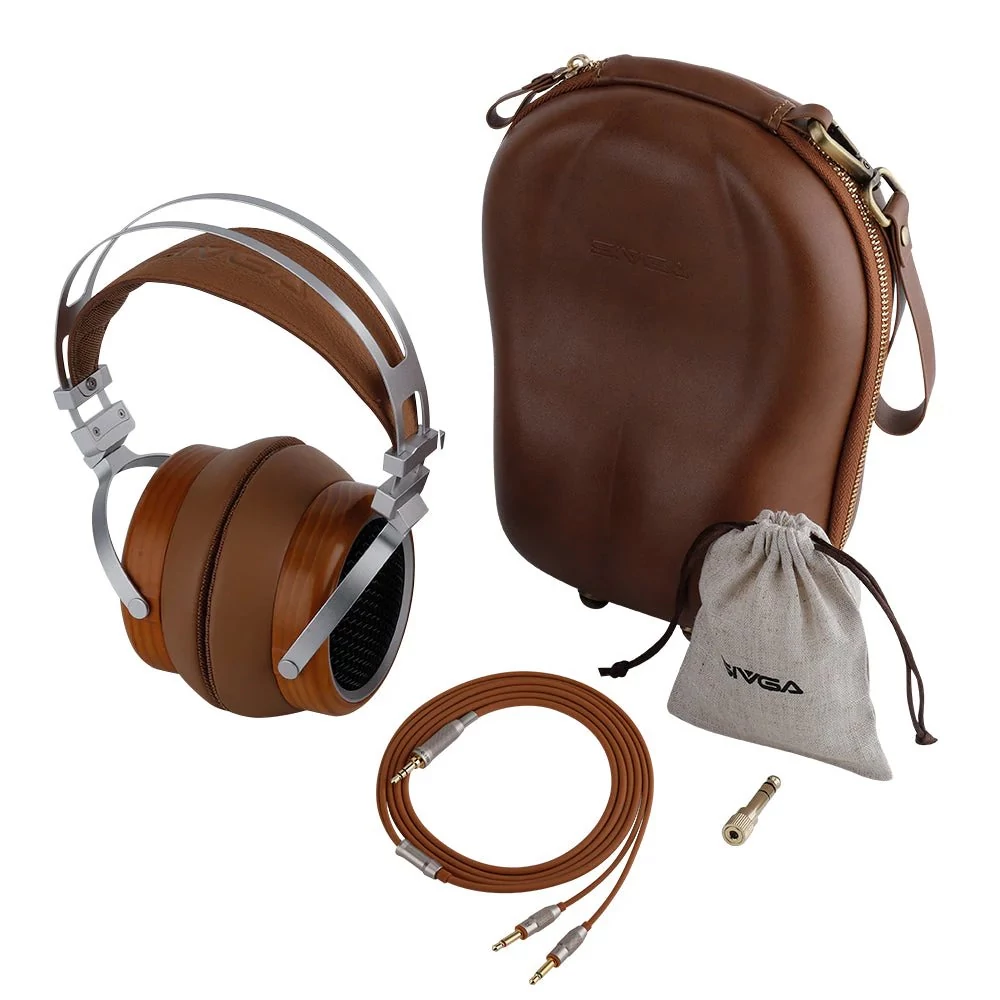
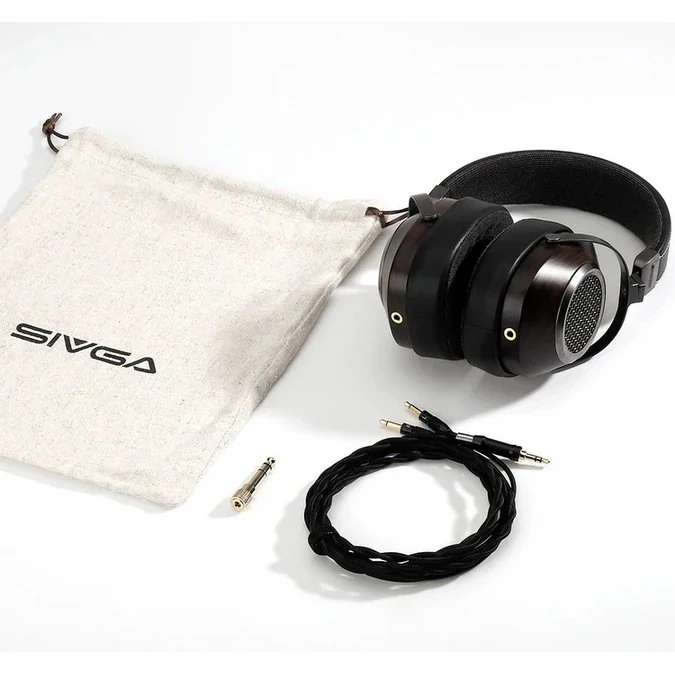
Accessories. 10 They come in a large black cardboard box with good protection. Inside, there’s a premium leather zippered case for storage and transport, which looks stylish and reliably protects the headphones. Also included is a detachable 3.5mm cable (with 3.5mm connectors on both ends for easy replacement), a 3.5mm to 6.35mm adapter, and a fabric pouch for additional accessories. The set looks solid and matches the model’s premium positioning.

2. Grado SR325x 9.43Best on-ear wired headphones – the king of emotion
Drivers
44mm DD
Impedance
32 Ohm
Sensitivity
100 dB
Frequency response
18 Hz-24 kHz.
grado

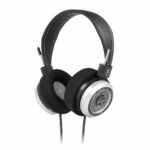
Grado SR325x $295–350 – the best on-ear wired headphones with an emotional, dramatic, and incredibly engaging sound. These open-back dynamic headphones feature a 4th generation 44mm driver with an improved magnetic system and a lighter voice coil for greater speed and detail.

Reasons to buy:
  • Pure emotion and sound drama
  • Lively energy
  • Full immersion
  • Moddability
Reasons not to buy:
  • Limited bass
Sound. 9.5 Grado SR325x have reinforced my long-standing respect for the legendary Grado style. These headphones impress with their emotional presentation and lively rendering of the entire range.


The main advantage of the Grado SR325x sound is the super-emotional, rich, and dramatic mids with vocals that hit you right in the soul with all their energy and drama, combined with bright, brilliant, and lively highs that add sparkle and drive. The main drawback is that the bass remains energetic and punchy, but lacks true sub-bass depth, and the soundstage is more front-facing and less spacious compared to planar models, which sometimes results in a lack of full scale and technical detachment in heavy or overly complex genres.
Read more.
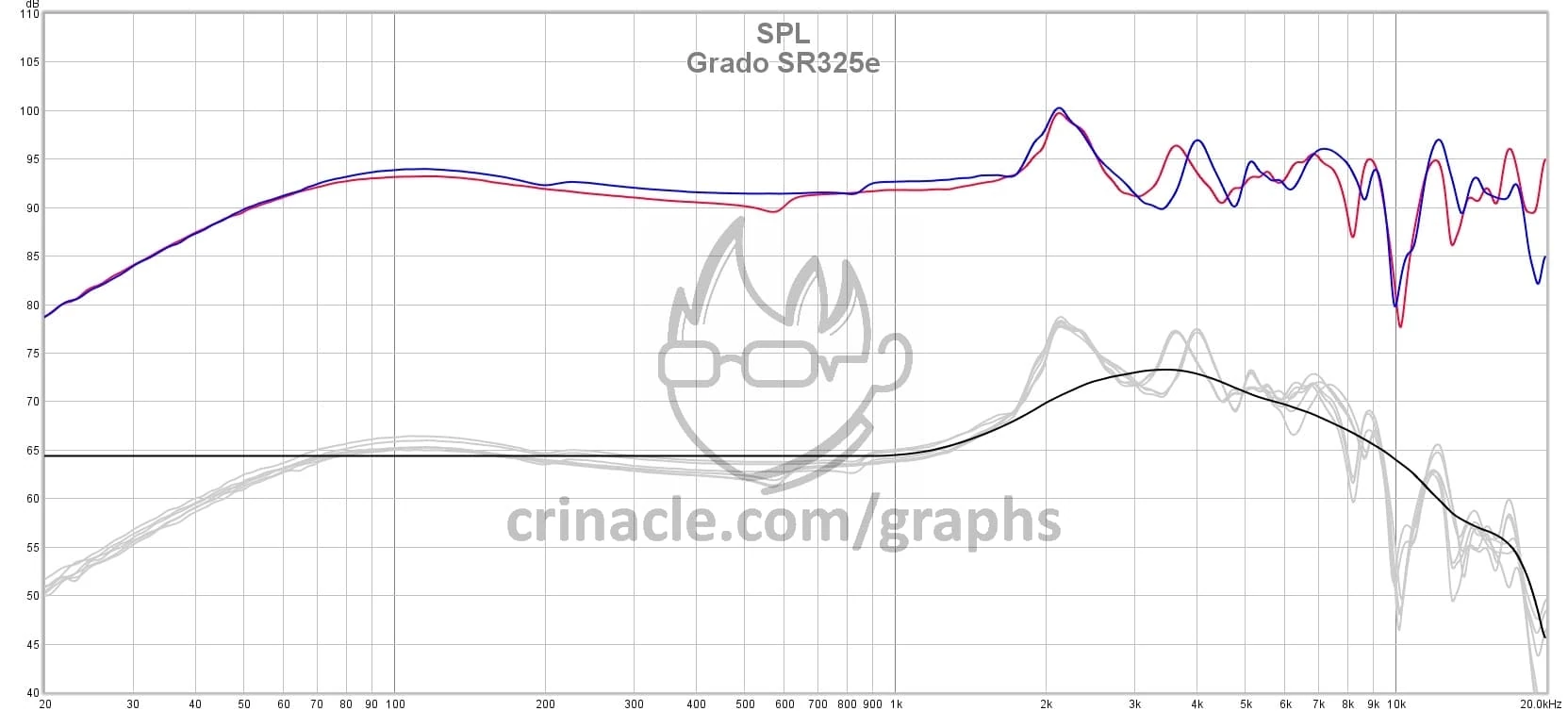
Frequency balance. 9.5 The headphones offer an energetic and emotional sound with a slight emphasis on the mids and highs. The lows are punchy and dynamic, providing good drive and attack, but without extreme sub-bass depth. The mids stand out with incredible emotionality, drama, and vocal liveliness, creating a sense of direct and raw contact with the music. The highs are sparkling, brilliant, and full of energy, adding brilliance and life without aggression. Overall, the balance is geared towards engagement and emotion rather than dry neutrality – it fully shines in rock, vocals, and live genres.

Frequency Response Chart👇

grado sr325x frequency response
Low frequencies. 8.7 They deliver energetic, fast, and punchy bass with a clear attack and good dynamics, which perfectly emphasizes the rhythm and adds drive to the music. The decay is natural, the bass doesn’t smear or dominate, leaving the focus on vocals and emotions. It fits perfectly into the overall picture, especially in rock and live genres. However, there’s clearly less sub-bass depth and true weight here – there’s no foundation and scale needed for heavy styles, which sometimes leads to a lack of powerful chest-thumping impact in bass-heavy music.
Mid frequencies. 10 Grado SR325x exhibit an amazing balance between vocals and instruments, but everything really revolves around the vocals – they come to the forefront with such clarity, richness, and emotional power that they simply throw all the drama right at you. Vocals sound lively, raw, and incredibly engaging, the accompaniment only emphasizes this energy and warmth without distraction. This isn’t an analytical presentation, but pure emotion – there’s no lack of air or simplification, on the contrary, the upper mids provide the very life and edge that make complex arrangements dramatic and captivating.
High frequencies. 9.8 They render energetic, brilliant, and sparkling highs, creating an excellent sense of life, brilliance, and airiness. The highs add energy and openness to the music, perfectly highlighting details without fatigue even during extended listening. However, in this series, they are slightly less aggressive and peaky compared to older Grados, and the finest overtones might be slightly subdued – this is done intentionally to avoid ear fatigue, but as a result, the highs remain controlled and not always maximally extended.
Detail retrieval. 9.5 SR325x deliver a bright and lively rendering of details with excellent micro-dynamics – all vocal nuances, guitar flourishes, and emotional transitions come to the forefront, making the music sharp and captivating. In dense and multi-layered compositions, instruments don’t get lost, maintaining separation and expressiveness without turning into a mess. However, this detail is delivered through the lens of emotion – it serves drama and energy, not the cold search for every tiny detail, so in highly technical recordings, the planar detachment and absolute micro-nuances might sometimes be lacking.
Naturalness. 9.6 They excellently reproduce vocals, preserving their recognizable timbre, emotionality, and lively energy – the voice sounds like it’s at a concert, with that very human soul. Live instruments sound plausible and open, with natural reproduction of textures and dynamics. Despite a slight emphasis on emotional presentation and highs, which adds brilliance and drama, the overall impression of natural sound remains very strong – this isn’t dry sterility, but lively, human audiophilia. Minor simplifications in transitions between ranges hardly affect the integrity of perception, making the music simply captivating and real.
Soundstage. 9.4 SR325x exhibit a wide and open soundstage with good localization of sound sources, creating a live concert feel – everything happens as if right in front of you, with excellent width and frontal presentation. Instruments and vocals are positioned clearly, with energy and air between elements. However, the soundstage depth isn’t as vast as in HiFiMAN Arya V2 (where the soundstage is holographic and reference-level in volume), and the dynamics remain rather straightforward and concert-like, which slightly limits its expressiveness in very spacious or multi-layered compositions – it’s more about emotional drive from the front than infinite scale.
Build quality. 9.25 Grado SR325x feature a classic, recognizable, and slightly retro metal design with open earcups and a leather headband with good build quality in the signature Grado style. The headphones are made from lightweight and durable materials, giving them not only an iconic, brutally simple look but also good ventilation and acceptable comfort during extended use – while not the softest clamping force, it’s nothing superfluous, everything is to the point, as befits true “Grado” owners.
Read more.
Comfort. 9.5 The headphones offer good comfort for not excessively long, but incredibly engaging listening sessions. Their lightweight and simple design with foam ear pads and moderate weight ensures an acceptable fit, allowing you to dive fully into the music and get the maximum emotion without distraction. However, the headband pressure can press slightly on the crown of the head, and during very long sessions (more than 2-3 hours) or with glasses, minor fatigue may occur – this is classic Grado: nothing superfluous, everything to the point, but not the softest option for those who wear headphones all day. It’s more about the “concert immersion” effect, when you want to blast your favorite track and live it to the fullest, rather than relax and listen for hours.
Durability. 9.5 They feel very well-made in the classic Grado style – metal, simple and durable construction, without any superfluous details, inspire confidence that they will easily withstand years of daily use without any issues. The materials look sturdy and time-tested, with no hint of fragility or cheapness. Everything is done at a level that commands respect and the feeling of “a lifetime item” – with normal care, these headphones will outlast many other models without headband loosening or earpad wear, although the signature F-Cushions (foam earpads) will eventually need replacement, as with all Grados.
Design. 10 Grado’s approach to design has always commanded respect, and the SR325x are a prime example. The look of these headphones is pure brand philosophy: nothing superfluous, an open metal earcup, a leather headband, simple lines, and a complete lack of pretension. It’s not about beauty for beauty’s sake, but about honesty and straightforwardness – like pure rock and roll, without any tinsel or decoration. They look exactly as true Grados should: recognizable, brutally simple, and with that character that commands respect for tradition – an item made for music, not for a shelf.
grado sr325x accessories
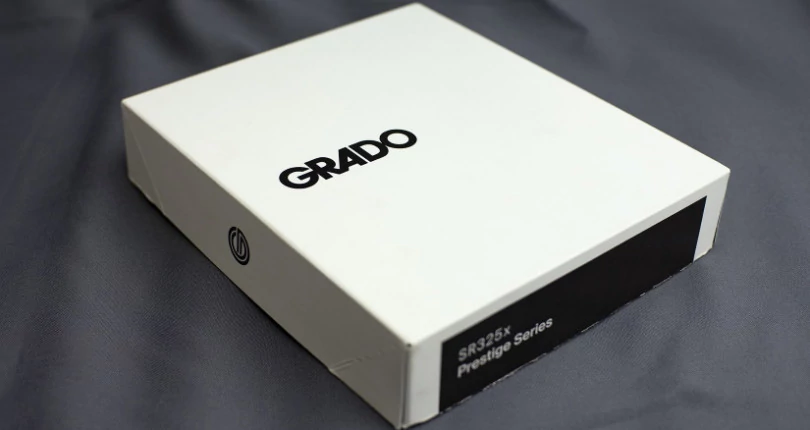
Accessories. 8 Grado SR325x come in a simple but signature black and white box with a minimalist design – nothing superfluous, as befits Grado; inside are the headphones themselves with the signature non-detachable cable, installed F-Cushion earpads, and a 3.5mm to 6.35mm adapter, without cases, pouches, spare earpads, or balanced cables – this is the brand’s classic “everything to the point” approach, fully consistent with Grado’s philosophy, although considering the price, I would have liked at least a simple fabric pouch or a hard case for storage and protection.

3. HiFiMAN Arya V2 9.43Best open-back planar wired headphones – scale and precision
Drivers
88x60mm Planar
Impedance
35 Ohm
Sensitivity
90 dB
Frequency response
8 Hz-65 kHz.
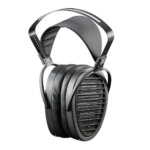
HiFiMAN Arya V2

HiFiMAN Arya V2 $1000–1300 – the best open-back planar wired headphones with a technical, spacious, and reference-level sound. These full-size open-back headphones feature a proprietary planar driver with a nanostructure diaphragm and Stealth Magnets technology for minimal distortion and maximum transparency. The housing is lightweight and comfortable with egg-shaped earcups.

Reasons to buy:
  • Vast soundstage scale
  • Tonal accuracy
  • Moddability
Reasons not to buy:
  • Requires driving
Sound. 9.5 HiFiMAN Arya V2 have established themselves for me as a model of successful planar headphones and one of the most convincing references in the world of open-back full-size models. They require good amplification, but in return, they demonstrate exceptional speed and tonal accuracy of a truly highest level, which is hard to find even in modern novelties – many of them seem noticeably simpler against the Arya. The soundstage here is incredibly vast, with excellent layering and a tangible distance between sources. And most importantly – Arya V2 deliver emotions not through coloration or artificial presentation, but through mega-scale, transparency, fidelity, and a sense of real space. Simply a magnificent model that still remains an unattainable benchmark for many manufacturers.


The main advantage of the HiFiMAN Arya V2 sound is the incredible tonal accuracy and detail combined with a huge holographic soundstage and technical transparency, where each instrument and vocal sounds natural, with very precise positioning and truly spacious surroundings. The main drawback is the high requirement for quality amplification: without a good source chain, Arya V2 are far from fully revealing their potential. Plus, the completely open design makes them true “personal speakers” – music actively leaks out and is clearly audible to everyone around.
Read more.
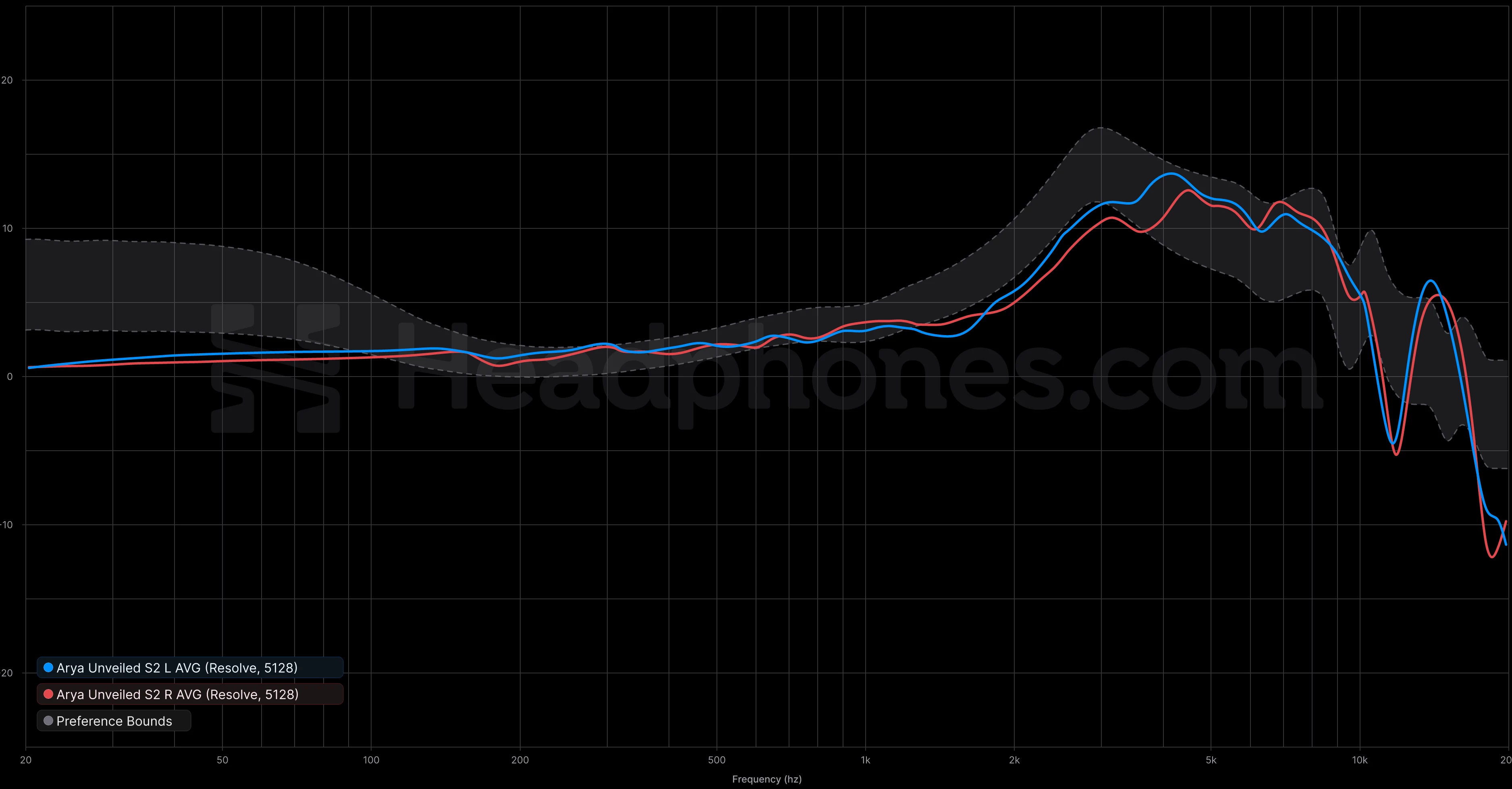
Frequency balance. 9.4 HiFiMAN Arya V2 are reference planar headphones with a huge emphasis on technique, speed, and soundstage scale. The bass here is fast, deep, and excellently controlled, without looseness or excess mass. The mids are neutral and exceptionally tonally accurate, with excellent separation of vocals and instruments – the level of fidelity is truly very high. The highs are airy, detailed, and form a huge holographic soundstage with a superb sense of space and distance between sources. At the same time, Arya V2 deliver emotions not through coloration or artificial warmth, but through transparency, mega-scale, and a sense of real presence within the recording. For full potential, these headphones require high-quality and powerful amplification.

Frequency Response Chart👇

hifiman arya v2 frequency response
Low frequencies. 9 Arya V2 show amazing purity and technicality in the lower range, where the bass is extended, tight, and fully controlled – it goes deep down, maintaining lightning speed and exceptional structural readability. The lows are light, precise, and very detailed, without a hint of smearing or excess mass. The soundstage geometry is constructed so that the bass forms a reliable foundation, maintaining a sense of silence and clean space between beats. Attacks are instantaneous, textures are rendered down to the finest nuances, and although Arya V2 may not provide the emotional density and physical impact that some closed-back models are known for, they compensate with depth, scale, and almost reference-level purity of presentation.
Mid frequencies. 9.5 Tonal accuracy is Arya V2’s strongest suit: vocals and instruments sound extremely natural and faithful, with superb informativeness and clarity of presentation. The mid-range literally floats in a vast, highly organized soundstage with precise layering and spacious imaging. The presentation here is slightly cool and doesn’t try to add artificial warmth or emotional coloration, but in return, it offers almost reference-level transparency, highest resolution, and a sense of real space around each instrument.
High frequencies. 9.7 The highs on Arya V2 are sparkling, clean, and completely free of any “dirt” or grain, and the afterglows are extended and decay very naturally, leaving a huge amount of air and that very ringing silence between sounds. The range is presented comfortably, without harshness or intrusive brightness, maintaining a characteristic “diamond” sheen and a sense of open space. At the same time, Arya V2 focus not on additional warmth or emotional coloration, but on scale, transparency, and ultimate clarity of presentation. This is why lovers of a denser and more colored sound might find the upper range slightly cool and too technical.
Detail retrieval. 9.7 HiFiMAN Arya V2 deliver reference-level and extremely precise rendering of details with stunning micro-dynamics – all vocal nuances, instrumental transitions, and subtle afterglows are revealed with exceptional readability, making the music maximally transparent and clear. Even in dense and multi-layered compositions, instruments maintain very high separation and positional accuracy, without turning into a mess in the most complex mixes. However, this detail works through the lens of technique – it serves the fidelity, scale, and truth of the recording, not additional emotional coloration. Therefore, in more soulful genres, some might miss the warmth and density that dynamic models or modified planars can provide.
Naturalness. 9.1 Arya V2 excellently reproduce vocals, preserving their recognizable timbre, accuracy, and technical truth – the voice sounds clean, transparent, and maximally faithful. Live instruments are presented openly and plausibly, with natural reproduction of textures, dynamics, and a sense of almost black space between sounds. Despite a noticeable emphasis on transparency and technical presentation, which adds openness and detail to the soundstage, the overall sense of naturalness remains very strong. This is not warm emotional coloration, but the most honest and uncolored presentation of the recording, where Arya V2 strive to show the music as it was originally intended.
Soundstage. 9.8 HiFiMAN Arya V2 exhibit an incredibly wide and deep soundstage with holographic localization of sound sources, creating a sense of vast space where everything happens as if around the listener in a large concert hall. Instruments and vocals are positioned with astonishing precision, maintaining a huge amount of air, distance, and body between elements. The soundstage here is multi-layered, spacious, and very open, with a superb sense of depth and layering. At the same time, Arya V2 focus not on an intimate or emotionally driven presentation, but on infinite scale, transparency, and reference-level spatial accuracy. This is why lovers of a more intimate and dense sound might find the soundstage less intimate than in some dynamic or modified planar models.
Build quality. 9.25 HiFiMAN Arya V2 are made in the signature HiFiMAN style with large open egg-shaped earcups and a modern minimalist design without excessive embellishment. The construction combines metal, high-quality plastic, and soft ear pads, creating the impression of a serious and well-thought-out product. Despite their large size, the fit turned out to be surprisingly comfortable: the weight is distributed very well, the headphones hardly press on the head and allow you to listen to music for hours without significant fatigue.
Read more.
Comfort. 10 Comfort is one of the strongest aspects of the HiFiMAN Arya V2. Despite the large size of the earcups, the fit is very successful: large soft ear pads, minimal clamping force, and well-distributed weight allow you to listen to music for hours without significant fatigue. On the head, the Arya V2 feel noticeably lighter than their dimensions might suggest, and the open design provides good ventilation and doesn’t create a feeling of overheating. At some point, you really start to forget that the headphones are even on your head.
Durability. 9 HiFiMAN Arya V2 feel like expensive and very well-built headphones – the combination of high-quality plastic, metal, and a thoughtful design creates the impression of a serious item designed for long-term use. The materials look modern and reliable, without any sense of cheapness or fragility. Despite their relatively light weight, the construction feels solid and doesn’t raise concerns in everyday use. However, the open architecture and some delicate elements still require careful handling to avoid unnecessary scratches or accidental damage over time.
Design. 10 The appearance of the Arya V2 is pure HiFiMAN philosophy: nothing superfluous, large open egg-shaped earcups with a metal grille, a lightweight hybrid frame, and minimalist lines without decorative embellishment. The design here is not built around external gloss, but around functionality and technical honesty. Specifically, the Arya V2 give the impression of a very well-built model: quality materials, metal, precise fitting of parts, and the feel of a serious engineering product without trying to impress with ostentatious luxury. This is precisely the “planar magic” of HiFiMAN – open, spacious, and maximally focused on sound, not on visual tinsel.
hifiman arya v2 accessories
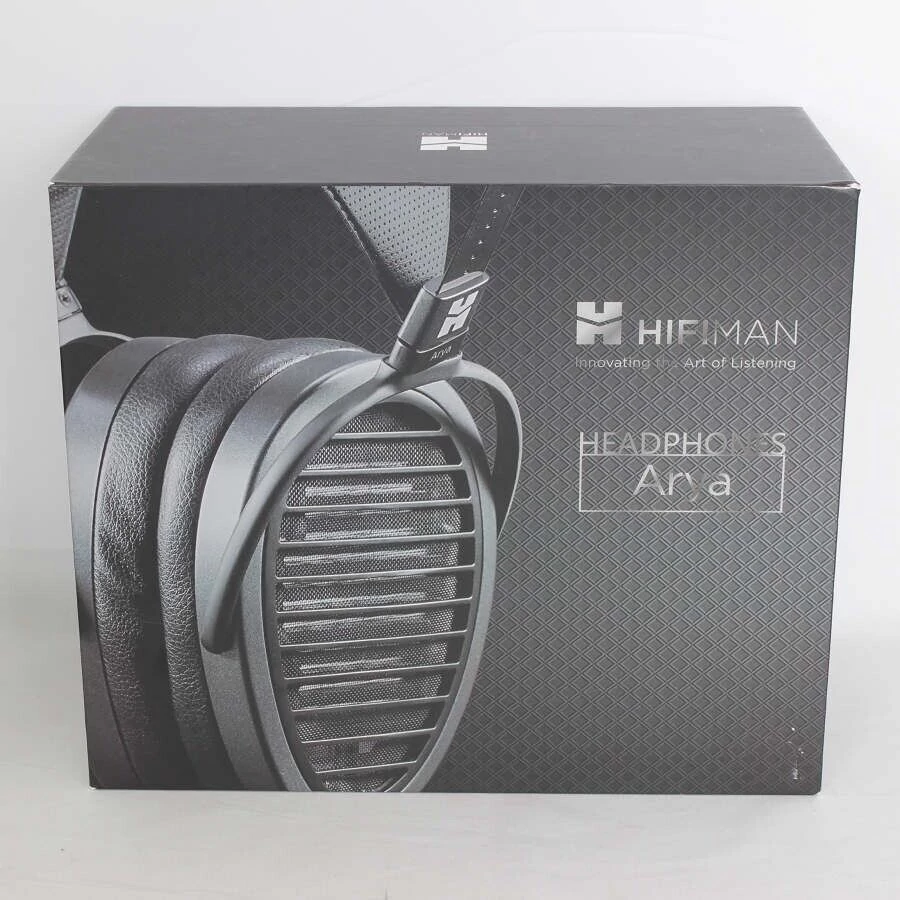
Accessories. 8 Included are the headphones themselves, a high-quality detachable cable with 3.5mm connectors on the earcups (usually an OFC or crystalline copper cable about 1.5–2 meters long with a 3.5mm mini-jack), a 6.35mm adapter, and sometimes a soft fabric pouch for storage. There is no hard case or additional cables (e.g., a balanced 4.4mm) in the box – this is typical for top-tier HiFiMAN, where the focus is on sound, not accessories.

4. Moondrop Para 9.29Best open-back planar wired headphones with bright neutrality and technical presentation
Drivers
100mm Planar
Impedance
8 Ohm
Sensitivity
101 dB
Frequency response
15 Hz-53 kHz.
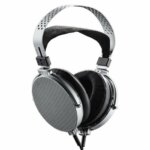
moondrop para

Moondrop Para $300–400 – the best open-back planar wired headphones with a technical, bright, and neutral sound for micro-dynamics and drama enthusiasts. These full-size open-back headphones feature a 100mm planar driver with silver plating for high speed and detail, in a lightweight housing with comfortable ear pads.

Reasons to buy:
  • Bright neutrality
  • Excellent micro-dynamics
  • Technicality and engagement
Reasons not to buy:
  • Not a basshead model
  • Bright presentation
  • Plays loudly outwards
Sound. 9.2 These headphones impress with their bright neutral presentation and excellent rendering of the entire range. The lows are clean and controlled, without being bass-heavy, but with good dynamics; the mids are neutral, detailed, and with stunning micro-dynamics, where vocals and instruments reveal all the drama and emotion of the composition; and the highs are bright, transparent, and sparkling, adding air and technique without fatigue. The soundstage is wide and with good separation, like in studio monitoring. Overall, they provide an incredibly technical and captivating musical immersion – it’s about bright neutrality, story, and drama, not warm colors or bass impact.


The main advantage of the Moondrop Para sound is excellent micro-dynamics and technical presentation combined with bright neutrality and the ability to convey the story, drama, and emotion of the composition without excessive coloration. The main drawback is that the bass is clean but not bass-heavy and lacks true sub-bass weight, and the highs are bright and detailed but can sometimes seem a bit too bright, causing a loss of impact and foundation in bass-heavy genres, and the overall presentation remains more head than heart.
Read more.
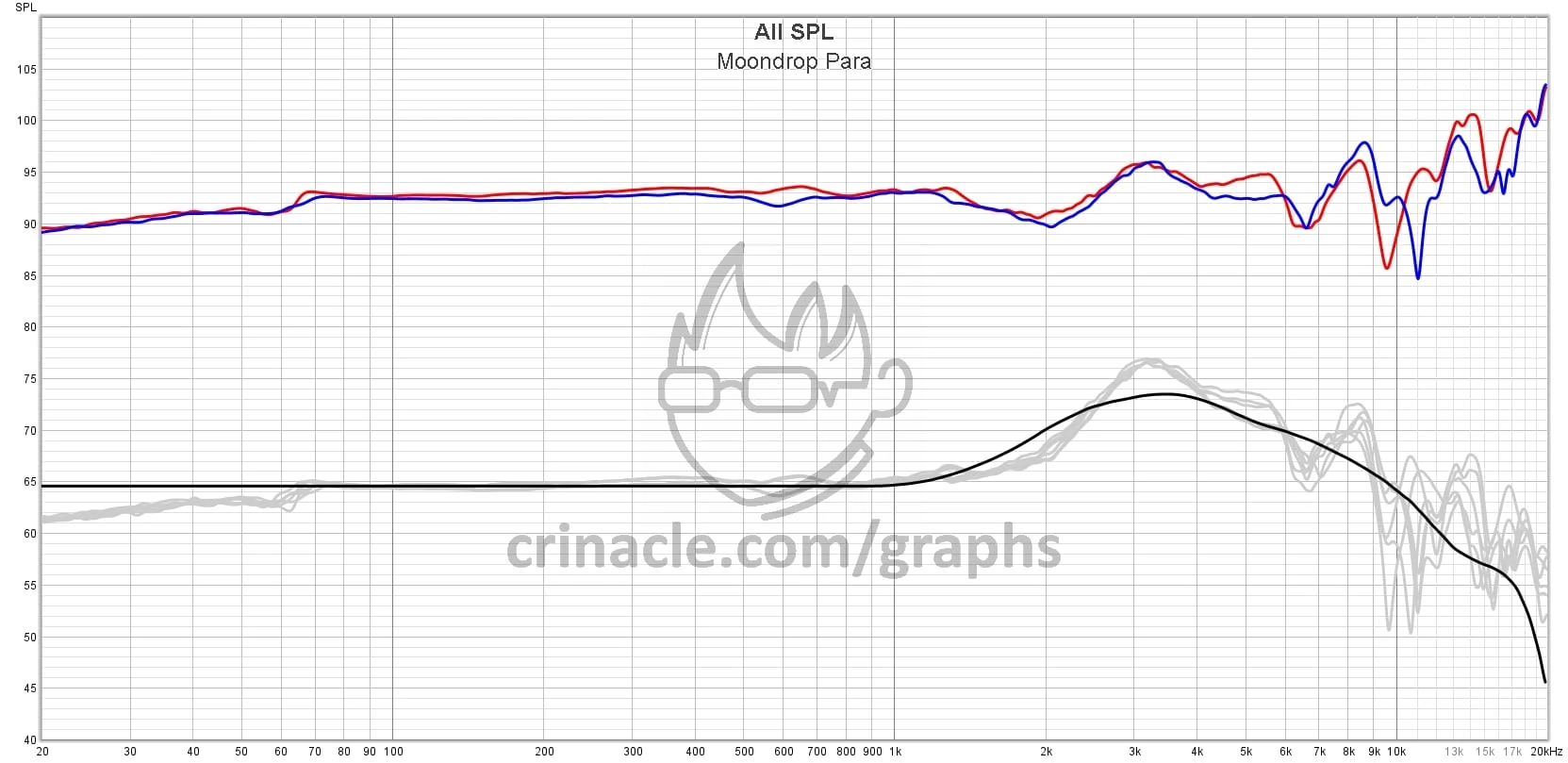
Frequency balance. 9.4 The balance here is shifted not towards fatness or warmth, but towards maximum clarity and airiness. The lows are presented carefully: they don’t try to overwhelm with mass, working solely on speed, crispness, and definition of impact. The mid-range is free from any cloudiness – it is crystal clear, transparent, and light, allowing you to discern every nuance. The highs go far up, they are rich in overtones and “air,” creating that very sense of expensive, “mature” audio, where detail retrieval is paramount.

Frequency Response Chart👇

moondrop para achh
Low frequencies. 8.9 A fundamentally different, emphatically “mature” approach to bass is implemented here. We won’t find bloated, dominant boom or cottony softness. The lows in Para are pure kinetics: they are fast, dry, and defined. The driver handles every impact with precision, leaving no extraneous resonance or blurriness. This is bass that doesn’t envelop with fat, but crisply strikes, creating a clear rhythmic skeleton of the composition. Yes, bassheads might find it quantitatively insufficient, but in terms of texture and control, it’s true high class, where every pluck of a string is heard separately and clearly.
Mid frequencies. 9.6 This range is a true realm of light and air. There is absolutely no “veil,” murkiness, or artificial warmth here – the mids are presented with crystal, almost surgical clarity. Vocals and instruments sound emphatically light and airy, without excessive heaviness, allowing you to literally examine every nuance of the recording under a microscope. This is the “mature” approach to sound, where resolution and micro-dynamics are brought to the forefront: the slightest breaths and details of sound production are audible. Images in space are separated flawlessly, they don’t merge, but float in an open field, creating a sense of expensive, elite transparency.
High frequencies. 9.7 This is perhaps the main pride of this model and the ticket to the upper league. Here we get not a cut-off or smoothed-out treble, but full, “mature” extension. The range is saturated with air, complex overtones, and those very subtle trails that are usually lost in the budget segment. The sound here is crystal clear and bright, without a hint of “grain” or synthetic dirt. It’s light, crumbly, and incredibly detailed, creating that very sense of vast space and freedom. For connoisseurs of bright, technical presentation, this is a real find – the highs here breathe freely.
Detail retrieval. 9 Moondrop Para demonstrate honest, mature detail retrieval without trying to embellish anything. The large planar drivers provide phenomenal speed, micro-dynamics, and micro-contrast – even the quietest background nuances and afterglows are extracted from the recording. In complex and dense compositions, instruments remain clearly separated, without the slightest “mush,” each image exists in its own space. This is detail retrieval through the lens of bright neutrality: it serves the technique and drama of the recording, not warmth or emotional drive, so in more soulful genres, there might be a lack of lively coloration, but in return, it offers a level of resolution that makes you re-listen to familiar music.
Naturalness. 8.9 Naturalness here is built on crystal honesty and lack of embellishment: vocals retain their recognizable timbre, sound clean, transparent, and technically faithful, and live instruments are reproduced plausibly and openly. The presentation is emphatically neutral, slightly cool, without artificial warmth or “personal interpretation” – timbres are accurate, but in a light manner, without dense corporeality. Yes, lovers of rich and enveloping sound might miss the soulful warmth, but the synthetic coloration is completely absent: the music sounds honest, clear, and maximally faithful, emphasizing the truth of the recording rather than beautiful illusions.
Soundstage. 9.5 Moondrop Para build a wide, airy, and very clean soundstage with precise localization and excellent separation – the presentation resembles studio monitoring, where each source has its clear place. Thanks to the large planar drivers, the space unfolds freely and holographically, with good depth and pronounced layering, musical images do not merge and retain their form. Compared to the HiFiMAN Arya V2, the soundstage is slightly less infinite in volume and emotional engagement, but it remains extremely neutral and narrative – it’s more about the precision, air, and drama of the recording than warm coziness or spectacular drive.
Build quality. 9.5 Moondrop Para feature a lightweight and modern housing with open earcups and very high-quality construction in the signature Moondrop style. The headphones are made from reliable materials – aluminum, durable plastic, and soft ear pads, giving them not only a technological and neat look but also excellent comfort during extended use – the weight is small, the fit is comfortable, nothing presses even after long sessions.
Read more.
Comfort. 10 The headphones offer excellent comfort for long listening sessions. Their lightweight and thoughtful design with large soft ear pads and moderate clamping force provides a comfortable fit, causing no fatigue or pressure even after several hours on the head. The weight is well distributed, the earcups fully enclose the ears, and ventilation is adequate due to the open type – you can wear them for hours, and they don’t remind you of themselves, especially when the bright and technical presentation draws you into the music all evening.
Durability. 10 Here we are dealing with a true metal monolith. The construction inspires a sense of absolute reliability – there’s simply nothing to break. The housing is entirely made of aluminum, without the slightest hint of cheap plastic or flimsiness. Holding them in your hands, you feel the pleasant weight and cold of the metal, which immediately creates the impression of a serious, industrial product, not a toy. The assembly is reference-level: nothing creaks, nothing wobbles, and everything is fitted with micron precision. This is a case where the headphones feel significantly more expensive than their actual cost – a true tank, ready for any test of time.
Design. 10 Visually, this is a true triumph of industrial aesthetics. The headphones look not just modern, but futuristic, clearly inheriting features from the flagship Venus model. The large earcups with a hypnotic grille pattern immediately make it clear that we are dealing with a serious engineering product, not a marketing toy. There is no room for cheap decor here – only strict, cold metal and monumental forms. They look expensive, massive, and impressive, creating the full impression that you own a premium item from a much higher price segment.
moondrop para accessories
Accessories. 8 Inside are the headphones themselves, a detachable cable with 3.5mm connectors on the earcups and a standard 3.5mm plug, a 6.35mm adapter, an additional pair of ear pads, and documentation. There is no hard case or balanced cable included – Moondrop traditionally focuses on sound and basic practicality, not on a wealth of accessories.

5. Fostex T50RP MK3 9.25​Legendary planar magnetic headphones – colors and emotions in a closed format
Drivers
50mm Planar
Impedance
50 Ohm
Sensitivity
92 dB
Frequency response
15 Hz-35 kHz.
Fostex T50RP MK3

Fostex T50RP MK3 $150–250 – the best closed-back planar wired headphones with an emotional, colorful, and truly soulful sound for their price. These closed-back full-size headphones feature a 50mm isodynamic (planar) driver with proprietary Regular Phase (RP) technology on a polyimide film with copper foil and powerful neodymium magnets for precise and fast sound reproduction.

Reasons to buy:
  • Colors and sound emotions
  • Closed compact format
  • Precise informativeness
  • Moddability
Reasons not to buy:
  • Requires powerful amplification
Sound. 9.3 Fostex T50RP MK3 have strengthened my conviction that closed-back planar headphones can be not only technical but also truly lively and full of drive. These headphones captivate with their powerful impact, bright colors, and surprising soulful presentation for a closed-back design – here is the real “tidal wave” effect, where a low impact washes over you with a wave of power and rich texture. The lows provide tangible impact and emotional power, the mids are rich, full of warmth and feeling, where everything sounds soulful and expressive, and the highs are detailed and restrained, without excessive harshness. The soundstage is correct in shape, with good scale and precise placement of sounds even in a closed-back design.


The main advantage of the Fostex T50RP MK3 sound is the colors and true emotions in the bass and mids: a powerful, emotional impact with rich texture and warmth, where everything sounds soulful, expressive, and with lively feelings. The main drawback is that the highs can be a bit bright and harsh, and the soundstage is not as vast and holographic as in Arya V2, which sometimes results in a loss of absolute volume and subtlest details in very complex mixes – it’s more about emotional drive and colors, not cold technical analysis.
Read more.
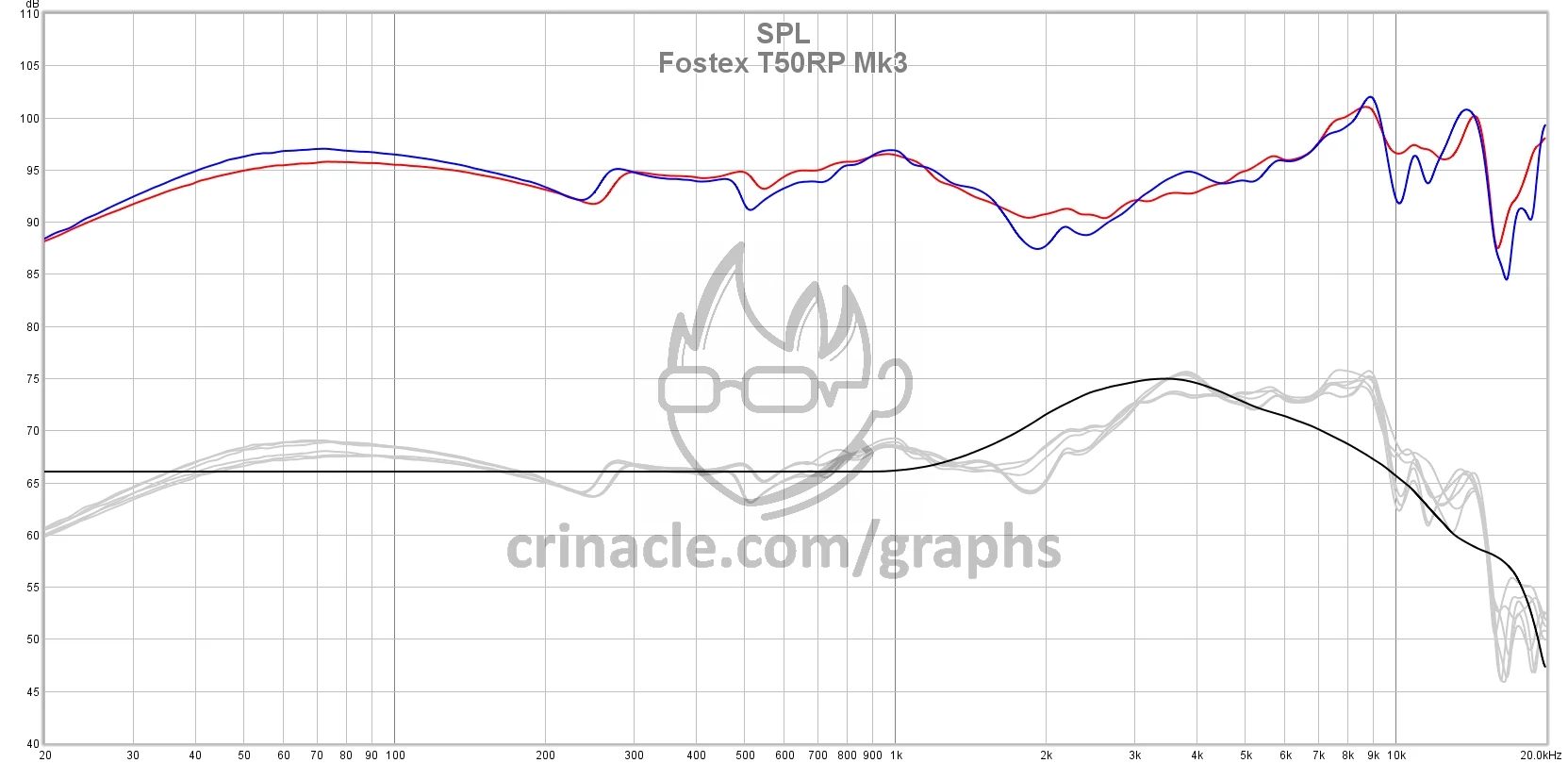
Frequency balance. 9.3 Fostex T50RP MK3 offer an emotionally colored and very lively sound with good balance for a closed-back planar. The lows are powerful and textured with tangible impact and emotional force, adding drive and punch. The mids stand out with colors, warmth, and soulful expressiveness, where vocals and instruments sound with true feeling and liveliness, creating a sense of emotional contact. The highs are detailed and restrained, with good control and no excessive harshness, but can seem a bit too bright in stock form. Overall, the balance is geared towards colors and emotions, rather than cold neutrality – this is a case where closed-back planars play with soul and make you truly experience music.

Frequency Response Chart👇

fostex t50rp mk3 frequency response
Low frequencies. 9.3 T50RP MK3 exhibit incredible precision and informativeness in the lower register, which is the complete opposite of the leisurely presentation of open planar models. The bass here is tight, dense, and has pronounced “colors” that convey the emotion and drama of the composition. The soundstage geometry is constructed so that the low frequencies form a reliable foundation without disturbing the ringing silence in pauses – chaos here is completely ordered. Attacks are fast, texture is well-rendered, and although they lack the infinite transparency and scale of top open solutions, they compensate with density, impact thickness, and flawless control.
Mid frequencies. 9.4 Incredible informativeness and precision reign here, allowing the headphones to convey not just sounds, but the drama embedded within them. Vocals and instruments are presented with amazing tonal fidelity and richness of colors, creating a correct, mathematically precise soundstage geometry. This sound is about emotions and narrative. However, compared to reference open-back models, there is a noticeable lack of transparency and “airiness,” which makes the presentation less spacious, but in return, it gives the listener perfect, ringing silence in the background and complete orderliness of musical images.
High frequencies. 9.2 Instead of infinite airiness, strict informativeness and order prevail here. The highs are precise, free of “dirt,” and the afterglows decay instantly, leaving perfect, ringing silence. The range is presented comfortably, without excessive harshness, however, lovers of maximum spectral extension and “diamond” brilliance might find them insufficiently extended. In this aspect, HiFiMAN Arya V2 remain the undisputed leaders, offering that very mega-scale and transparency that were intentionally avoided here in favor of density and emotion.
Detail retrieval. 9.2 Detail retrieval here is built on the foundation of that very perfect, ringing silence that remains after the “tidal wave.” Chaos is ordered: each sound, each nuance occupies its strictly assigned place without disturbing the overall structure. This is not about flying transparency and mega-scale, characteristic of open references like Arya V2, but about informativeness and working with colors. Fostex convey emotions through the precision and density of images, allowing you to hear the story and drama, but without getting distracted by excessive analysis of micro-nuances for the sake of analysis itself.
Naturalness. 9.5 There is not a drop of synthetic material here, only strict, well-balanced truth. Fostex captivate not with scale, but with density of colors and corporeality of images. Timbres are reproduced with amazing accuracy – these are emotions embedded in the very texture of sound. The soundstage geometry is flawlessly constructed: each instrument has its weight and its place in this ordered chaos. This is a sound that conveys the story and drama of the composition through richness and informativeness, rather than through artificial expansion of space. Order has been restored, and it sounds damn convincing.
Soundstage. 9.2 Localization of sources is excellent – each sound occupies its place against a background of perfect, ringing silence. The soundstage here works for informativeness and conveying the narrative, creating a sense of density and drama, rather than airy lightness.
Build quality. 9.13 When you pick them up and start using them, you immediately understand how cool they are. They have a completely different, uniquely unique design that stands out from the rest. The ergonomics are superbly thought out: this is a true closed-back type in a compact body, the complete opposite of giant open planars. Despite the low cost, they feel like a serious instrument, made competently and conscientiously.
Read more.
Comfort. 9 Here we are dealing with excellently implemented ergonomics. The model turned out to be compact, it doesn’t feel bulky on the head. The most important advantage is the honest closed-back design: the headphones hardly play outwards, making them suitable for use in situations where open planars would be inappropriate. They create an excellent personal space, without letting external noise in and without disturbing others, making listening maximally focused.
Durability. 10 Despite their very affordable price, there’s no feeling of a budget product here. On the contrary, the model has a completely unique design that stands on its own. When you hold them in your hands, you immediately feel reliability – the construction is solid, well-thought-out, and tactilely pleasant. This is not a fragile toy, but a serious instrument. They are truly cool in terms of execution: nothing wobbles, everything is fitted perfectly, creating the full impression of an item that will last a very long time.
Design. 9.5 These are my first Fostex headphones, and I was impressed by the brand’s approach. Visually, it’s a completely different story. They have their own, absolutely unique style that you can’t mistake for anything else. It’s the complete opposite of huge open models – everything here is compact, solid, and neat.
fostex t50rp mk3 accessories
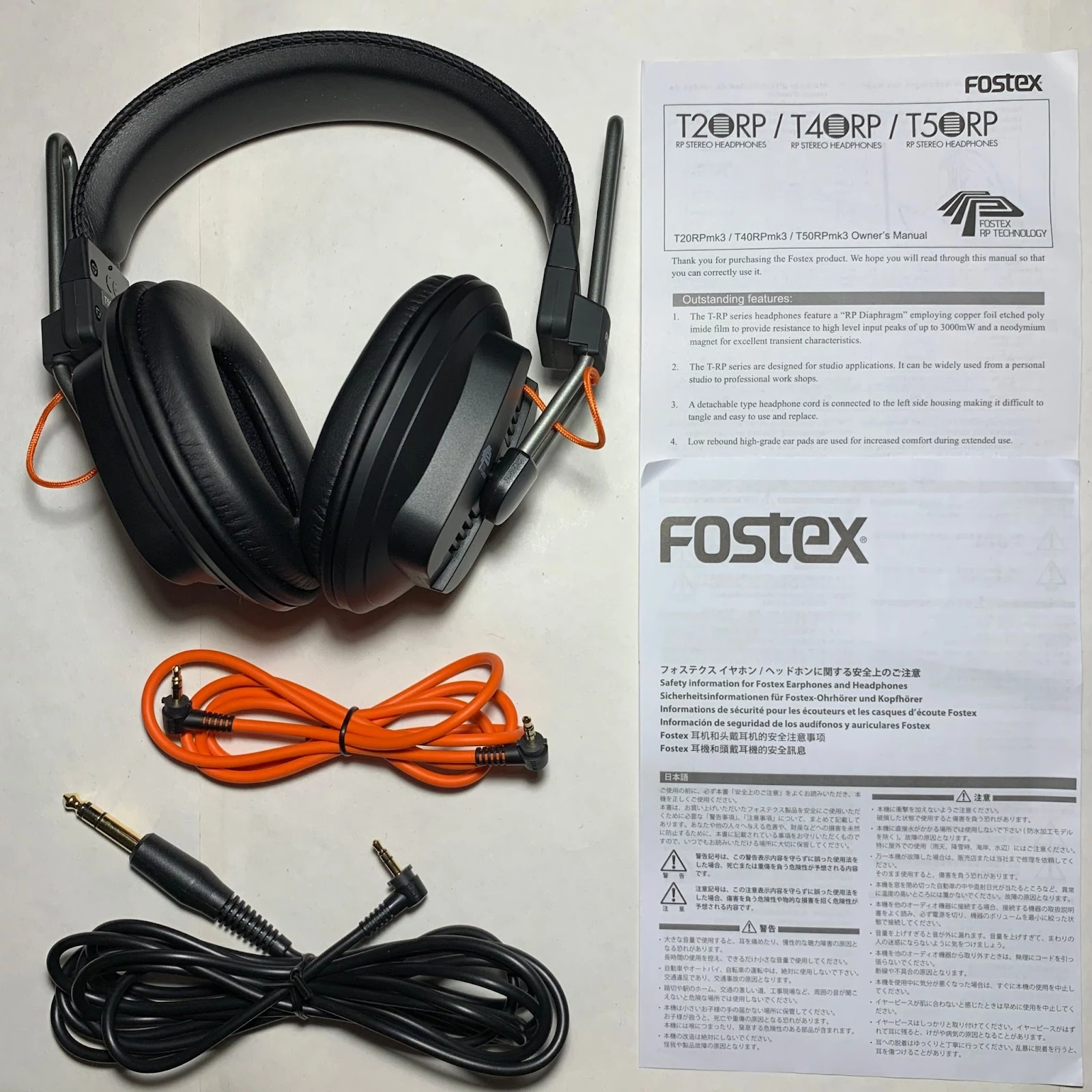
Accessories. 8 Fostex T50RP MK3 come in a simple but sturdy cardboard box with a minimalist design – nothing superfluous, everything to the point. Inside are the headphones themselves, a detachable cable with 3.5mm connectors on the earcups (standard OFC cable about 3 meters long with a mini-jack), a 6.35mm adapter. No cases, pouches, or additional cables are included – this is typical for Fostex’s semi-professional models.

6. Sivga Audio Anser 9.16Best compact over-ear headphones – a dark horse with huge potential
Drivers
50mm DD
Impedance
38 Ohm
Sensitivity
105 dB
Frequency response
20 Hz-20 kHz.
sivga audio anser

Sivga Audio Anser $200–250 – the best compact over-ear wired headphones with a versatile, spacious, and very pleasant sound. These open-back dynamic headphones feature a large 50mm driver (the same as in the higher-end Luan), but in a more miniature housing with 180° rotating earcups for comfortable neck wear. The housing is lightweight and ergonomic with quality materials.

Reasons to buy:
  • Huge modding potential
  • Large 50mm driver in miniature
  • Moddability
Reasons not to buy:
  • Only mid-tier in stock
  • Unwillingness to mod
Sound. 9.03 The sound of Sivga Audio Anser is a real find for those who want the sound level of the higher-end Luan but in a compact and mobile format. In stock form, they are already a solid mid-tier performer – balanced, pleasant, with good warmth, punchy bass, and natural mids where vocals sound weighty and corporeal. The highs are energetic, detailed, and without harshness, the soundstage is wide and airy. But after a simple mod (and they are designed precisely for it), they turn into a bomb: the bass becomes even more textured and controlled, the mids – even juicier and more lively, the highs open up completely, the soundstage gains depth and scale. As a result, you get a versatile, spacious, and incredibly pleasant sound that easily handles everything from classical to heavy rock, and at the same time, the headphones are lightweight, with rotating earcups that can be comfortably worn around the neck.


The main advantage of the Sivga Audio Anser sound is the punchy, textured bass with pleasant warmth and excellent control, combined with full, juicy, and incredibly natural mids, where vocals sound weighty, corporeal, and soulful. The main drawback is that in stock form, the highs can be slightly less sparkling and open, and the soundstage is not as vast and deep as in the higher-end Luan, which sometimes results in a loss of absolute air and micro-details in very complex mixes – the full potential is only unlocked after a simple mod.
Read more.
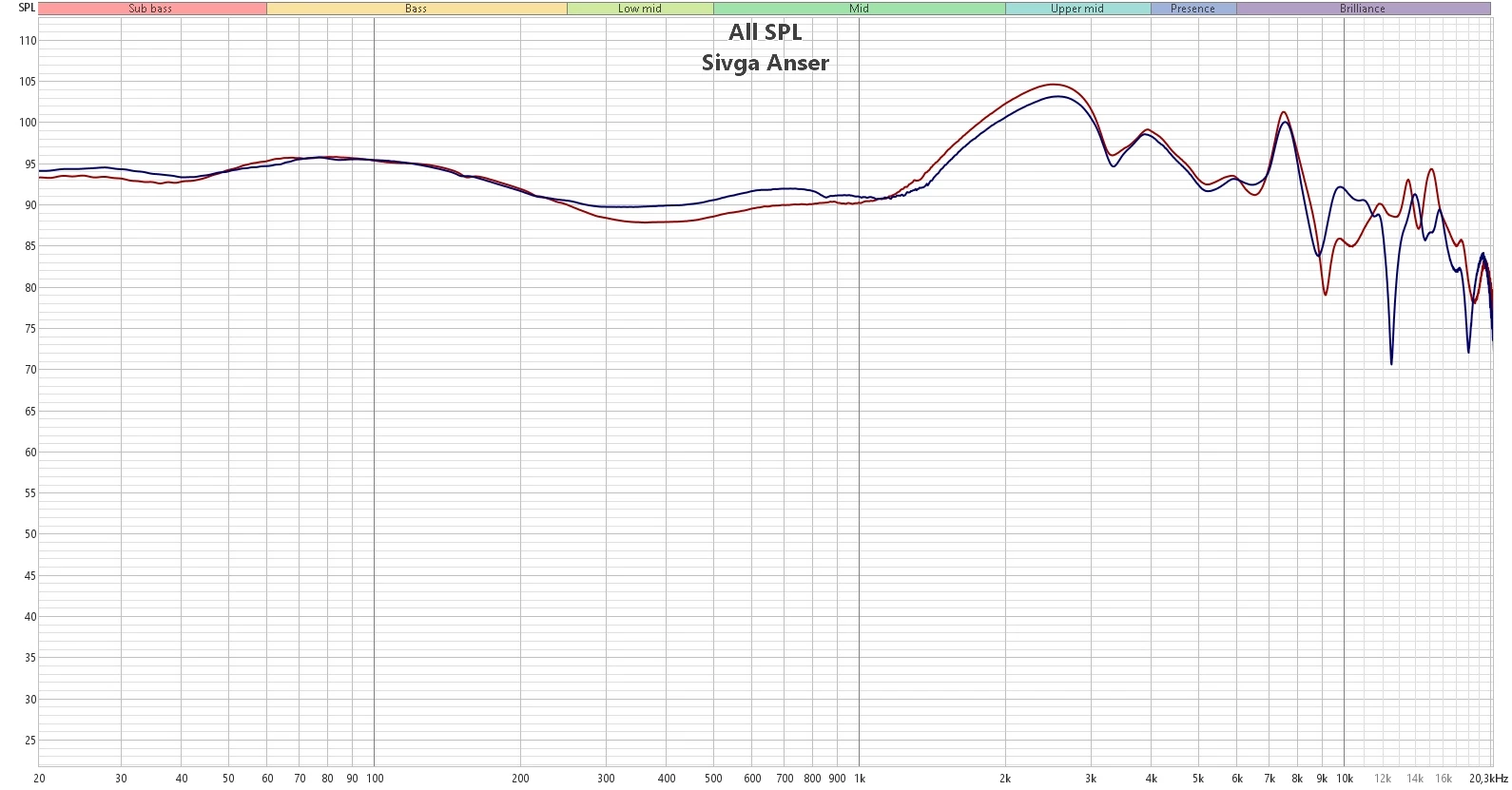
Frequency balance. 9.03 Sivga Audio Anser offer a very balanced and surprisingly versatile sound for such a compact housing. The lows are punchy, textured with pleasant warmth and excellent control. The mids stand out with juiciness, naturalness, and weighty separation of vocals and instruments, creating a sense of intimate and corporeal presence. The highs are energetic, detailed, and full of air.

Frequency Response Chart👇

sivga audio anser achh
Low frequencies. 9 Sivga Audio Anser show surprising power and texture in the lower range for such a small housing – this is the complete opposite of the sluggish or muddy presentation of inexpensive models. The bass here is tight, punchy, and has a pleasant warmth that conveys the weight and drive of the composition. The soundstage geometry is built so that the low frequencies form a reliable foundation without disturbing the clarity and order in pauses – everything remains dynamic and orderly. Attacks are fast, texture is clearly defined, and although they lack the infinite depth and scale of the higher-end Luan, they compensate with density, tangible impact, and excellent control, especially when you do a little tweaking.
Mid frequencies. 9.1 Vocals and instruments are presented with surprising weight and soulful fidelity, creating a sense of the performer being very close, with a lively and intimate presence. This sound is about pleasant versatility and deep immersion. However, in stock form, the upper mids can be slightly less open and airy, making the presentation a bit denser and cozier, but in return, it provides a warmer, enveloping background and complete naturalness of images – full bloom comes only after a simple mod.
High frequencies. 9 The highs are detailed, without excessive “dirt,” and the afterglows decay naturally, leaving good air and clarity. The range is presented comfortably, without excessive harshness or fatigue, however, lovers of maximum extension and brilliant sparkle might find them slightly less open and sparkling. In this aspect, planars like the Arya V2 remain the undisputed leaders.
Detail retrieval. 9 The headphones deliver a pleasant and very musical rendering of details with good micro-dynamics – all vocal nuances, instrumental transitions, and subtle textures come to the forefront, making the music juicy and engaging. However, this is detail retrieval through the lens of warmth and versatility – it serves overall musicality and pleasantness, not the cold search for every tiny detail, so in highly technical recordings, the planar detachment and absolute micro-nuances might sometimes be lacking.
Naturalness. 9.1 They excellently reproduce vocals, preserving their recognizable timbre, weight, and soulful warmth – the voice sounds close, corporeal, and with real human breath. Live instruments sound plausible and natural, with accurate reproduction of textures and dynamics. Despite a slight warmth in the presentation that adds juiciness and pleasantness, the overall impression of natural sound remains very strong – this is not cold sterility, but warm, lively, and versatile audiophilia. Minor nuances in transitions between ranges hardly affect the integrity of perception, making the music simply cozy and real.
Soundstage. 9 Anser demonstrate a wide and airy soundstage with precise localization of sound sources, creating a sense of space and freedom – everything unfolds naturally, with good scale and pleasant air between elements. Instruments and vocals are positioned clearly, with body and lightness, especially in the compact housing. However, the soundstage depth is not as infinite as in higher-end models or top planars (where everything is holographic and multi-layered), and the dynamics remain rather intimate and cozy.
Build quality. 9.5 Anser feature a compact and very comfortable housing with rotating earcups and impeccable build quality. The headphones are made from lightweight and premium materials, giving them not only a practical and mobile look but also excellent comfort during extended use – they can be comfortably worn around the neck or in a bag without extra weight or bulk.
Read more.
Comfort. 10 The headphones offer excellent comfort for long listening sessions. Their lightweight and thoughtful design with soft ear pads and moderate clamping force ensures a comfortable fit, causing no fatigue even after several hours on the head.
Durability. 10 They feel very reliable and truly high-quality built – lightweight materials, durable plastic, metal in the rotating mechanisms, and flawless fitting of parts inspire full confidence that they will easily withstand years of active daily use without any issues.
Design. 10 Sivga’s approach to headphone design has always commanded respect, and the Anser are a prime example. The look of these little ones is pure brand philosophy: compact rotating earcups, lightweight housing, quality materials, and no superfluous details.
Sivga Audio Anser accessories
Accessories. 8 Inside are the headphones themselves, a high-quality detachable cable (usually OFC with a 3.5mm jack and connectors on the earcups for easy replacement), a 6.35mm adapter, a soft fabric or leather case (or pouch) for storage and transport, plus sometimes spare ear pads or cleaning cloth. No hard cases or balanced cables are included – this is typical for Sivga, where the focus is on sound and materials, not on a wealth of accessories.

7. Monoprice Monolith 9.11Affordable open-back planar headphones with a dense, full-bodied, and incredibly comfortable sound for heavy genres
Drivers
106mm Planar
Impedance
50 Ohm
Sensitivity
130 dB
Frequency response
10 Hz-50 kHz.
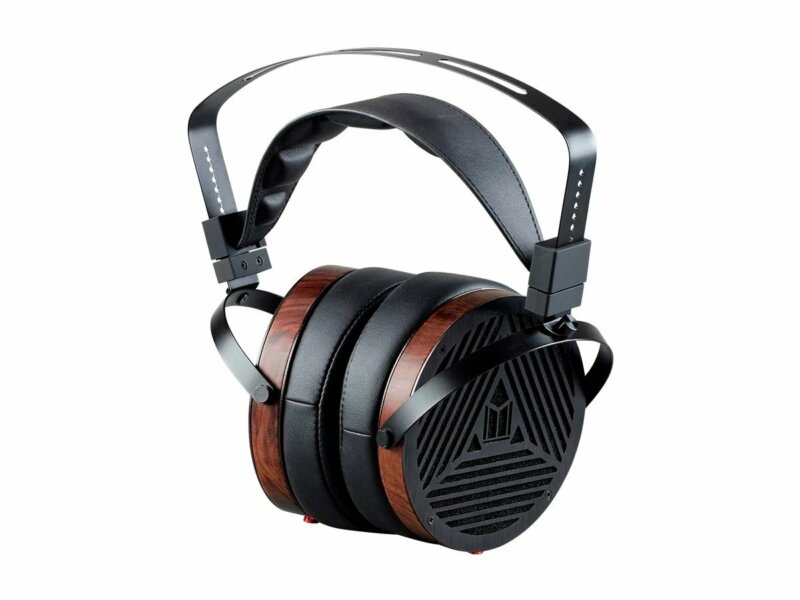
Monoprice Monolith


Monoprice Monolith $150–250 – the best open-back full-size wired headphones with a dense, full-bodied, and incredibly comfortable sound for lovers of heavy genres. These open-back planar headphones feature a large 106mm planar driver with excellent dynamics and control, in a lightweight and durable housing with comfortable ear pads.

Reasons to buy:
  • Rich and full-bodied sound
  • Surprisingly beefy for an open type
Reasons not to buy:
  • Not for audiophile analytics
Sound. 8.9 These planars impress with their full-bodied presentation and surprising density for an open-back type. The lows are fundamental, rich, and have real weight, the mids are juicy, saturated, and comfortable, where everything sounds dense and pleasant, and the highs are soft and smooth, without any piercing harshness or early roll-off – the highs extend naturally, without leaving a feeling of being cut off. The soundstage is wide and open, but with a sense of density and coziness. Overall, they provide an incredibly comfortable and engaging musical immersion – it’s not about audiophile analytics and brilliance, but about a dense, rich, and cozy sound that perfectly suits metal, rock, and all heavy music where a real foundation and lack of fatigue are needed, even after long sessions.


The main advantage of the Monoprice Monolith sound is the fundamental, full-bodied, and incredibly dense bass combined with juicy, comfortable, and saturated mids, where everything sounds rich and cozy. The main drawback is that the highs are soft and have an early but natural roll-off, without piercing harshness or diamond-like brilliance, which sometimes results in a loss of air, sparkle, and micro-details in lighter genres – everything here is geared towards density and comfort, not audiophile openness and analytics.
Read more.
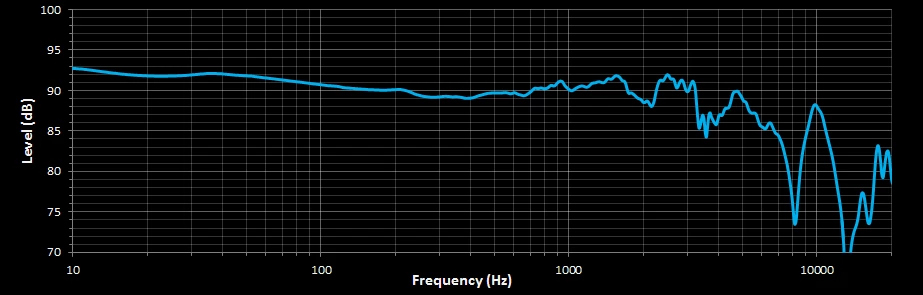
Frequency balance. 9 Monoprice Monolith offer a dense, full-bodied, and very comfortable sound with an emphasis on the lower half of the spectrum. The lows are fundamental and rich with real weight and density. The mids stand out with juiciness, saturation, and a cozy presentation of vocals and instruments, creating a sense of warm and enveloping presence. The highs are soft, smooth, and without any harshness, with a natural roll-off that doesn’t fatigue the ears even during long sessions. Overall, the balance is geared towards comfort and density – it’s not about sparkling openness and analytics.

Frequency Response Chart👇

monoprice monolith achh
Low frequencies. 9.3 Monoprice Monolith demonstrate surprising fullness and density in the lower register, which is the complete opposite of the light and airy presentation of typical open-back models. The bass here is rich, dense, and has real weight that conveys the foundation and coziness of the composition. Attacks are confident, texture is saturated, and although they lack the infinite extension and transparency of top technical solutions, they compensate with density, tangible impact, and comfort, especially in heavy genres.
Mid frequencies. 9 Vocals and instruments are presented with saturation and fullness, creating a sense of warm, enveloping presence. This sound is about coziness and foundation, where everything lies densely and pleasantly. However, compared to more technical open-back models, there is a noticeable lack of transparency and lightness, which makes the presentation denser and thicker, but in return, it gives the listener incredible comfort and lack of fatigue even during long sessions, with complete orderliness and absence of harshness in musical images.
High frequencies. 8.7 The highs are clean, without “dirt” or harshness, and the afterglows decay smoothly and naturally, leaving a sense of coziness and lack of fatigue. The range is presented calmly, without peaks or fatigue even during long sessions, however, lovers of maximum air, sparkle, and “diamond” shine might find them insufficiently bright and open. In this aspect, HiFiMAN Arya V2 remain the undisputed leaders.
Detail retrieval. 8.7 Monoprice Monolith deliver warm and saturated rendering of details with good micro-dynamics – nuances of guitars, drums, and vocals confidently come to the forefront, making the music dense and cozy. In heavy and multi-layered tracks, instruments don’t merge, maintaining clear separation and fullness, without turning into a mess even in the most overloaded mixes. However, this detail retrieval comes through the lens of density and comfort – it works for overall density and pleasantness, not for cold analysis of every speck of dust.
Naturalness. 8.9 Here, the concept of naturalness is interpreted not through audiophile transparency or listening to endless trails, but through physical tangibility and sound weight. This is a case where an open-back design plays unexpectedly weighty and corporeal. This is a dense, saturated sound that is perceived as very comfortable and organic, especially if you are not chasing dry analytics, but are looking for a cohesive, full-bodied presentation.
Soundstage. 9 Here the situation goes against the usual expectations for open-back headphones. We don’t get that infinite, rarefied air or an attempt to artificially inflate the space to a stadium. The soundstage is built on different principles: it is incredibly dense, thick, and saturated. Sound images are presented large, with distinct corporeality and weight – they can literally be touched. The space here is not so much wide as it is solidly filled; this is a story not about listening to echoes in distant corners, but about a comfortable, monolithic wall of sound that doesn’t break down into molecules but envelops the listener with its fundamentality.
Build quality. 9.63 Monoprice Monolith have a durable and lightweight housing with open earcups and impeccable build quality in a typical planar style. The headphones are made of reliable materials — aluminum, high-quality plastic, and comfortable ear pads, which give them not only a practical and modern look but also excellent comfort for prolonged use — the weight is well distributed, nothing presses, and the large earcups fully encompass the ears.
Read more.
Comfort. 10 Everything is done humanely here. These are classic large “earmuffs” — large, spacious earcups that completely surround the ears, without pinching or creating excess pressure anywhere. The ear pads are soft and pleasant to the touch, the fit is relaxed. You can wear them for a very long time without the slightest fatigue. The ergonomics here completely match the character of the sound: everything is set up so that nothing distracts or strains you during listening.
Durability. 10 They feel very sturdy and truly reliably built — aluminum, durable plastic, and quality construction inspire full confidence that they will easily survive years of active daily use without any problems. The materials look solid and proven, there is no feeling of fragility or cheapness whatsoever.
Design. 10 Externally, this is absolute classic, which immediately sets the right mood. Before us are large, full-size earcups made of natural wood framed in metal — a combination that always looks advantageous and expensive. There is no flirting with futurism or cheap gloss here. The design is as honest and utilitarian as possible: everything is subordinated to the idea of home comfort and reliability. They look massive and substantial, like solid furniture or old equipment, creating a sense of cozy weight and premium feel that modern plastic competitors often lack.
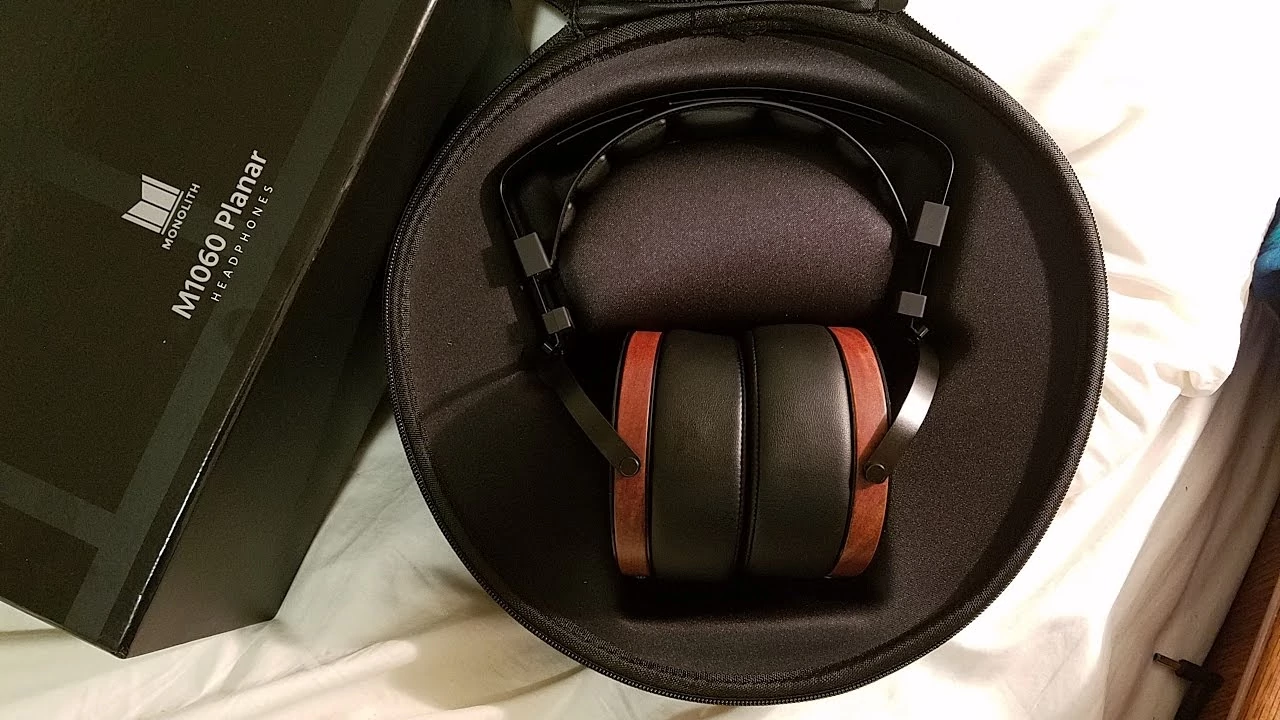
Monoprice Monolith Package Contents
Accessories. 8.5 Inside — the headphones themselves, a detachable cable (usually 2–3 meters of OFC with a 3.5 mm jack and connectors on the earcups for easy replacement), an adapter to 6.35 mm, spare ear pads (often velour and leather included for different tastes), and sometimes a fabric pouch. There are no hard cases, balanced cables, or additional accessories in the box — this is classic Monoprice: emphasis on sound and price, not on packaging luxury.

8. HiFiMan Deva Pro 8.95The best entry-level planar wired headphones — a benchmark for punchy drive, energetic speed, and assertive presentation
Drivers
Planar Magnetic
Impedance
32 Ohm
Sensitivity
93.5 dB
Frequency response
20 Hz-20 kHz.
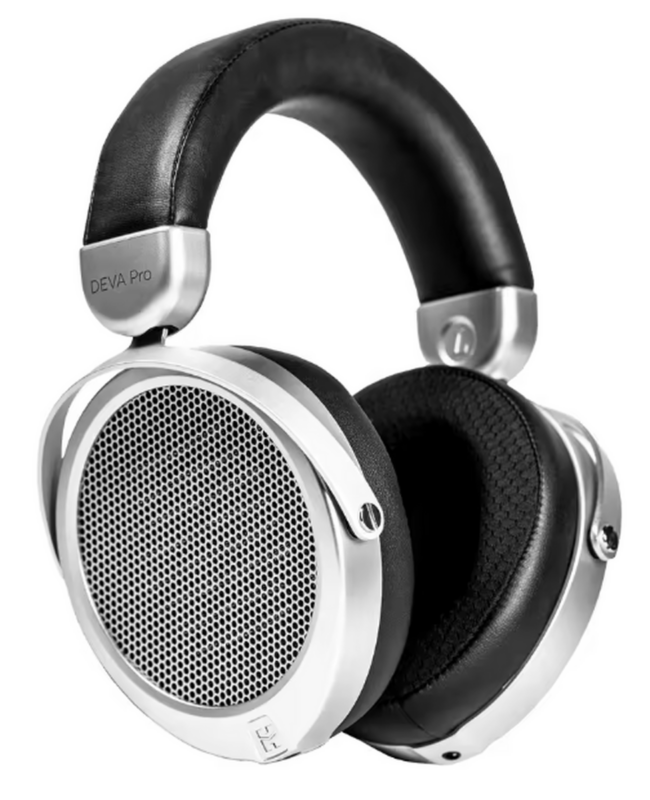
HiFiMAN Deva Pro

HiFiMAN Deva Pro $85–120 are the best entry-level planar wired headphones with a punchy, dynamic, and energetic sound for those who want their first taste of planar drivers. These open-back, over-ear headphones feature a proprietary planar driver with an ultra-thin diaphragm and Stealth Magnets technology for high speed and detail, in a lightweight housing with comfortable ear pads.

Reasons to buy:
  • Expansive soundstage
  • Planar speed
  • Moddability
Reasons not to buy:
  • Lightweight low-end
  • Dry presentation
Sound. 8.63 These headphones impress with their punchy presentation and energetic rendition of the entire range. The lows are punchy and fast, providing good impact and dynamics, the mids are detailed and straightforward, with fast attack and decent expressiveness, and the highs are bright and fast, adding speed and openness without much fatigue. The soundstage is wide and open, with planar speed and good separation. Overall, they provide a dynamic and energetic musical immersion — this is an affordable and feisty entry into planars, offering drive and speed, but the timbres are not always perfectly natural, and the presentation is more about drive than subtle emotion.


The main advantage of the HiFiMAN Deva Pro sound is that signature planar magic, which gives a phenomenal sense of air and freedom, where the soundstage unfolds widely and expansively, and the mids are presented with crystal clarity and speed. The main disadvantage is the noticeable lightness of the low frequencies, which lack physical mass and dense impact, making the sound seem too ethereal and devoid of the fundamental corporeality that dynamic drivers provide.
Read more.
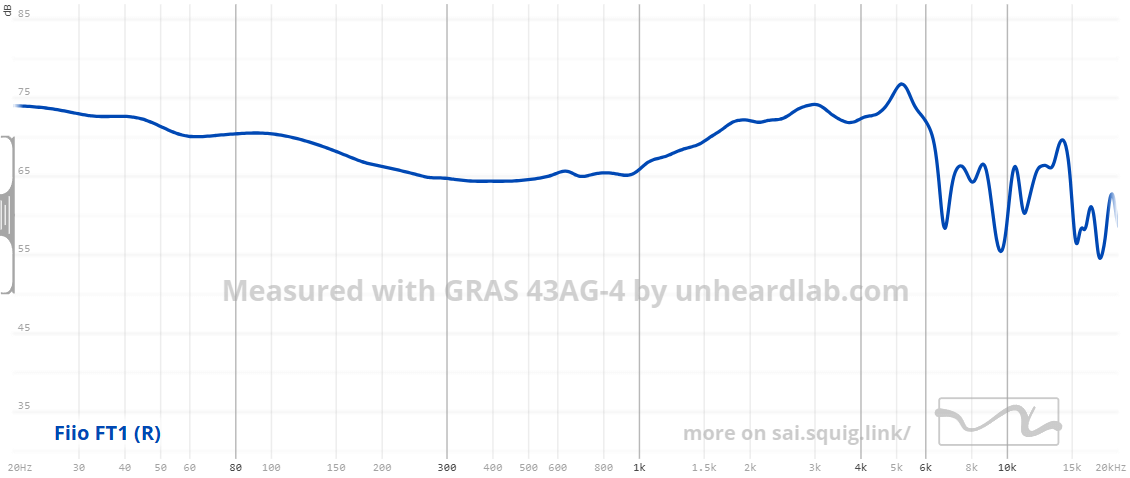
Frequency balance. 8.83 Here we are dealing with the classic, recognizable HiFiMAN signature — it’s a realm of air and speed. The balance is deliberately shifted from dark density towards a bright, ethereal presentation. Low frequencies play a supporting role here: they are fast, crisp, but lack massive weight and that “fat” foundation that bassheads seek. The mid-range is a benchmark of transparency and lightness, with not an ounce of indistinctness or excess warmth. High frequencies rule the roost, providing that phenomenal sense of endless space and detail, turning listening into flight rather than immersion in a dense mass of sound.

Frequency Response Chart👇

Fiio FT1 Frequency Response
Low frequencies. 8.5 Here we encounter the classic planar “diet.” The bass in the Deva Pro is about speed and definition, not a massive hammer blow. Low frequencies are presented dryly, tightly, and phenomenally fast: attacks are lightning-fast, aftersounds don’t linger, and there’s no boominess whatsoever. But if you’re looking for that fat, enveloping “foundation” and physical pressure that vibrates your eardrums, it’s not here. This is intelligent, light bass for those who prefer to hear the structure of the sound rather than feel its weight with their whole body.
Mid frequencies. 9 This is the very range for which it is worth looking at HiFiMAN planars at all. There is no “veil,” cotton wool, or attempt to smooth the edges here — the mids are presented as openly, brightly, and freely as possible. Vocals and instruments are not tied to the driver; they literally float in the air, creating a sense of amazing lightness and effortlessness. Yes, there might be a lack of that dense, “meaty” corporeality that some dynamic models provide, but in return, you get phenomenal separation of planes and that “holographic” quality, where each sound exists in its own space without interfering with its neighbors.
High frequencies. 9 The treble doesn’t try to be modest or “comfortably subdued” — it plays at full strength, extending far upwards with excellent extension. This is a bright, overtone-rich sound, where every cymbal and every ringing nuance scatters like crystal sparks. It is this range that is responsible for that phenomenal sense of freshness and openness that makes these headphones sound much more expensive than their price, literally pulling out all the hidden details of the recording.
Detail retrieval. 8.9 Detail retrieval in the Deva Pro is not an attempt to artificially “crank up” sharpness, but a natural consequence of the diaphragm’s excellent speed. We get that “layered” presentation where each instrument exists in its own vacuum, not mixing with its neighbors even in the fastest and busiest passages. This is a level of resolution that allows you to literally dissect the recording: the slightest nuances of sound production, light touches, and the “breathing” of the hall are audible. No “mush” or “blur” — just a strict, honest, and transparent picture that allows you to rediscover long-familiar tracks.
Naturalness. 8 This is not the sound that tries to deceive you with a beautiful analog coloration or add chesty velvetness to vocals that isn’t in the recording. The Deva Pro plays honestly, but in its own way: timbres are slightly brightened, presented dryly and lightly, without excess “fat.” Yes, you can catch that slight, barely noticeable “planar coloration” or synthetic tinge in the highs, but it’s perceived not as a flaw, but as a characteristic of the presentation that works towards the overall sense of freshness.
Soundstage. 8.8 The soundstage here is not just wide — it’s truly expansive and three-dimensional. The sound completely detaches from the earcups and head, building into a huge, air-filled space around the listener. This is that “audio-holography” effect, where musical images float freely, not confined by tight boundaries, with excellent separation of planes in width and depth.
Build quality. 9.75 HiFiMAN Deva Pro have a lightweight and modern housing with open earcups and good build quality in the typical HiFiMAN style. The headphones are made of practical materials — durable plastic, metal, and soft ear pads, which give them not only a technological and neat look but also good comfort for prolonged use — the weight is small, the fit is comfortable, nothing presses unnecessarily, and the optional Bluetooth module adds versatility.
Read more.
Comfort. 10 The headphones offer excellent comfort for long listening sessions. Their very lightweight and comfortable design with large soft ear pads and moderate clamping force provides a pleasant fit without causing fatigue or pressure even after several hours on your head. The weight is minimal, the earcups fully encompass the ears, and ventilation is good thanks to the open-back design — you can wear them for hours and not remember they’re there.
Durability. 10 They feel quite sturdy and reliably built — lightweight plastic, metal in the frame, and precise fitting of parts inspire confidence that they will easily survive years of normal daily use without serious problems. The materials look practical and durable, there is no feeling of cheapness or fragility whatsoever.
Design. 10 The appearance of this model is a rather bold mix of classic audiophile form factor and a peculiar retro-futurism. There is no noble wood or strict matte blackness inherent in higher-end lines; instead, there’s a striking silver finish and deliberate technological aesthetic. They look like a gadget from 80s science fiction: large, noticeable, with a characteristic protrusion for the Bluemini module, which immediately breaks the usual symmetry. This is a design not about material luxury, but about functionality and recognizability — the plastic, although high-quality, feels like a utilitarian solution.
HIFIMAN DEVA Pro Package Contents
Accessories. 9 HiFiMAN Deva Pro come in a neat branded box with good protection. Inside — the headphones themselves, a separate Bluemini R2R module (Bluetooth receiver and USB-DAC on R2R), a 3.5 mm cable for wired connection, a 6.35 mm adapter, a USB-C cable for the Bluemini, and a quick start guide with warranty. Everything you need to start in both wired and wireless modes is included right out of the box. Balanced cables or a hard case are not included — this is typical for HiFiMAN, many buy them separately.

9. FiiO FT1 8.94Best budget over-ear dynamic wired headphones — a "growth" hit with powerful bass

Drivers
60 mm DD
Impedance
32 ohms
Sensitivity
113 dB
Frequency range
10 Hz-40 kHz.
Fiio FT1

FiiO FT1 ($155) are over-ear, closed-back headphones focused on comfortable music listening. They are equipped with 60mm dynamic drivers with a polymer diaphragm, which, according to FiiO, provides deep bass and clear sound.

Reasons to buy:
  • Warm sound
  • Powerful bass
  • Moddability
Reasons not to buy:
  • Strong clamping force
  • Loss of treble transparency
Sound. 8.77 The headphones offer powerful and deep bass that remains sufficiently controlled and doesn’t “boom.” The mids are presented quite evenly, ensuring good clarity of vocals and instruments. The highs are slightly elevated, adding “air” and detail to the sound without excessive harshness. Overall, the FT1’s sound can be described as balanced with an emphasis on the low frequencies.


The main advantage of the sound of the FiiO FT1 is the huge, powerful, and textured bass from the 60mm driver combined with full, pleasant, and versatile mids, where everything sounds expansive and fun. The main disadvantage is that the stock treble can be a bit restrained and less sparkling, and the overall presentation requires refinement (cutting off “rags” and changing the cable), which causes a loss of openness, air, and detail without mods — the full potential is only revealed after simple upgrades, turning them into models worth twice the price.
Read more.
Frequency balance. 8.77 The frequency balance in the FiiO FT1 is shifted towards the low frequencies, which is characteristic of a warm sound. The bass feels quite pronounced but doesn’t drown out the other frequencies. The mids are presented quite evenly, ensuring clarity of vocals and instruments. The highs are slightly elevated, adding “air” to the sound.

Frequency Response Chart👇

Fiio FT1 Frequency Response
Low frequencies. 9 The bass in the FT1 is powerful, deep, and well-controlled. In the track Dr. Dre – “Still D.R.E.” (hip-hop/G-funk), the bass sounded tight and punchy, creating the necessary “groove.” However, at high volume levels, I noticed a slight loss of bass texture and elasticity, as well as a minor loss of clarity in sustained bass notes. I recommend not turning the volume to maximum to avoid these artifacts.
Mid frequencies. 8.8 The mids in the FT1 are presented quite evenly, ensuring a natural and clear sound of vocals and instruments. In the track Chris Stapleton – “Tennessee Whiskey” (country/blues), the vocals sounded expressive, although with a slight loss of body and emotional impact. The guitar and keyboards also sounded decent, although they lacked a bit of texture and “vintage” warmth.
High frequencies. 8.5 The highs in the FT1 are quite detailed and “airy.” In the track Radiohead – “Paranoid Android” (alternative rock), they added clarity and “sparkle” to the sound. However, at certain moments, I noticed a slight loss of transparency in the cymbals, as well as some dullness in the guitar notes and less pronounced overtones. Background effects sounded a bit closer than desired.
Detail retrieval. 8.7 Detail retrieval in the FiiO FT1 is at a good level for its price category. I was able to hear many small nuances in various tracks. However, in complex and dense arrangements, such as Metallica – “Enter Sandman” (heavy metal), there was a slight “mixing” of instruments, as well as a slight loss of attack and a minor blur during fast riff transitions. Vocal intonations are slightly smoothed, screams have slight compression, and some whispers lose depth. Cymbals become slightly less “sparkling,” and some airiness disappears from their sound. The bass drum is slightly recessed in the overall mix.
Naturalness. 8.8 The FiiO FT1 have a fairly wide soundstage, which creates a pleasant sense of space. In the track Pink Floyd – “Money” (progressive rock), the sound panning effects were conveyed decently, but the soundstage depth was somewhat lacking. The space didn’t feel fully three-dimensional, the saxophone and bass slightly moved closer to each other, losing ideal distance, and the drums sounded slightly less voluminous.
Soundstage. 8.8 The sound of the FiiO FT1 cannot be called absolutely neutral due to the emphasis on low frequencies. In the track Johnny Cash – “Hurt” (country/acoustic ballad), Cash’s vocals sounded a bit less soulful, losing some of their textural rasp. The guitar remained lively but lost a tiny bit of natural resonance. Nevertheless, the overall listening experience remained quite pleasant and immersive.
Build quality. 9.38 The FiiO FT1 combine classic shapes and natural materials. The wooden earcups look stylish and give the headphones a premium feel. The headband comfortably hugs the head, and the soft ear pads ensure a comfortable fit. The detachable cable adds convenience to use. Overall, the design and construction of the FT1 create the impression of a high-quality and well-thought-out product.
Read more.
Comfort. 9 The soft headband and ear pads provide a pleasant fit. The lightweight of the headphones also contributes to comfortable long listening sessions. The only thing worth noting is the noticeable clamping force, which may cause slight discomfort in the first few days of use (minus 1 point). The clamping force slightly weakens over time.
Durability. 9 The wooden earcups and metal headband create a sense of solid construction. However, attention should be paid to the points where the earcups attach to the headband, which use plastic elements. They may not be as durable with careless handling (minus 1 point). The detachable cable, while not looking super robust, is functional enough and easily replaceable. The overall build quality is good.
Design. 10 The headphones are made in a classic style using natural materials. The wooden earcups with a pronounced wood texture look elegant and noble. The soft headband and fabric ear pads complement the look, creating a sense of comfort and coziness. Overall, the FT1’s design can be described as understated and stylish, aimed at connoisseurs of classic design.
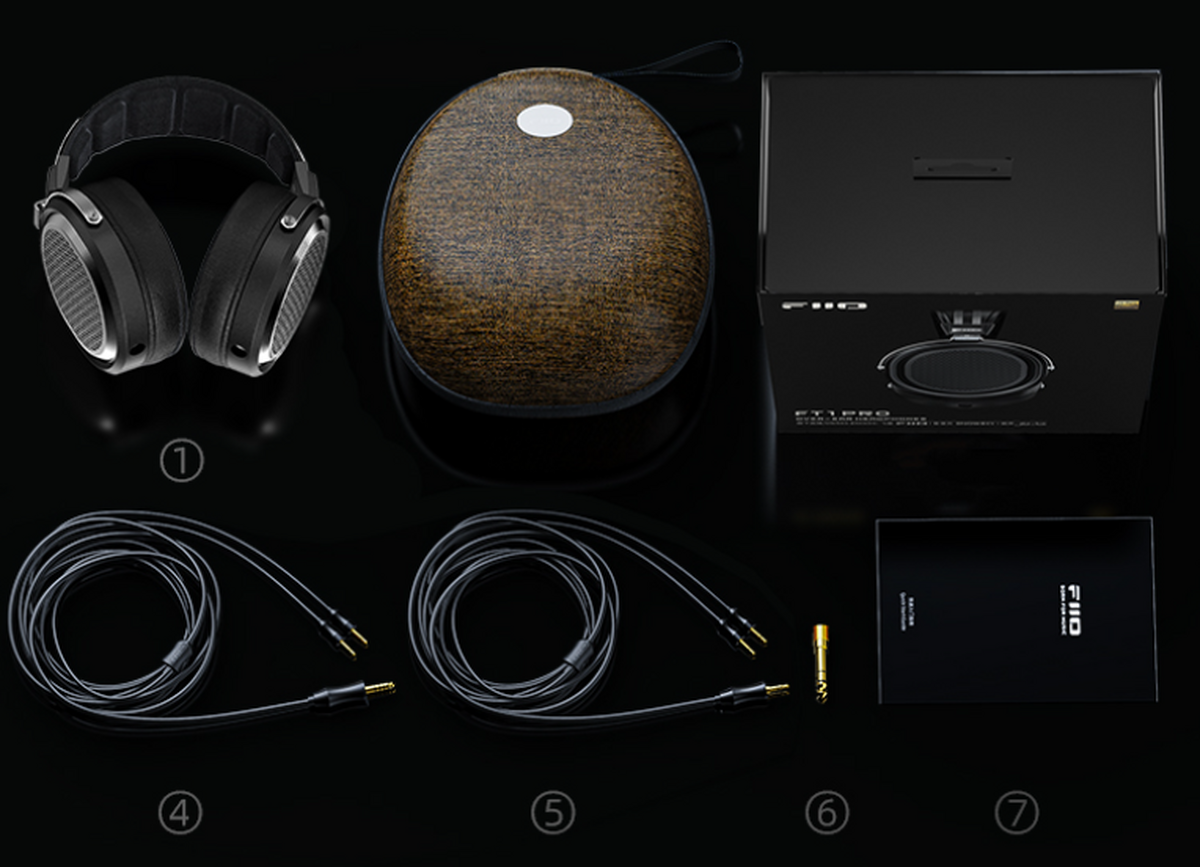
Fiio FT1 package
Accessories. 9.5 FiiO FT1 come in a large and neatly designed branded box with good protection for the contents — everything is packed tightly and thoughtfully. The set includes the headphones themselves, two detachable cables: a standard one with a 3.5 mm jack and a balanced one with a 4.4 mm for compatible sources, a 3.5 mm to 6.35 mm adapter, a hard protective case, a high-quality soft pouch for storage and transport, as well as brief documentation. The cables are made of oxygen-free copper (OFC), are quite flexible, and practical for everyday use. The ear pads are soft, made of artificial leather with a good fit and comfort right out of the box.

10. FiiO FT1 Pro 8.78Affordable over-ear planar headphones with a neutral-technical balance, accuracy, and spacious soundstage

Drivers
95 mm Planar
Impedance
20 ohms
Sensitivity
112 dB
Frequency range
70 Hz-40 kHz.
imgi 32 filoft1pro 920x920 1

FiiO FT1 Pro — this is the manufacturer’s promise to deliver exceptional sound through advanced technologies. The key to this is large 95×86mm planar-magnetic drivers with an ultra-thin (1-micron) diaphragm, featuring a patented dual coating (aluminum and sapphire) to improve conductivity, stiffness, and treble transparency. The result promises a spacious, almost boundless soundstage, outstanding dynamics, and a wide frequency range, while the headphones are lightweight (374g) and easy to “drive.”

Reasons to buy:
  • Total comfort
  • Excellent build
Reasons not to buy:
  • Midrange dip
  • Synthetic highs
  • Slightly closed-in sound
Sound. 8.29 FiiO FT1 Pro deliver a comfortable, warm sound with a well-perceived soundstage. However, a dip in the 1.5–2.5 kHz range reduces midrange transparency and makes vocals slightly distant. This results in a slight cloudiness and a sense of congestion in the sound, especially on busy or vocal-oriented tracks.


The main advantage of the sound is a fairly tight and confident bass combined with a wide horizontal soundstage. Low frequencies sound clear and without excessive boominess, creating a good foundation for music, although without pronounced physical impact. The soundstage is expanded horizontally — the sound extends beyond the head, giving a sense of space, although the vertical dimension and airiness are limited. The main disadvantage of the sound is a noticeable dip in the midrange and limited vertical soundstage. Because of this, vocals and individual instruments can sound slightly distant, and the overall sound picture seems less voluminous and not fully “breathing,” especially in busy compositions.
Read more.
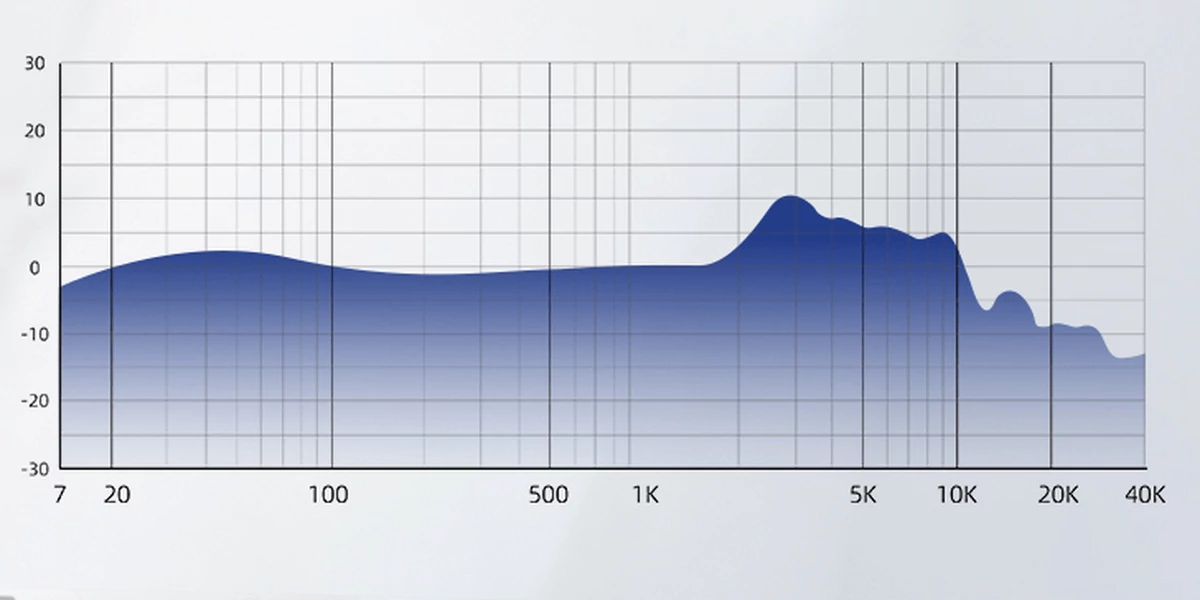
Frequency balance. 8.17 FiiO FT1 Pro form a softly expressed V-shaped curve with emphasis on the frequency range edges and a dip in the middle. Low frequencies are emphasized — the sub-bass goes deep, the mid-bass has mass and weight, but maintains good control and doesn’t become boomy. High frequencies are generally clean and detailed, but there’s a sense of lacking transparency.

Frequency Response Chart👇

fiio ft1 pro frequency response
Low frequencies. 9 They demonstrate good sub-bass depth and weighty, yet excellently controlled mid-bass.
Read more.

In (The Weeknd – Blinding Lights) during the intro and further into the track, the pulsating synth bass sounds clear, rhythmic, and fast — it literally carries the whole track. I can literally feel it driving the music forward, adding that neon mood. The sound is massive, rich, but that physical impact that gives you goosebumps is still missing. That’s why I’m deducting 0.5 points — not critical, but I’d like a bit more “kick.” And in (Michael Jackson – P.Y.T.), the bass guitar sounds great — especially in the verses and chorus: the plucks are clearly audible, there’s pleasant response and control. The bass is more about intelligence and nuances than brute force. But in overloaded moments, it gets a bit lost and merges with the others — losing separation. For this, minus 0.5 points.

Mid frequencies. 7.5 They demonstrate potential in the lower range, but the dip in the critically important frequency range prevents them from being fully transparent and forward. They are clean, but don’t always provide the immediacy and body you expect from the mids.
Read more.

In the track (Oasis – Wonderwall), the acoustic guitar in the intro sounds clear and full, with good string definition. But as soon as the vocals come in — they seem to be slightly pulled back. Liam is recognizable, but that signature rock delivery right in your face is missing. Especially in the chorus, you can hear that micro-details in the backing vocals and plucks are compressed and not fully realized. I’m deducting 1.5 points for vocal detachment and loss of subtleties. In (Michael Jackson – Man in the Mirror), Michael sounds good on the verses — clear, full-bodied, with character. But as soon as the arrangement gets denser (chorus, backing vocals, pads), the vocals lose focus, becoming part of the mass. Unnatural harshness is evident on high notes. I’m deducting 1 point for loss of emphasis and another for slight harshness in the treble.

High frequencies. 8 Rather neat than inspiring. There is clarity and order, but a lack of air, refinement, and upper “magic,” especially in busy tracks. The frequency dip makes the sound safe, but simultaneously limited.
Read more.

In the track (Eagles – Hotel California), the guitar solo sounds transparent and with good attack — that’s fine. But in the brightest moments, the sound can seem piercing, especially if you are sensitive to high frequencies. The ringing loses softness; instead of refinement, there’s a metallic aftertaste. I’m deducting 1 point — for localized but noticeable harshness. In (Daft Punk – Get Lucky, Lose Yourself to Dance), the highs show their weaknesses: in the first case, hi-hats and percussion lose their “sparkle” in busy sections, sounding smoothed and flat, as if the top is cut off — which removes the signature funky liveliness; in the second — shakers and percussive accents become tiring over time, especially at volume, due to the slightly harsh presentation and lack of refinement. Instead of transparency and lightness, there’s restraint and localized harshness, for which I’m deducting 1 point.

Detail retrieval. 8 The headphones can reveal nuances in calm music — breaths or string plucks are heard excellently. But give them something more complex, and the sound immediately breaks down: details are lost, the lows get bogged down, and the soundstage collapses.
Read more.

In the track (Oasis – Dont Go Away), everything sounds great at the beginning — acoustic guitar, vocals, atmosphere. But as soon as the drums, bass, and rhythm guitar kick in, everything starts sounding separate. Instruments lose coherence and begin to “scatter” across the soundstage, creating a sense of detachment. Instead of a cohesive picture, we get a collection of sounds without a unified breath, for which I’m deducting 1 point. In (Johnny Cash – Hurt), the atmosphere at the beginning is conveyed well — noises and studio nuances are audible. But Cash’s voice sounds unexpectedly dry and flat. The necessary warmth and weight that should give you goosebumps are missing. Instead of soulful vocals, we get a slightly “skimmed” image without emotional intensity. I’m deducting 1 point for dry vocal presentation and lack of expressiveness.

Naturalness. 8 It is at a good level, especially in conveying acoustic instruments and textures. However, in the upper range, a digital tinge is noticeable, which prevents the sound from fully unfolding naturally and organically. 
Read more.

In the track (Sting – Englishman in New York), Sting’s voice sounds confident and characteristic — with a rasp, warmth, and a sense of live performance. The saxophone is expressive, the double bass is weighty — everything is fine until the cymbals and hi-hats join in. It is they that break the “analog” feel: they sound dry and sometimes with a metallic aftertaste, especially at volume. This slight glassiness in the highs spoils the overall impression and hinders the full “liveness” of the sound. I’m deducting 1 point for unnatural treble presentation and loss of naturalness in the highs. As for (Lenny Kravitz — Low), at the start, everything is presented convincingly — guitars are crisp, the groove is felt, instruments are well-rendered. But as soon as the rhythm section kicks in, especially the fast hi-hats, I hear a slight synthetic tint emerge. Instead of an organic funky presentation, there are hints of artificiality that spoil the overall impression of a live recording. I’m deducting 1 point for the ringing percussion and loss of organic quality in the upper range.

Soundstage. 9 The headphones try to build a wide soundstage with precise positioning — the sound truly extends beyond the head. But the verticality is lacking: the lack of height flattens the soundstage, causing the sound to “stumble” at times, losing airiness. The immersion could be deeper, but the flat treble doesn’t allow it to fully unfold.
Read more.

In the track (Michael Jackson – Man in the Mirror), I hear that the vocals are centered, the choirs spread beautifully to the sides, instruments are layered — everything seems to be in place. But the denser the arrangement becomes, the more the sound turns into a collection of disparate elements. Something is missing in the coherence of the soundstage, it doesn’t “breathe” — I lack depth and vertical expansion. I’m deducting 0.5 points for the disconnection of elements and compressed verticality in dense passages. In (Yosi Horikawa – Bubbles), yes, the sound literally flies around me: clicks, drips, rustles — everything moves in space, and the first impression of this wide panorama is just great. But when I expect to hear sounds “above my head” or below my feet — there’s none. The vertical component is cut off, and some of the magic is lost. Instead of full holography, I get a wide but seemingly “squeezed” wide soundstage. I’m deducting 0.5 points for limited height and loss of a sense of volume from above.

Build quality. 10 I wore the FiiO FT1 Pro for hours, and I can confidently say: these headphones are built for total comfort, making them ideal for marathon listening sessions. With a weight of only about 374-375 grams, they feel surprisingly light on the head. The headband evenly distributes the weight, eliminating pressure points. And the ear pads? Large, fully encompassing the ears, with breathable fabric and the softest memory foam, they create a perfect seal without excessive pressure. The clamping force, in my opinion, is ideally chosen – the headphones sit securely but don’t squeeze.
Read more.
Comfort. 10 FiiO FT1 Pro demonstrate a high level of comfort, geared towards long and thoughtful listening sessions. Despite their more substantial construction, the headphones distribute weight well thanks to a well-designed headband and soft, deep ear pads that don’t press on the ears or create tension points. The clamping force is moderate and secure — sufficient for a stable fit, but without a “vise” feeling, and the fit remains comfortable even after several hours.
Durability. 10 The headphones inspire confidence. Their construction is made of an aluminum alloy, which ensures both strength and lightness. The ear pads made of breathable mesh fabric and protein leather (yes, that’s correct!), as well as the suede headband, look and feel high-quality, designed for long-term use. The attachments and adjustment mechanisms seem robust, without play, indicating attention to detail. Overall, the FiiO FT1 Pro give the impression of headphones that will last a long time and delight with their appearance and functionality for many years.
Design. 10 They are made in a strict, modern style, with a predominance of black color and metallic accents, which gives them solidity. The open earcups are particularly noteworthy, their design not only attracts the eye but also emphasizes their acoustic nature. The build quality is visually flawless: all elements are tightly fitted, without gaps or play. Despite their full-size form factor, they look quite elegant on the head, not bulky. The overall impression is reliability and thoughtfulness, without unnecessary details, but with a premium feel.
FiiO FT1 Pro Package
Accessories. 10 In the box, you’ll find the headphones themselves, a durable hard case for storage and transport, two OFC cables with interchangeable audio connectors (3.5 mm and balanced 4.4 mm), as well as a 6.35 mm adapter and a quick start guide. Such a set is rare in the sub-$300 segment: the package includes everything you need for comfortable connection to various sources, and the accessories are pleasing in quality and thoughtfulness.

11. HarmonicDyne x Zeos ERIS 8.81Affordable open-back dynamic headphones with a V-shaped frequency response for energetic sound

Drivers
50 mm DD
Impedance
32 ohms
Sensitivity
118 dB
Frequency range
10 Hz-70 kHz.
HarmonicDyne x Z

HarmonicDyne x Zeos ERIS ($244) are semi-open on-ear headphones created in collaboration between HarmonicDyne and the well-known audio blogger Zeos Pantera. They are equipped with 50mm dynamic drivers with ceramic-metal composite diaphragms, which, according to the manufacturer, provide a wide frequency range, deep bass, and minimal distortion.

Reasons to buy:
  • Powerful bass
  • Dynamic sound
Reasons not to buy:
  • Strong clamping force
  • Treble harshness
  • Midrange dip
  • Poor ventilation
Sound. 8.78 The ERIS have a pronounced V-shaped frequency response with emphasis on the low and high frequencies and some dip in the mids. This creates an energetic and dynamic sound that is well-suited for certain genres but may not appeal to lovers of neutral or balanced sound.The main advantage of the sound of the HarmonicDyne x Zeos ERIS is the powerful, deep, and punchy bass with excellent control and texture, which creates real “groove” and drive, ideal for heavy and energetic genres, combined with bright, detailed, and airy highs that add sparkle and openness. The main disadvantage is a noticeable dip in the midrange with a V-shaped frequency response, causing vocals and instruments to sound distant, losing body, warmth, and intimacy, and in busy tracks, there’s a mixing of details and slight harshness at high volumes.
Read more.
Frequency balance. 8.93 The balance is shifted towards the low and high frequencies, which is characteristic of a V-shaped frequency response. Bass dominates but does not drown out the other frequencies. The mids are somewhat pushed to the background.

Frequency Response Chart👇

HarmonicDyne x Zeos ERIS Frequency Response
Low frequencies. 9.3 The bass on the ERIS is powerful, deep, and well-controlled. In the track Dr. Dre – “Still D.R.E.” (hip-hop/G-funk), the bass sounded tight and punchy, creating the necessary “groove.” However, at high volume levels, I noticed slight distortion and “boominess.”
Mid frequencies. 8.7 The mids, as expected, are somewhat “dipped.” In the track Chris Stapleton – “Tennessee Whiskey” (country/blues), the vocals sounded a bit distant, lacking body and intimacy. Guitars and other instruments in the mid-range also sounded less expressive than desired.
High frequencies. 8.8 The highs on the ERIS are bright and detailed. In the track Radiohead – “Paranoid Android” (alternative rock), they added “air” and clarity to the sound. However, at certain moments, I noticed slight harshness and sibilance, especially at high volumes.
Detail retrieval. 9 Detail retrieval is generally at a good level, although due to the emphasis on bass and the dip in the mids, some nuances in the mid-range may be lost. In the track Metallica – “Enter Sandman” (heavy metal), in the busiest moments, there was a slight “mixing” of instruments.
Naturalness. 8.5 Due to the V-shaped frequency response, the ERIS sound cannot be called completely natural. In the track Johnny Cash – “Hurt” (country/acoustic ballad), Cash’s vocals sounded a bit unnatural, lacking warmth and intimacy.
Soundstage. 8.7 The soundstage on the ERIS is quite wide, but it lacks a bit of depth. In the track Pink Floyd – “Money” (progressive rock), the sound panning effects were conveyed decently, but the space didn’t feel fully three-dimensional.
Build quality. 8.88 The HarmonicDyne x Zeos ERIS leaves a pleasant impression. The earcups are made of metal, which is immediately felt by the weight and gives the headphones solidity. The headband is covered with soft fabric, similar to Alcantara or velour, and has sufficient soft padding for a comfortable fit. The ear pads are large, fully enclosing the ear, and also covered with soft fabric. The cable is detachable, with connectors on both earcups, allowing for balanced connection. Overall, the ERIS construction looks solid and well-assembled.
Read more.
Comfort. 8 In the first few minutes of use, the HarmonicDyne x Zeos ERIS feel very comfortable. However, after an hour or two, the drawbacks start to appear. The strong clamping force begins to press on the ears, causing discomfort (minus 1 point). Additionally, the ears start to sweat heavily due to poor ventilation of the ear pads, making long listening sessions not very pleasant (minus 1 point).
Durability. 9 In terms of durability, the HarmonicDyne x Zeos ERIS perform well. The metal earcups and headband look reliable, and the only potentially weak point is the plastic attachments of the earcups (minus 1 point). Separately, the excellent detachable cable deserves mention. Overall, the construction inspires confidence.
Design. 10 The HarmonicDyne x Zeos ERIS are simply magnificent! Understated, stylish, laconic – they create the impression of a high-quality and expensive product. The metal earcups, soft headband, and large ear pads look harmonious and thoughtful. This design, in my opinion, will appeal to absolutely everyone.
HarmonicDyne x Z Eris
Accessories. 8.5 HarmonicDyne x Zeos ERIS come with a well-thought-out set: the headphones themselves, a detachable 1.5m single-crystal copper cable with dual-sided connection (3.5mm to earcups and 4.4mm balanced connector), a soft pouch for storage and transport, and a brief instruction manual with a warranty card. The cable is high quality and allows immediate use of the headphones in a balanced system, enhancing soundstage expansion and detail. Package cons — no hard case for transport protection and no additional accessories or adapters (e.g., a 6.35mm adapter), which reduces the set’s versatility for frequent travel.

12. Grado RS2x 8.87Iconic open dynamic headphones for aesthetes, with an airy, fast sound and an intimate, engaging presentation
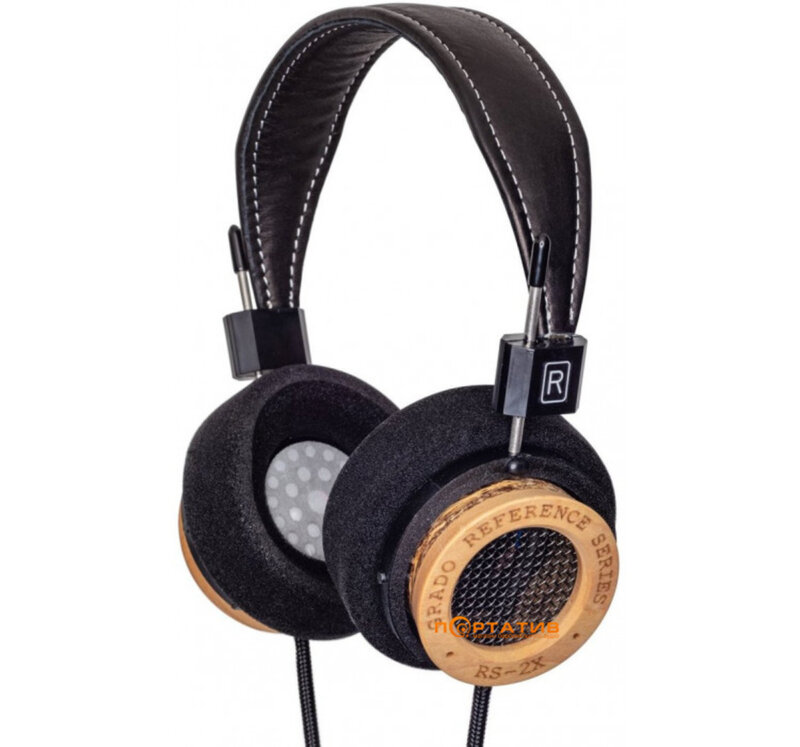
Drivers
44mm DD
Impedance
38 Ohm
Sensitivity
99.8 dB
Frequency response
14 Hz–28 kHz.
grado

Grado RS2x $550–600 — the best on-ear open-back wired headphones with an airy, fast, and incredibly aesthetic sound in the category of lightweight and refined models. These dynamic on-ear headphones feature a 44mm Reference Series driver with an improved voice coil and magnetic system for maximum speed and resolution, housed in an ultra-lightweight body with mahogany wooden earcups and a leather headband.

Reasons to buy:
  • Maximum freedom and air
  • Pure aesthetics
  • Moddability
Reasons not to buy:
  • Lightweight lows
  • Bright presentation
  • Niche sound
Sound. 9.12 The headphones are characterized by a bright and free presentation with an emphasis on speed, air, and detail retrieval, ideally suited for connoisseurs of sound aesthetics — pure beauty and lightness for instrumental, jazz, and acoustic music where bass weight and genre heaviness are not needed.


The main advantage of the Grado RS2x sound is an incredibly free, airy, and fast sound with an emphasis on speed and refined detail retrieval, where the mids and highs unfold with stunning lightness and sparkle, conveying the pure aesthetics and beauty of music. The main disadvantage is the light bass without sub-bass weight and depth, as well as a bright presentation without emotional richness, due to which, in heavy or bass-heavy genres, some of the impact and foundation is lost — these are headphones strictly for light, instrumental, and aesthetic compositions where drive and power are not needed.
Read more.
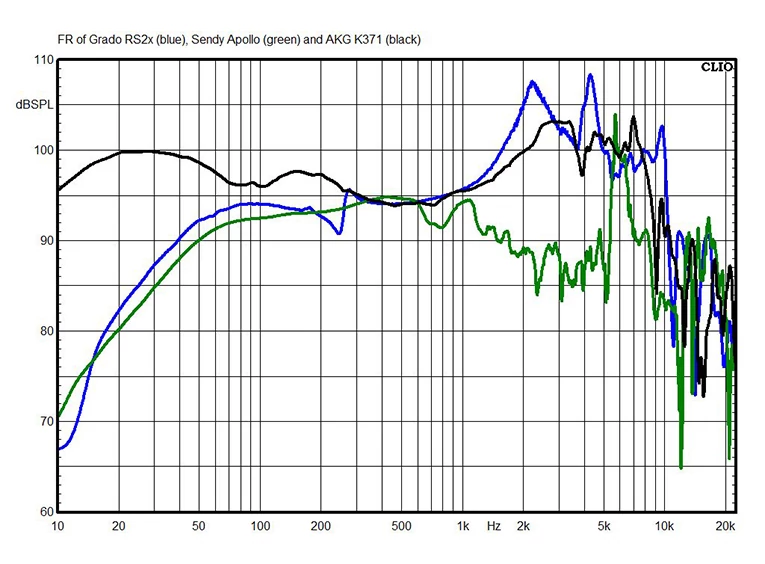
Frequency balance. 8.87 Grado RS2x offer a bright and very fast sound with an emphasis on speed and air. The lows are light and fast, providing good dynamics, but without sub-bass weight and depth. The mids stand out with openness, naturalness, and incredible speed, where vocals and instruments sound free and refined, creating a sense of pure aesthetics. The highs are sparkling, extended, and full of brilliance, adding maximum air and resolution without harshness. Overall, the balance is tuned for lightness and aesthetics — it’s not about versatility and power, but about a free, airy, and fast sound that perfectly suits instrumental and jazz, but is strictly not for heavy genres.

Frequency Response Chart👇

grado rs2x achh
Low frequencies. 7 Grado RS2x demonstrate surprising lightness and speed in the lower register, which is the complete opposite of the heavy and full-bodied bass of more versatile models. The bass here is fast, airy, and possesses refined dynamics that convey the rhythm and lightness of the composition without excess weight. Attacks are instantaneous, texture is finely rendered, and although they lack sub-bass depth, powerful impact, and the scale of top universal solutions, they compensate with speed, freedom, and the absence of any heaviness — the bass here is not for heavy genres, but for aesthetics and lightness.
Mid frequencies. 10 ​This is the absolute dominant feature and heart of this model, the reason why it’s worth engaging with the Reference series at all. The magic of the wooden earcups works at full capacity here: the mids are presented not just with detail, but with incredible, almost intoxicating warmth and body. The mids, as expected, are somewhat ‘recessed’. In the track Chris Stapleton – “Tennessee Whiskey” (country/blues), the vocals sounded a bit distant, lacking volume and intimacy. The guitar and other instruments in the mid-range also sounded less expressive than desired.
High frequencies. 9.6 The treble in the RS2x is presented with noble softness and a surprising ‘golden’ hue. They retain the highest detail retrieval and signature speed, but the sharp edges are masterfully smoothed out: sibilance doesn’t cut the ear, and cymbals sound full-bodied and weighty, not like shattered glass. This is a comfortable, ‘expensive’ presentation that allows you to enjoy music for hours.
Detail retrieval. 9.3 The RS2x reveal nuances through excellent rendering of texture and timbre. You hear not just the pluck of a string, but how the wooden soundboard resonates, you feel the physical ‘body’ of each instrument. The driver’s speed is phenomenal, so even in the busiest tracks, there’s no congestion, yet the presentation remains cohesive and musical.
Naturalness. 9.5 Strings, brass, vocals — everything sounds with excellent realism and tonal richness that is simply impossible to achieve with plastic or metal. The wooden earcups add those very noble resonances and aftersounds that make the sound ‘full-bodied’ and tangible.
Soundstage. 8.8 While the soundstage doesn’t boast infinite width like top-tier planars, it excels with phenomenal depth layering and a 3D effect. Instruments aren’t lined up in a flat wall of sound; they breathe and have clearly defined boundaries in the space around your head.
Build quality. 8.25 Grado RS2x feature an ultra-lightweight and open design with mahogany wooden earcups and impeccable build quality in the signature Grado tradition. The headphones are made from premium materials — wood, metal, and a leather headband, which not only gives them an elegant and timeless look but also outstanding lightness with good comfort during prolonged use — nothing superfluous, everything breathes and doesn’t press.
Read more.
Comfort. 8 The headphones offer good comfort specifically for not-too-long, but very engaging listening sessions — those when you want to completely disconnect from the world and dive into music with maximum immersion, not just as background. Their ultra-lightweight and simple construction with foam ear pads (on-ear) and minimal weight ensures an acceptable fit, without causing significant discomfort even after a couple of hours of use. However, the headband pressure might remind you of itself on the crown of your head, and during very long sessions or with glasses, minor fatigue may appear — this is classic Grado: nothing superfluous, everything breathes and is free, but it’s not the softest option for those who wear headphones all day and listen to music in the background.
Durability. 8 The materials look high-quality and durable, with no feeling of fragility or cheapness. Everything is done at a level that commands respect and the feeling of ‘a thing for years to come’ — with normal handling, the frame and headband will easily last without loosening. However, the problematic spot is the signature foam ear pads (F-Cushion or L-Cushion), which over time start to crumble and flake, requiring replacement every year or two with active use, and the wooden earcups require care to avoid scratches.
Design. 10 There isn’t a gram of modern soulless plastic here — only noble wood, natural leather, and metal. This is the very ‘warm’ vintage that only becomes more valuable with age, evoking tactile and visual delight even before you press the Play button.
Grado RS2x package contents
Accessories. 7 The box contains the Grado RS2x open-back wired headphones with a non-detachable 8-core cable and a 3.5mm connector, a 3.5mm to 6.3mm adapter for connecting to stationary audio equipment, warranty materials, and a branded card with Grado’s history; no cases, charging cases, replacement cables, or additional accessories are included — only everything necessary for listening, without decorative excesses.

13. Sivga Audio Robin 8.61Affordable closed-back dynamic headphones with a surprisingly mature, grand sound

Drivers
50mm DD
Impedance
32 Ohm
Sensitivity
105 dB
Frequency response
20 Hz-20 kHz.
sivga audio robin

Sivga Audio Robin $100–150, after a mod by Alexander Chernov, become the best closed-back over-ear wired headphones with a mature, grand, and incredibly lively sound in their class. These closed-back dynamic headphones feature a 50mm driver in a wooden housing (natural rosewood or zebrawood with glossy or matte lacquer finish, aviation aluminum in the yokes and headband) with excellent ergonomics — lightweight (around 280g), soft protein leather ear pads with memory foam, and flexible adjustment for long-term comfort.

Reasons to buy:
  • Soundstage is cosmic (for closed-back)
  • Mature bass
  • Lively timbres
  • Moddability
Reasons not to buy:
  • Mod required (not the same without it)
  • Protect the lacquer
Sound. 8.4 Sivga Audio Robin (after mod by Alexander Chernov) only confirmed how cool a simple base can grow into a full-fledged mature instrument. These headphones impress with the scale and liveliness of their sound in a closed-back enclosure. The lows have become deep, clear, and with real impact — no boominess or congestion, just pure power. The mids are full-bodied, warm, and very natural; vocals and instruments sound intimate, with that very soulful warmth of wood. The highs are detailed, free, and full of air, adding lightness and openness without any harshness. The result is a versatile and very emotional listening experience: from ordinary fun audiophilia after proper refinement, a serious closed-back sound with soul, scale, and character emerges.


The main advantage of the modified Robin’s sound is the phenomenal soundstage for a closed-back type and deep, articulate bass without a hint of boominess. The sound detaches from the earcups and breathes. The main disadvantage is that this sound is not available ‘out of the box’; it requires intervention. And, perhaps, for hardcore audiophiles, there are still slightly more emotions and ‘body’ here than dry analysis.
Read more.
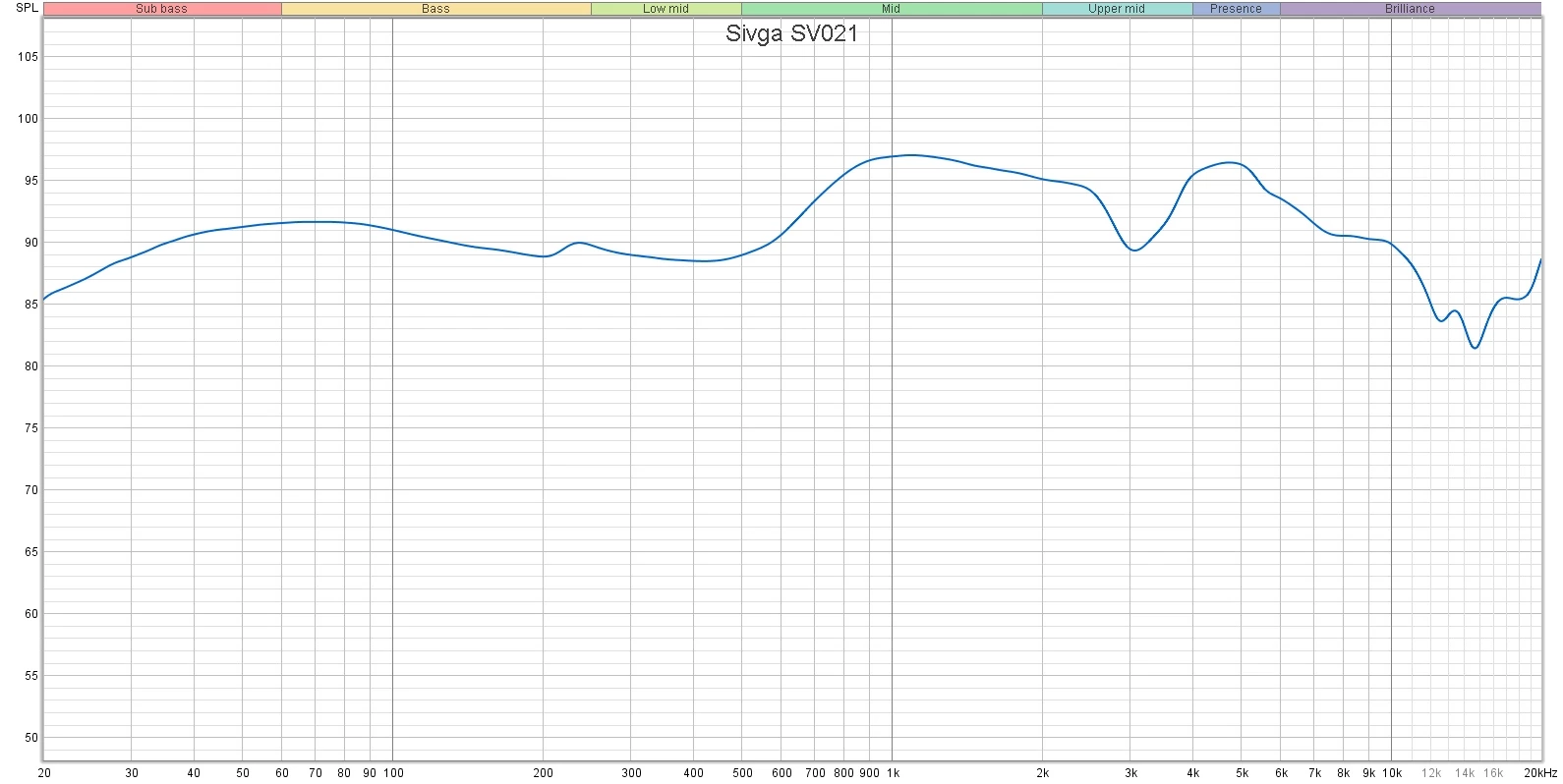
Frequency balance. 8.5 The mod removes that very ‘crookedness’ of the stock. Instead of an intrusive V-shape with bloated mid-bass, we get a powerful, balanced sound. The bass no longer bleeds into the mids; it knows its place. The frequencies have lined up in a smooth curve with a light, pleasant ‘warm’ coloration that the wood provides. Now it’s versatile: it can play jazz with soul and metal with due impact.

Frequency Response Chart👇

sivga audio robin achh
Low frequencies. 8.8 This is where the revolution happened. In stock, the bass was boomy and muddy. In the mod, it hits. The mod cleared the space, and a real, visceral sub-bass emerged that you feel in your body. The mid-bass became punchy, fast, and textured. The mud is completely gone. Now it’s the foundation on which the track is built, not a cotton blanket covering the music. The control is remarkable.
Mid frequencies. 8.7 As soon as the boomy bass disappeared, the mids emerged from the shadows. Vocals now sound not ‘somewhere out there,’ but right in front of you, clear and full-bodied. The ‘veil’ is gone. The wooden earcups give acoustic instruments and voices that very natural warmth and body, but now with excellent layering. It’s a lively, breathing midrange, full of emotion.
High frequencies. 8 They remained comfortable, but due to the overall cleansing of the spectrum, they gained more air. Cymbals shimmer more naturally, and the congestion is gone. It’s still not ‘sparks from your eyes’ for treble-phobes; it’s a neat, detailed presentation that adds life but allows you to listen for hours without fatigue.
Detail retrieval. 7.9 In stock, details drowned in fat. In the mod, they surfaced. Now you can hear fingers sliding on the fretboard, you can hear the hall’s breath. This isn’t the microscopic analysis of an armature; no. This is natural informativeness: you hear everything you need to perceive the track’s story, and nothing gets blurred.
Naturalness. 8.2 Sivga in wood is always about life. And after the mod, when the synthetic boominess disappeared, naturalness reached a new level. Instruments sound as they do in life, not in a recording. The sound has body, weight, and correct timbres. You believe them. 
Soundstage. 9 This is the killer feature of the modified Robins. I don’t know how, but in a closed-back enclosure, we get sound that plays *outside*. The soundstage is huge, wide, with excellent depth layering. The ‘box’ effect is completely gone. You’re sitting in a hall, not in a box. For closed-back headphones at this price — it’s simply illegal.
Build quality. 9.13 No changes here — all the same gorgeous materials. Natural wood under lacquer, aviation aluminum. The build is monolithic, nothing rattles or creaks. Feels like an expensive, status item in your hands.
Read more.
Comfort. 10 Ergonomics remain reference-quality. Weightless, with the softest ear pads. The mod doesn’t affect external comfort at all, so you get the same ‘couch for your ears,’ but with drastically better sound.
Durability. 9 Simplicity of construction is the key to longevity. Metal and wood will survive a lot. The detachable cable means you don’t have to worry about kinks. The main thing is to protect the lacquer on the earcups from scratches; beauty requires care.
Design. 10 Understated classic. Matte metal and glossy wood — a combination that never ages. They look expensive, mature, without unnecessary flashiness.
sivga audio robin komplektacija
Accessories. 7.5 The Sivga Robin headphones come with everything necessary to start using them without unnecessary accessories — the Sivga Robin headphones themselves, a detachable audio cable with 2.5mm connectors, a fabric pouch-case for carrying/protection from scratches, and a 3.5mm to 6.35mm adapter for connecting to amplifiers or stationary equipment; all this is packed in a neat compact box, but additional accessories, enhanced protection cases, or spare cables are usually not included.

14. Fosi Audio i5 8.66Large over-ear open planar magnetic headphones with a spacious, airy soundstage, good detail retrieval, and natural timbres
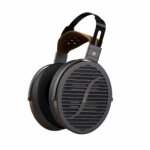
Drivers
Planar Magnetic 97 mm
Impedance
28 ohms
Sensitivity
98 dB
Frequency range
10 Hz-50 kHz.
Fosi Audio i5

Fosi Audio i5 — wired, over-ear, open planar magnetic headphones from 2025 for $522. The interest is obvious: 97mm planars, open-back design, and Hi-End ambitions for half a thousand dollars.

Reasons to buy:
  • Premium materials
  • Warm sound
Reasons not to buy:
  • Bulkiness
  • Weak sub-bass
  • Demanding of amplifier
Sound. 8.92 Fosi Audio i5 deliver a warm, detailed, and airy sound with natural timbres and low distortion, but they require a powerful amplifier to unlock their full potential. The overall character is neutral-analytical with a slight emphasis on the mid-bass and treble.


The main advantage of the sound: Spacious, airy soundstage with high detail retrieval and natural timbres, providing three-dimensional immersion and accurate positioning of instruments and vocals. The main disadvantage of the sound: Insufficient sub-bass intensity due to the open-back design, which limits power in bass-heavy genres like EDM or hip-hop, making the sound less impactful for bassheads.
Read more.
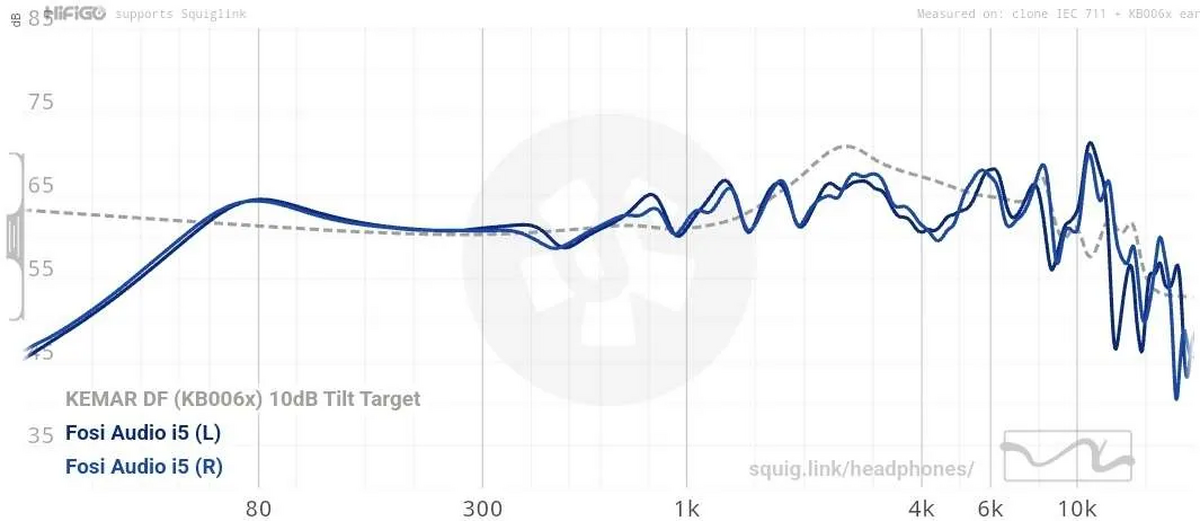
Frequency balance. 8.67 Warm and controlled: the mid-bass is elastic and textured, but the sub-bass is weak due to the open-back design and doesn’t provide a wall of sound for bassheads. The mids are clean and neutral, with a slight emphasis on the upper vocal range, but become thin on weak amplifiers. The treble is detailed and comfortable, without harshness, although it can become fatiguing with bright sources.

Frequency Response Chart👇

Fosi Audio i5 Frequency Response
Low frequencies. 8.5 The bass is warm, elastic, and controlled, creating a foundation but not a ‘wall of sound,’ which limits powerful sub-bass.
Read more.

In (The Weeknd – Blinding Lights), the kick drum in the intro (0:00–0:10) sounds blurred, and the synth bass in the chorus (0:50) loses intensity due to the open-back design, reducing drive and depth (-1 point). In (Michael Jackson – P.Y.T.), the slap bass in the intro (0:10) is elastic and textured, but in fast passages (1:30), the sub-bass is not powerful enough, slightly losing the track’s energy (-0.5 points).

Mid frequencies. 8.5 Neutral, clean, and detailed with an emphasis on the upper vocal range, providing excellent resolution of vocals and instruments, but with a weak setup, they lose fullness and become ‘thin’.
Read more.

In the track (Oasis – Wonderwall), Liam Gallagher’s voice in the verse (0:15–0:45) is textured but slightly thin, and the acoustic guitar in the intro (0:00–0:15) loses fullness in the lower mids, reducing emotional richness (-1 point). In (Michael Jackson – Man in the Mirror), the backing vocals in the chorus (1:00–1:30) are clearly layered, but slightly ‘lean,’ causing the vocal stage to lose some warmth and body (-0.5 points).

High frequencies. 9 Neutral, detailed, and comfortable, with excellent extension and no harshness, but can become slightly bright, causing fatigue.
Read more.

In (Eagles – Hotel California), the guitars in the final solo (5:30–6:30) are sparkling and bright, but the treble is slightly emphasized, adding a hint of fatigue; the percussion in the intro (0:00–0:30) is clear, but the cymbals lose some softness (-0.5 points). In (Daft Punk – Get Lucky, Lose Yourself to Dance), the layered shakers and synths in the verses/choruses (0:40–1:20) sound wide and airy, but the treble is sometimes excessively bright, reducing the comfort of the disco groove (-0.5 points for both tracks).

Detail retrieval. 9 High, with fast response and low distortion, rendering nuances well, but the open-back design is sensitive to ambient noise.
Read more.

In the track (Oasis – Dont Go Away), the reverb of drums and guitars in the finale (4:00–4:50) is precisely positioned, but in a noisy environment, ambient noise slightly muffles the subtle reverb tails, reducing the mix’s airiness (-0.5 points). In the track (Johnny Cash – Hurt), in the verse (0:20–1:00), breaths and finger friction on strings sound intimate, but ambient noise can mask these micro-details, reducing the sense of recording intimacy (-0.5 points).

Naturalness. 9 The Fosi Audio i5 sound is warm, with high timbre and vocal authenticity, combining plausibility and analyticity, but the extreme precision of the planars sometimes reduces emotional ‘juiciness’.
Read more.

In the track (Sting – Englishman in New York), the saxophone in the solo (2:00–2:30) sounds velvety and natural, and Sting’s voice (0:30–1:00) is full-bodied, but the extreme precision slightly dampens the emotional warmth, making the presentation overly analytical (-0.5 points). In the track (Lenny Kravitz — Low), the funky bass guitar (0:20–0:50) is rich, and the drums in the chorus (1:20–1:50) have a natural ‘snap,’ but the excessive precision slightly reduces the track’s soul-rock ‘juiciness’ (-0.5 points).

Soundstage. 9 Spacious, airy, and with precise positioning thanks to the open-back design, creating an impressive 3D immersion, but sensitive to ambient noise and the source setup.
Read more.

In the track (Michael Jackson – Man in the Mirror), the keyboards and backing vocals in the intro (0:00–0:30) and chorus (1:00–1:30) are widely separated, but ambient noise slightly blurs the subtle vocal layers, reducing the soundstage depth (-0.5 points). In the track (Yosi Horikawa – Bubbles), sound effects (0:20–1:00) move across width and depth, creating immersion, but ambient noise can disrupt the perception of subtle spatial details, reducing the sense of envelopment (-0.5 points).

Build quality. 8 The Fosi i5 are made from premium materials — walnut wooden earcups, CNC-machined aluminum, a durable steel headband, and soft protein leatherette ear pads with Velcro attachment for easy replacement. Everything looks luxurious, expensive, and reliable — the build quality is top-notch, braided cables are wear-resistant, and the construction inspires confidence in durability.
Read more.
Comfort. 8 Fosi i5 offer high comfort: soft protein leatherette ear pads and breathable material handle heat, the flexible ear cup rotation system with a steel frame allows precise adjustment, and the weight is evenly distributed. However, the 550g weight and large earcups feel heavy during extended sessions — for this, I deduct 2 points. For analytical listening, the comfort is normal, but wearing them for hours straight is a bit heavy.
Durability. 9 The headphones are made from premium materials: walnut wooden earcups, a frame made of computer numerical control (CNC) machined aluminum, and a durable steel headband provide a luxurious look and exceptional durability; protein leatherette ear pads with Velcro attachment are easily replaceable, and braided cables (3.5mm and 4.4mm) are wear-resistant, ensuring reliability with careful use.
Design. 8 The headphones impress with their premium design: walnut wooden earcups, an aluminum grille, and a black-brown color scheme with ‘S’ letter accents give them a stylish and expensive look. I deduct 2 points for the bulky earcups — on a smaller head, the construction looks massive and clumsy, although some might like this brutal style.
Fosi Audio i5 Package
Accessories. 7 The package includes the headphones, braided cables (3.5mm with a 6.35mm adapter), an instruction manual, and a small fabric pouch for the cable — a basic set for audiophiles. For $522, the package looks a bit sparse: there’s no full-fledged case for storage and transport, and the stiff and heavy cables reduce convenience, for which I deduct 3 points.

15. GRADO SR60 8.37Legendary open dynamic headphones with a lively, detailed midrange and an engaging soundstage
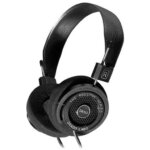
Drivers
44 mm DD
Impedance
32 ohms
Sensitivity
94 dB
Frequency range
20 Hz-20 kHz.
GRADO SR60

GRADO SR60 ($99) — these are open on-ear dynamic headphones that have been in my collection for a long time. It’s time to summarize and give them a brief review, sharing my experience. The SR60 are known for their characteristic ‘bright’ sound with an emphasis on the highs and mids, a wide soundstage, and relatively neutral bass.

Reasons to buy:
  • Lively emotion
  • Rock drive
  • Moddability
Reasons not to buy:
  • No sub-bass
Sound. 8.47 The headphones offer the recognizable ‘signature’ Grado sound, characterized by an emphasis on the highs and mids, fast and controlled bass, and a wide soundstage. This makes them an excellent choice for lovers of detailed and ‘airy’ sound.


The main advantage of the Grado SR60 sound is very natural and lively mids with good vocal and instrument clarity, combined with a wide, airy soundstage and bright, detailed highs that make listening open and pleasant, with a sense of live music. The main disadvantage is that the bass is fast and clear, but lacks sub-bass depth and real physical impact, and at high volumes, the treble can sometimes become harsh, resulting in a lack of impact and weight in heavy or bass-heavy genres, and prolonged listening at maximum volume may cause fatigue.
Read more.
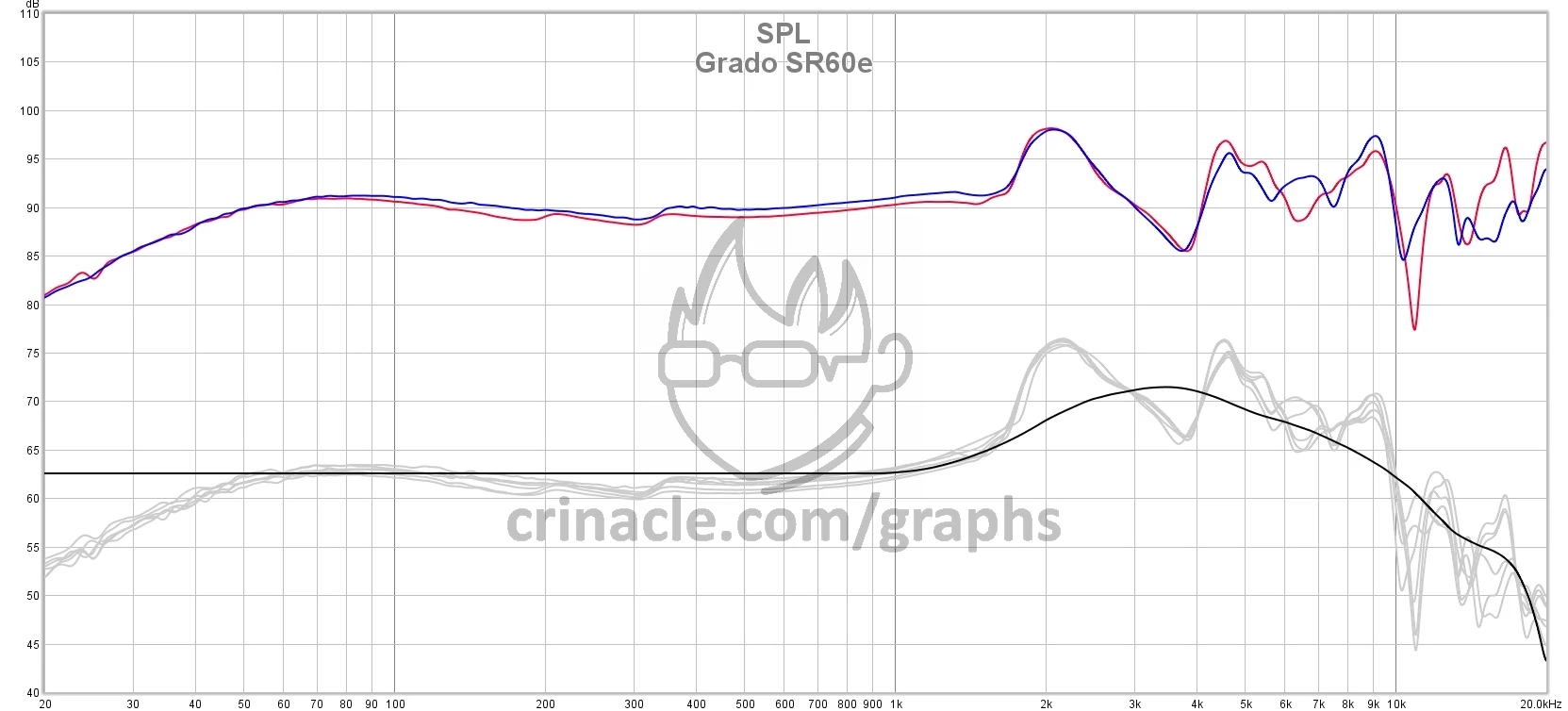
Frequency balance. 8.17 The SR60 is not about a flat line on a graph. The balance is shifted towards the bright side, towards the mids and highs. This gives the feeling of that very ‘signature’ openness and speed. The bass here is not the foundation, but the rhythm section: it’s there just enough to tap your foot, but don’t expect dominance. This is a matter of taste, not a reference presentation.

Frequency Response Chart👇

grado sr60 achh
Low frequencies. 7 The bass is fast, dry, and articulate. It doesn’t try to impress with mass; it works for speed. In the track Dr. Dre – “Still D.R.E.” (hip-hop), miracles don’t happen: there’s physically no sub-bass depth, and no ‘meat’ either. The kick drum’s punch is audible, it’s clear, but it doesn’t hit you in the chest. These headphones are not suitable for fat beats — the track sounds lightweight, losing its dark energy.
Mid frequencies. 9.5 But this is the soul of Grado. This is what they are forgiven for everything else. Vocals and live instruments sound frighteningly alive. In the track Chris Stapleton – “Tennessee Whiskey” (country/blues), Chris’s voice sends shivers down your spine. Every intonation, every rasp is audible. The guitar growls, has body and texture. Here, the SR60 perform at the level of models 5 times more expensive. This is their element.
High frequencies. 8 The treble is bright, bold, and sparkling. It provides air and drive, but balances on the edge. In the track Radiohead – “Paranoid Android,” cymbals and guitar arpeggios sound crystal clear, adding edge to the track. But be careful with volume: at peaks and in ‘dirty’ recordings, harshness and grain can emerge. This is garage rock-n-roll, not sterile purity.
Detail retrieval. 8 They impress not with microscopic detail, but with macro-dynamics. Due to the bright treble, it seems like you hear everything: the rustle of strings, sighs. In Metallica – “Enter Sandman,” the drive is insane, guitars cut through the air. But in the busiest moments, when everything kicks in at once, the soundstage can slightly ‘collapse,’ and instrument separation is lost. These are headphones for emotion, not for studio-level nitpicking.
Naturalness. 8.5 This is not tonal accuracy (there is coloration here), it’s emotional truth. In Johnny Cash – “Hurt,” the SR60 do the main thing — they convey the pain and weariness in Cash’s voice. The acoustic guitar sounds dry, woody, and believable. The sound is not polished; it’s rough and alive, so you believe it. 
Read more.

In the track (Sting – Englishman in New York), Sting’s voice sounds confident and characteristic — with a rasp, warmth, and a sense of live performance. The saxophone is expressive, the double bass is weighty — everything is fine until the cymbals and hi-hats join in. It is they that break the “analog” feel: they sound dry and sometimes with a metallic aftertaste, especially at volume. This slight glassiness in the highs spoils the overall impression and hinders the full “liveness” of the sound. I’m deducting 1 point for unnatural treble presentation and loss of naturalness in the highs. As for (Lenny Kravitz — Low), at the start, everything is presented convincingly — guitars are crisp, the groove is felt, instruments are well-rendered. But as soon as the rhythm section kicks in, especially the fast hi-hats, I hear a slight synthetic tint emerge. Instead of an organic funky presentation, there are hints of artificiality that spoil the overall impression of a live recording. I’m deducting 1 point for the ringing percussion and loss of organic quality in the upper range.

Soundstage. 9.2 The open-back design of the SR60 provides a wide and airy soundstage with good instrument separation. In the track Pink Floyd – “Money” (progressive rock), the spatial arrangement of the composition unfolds in all its glory. Sound movement effects, such as the clinking of coins, are conveyed very convincingly, creating a sense of presence at a concert. Instruments are clearly localized in space, making the listening experience very engaging.
Read more.

In the track (Michael Jackson – Man in the Mirror), I hear that the vocals are centered, the choirs spread beautifully to the sides, instruments are layered — everything seems to be in place. But the denser the arrangement becomes, the more the sound turns into a collection of disparate elements. Something is missing in the coherence of the soundstage, it doesn’t “breathe” — I lack depth and vertical expansion. I’m deducting 0.5 points for the disconnection of elements and compressed verticality in dense passages. In (Yosi Horikawa – Bubbles), yes, the sound literally flies around me: clicks, drips, rustles — everything moves in space, and the first impression of this wide panorama is just great. But when I expect to hear sounds “above my head” or below my feet — there’s none. The vertical component is cut off, and some of the magic is lost. Instead of full holography, I get a wide but seemingly “squeezed” wide soundstage. I’m deducting 0.5 points for limited height and loss of a sense of volume from above.

Build quality. 8.13 Grado SR60 are extremely simple and functional – nothing superfluous. Plastic earcups and headband make the headphones very light, which is important for prolonged use. The foam ear pads are easily removable and replaceable, which is convenient. The cable is non-detachable but quite thick and durable, so I’m not worried about its reliability. Overall, the SR60’s construction is designed for sound, not for external gloss.
Read more.
Comfort. 8 For me, Grado SR60 are a compromise between lightness and clamping force. The headphones are indeed very light and almost unnoticeable on the head, which is a big plus. However, the clamping force is quite strong, especially at first (minus 1 point). This provides good fixation but can cause discomfort and fatigue during long listening sessions (minus 1 point). Over time, the clamping force slightly weakens but remains noticeable.
Durability. 8 The headphones have several vulnerable spots. The plastic attachment of the earcups to the headband can crack with careless handling (minus 1 point), and the non-detachable and stiff cable is prone to damage at the connection points (minus 1 point). The foam ear pads require periodic replacement.
Design. 10 The SR60 is a journey into the past. They unmistakably embody the retro style popular in the 80s and 90s. Simple shapes, lack of any frills, and an emphasis on functionality — all this creates a unique image. Plastic earcups and foam ear pads may not be the most modern materials, but they are an integral part of this classic design. Personally, I appreciate this authenticity.
GRADO SR60 package contents
Accessories. 6.5 The Grado SR60 come in an extremely minimalist package, fully in line with the brand’s philosophy. The box contains the headphones with a non-detachable cable, a 3.5mm to 6.3mm adapter, and a brief manual with a warranty card — no cases, spare ear pads, or any additional accessories.

Conclusion

There is no single absolute king in this ranking that overshadows all others. Each model is its own world, its own scenario where it reveals itself most brightly and provides that moment of epiphany when you realize: ‘This is it, mine.’

For some, it’s the Sivga Luan — a universal soldier that takes everything and doesn’t let go, allowing you to forget about searching. For others, it’s the Grado SR325x, where emotion hits hard, and music becomes pure experience. Someone will find happiness in the color and impact of the Fostex, in the technical scope of the Arya, or in the bright drama of the Moondrop Para.

They are all strong in their own way — different characters, different drivers, different emotions. There is no universal ‘better’; there is only what perfectly suits your recordings, your system, and your heart.

If a model has upgrade potential — use it. It’s a chance to hear headphones sing at their full voice.

Thank you for your attention. I wish you to find that very sound that doesn’t just reproduce files but truly breathes and lives. May your system build a huge holographic soundstage, may the timbres startle with their body and naturalness, and may the highs fill the space with sparkling air. Seek not graphs and measurements, but pure emotion — that very magic that gives you goosebumps and makes you want to re-listen to your favorite albums again and again, for hours without interruption.

No need to come back and check — we will write when the ranking changes.

Audio Equipment Expert, Wired Sound & Audiophilia
MyChooz on Telegram13+ readers · fresh reviews and ratings about sound
Your rating for the model
—/10
Rate in detail (optional):
Sound
Features
Build quality