
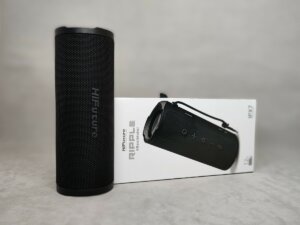

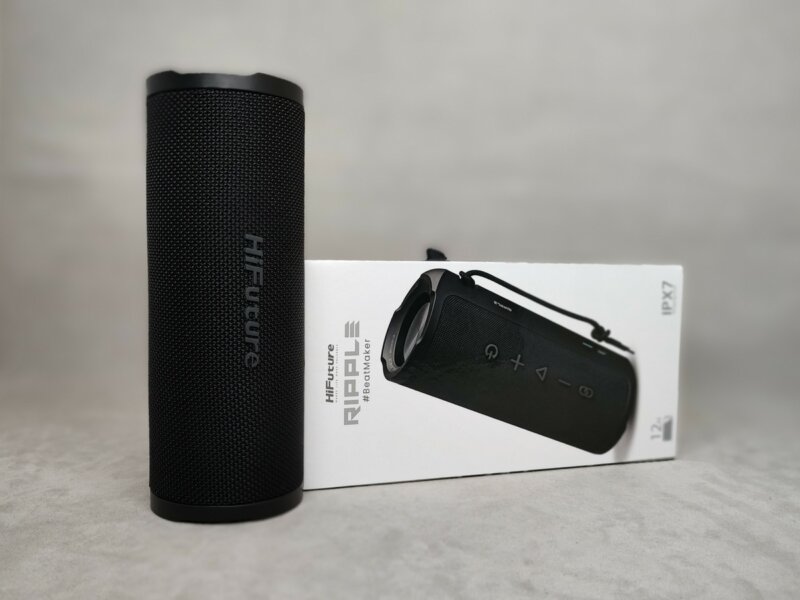
HiFuture Ripple is the BEST speaker you can buy under $40 (1,699 UAH), in the mid-sized JBL Flip. (Let’s hear it) Awesome 17 hour battery life, bassy sound and comfortable design, sturdy construction.
The speaker came out in 2024 for $65 on the official site. But on Ukrainian marketplaces, the portable speaker costs only 1699 hryvnia or $40 at the time of writing this review. There is sound for this money if you tweak the equalizer. And in the review I will tell you about a couple of settings. Plus, the speaker has no serious flaws, only if you don’t take into account the app not working, more about it below.
- Good sound with equalizer
- Robust and reliable design
- 17 hours of battery life at 40% volume
- Branded app does not work
- No wired audio transmission
- Boring sound without equalizer adjustment
V 1.0.0 – 11/21/25 – review published.
Sound
Recording of sound on the FiFine K688 microphone for approximate understanding of sound quality. Volume 60%, Bluetooth connection, distance to the microphone 2-3 cm:
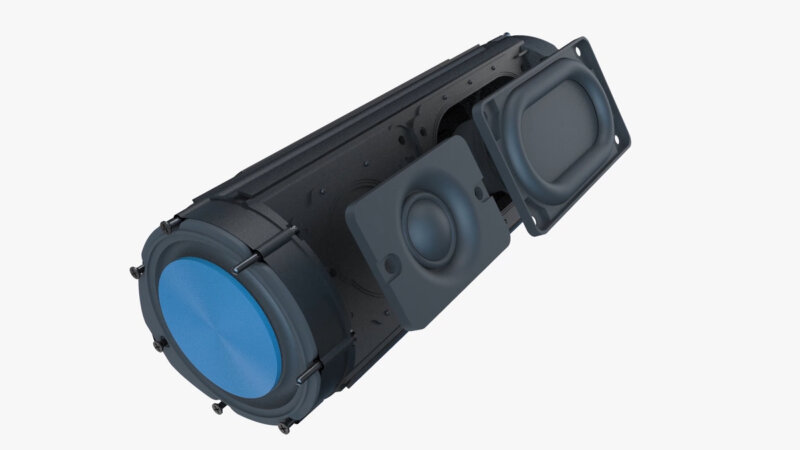
There are 2 drivers inside the speaker with a total power of 30W – 20+10 to be exact. The speaker is loud, I was able to listen in the background at 40% volume on my phone with Snapdragon chip. On another phone with a budget MediaTek it was 60%. On the iPhone, it’s also around 60%. I immediately recommend adjusting the equalizer, the sound becomes noticeably better.
I tested the speaker without equalizer setting, sounding out of the box by SBC codec, no other audio codecs. For the equalizer setting, see below after the sound evaluation.
Learn more about how we test headphonesТесты проводим с OnePlus 11 (Android) и iPhone 14 Pro (iOS), стримим через Deezer HiFi(подробнее про подписку тут) в FLAC (1411 кбит/с).
Мой плей лист – для теста наушников:
- Michael Jackson – P.Y.T. (Pretty Young Thing). Поп-фанк.
✅ Проверка низкочастотной составляющей и натуральности – тембр основного басового синта должен звучать естественно и быть в принципе слышен. Бас здесь мощный, но не должен забивать другие диапазоны частот.
✅ Проверка детализации и ширины сцены – бэк вокалы и перкуссия в правом канале должны быть отчетливо слышны.
✅ Проверка высоких частот и натуральности ВЧ – железо барабанов в этой композиции должно звучать мягко и естественно, без песка. Барабаны в этой песне записаны и сведены просто восхитительно (Джонатан Моффетт – виртуоз ударки). - Oasis – Don’t Go Away. Альтернативный рок, Брит Поп.
✅ Проверка натуральности – звучание акустической гитары, должно быть естественным.
✅ Проверка низкочастотной составляющей – бочка, тома и рабочий в этой композиции задвинуты достаточно далеко и там где плохой бас, барабанные сбивки будут просто не слышны.
✅ Проверка середины – голос Лиама должен звучать открыто и забиваться, в этой композиции очень много живых инструментов, которые легко могу закрыть собой середину и вокал, добавив мутность или закрытость голосу.
✅ Проверка высоких и натуральности – в конце песни мой любимый проигрыш с акустикой и бубеном, они должны отделяться друг от друга и звучать естественно, без песка и синтетики. - Twenty One Pilots – Backslide. Хип-Хоп, Альтернативный поп.
✅ Проверка детализации. В этой композиции Тайлер сделал множество бэк вокалов с эффектами и без (как всегда), они должны четко отделяться друг от друга и быть слышны.
✅ Проверка ширины сцены – шейкер который то появляется, то исчезает, с перетеканием из канала в канал, отлично показывает ширину звучания. Как э бэквокалы, которые отлично разведены по каналам. - Adele – Rolling in the Deep. Поп, Соул, Блюз.
✅ Проверка середины и вокала – голос адель здесь должны быть отчетливый, с эффектом присутствия, без вуали и мутности. - Eagles – Hotel California (Live on MTV, 1994). Рок, кантри-рок. Боже, храни тех кто записал и свел этот лайв.
✅ Проверка ширины сцены – звуки толпы, фоновые эффекты, расстановка инструментов.
✅ Проверка высоких – 2 шейкера в левом и правом канале должны быть отчетливо слышны и не быть синтетичными.
Еще треки на которых я тестирую модели:
- Modern Talking – You’re My Heart, You’re My Soul. Европоп.
Вокал не должен маскироваться басовой партией, шейкер должен звучать не песочно и натурально. - Eminem – Ass Like That. Хип-хоп и рэп.
Увесистая басовая партия не должна закрывать собой вокал. Слышимость второстепенных этно инструментов и бэк вокалов. - Bob Marley – Could You Be Loved. Регги.
Железо барабанов не должно песочить, вокал и бэк вокалы не должны маскироваться низами, должна быть хорошая читаемость басовой партии. - Disturbed – Stricken. Альтернативный метал и хеви-метал.
Перегруженная гитара не должна забивать собой барабаны и вокал.
Железо барабанов не должно забиваться общим миксом. - System of a Down – Radio/Video. Альтернативный метал и ню-метал.
Шейкер должен звучать не песочно. Перегруженная гитара, не должна забивать собой барабаны и вокалы Сержа и Дарона.
Оценка выставляется в соответствии с нашей методикой “Оценки 3.0”.
Звук — 50% оценки:
- Баланс частот в звучании — на сколько гармонично наушники воспроизводят низкие, средние и высокие частоты.
- Сцена или звуковое пространство — способность наушников создавать ощущение 3D объема и пространства в музыке.
- Детализация или разрешение — способность наушников передавать мельчайшие нюансы звука с высокой точностью.
- Натуральность или тембральный баланс — это сохранение естественности звучания инструментов, звуков и вокалов.
Функции и конструкция — 50% оценки:
- Качество микрофона.
- Шумоподавление и режим прозрачности.
- Автономность, управление, приложение и другие функции.
- Качество конструкции: удобство для ношения, долговечность и дизайн + доступные цвета.
- Если хочешь узнать, как мы тестируем и оцениваем наушники, то подробности вот здесь.
Sound Evaluation:
The final sound score is calculated using this formula:
Frequency balance + Detail retrieval + Soundstage + Natural timbre / 4 = Final Sound Score.
. 6.14 Good result, my expectations were lower. The main pluses of the sound are the bass and midrange. There is enough bass for the body of the sound. The bass instrument is recognizable and with enough texture. Vocals are deafening, slightly distant with the performer singing in the same room as you, not in the next room. The highs are not quite there, but they are audible and intelligible.The main disadvantages of the sound are the soundstage, detail and treble. The sound is like from one point, and this is the norm for mono speakers. The detailing in the speaker is average, high-frequency instruments are worse detailed. And the sound of percussion is muffled and you need to listen. In particular, the hi-hats sound rather backward.
Let me tell you right away that you shouldn’t expect a $40 speaker at the level of JBL or SoundCore Motion+. But for its money, the sound is excellent. The general picture of sound: a small cloudy window in 2D. But with equalizer it is already wiped and ajar window. About it further.
Frequency balance: This refers to how sound energy is distributed across the entire audible range, from 20 Hz to 20 kHz. It’s not just about covering the full spectrum, but about achieving the right proportions so that the lows, mids, and highs work together harmoniously, without clashing or obscuring important details.
The ideal balance means the bass provides a solid foundation, the mids deliver clear and present vocals, and the highs add sparkle and detail. Frequency balance skew occurs when one or two of these main ranges are either overemphasized or noticeably lacking compared to the others.
. 6.95 The HiFuture Ripple produce a sound with an emphasis on bass, sagging mids and pushed highs.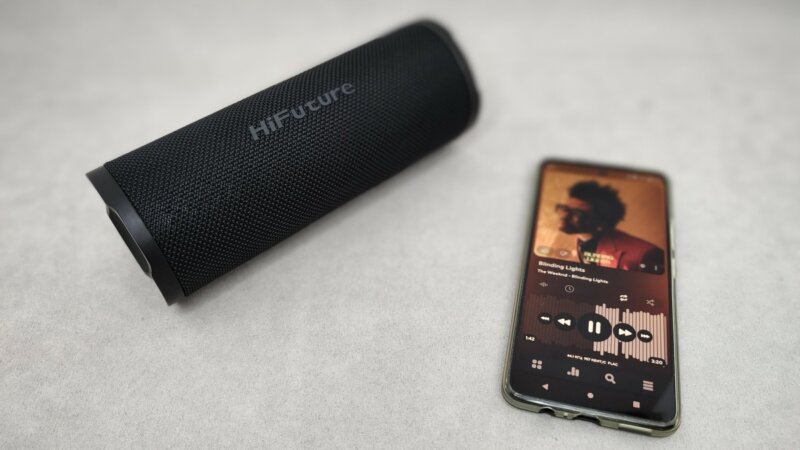
Low frequencies, or bass (20 Hz – 250 Hz), form the foundation of music, giving sound depth, weight, and a rhythmic basis.
The ideal balance results in clear, powerful, and well-rounded sound. An **excess** of low frequencies, however, makes music sound muddy and boomy, masks vocals, and quickly fatigues the listener, leading to indistinct overall sound. Conversely, a **shortage** makes music sound thin, weak, and empty, robbing it of warmth and rhythmic foundation, which in turn causes harshness in the mids and highs.
. 7 There is bass in the speaker, sometimes there is a slight underdrive. The whole bass range is predominant, if you do not break it down into components. However, the bass lacks detail and collectedness. Expected picture for $40.Read More.
The midrange (250 Hz to 4 kHz) is where most musical elements live, and it’s crucial for hearing main melodies, vocals, and instruments.
Too many mids, especially in the upper range, make sound harsh, intrusive, and fatiguing fast. The mix can sound shouty or “boxy.” Conversely, a shortage of mids results in a hollow, recessed sound where vocals and main instruments lose their presence and seem distant, draining the music of energy and overall clarity.
. 6.9 Vocals are intelligible and recognizable. The position is slightly backward, noticeably lacking in transparency across the frequency range.Read More.
Highs, or treble (4 kHz – 20 kHz) – these frequencies are responsible for brightness, sparkle, detail, and that sense of ‘air’ in a music mix. This range helps you pick out the finest details, like string overtones, cymbal shimmer, and sibilant sounds in vocals.
An optimal balance makes music sound lively, clean, and open. Too much, however, leads to unnecessary harshness, causes sibilance (overly loud ‘s’ sounds), and makes cymbals sound unpleasantly ‘grainy’ or metallic, quickly fatiguing your ears. Too little, and the entire mix sounds dull, muffled, and ‘closed-in’ (veiled). The sound loses its detail and openness, feeling like you’re listening through a thick filter that robs the music of clarity.
. 6.5 High frequencies are lacking, there is little airiness, and the percussion sounds muffled.Read More.
Detail retrieval – this describes how clearly and distinctly you can hear the tiniest sounds in a mix, like reverb, overtones, quiet instruments, texture, and subtle percussion sounds (such as light hi-hat taps).
Ideal detail retrieval – all subtle sounds are audible, just as they would be at a live performance.Lack: The sound is dull, muted, and veiled, as if you’re listening through a layer of fabric. The musical picture lacks depth, instruments sound flat, and subtle nuances get lost.Excess: The sound becomes unnaturally sharp, aggressive, and glassy. This can manifest as an overemphasis on sibilant sounds and background noise. This kind of sound quickly becomes fatiguing, often due to too much treble above 6 kHz.
. 6 The main and background parts are intelligible. You have to listen to the sound of bass instruments and percussion. The instruments are pushed back and sound muffled. Less discernible are the percussion sounds – the sound of the drum cymbals. Small details cannot be made out. Bass instruments are well detailed and it is difficult to confuse the sound of the instruments. High-frequency instruments are less intelligible.Read More.
Naturalness— how authentic and realistic the sound is. It indicates how accurately the sound of voices and musical instruments is reproduced.
Best naturalness – the sound is clean, warm, and lively, without artificial coloration or extraneous noises.
Excess – an excessive amount of distracting sounds like sighs, mechanical noises, rustles, etc.
Lack – the sound feels artificial, colored, or plastic. You lose timbre recognition (instruments don’t sound like they do in real life), and the sound becomes flat and fatiguing due to incorrect equalization or excessive compression.
Read More.
Soundstage, or stage, refers to the perceived three-dimensional space where instruments and vocals in a musical piece are placed. It’s a virtual soundscape that sound engineers craft during mixing. The stage encompasses width (left-to-right placement), depth (a sense of distance), and height (the feeling of instruments being above or below the horizontal plane).
The best soundstage makes music feel immersive and realistic, letting you pinpoint each element in space—whether it’s to your left or right, closer or further away, or above or below your head. A lack of it results in a monolithic sound, as if everything is coming from a single point, making it difficult to discern the position of each instrument. An excess of it, on the other hand, can make instruments and vocals sound overly distant, causing the musical composition to lose its coherence.
. 5 Sounding as if from a single point with minimal instrument separation.Read More.
What genres are the HiFuture Ripple best suited for? Out of the box for listening to hip-hop, electronica and dance genres. Worse suited except for complex instrumental music.
Involvement in music? 5/10. The sound is more for background listening during physical work for example. But with sound enhancement via equalizer the sound is more engaging – 6.5/10. Already have the desire to spin different tracks.
HiFuture Ripple volume – 60% is enough for me for personal listening at home.
Sound enhancement
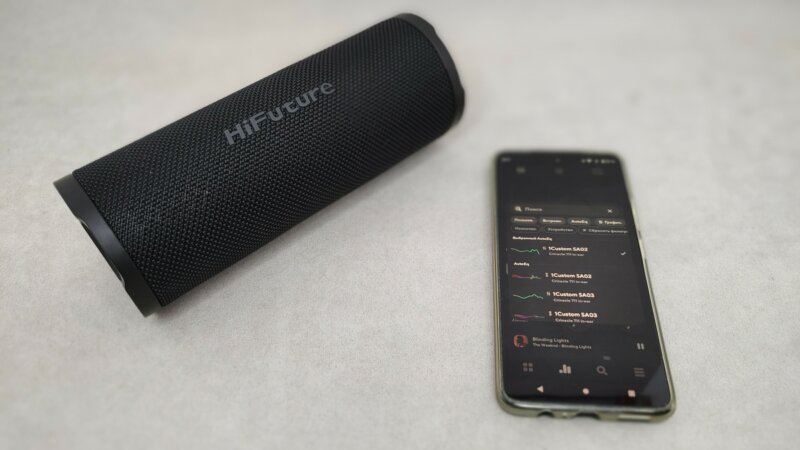
Sound with EQ – this is the sound rating after improvement, often with EQ tuning. For each model, we try to find a setting with the best sound output and without complicated steps for the user.
. 6.5 I recommend 2 settings in the PowerAMP equalizer.Read More.
Sound with AAC – sound rating with the basic Bluetooth codec and without sound tuning.
. 6.1 The speaker only supports the SBC codec.More about codecs.
Sound in games – This is how we rate sound quality in games. We check how much the sound pulls you into the game.
. 6.6 Normal sound for mobile games. Slightly deaf and unintelligible.Read More.
Buy HiFuture Ripple
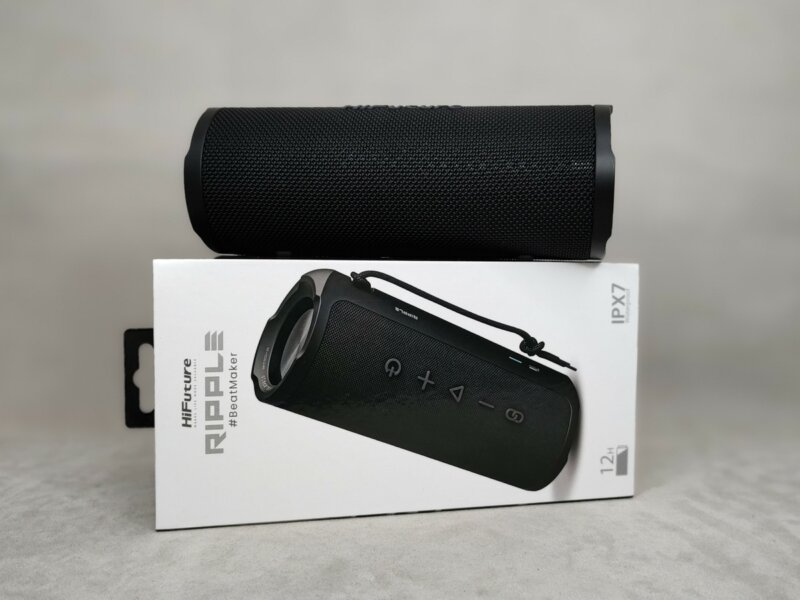
Comparison with Competitors
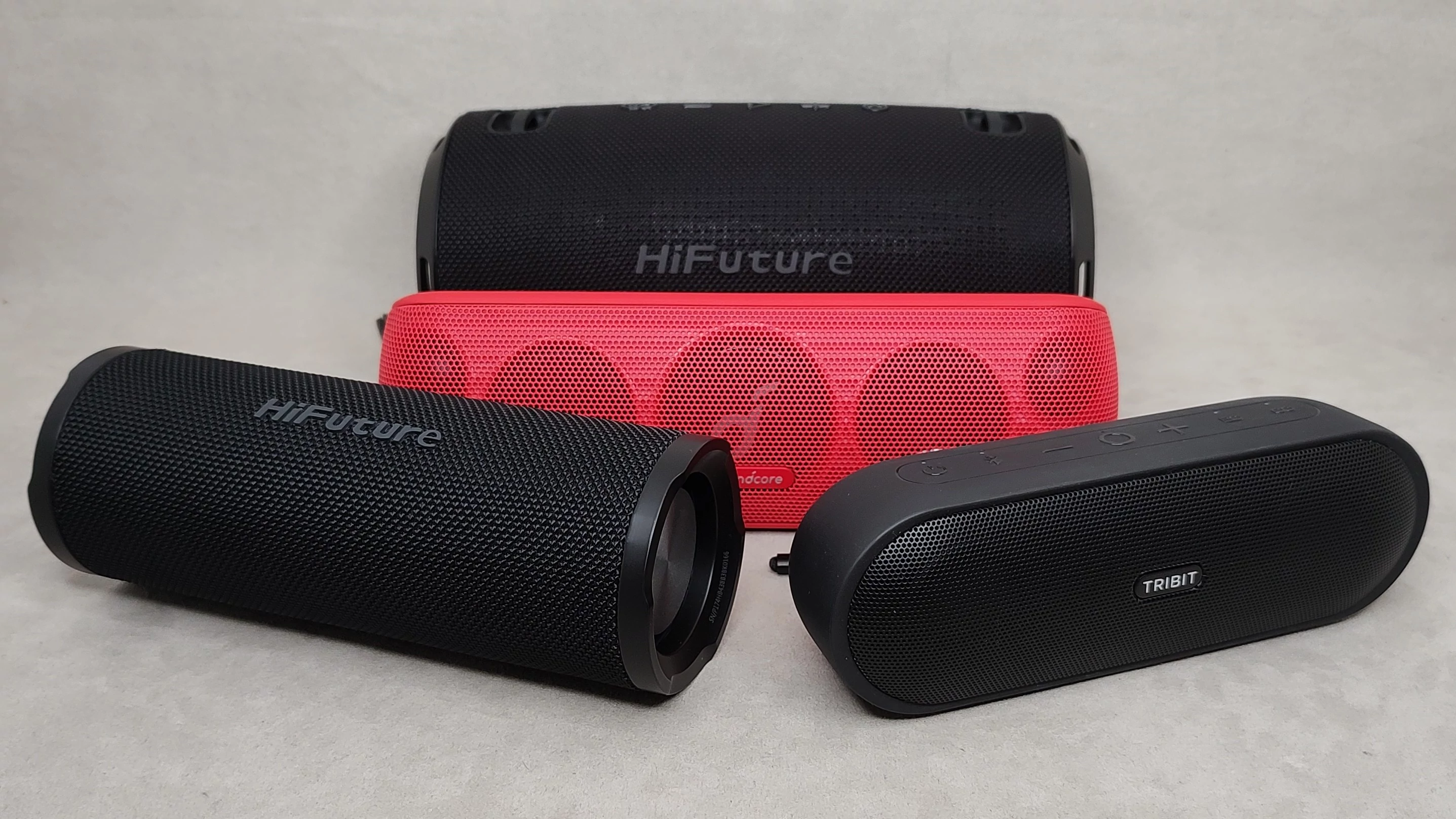
All speakers cost more.
Comparing the lineup: HiFuture Ripple vs HiFuture Gravity.
Read MoreHiFuture Ripple vs HiFuture Gravity
A driver is a speaker that plays sound. Speakers use different types of drivers:
- Lows (low-frequency) – handle the bass.
- Mids (mid-frequency) – handle vocals and instruments.
- Highs (high-frequency) – make the sound detailed.
- Passive radiators – boost the bass, but they are not active speakers.
- Full-range drivers – can play the entire frequency range.
📌 How to read specs?
Example. Drivers: 2 x Lows 70 mm + 1 x Mids 60 mm + 2 x Highs 20 mm
👉 This means the speaker has 2 low-frequency drivers with a 70 mm diameter, 1 mid-frequency driver with a 60 mm diameter, and 2 high-frequency drivers 20 mm.
Power (Watts) is how much volume a speaker has. More Watts does not mean better – the balance between power distribution to the lows, mids, and highs, sound quality, and the speaker’s efficiency (build quality) is important.
📌 Marketing tricks: they often list the total power of all drivers – this is not a real measure of loudness.
👉 Example: 100 Watts is not louder than 50 Watts if the 50 Watts are better used in the speaker.
Battery life (hours) – This is how long the battery lasts. The louder the sound, the faster the speaker runs out of power.
📌 Typical battery life:
- Small speakers – 8–12 h (JBL Go, Sony XB100).
- Medium speakers – 12–20 h (JBL Charge, Soundcore Motion+).
- Large speakers – 20+ h (JBL Boombox, PartyBox).
📌 What you should know:
- Maximum volume = fast battery drain. At 100% volume, the actual time can be 2-3 times less than what they claim.
- Lights and bass modes also use up power.
- Bluetooth 5.2 and newer versions last longer, but if the stated battery life is 12 hours, the Bluetooth version will not make it 20 – there is a difference, but it is not more than 15%.
- You can use some models while they charge, but not others.
👉 Tip: If battery life is important, look at real tests, not the manufacturer’s numbers.
A speaker’s protection affects its resistance to water, dust, and impacts. Specs show this as an IP rating (for example, IP67).
📌 How to read IP protection?
👉 The first digit (dust):
- 6 – full protection from dust (the best option).
- 5 and lower – partial protection or no protection.
👉 The second digit (water):
- X – not tested for water resistance.
- 4 – protection from splashes (rain is fine, but do not drop it in water).
- 7 – handles immersion in water up to 1 meter for 30 minutes (JBL Flip 6, Charge 5, Boombox 3).
- 8 – even higher water resistance (rare for speakers).
📌 What is important to know?
- IP67 = fully dustproof and waterproof (JBL Flip 6, Sony XB100, Bose SoundLink Micro).
- IPX4 = protection only from splashes, do not sink it in water (Marshall Emberton, Sony SRS-XG300).
- Some models even float (Ultimate Ears Wonderboom 4, Tribit StormBox Micro 2).
- Charging port without a cover? It is better not to get it wet, even if the speaker has protection.
🚀 Conclusion: IP67 is the best option for outdoors and water. If the speaker is only for home, protection is not as important!
Weight is about how easy it is to carry and use the speaker. You can carry a light speaker every day, but a heavy one is better left at home.
📌 Weight categories:
- Up to 500 g – lightweight: for your pocket, bike, or backpack (JBL Go, Sony XB100, Bose SoundLink Micro).
- 500 g – 1.5 kg – great for travel: easy to carry in a bag, good sound (JBL Flip, Soundcore Motion+).
- 1.5 – 3 kg – all-purpose: for home and outdoors, but heavy to carry in your hands for a long time (JBL Charge, Marshall Kilburn II).
- 3 – 7 kg – for parties: powerful sound, but not really portable anymore (JBL Xtreme, Tribit StormBox Blast).
- 7+ kg – almost floor-standing: hard to carry, better to leave in one spot (JBL PartyBox, Sony X-series).
📌 What’s important to know?
👉 A strap or carabiner helps you carry lightweight models on a backpack.
👉 Handles and straps make medium and heavy models easier to carry (for example, the JBL Xtreme has a shoulder strap).
👉 Wheels are found on the biggest speakers (JBL PartyBox 310, Sony XP700).
🚀 Conclusion: if you’ll be carrying the speaker every day – get one under 1.5 kg. If powerful sound is important, choose 3 kg+, but make sure the speaker is easy to carry! 🎒🎶
A speaker’s size affects its volume, battery life, and convenience.
📌 Main categories:
- Small (up to 15 cm, 300–600 g) – pocket-sized, good for travel (JBL Go, Sony XB100, Bose SoundLink Micro).
- Medium (15–25 cm, 700 g – 2 kg) – all-purpose, good for both home and outdoor use (JBL Charge, Soundcore Motion+).
- Large (25+ cm, 2–7 kg) – powerful, with deep bass, but less portable (JBL Xtreme, Boombox, Tribit StormBox Blast).
- Floor speakers (40+ cm, 7+ kg) – for parties, can be plugged in (JBL PartyBox, Sony X-series).
📌 What’s important to know?
👉 Bigger speakers are louder, often have better sound and deeper bass, but their weight and size go up.
👉 Smaller speakers are more portable, but they have limited volume, and the sound quality is often worse.
👉 Shape is also important – long speakers have directional sound, while round and oval ones give you 360° sound.
🚀 Conclusion: choose a speaker based on the size that fits your needs, not just by its power!
A driver is a speaker that plays sound. Speakers use different types of drivers:
- Lows (low-frequency) – handle the bass.
- Mids (mid-frequency) – handle vocals and instruments.
- Highs (high-frequency) – make the sound detailed.
- Passive radiators – boost the bass, but they are not active speakers.
- Full-range drivers – can play the entire frequency range.
📌 How to read specs?
Example. Drivers: 2 x Lows 70 mm + 1 x Mids 60 mm + 2 x Highs 20 mm
👉 This means the speaker has 2 low-frequency drivers with a 70 mm diameter, 1 mid-frequency driver with a 60 mm diameter, and 2 high-frequency drivers 20 mm.
Power (Watts) is how much volume a speaker has. More Watts does not mean better – the balance between power distribution to the lows, mids, and highs, sound quality, and the speaker’s efficiency (build quality) is important.
📌 Marketing tricks: they often list the total power of all drivers – this is not a real measure of loudness.
👉 Example: 100 Watts is not louder than 50 Watts if the 50 Watts are better used in the speaker.
Battery life (hours) – This is how long the battery lasts. The louder the sound, the faster the speaker runs out of power.
📌 Typical battery life:
- Small speakers – 8–12 h (JBL Go, Sony XB100).
- Medium speakers – 12–20 h (JBL Charge, Soundcore Motion+).
- Large speakers – 20+ h (JBL Boombox, PartyBox).
📌 What you should know:
- Maximum volume = fast battery drain. At 100% volume, the actual time can be 2-3 times less than what they claim.
- Lights and bass modes also use up power.
- Bluetooth 5.2 and newer versions last longer, but if the stated battery life is 12 hours, the Bluetooth version will not make it 20 – there is a difference, but it is not more than 15%.
- You can use some models while they charge, but not others.
👉 Tip: If battery life is important, look at real tests, not the manufacturer’s numbers.
A speaker’s protection affects its resistance to water, dust, and impacts. Specs show this as an IP rating (for example, IP67).
📌 How to read IP protection?
👉 The first digit (dust):
- 6 – full protection from dust (the best option).
- 5 and lower – partial protection or no protection.
👉 The second digit (water):
- X – not tested for water resistance.
- 4 – protection from splashes (rain is fine, but do not drop it in water).
- 7 – handles immersion in water up to 1 meter for 30 minutes (JBL Flip 6, Charge 5, Boombox 3).
- 8 – even higher water resistance (rare for speakers).
📌 What is important to know?
- IP67 = fully dustproof and waterproof (JBL Flip 6, Sony XB100, Bose SoundLink Micro).
- IPX4 = protection only from splashes, do not sink it in water (Marshall Emberton, Sony SRS-XG300).
- Some models even float (Ultimate Ears Wonderboom 4, Tribit StormBox Micro 2).
- Charging port without a cover? It is better not to get it wet, even if the speaker has protection.
🚀 Conclusion: IP67 is the best option for outdoors and water. If the speaker is only for home, protection is not as important!
Weight is about how easy it is to carry and use the speaker. You can carry a light speaker every day, but a heavy one is better left at home.
📌 Weight categories:
- Up to 500 g – lightweight: for your pocket, bike, or backpack (JBL Go, Sony XB100, Bose SoundLink Micro).
- 500 g – 1.5 kg – great for travel: easy to carry in a bag, good sound (JBL Flip, Soundcore Motion+).
- 1.5 – 3 kg – all-purpose: for home and outdoors, but heavy to carry in your hands for a long time (JBL Charge, Marshall Kilburn II).
- 3 – 7 kg – for parties: powerful sound, but not really portable anymore (JBL Xtreme, Tribit StormBox Blast).
- 7+ kg – almost floor-standing: hard to carry, better to leave in one spot (JBL PartyBox, Sony X-series).
📌 What’s important to know?
👉 A strap or carabiner helps you carry lightweight models on a backpack.
👉 Handles and straps make medium and heavy models easier to carry (for example, the JBL Xtreme has a shoulder strap).
👉 Wheels are found on the biggest speakers (JBL PartyBox 310, Sony XP700).
🚀 Conclusion: if you’ll be carrying the speaker every day – get one under 1.5 kg. If powerful sound is important, choose 3 kg+, but make sure the speaker is easy to carry! 🎒🎶
A speaker’s size affects its volume, battery life, and convenience.
📌 Main categories:
- Small (up to 15 cm, 300–600 g) – pocket-sized, good for travel (JBL Go, Sony XB100, Bose SoundLink Micro).
- Medium (15–25 cm, 700 g – 2 kg) – all-purpose, good for both home and outdoor use (JBL Charge, Soundcore Motion+).
- Large (25+ cm, 2–7 kg) – powerful, with deep bass, but less portable (JBL Xtreme, Boombox, Tribit StormBox Blast).
- Floor speakers (40+ cm, 7+ kg) – for parties, can be plugged in (JBL PartyBox, Sony X-series).
📌 What’s important to know?
👉 Bigger speakers are louder, often have better sound and deeper bass, but their weight and size go up.
👉 Smaller speakers are more portable, but they have limited volume, and the sound quality is often worse.
👉 Shape is also important – long speakers have directional sound, while round and oval ones give you 360° sound.
🚀 Conclusion: choose a speaker based on the size that fits your needs, not just by its power!
HiFuture Gravity for $65 (2700 UAH), bigger, louder and more powerful. Out of the box, the speaker has more bass, and music sounds more dynamic and engaging. As with the Ripple, the speaker has little transparency and sounds muffled. The high frequencies are muffled and you can’t hear the sound of the cymbals. The sound in the speaker is like a single point. At the same time, the abundance of bass gives more volume compared to the Ripple. And with equalizer the sound is even better and more pleasant.
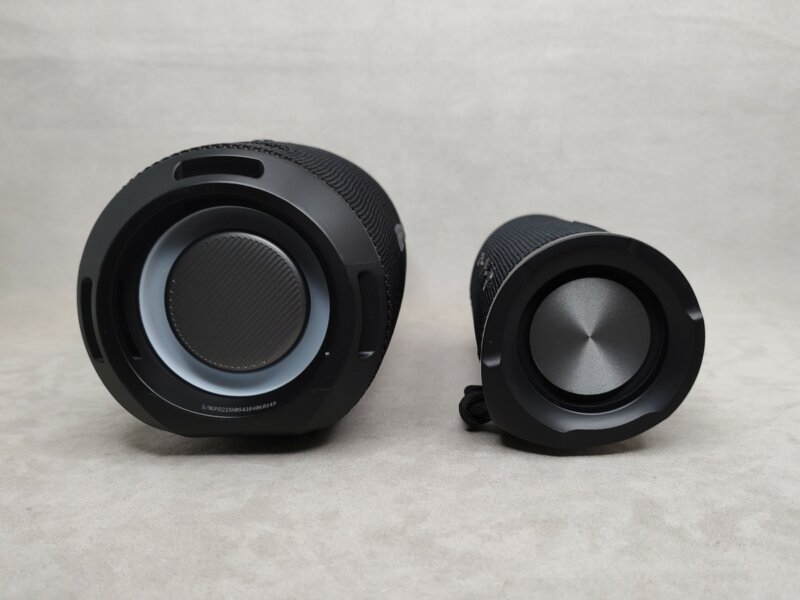
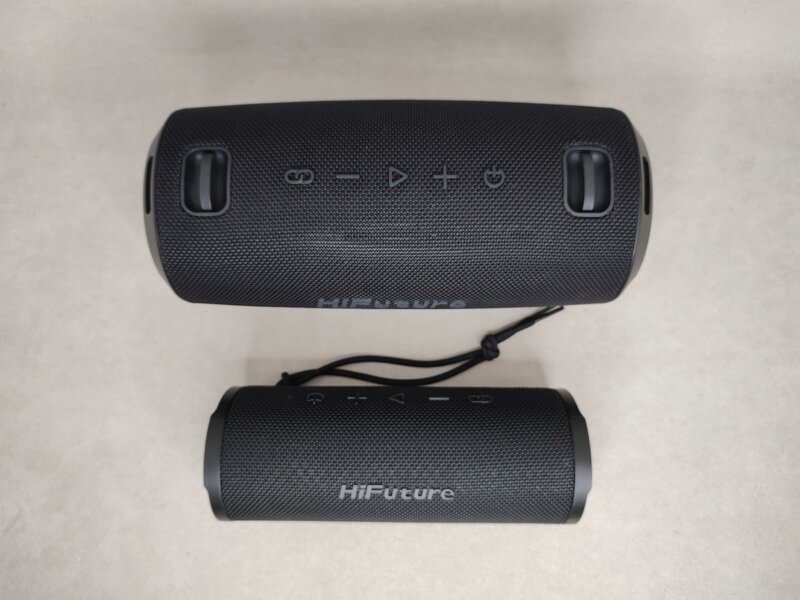
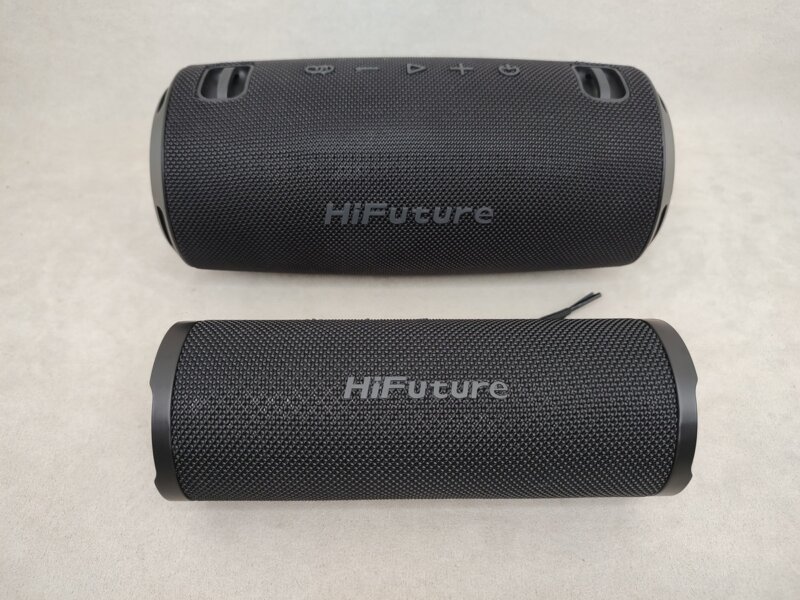
MyChooz – HiFuture Gravity.
Comparing with competitors on price: HiFuture Ripple vs TRIBIT XSound Plus 2.
Read MoreHiFuture Ripple vs TRIBIT XSound Plus 2
A driver is a speaker that plays sound. Speakers use different types of drivers:
- Lows (low-frequency) – handle the bass.
- Mids (mid-frequency) – handle vocals and instruments.
- Highs (high-frequency) – make the sound detailed.
- Passive radiators – boost the bass, but they are not active speakers.
- Full-range drivers – can play the entire frequency range.
📌 How to read specs?
Example. Drivers: 2 x Lows 70 mm + 1 x Mids 60 mm + 2 x Highs 20 mm
👉 This means the speaker has 2 low-frequency drivers with a 70 mm diameter, 1 mid-frequency driver with a 60 mm diameter, and 2 high-frequency drivers 20 mm.
Power (Watts) is how much volume a speaker has. More Watts does not mean better – the balance between power distribution to the lows, mids, and highs, sound quality, and the speaker’s efficiency (build quality) is important.
📌 Marketing tricks: they often list the total power of all drivers – this is not a real measure of loudness.
👉 Example: 100 Watts is not louder than 50 Watts if the 50 Watts are better used in the speaker.
Battery life (hours) – This is how long the battery lasts. The louder the sound, the faster the speaker runs out of power.
📌 Typical battery life:
- Small speakers – 8–12 h (JBL Go, Sony XB100).
- Medium speakers – 12–20 h (JBL Charge, Soundcore Motion+).
- Large speakers – 20+ h (JBL Boombox, PartyBox).
📌 What you should know:
- Maximum volume = fast battery drain. At 100% volume, the actual time can be 2-3 times less than what they claim.
- Lights and bass modes also use up power.
- Bluetooth 5.2 and newer versions last longer, but if the stated battery life is 12 hours, the Bluetooth version will not make it 20 – there is a difference, but it is not more than 15%.
- You can use some models while they charge, but not others.
👉 Tip: If battery life is important, look at real tests, not the manufacturer’s numbers.
A speaker’s protection affects its resistance to water, dust, and impacts. Specs show this as an IP rating (for example, IP67).
📌 How to read IP protection?
👉 The first digit (dust):
- 6 – full protection from dust (the best option).
- 5 and lower – partial protection or no protection.
👉 The second digit (water):
- X – not tested for water resistance.
- 4 – protection from splashes (rain is fine, but do not drop it in water).
- 7 – handles immersion in water up to 1 meter for 30 minutes (JBL Flip 6, Charge 5, Boombox 3).
- 8 – even higher water resistance (rare for speakers).
📌 What is important to know?
- IP67 = fully dustproof and waterproof (JBL Flip 6, Sony XB100, Bose SoundLink Micro).
- IPX4 = protection only from splashes, do not sink it in water (Marshall Emberton, Sony SRS-XG300).
- Some models even float (Ultimate Ears Wonderboom 4, Tribit StormBox Micro 2).
- Charging port without a cover? It is better not to get it wet, even if the speaker has protection.
🚀 Conclusion: IP67 is the best option for outdoors and water. If the speaker is only for home, protection is not as important!
Weight is about how easy it is to carry and use the speaker. You can carry a light speaker every day, but a heavy one is better left at home.
📌 Weight categories:
- Up to 500 g – lightweight: for your pocket, bike, or backpack (JBL Go, Sony XB100, Bose SoundLink Micro).
- 500 g – 1.5 kg – great for travel: easy to carry in a bag, good sound (JBL Flip, Soundcore Motion+).
- 1.5 – 3 kg – all-purpose: for home and outdoors, but heavy to carry in your hands for a long time (JBL Charge, Marshall Kilburn II).
- 3 – 7 kg – for parties: powerful sound, but not really portable anymore (JBL Xtreme, Tribit StormBox Blast).
- 7+ kg – almost floor-standing: hard to carry, better to leave in one spot (JBL PartyBox, Sony X-series).
📌 What’s important to know?
👉 A strap or carabiner helps you carry lightweight models on a backpack.
👉 Handles and straps make medium and heavy models easier to carry (for example, the JBL Xtreme has a shoulder strap).
👉 Wheels are found on the biggest speakers (JBL PartyBox 310, Sony XP700).
🚀 Conclusion: if you’ll be carrying the speaker every day – get one under 1.5 kg. If powerful sound is important, choose 3 kg+, but make sure the speaker is easy to carry! 🎒🎶
A speaker’s size affects its volume, battery life, and convenience.
📌 Main categories:
- Small (up to 15 cm, 300–600 g) – pocket-sized, good for travel (JBL Go, Sony XB100, Bose SoundLink Micro).
- Medium (15–25 cm, 700 g – 2 kg) – all-purpose, good for both home and outdoor use (JBL Charge, Soundcore Motion+).
- Large (25+ cm, 2–7 kg) – powerful, with deep bass, but less portable (JBL Xtreme, Boombox, Tribit StormBox Blast).
- Floor speakers (40+ cm, 7+ kg) – for parties, can be plugged in (JBL PartyBox, Sony X-series).
📌 What’s important to know?
👉 Bigger speakers are louder, often have better sound and deeper bass, but their weight and size go up.
👉 Smaller speakers are more portable, but they have limited volume, and the sound quality is often worse.
👉 Shape is also important – long speakers have directional sound, while round and oval ones give you 360° sound.
🚀 Conclusion: choose a speaker based on the size that fits your needs, not just by its power!
A driver is a speaker that plays sound. Speakers use different types of drivers:
- Lows (low-frequency) – handle the bass.
- Mids (mid-frequency) – handle vocals and instruments.
- Highs (high-frequency) – make the sound detailed.
- Passive radiators – boost the bass, but they are not active speakers.
- Full-range drivers – can play the entire frequency range.
📌 How to read specs?
Example. Drivers: 2 x Lows 70 mm + 1 x Mids 60 mm + 2 x Highs 20 mm
👉 This means the speaker has 2 low-frequency drivers with a 70 mm diameter, 1 mid-frequency driver with a 60 mm diameter, and 2 high-frequency drivers 20 mm.
Power (Watts) is how much volume a speaker has. More Watts does not mean better – the balance between power distribution to the lows, mids, and highs, sound quality, and the speaker’s efficiency (build quality) is important.
📌 Marketing tricks: they often list the total power of all drivers – this is not a real measure of loudness.
👉 Example: 100 Watts is not louder than 50 Watts if the 50 Watts are better used in the speaker.
Battery life (hours) – This is how long the battery lasts. The louder the sound, the faster the speaker runs out of power.
📌 Typical battery life:
- Small speakers – 8–12 h (JBL Go, Sony XB100).
- Medium speakers – 12–20 h (JBL Charge, Soundcore Motion+).
- Large speakers – 20+ h (JBL Boombox, PartyBox).
📌 What you should know:
- Maximum volume = fast battery drain. At 100% volume, the actual time can be 2-3 times less than what they claim.
- Lights and bass modes also use up power.
- Bluetooth 5.2 and newer versions last longer, but if the stated battery life is 12 hours, the Bluetooth version will not make it 20 – there is a difference, but it is not more than 15%.
- You can use some models while they charge, but not others.
👉 Tip: If battery life is important, look at real tests, not the manufacturer’s numbers.
A speaker’s protection affects its resistance to water, dust, and impacts. Specs show this as an IP rating (for example, IP67).
📌 How to read IP protection?
👉 The first digit (dust):
- 6 – full protection from dust (the best option).
- 5 and lower – partial protection or no protection.
👉 The second digit (water):
- X – not tested for water resistance.
- 4 – protection from splashes (rain is fine, but do not drop it in water).
- 7 – handles immersion in water up to 1 meter for 30 minutes (JBL Flip 6, Charge 5, Boombox 3).
- 8 – even higher water resistance (rare for speakers).
📌 What is important to know?
- IP67 = fully dustproof and waterproof (JBL Flip 6, Sony XB100, Bose SoundLink Micro).
- IPX4 = protection only from splashes, do not sink it in water (Marshall Emberton, Sony SRS-XG300).
- Some models even float (Ultimate Ears Wonderboom 4, Tribit StormBox Micro 2).
- Charging port without a cover? It is better not to get it wet, even if the speaker has protection.
🚀 Conclusion: IP67 is the best option for outdoors and water. If the speaker is only for home, protection is not as important!
Weight is about how easy it is to carry and use the speaker. You can carry a light speaker every day, but a heavy one is better left at home.
📌 Weight categories:
- Up to 500 g – lightweight: for your pocket, bike, or backpack (JBL Go, Sony XB100, Bose SoundLink Micro).
- 500 g – 1.5 kg – great for travel: easy to carry in a bag, good sound (JBL Flip, Soundcore Motion+).
- 1.5 – 3 kg – all-purpose: for home and outdoors, but heavy to carry in your hands for a long time (JBL Charge, Marshall Kilburn II).
- 3 – 7 kg – for parties: powerful sound, but not really portable anymore (JBL Xtreme, Tribit StormBox Blast).
- 7+ kg – almost floor-standing: hard to carry, better to leave in one spot (JBL PartyBox, Sony X-series).
📌 What’s important to know?
👉 A strap or carabiner helps you carry lightweight models on a backpack.
👉 Handles and straps make medium and heavy models easier to carry (for example, the JBL Xtreme has a shoulder strap).
👉 Wheels are found on the biggest speakers (JBL PartyBox 310, Sony XP700).
🚀 Conclusion: if you’ll be carrying the speaker every day – get one under 1.5 kg. If powerful sound is important, choose 3 kg+, but make sure the speaker is easy to carry! 🎒🎶
A speaker’s size affects its volume, battery life, and convenience.
📌 Main categories:
- Small (up to 15 cm, 300–600 g) – pocket-sized, good for travel (JBL Go, Sony XB100, Bose SoundLink Micro).
- Medium (15–25 cm, 700 g – 2 kg) – all-purpose, good for both home and outdoor use (JBL Charge, Soundcore Motion+).
- Large (25+ cm, 2–7 kg) – powerful, with deep bass, but less portable (JBL Xtreme, Boombox, Tribit StormBox Blast).
- Floor speakers (40+ cm, 7+ kg) – for parties, can be plugged in (JBL PartyBox, Sony X-series).
📌 What’s important to know?
👉 Bigger speakers are louder, often have better sound and deeper bass, but their weight and size go up.
👉 Smaller speakers are more portable, but they have limited volume, and the sound quality is often worse.
👉 Shape is also important – long speakers have directional sound, while round and oval ones give you 360° sound.
🚀 Conclusion: choose a speaker based on the size that fits your needs, not just by its power!
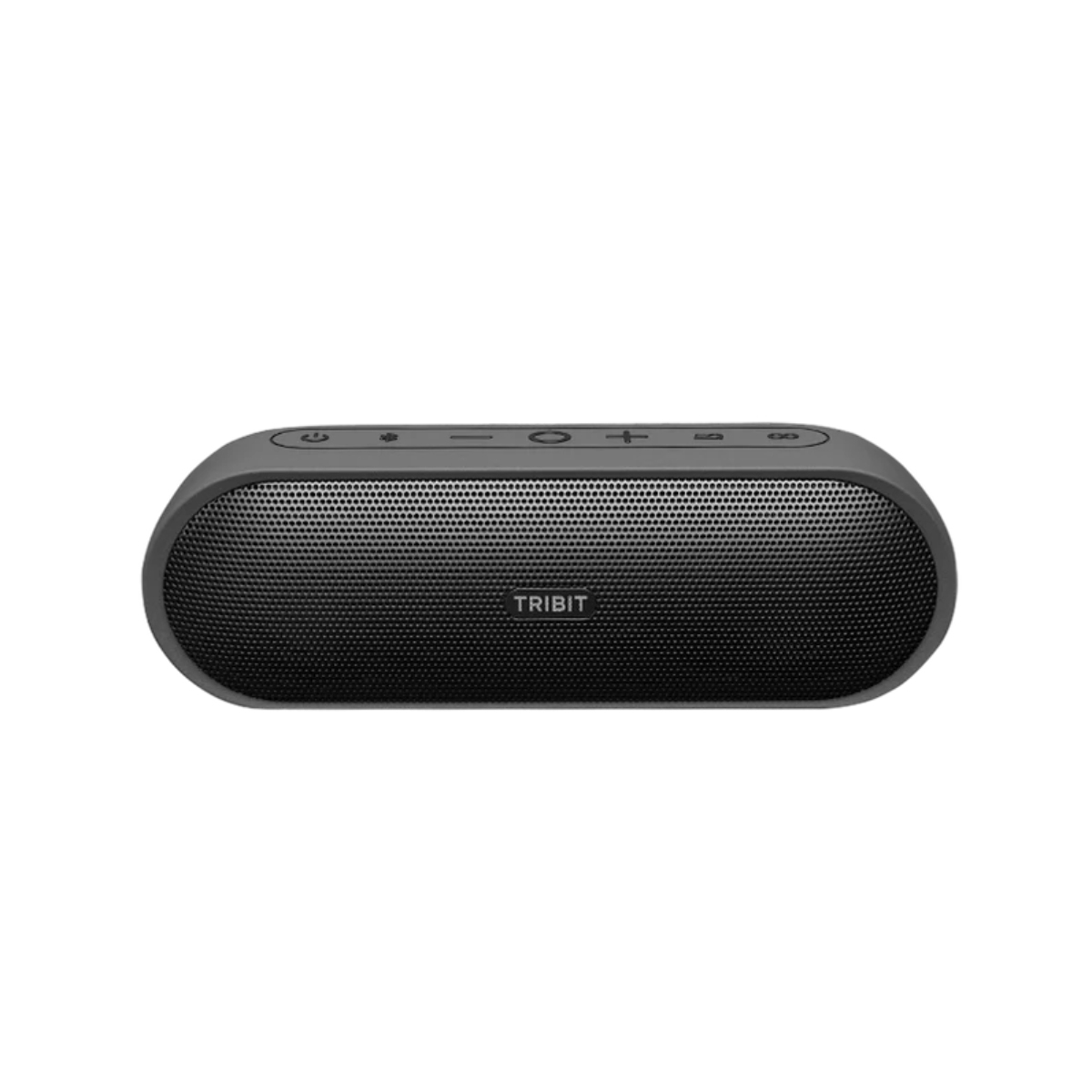
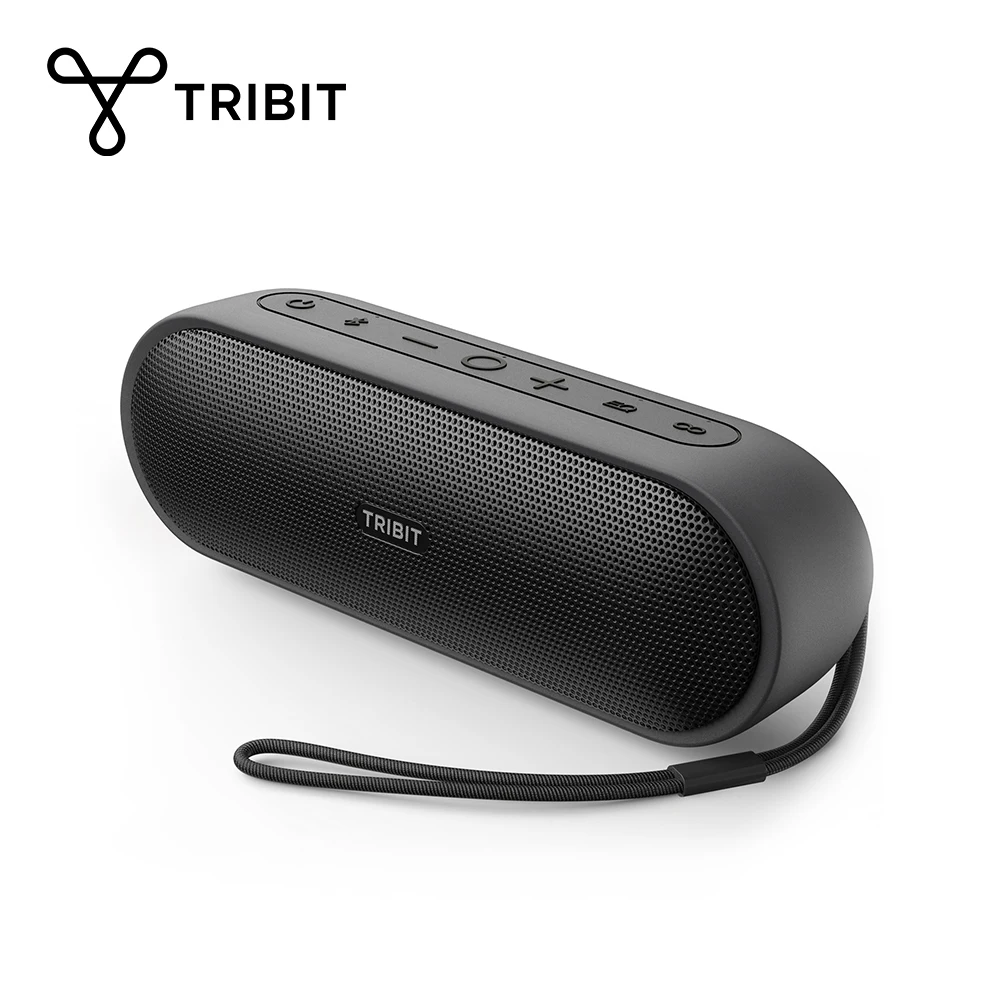
TRIBIT XSound Plus 2 for $60 – the emphasis is shifted to the midrange and treble. The sound is noticeably cleaner and more pleasant. The bass in the speaker is not much and the bass is rather dry. I liked the HiFuture Ripple better with the equalizer. Plus the proprietary app works without any problems. Ripple still couldn’t add to the branded app either on android or iPhone.
MyChooz – HiFuture Ripple for fans of bass and rocking. TRIBIT XSound Plus 2 for those who like clean and precise sound.
- Watch review – TRIBIT XSound Plus 2
- View Rating – Best Inexpensive Speakers 2026 Top 10
Benchmarking: HiFuture Ripple vs Anker SoundCore Motion+ vs JBL Flip 7.
Read MoreHiFuture Ripple vs Anker SoundCore Motion+
A driver is a speaker that plays sound. Speakers use different types of drivers:
- Lows (low-frequency) – handle the bass.
- Mids (mid-frequency) – handle vocals and instruments.
- Highs (high-frequency) – make the sound detailed.
- Passive radiators – boost the bass, but they are not active speakers.
- Full-range drivers – can play the entire frequency range.
📌 How to read specs?
Example. Drivers: 2 x Lows 70 mm + 1 x Mids 60 mm + 2 x Highs 20 mm
👉 This means the speaker has 2 low-frequency drivers with a 70 mm diameter, 1 mid-frequency driver with a 60 mm diameter, and 2 high-frequency drivers 20 mm.
Power (Watts) is how much volume a speaker has. More Watts does not mean better – the balance between power distribution to the lows, mids, and highs, sound quality, and the speaker’s efficiency (build quality) is important.
📌 Marketing tricks: they often list the total power of all drivers – this is not a real measure of loudness.
👉 Example: 100 Watts is not louder than 50 Watts if the 50 Watts are better used in the speaker.
Battery life (hours) – This is how long the battery lasts. The louder the sound, the faster the speaker runs out of power.
📌 Typical battery life:
- Small speakers – 8–12 h (JBL Go, Sony XB100).
- Medium speakers – 12–20 h (JBL Charge, Soundcore Motion+).
- Large speakers – 20+ h (JBL Boombox, PartyBox).
📌 What you should know:
- Maximum volume = fast battery drain. At 100% volume, the actual time can be 2-3 times less than what they claim.
- Lights and bass modes also use up power.
- Bluetooth 5.2 and newer versions last longer, but if the stated battery life is 12 hours, the Bluetooth version will not make it 20 – there is a difference, but it is not more than 15%.
- You can use some models while they charge, but not others.
👉 Tip: If battery life is important, look at real tests, not the manufacturer’s numbers.
A speaker’s protection affects its resistance to water, dust, and impacts. Specs show this as an IP rating (for example, IP67).
📌 How to read IP protection?
👉 The first digit (dust):
- 6 – full protection from dust (the best option).
- 5 and lower – partial protection or no protection.
👉 The second digit (water):
- X – not tested for water resistance.
- 4 – protection from splashes (rain is fine, but do not drop it in water).
- 7 – handles immersion in water up to 1 meter for 30 minutes (JBL Flip 6, Charge 5, Boombox 3).
- 8 – even higher water resistance (rare for speakers).
📌 What is important to know?
- IP67 = fully dustproof and waterproof (JBL Flip 6, Sony XB100, Bose SoundLink Micro).
- IPX4 = protection only from splashes, do not sink it in water (Marshall Emberton, Sony SRS-XG300).
- Some models even float (Ultimate Ears Wonderboom 4, Tribit StormBox Micro 2).
- Charging port without a cover? It is better not to get it wet, even if the speaker has protection.
🚀 Conclusion: IP67 is the best option for outdoors and water. If the speaker is only for home, protection is not as important!
Weight is about how easy it is to carry and use the speaker. You can carry a light speaker every day, but a heavy one is better left at home.
📌 Weight categories:
- Up to 500 g – lightweight: for your pocket, bike, or backpack (JBL Go, Sony XB100, Bose SoundLink Micro).
- 500 g – 1.5 kg – great for travel: easy to carry in a bag, good sound (JBL Flip, Soundcore Motion+).
- 1.5 – 3 kg – all-purpose: for home and outdoors, but heavy to carry in your hands for a long time (JBL Charge, Marshall Kilburn II).
- 3 – 7 kg – for parties: powerful sound, but not really portable anymore (JBL Xtreme, Tribit StormBox Blast).
- 7+ kg – almost floor-standing: hard to carry, better to leave in one spot (JBL PartyBox, Sony X-series).
📌 What’s important to know?
👉 A strap or carabiner helps you carry lightweight models on a backpack.
👉 Handles and straps make medium and heavy models easier to carry (for example, the JBL Xtreme has a shoulder strap).
👉 Wheels are found on the biggest speakers (JBL PartyBox 310, Sony XP700).
🚀 Conclusion: if you’ll be carrying the speaker every day – get one under 1.5 kg. If powerful sound is important, choose 3 kg+, but make sure the speaker is easy to carry! 🎒🎶
A speaker’s size affects its volume, battery life, and convenience.
📌 Main categories:
- Small (up to 15 cm, 300–600 g) – pocket-sized, good for travel (JBL Go, Sony XB100, Bose SoundLink Micro).
- Medium (15–25 cm, 700 g – 2 kg) – all-purpose, good for both home and outdoor use (JBL Charge, Soundcore Motion+).
- Large (25+ cm, 2–7 kg) – powerful, with deep bass, but less portable (JBL Xtreme, Boombox, Tribit StormBox Blast).
- Floor speakers (40+ cm, 7+ kg) – for parties, can be plugged in (JBL PartyBox, Sony X-series).
📌 What’s important to know?
👉 Bigger speakers are louder, often have better sound and deeper bass, but their weight and size go up.
👉 Smaller speakers are more portable, but they have limited volume, and the sound quality is often worse.
👉 Shape is also important – long speakers have directional sound, while round and oval ones give you 360° sound.
🚀 Conclusion: choose a speaker based on the size that fits your needs, not just by its power!
A driver is a speaker that plays sound. Speakers use different types of drivers:
- Lows (low-frequency) – handle the bass.
- Mids (mid-frequency) – handle vocals and instruments.
- Highs (high-frequency) – make the sound detailed.
- Passive radiators – boost the bass, but they are not active speakers.
- Full-range drivers – can play the entire frequency range.
📌 How to read specs?
Example. Drivers: 2 x Lows 70 mm + 1 x Mids 60 mm + 2 x Highs 20 mm
👉 This means the speaker has 2 low-frequency drivers with a 70 mm diameter, 1 mid-frequency driver with a 60 mm diameter, and 2 high-frequency drivers 20 mm.
Power (Watts) is how much volume a speaker has. More Watts does not mean better – the balance between power distribution to the lows, mids, and highs, sound quality, and the speaker’s efficiency (build quality) is important.
📌 Marketing tricks: they often list the total power of all drivers – this is not a real measure of loudness.
👉 Example: 100 Watts is not louder than 50 Watts if the 50 Watts are better used in the speaker.
Battery life (hours) – This is how long the battery lasts. The louder the sound, the faster the speaker runs out of power.
📌 Typical battery life:
- Small speakers – 8–12 h (JBL Go, Sony XB100).
- Medium speakers – 12–20 h (JBL Charge, Soundcore Motion+).
- Large speakers – 20+ h (JBL Boombox, PartyBox).
📌 What you should know:
- Maximum volume = fast battery drain. At 100% volume, the actual time can be 2-3 times less than what they claim.
- Lights and bass modes also use up power.
- Bluetooth 5.2 and newer versions last longer, but if the stated battery life is 12 hours, the Bluetooth version will not make it 20 – there is a difference, but it is not more than 15%.
- You can use some models while they charge, but not others.
👉 Tip: If battery life is important, look at real tests, not the manufacturer’s numbers.
A speaker’s protection affects its resistance to water, dust, and impacts. Specs show this as an IP rating (for example, IP67).
📌 How to read IP protection?
👉 The first digit (dust):
- 6 – full protection from dust (the best option).
- 5 and lower – partial protection or no protection.
👉 The second digit (water):
- X – not tested for water resistance.
- 4 – protection from splashes (rain is fine, but do not drop it in water).
- 7 – handles immersion in water up to 1 meter for 30 minutes (JBL Flip 6, Charge 5, Boombox 3).
- 8 – even higher water resistance (rare for speakers).
📌 What is important to know?
- IP67 = fully dustproof and waterproof (JBL Flip 6, Sony XB100, Bose SoundLink Micro).
- IPX4 = protection only from splashes, do not sink it in water (Marshall Emberton, Sony SRS-XG300).
- Some models even float (Ultimate Ears Wonderboom 4, Tribit StormBox Micro 2).
- Charging port without a cover? It is better not to get it wet, even if the speaker has protection.
🚀 Conclusion: IP67 is the best option for outdoors and water. If the speaker is only for home, protection is not as important!
Weight is about how easy it is to carry and use the speaker. You can carry a light speaker every day, but a heavy one is better left at home.
📌 Weight categories:
- Up to 500 g – lightweight: for your pocket, bike, or backpack (JBL Go, Sony XB100, Bose SoundLink Micro).
- 500 g – 1.5 kg – great for travel: easy to carry in a bag, good sound (JBL Flip, Soundcore Motion+).
- 1.5 – 3 kg – all-purpose: for home and outdoors, but heavy to carry in your hands for a long time (JBL Charge, Marshall Kilburn II).
- 3 – 7 kg – for parties: powerful sound, but not really portable anymore (JBL Xtreme, Tribit StormBox Blast).
- 7+ kg – almost floor-standing: hard to carry, better to leave in one spot (JBL PartyBox, Sony X-series).
📌 What’s important to know?
👉 A strap or carabiner helps you carry lightweight models on a backpack.
👉 Handles and straps make medium and heavy models easier to carry (for example, the JBL Xtreme has a shoulder strap).
👉 Wheels are found on the biggest speakers (JBL PartyBox 310, Sony XP700).
🚀 Conclusion: if you’ll be carrying the speaker every day – get one under 1.5 kg. If powerful sound is important, choose 3 kg+, but make sure the speaker is easy to carry! 🎒🎶
A speaker’s size affects its volume, battery life, and convenience.
📌 Main categories:
- Small (up to 15 cm, 300–600 g) – pocket-sized, good for travel (JBL Go, Sony XB100, Bose SoundLink Micro).
- Medium (15–25 cm, 700 g – 2 kg) – all-purpose, good for both home and outdoor use (JBL Charge, Soundcore Motion+).
- Large (25+ cm, 2–7 kg) – powerful, with deep bass, but less portable (JBL Xtreme, Boombox, Tribit StormBox Blast).
- Floor speakers (40+ cm, 7+ kg) – for parties, can be plugged in (JBL PartyBox, Sony X-series).
📌 What’s important to know?
👉 Bigger speakers are louder, often have better sound and deeper bass, but their weight and size go up.
👉 Smaller speakers are more portable, but they have limited volume, and the sound quality is often worse.
👉 Shape is also important – long speakers have directional sound, while round and oval ones give you 360° sound.
🚀 Conclusion: choose a speaker based on the size that fits your needs, not just by its power!
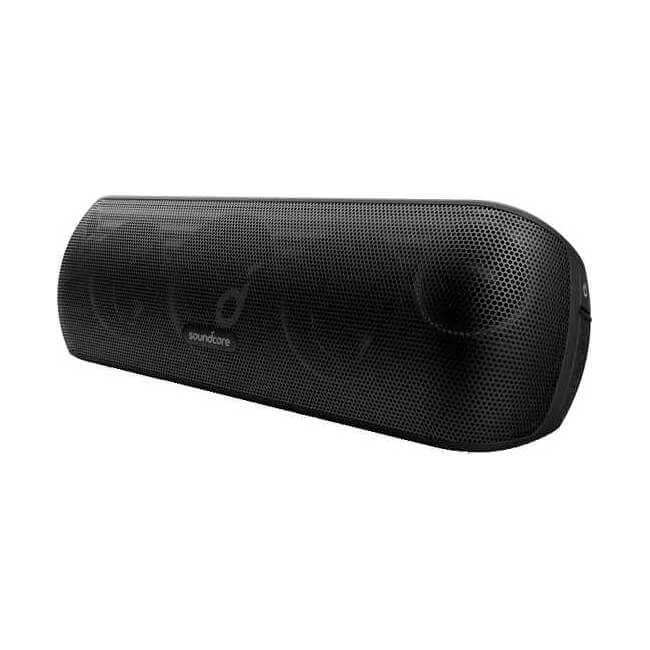
The Anker SoundCore Motion+ sounds better in all sound parameters. The bass is nicer and more spacious, the midrange is more transparent and the treble is better emphasized. The sound is more natural and detailed with aptX HD codec. And most importantly, the speaker has a noticeably better soundstage. The four drivers give a pleasant and spacious sound. And the speaker itself can be used as a mini soundbar for TV, PC or laptop.
MyChooz – Anker SoundCore Motion+.
- Watch review – Anker SoundCore Motion+
- Watch Rating – Best Portable Speakers 2026 – Top 15 Bluetooth Speakers (All Sizes)!
HiFuture Ripple vs JBL Flip 7
A driver is a speaker that plays sound. Speakers use different types of drivers:
- Lows (low-frequency) – handle the bass.
- Mids (mid-frequency) – handle vocals and instruments.
- Highs (high-frequency) – make the sound detailed.
- Passive radiators – boost the bass, but they are not active speakers.
- Full-range drivers – can play the entire frequency range.
📌 How to read specs?
Example. Drivers: 2 x Lows 70 mm + 1 x Mids 60 mm + 2 x Highs 20 mm
👉 This means the speaker has 2 low-frequency drivers with a 70 mm diameter, 1 mid-frequency driver with a 60 mm diameter, and 2 high-frequency drivers 20 mm.
Power (Watts) is how much volume a speaker has. More Watts does not mean better – the balance between power distribution to the lows, mids, and highs, sound quality, and the speaker’s efficiency (build quality) is important.
📌 Marketing tricks: they often list the total power of all drivers – this is not a real measure of loudness.
👉 Example: 100 Watts is not louder than 50 Watts if the 50 Watts are better used in the speaker.
Battery life (hours) – This is how long the battery lasts. The louder the sound, the faster the speaker runs out of power.
📌 Typical battery life:
- Small speakers – 8–12 h (JBL Go, Sony XB100).
- Medium speakers – 12–20 h (JBL Charge, Soundcore Motion+).
- Large speakers – 20+ h (JBL Boombox, PartyBox).
📌 What you should know:
- Maximum volume = fast battery drain. At 100% volume, the actual time can be 2-3 times less than what they claim.
- Lights and bass modes also use up power.
- Bluetooth 5.2 and newer versions last longer, but if the stated battery life is 12 hours, the Bluetooth version will not make it 20 – there is a difference, but it is not more than 15%.
- You can use some models while they charge, but not others.
👉 Tip: If battery life is important, look at real tests, not the manufacturer’s numbers.
A speaker’s protection affects its resistance to water, dust, and impacts. Specs show this as an IP rating (for example, IP67).
📌 How to read IP protection?
👉 The first digit (dust):
- 6 – full protection from dust (the best option).
- 5 and lower – partial protection or no protection.
👉 The second digit (water):
- X – not tested for water resistance.
- 4 – protection from splashes (rain is fine, but do not drop it in water).
- 7 – handles immersion in water up to 1 meter for 30 minutes (JBL Flip 6, Charge 5, Boombox 3).
- 8 – even higher water resistance (rare for speakers).
📌 What is important to know?
- IP67 = fully dustproof and waterproof (JBL Flip 6, Sony XB100, Bose SoundLink Micro).
- IPX4 = protection only from splashes, do not sink it in water (Marshall Emberton, Sony SRS-XG300).
- Some models even float (Ultimate Ears Wonderboom 4, Tribit StormBox Micro 2).
- Charging port without a cover? It is better not to get it wet, even if the speaker has protection.
🚀 Conclusion: IP67 is the best option for outdoors and water. If the speaker is only for home, protection is not as important!
Weight is about how easy it is to carry and use the speaker. You can carry a light speaker every day, but a heavy one is better left at home.
📌 Weight categories:
- Up to 500 g – lightweight: for your pocket, bike, or backpack (JBL Go, Sony XB100, Bose SoundLink Micro).
- 500 g – 1.5 kg – great for travel: easy to carry in a bag, good sound (JBL Flip, Soundcore Motion+).
- 1.5 – 3 kg – all-purpose: for home and outdoors, but heavy to carry in your hands for a long time (JBL Charge, Marshall Kilburn II).
- 3 – 7 kg – for parties: powerful sound, but not really portable anymore (JBL Xtreme, Tribit StormBox Blast).
- 7+ kg – almost floor-standing: hard to carry, better to leave in one spot (JBL PartyBox, Sony X-series).
📌 What’s important to know?
👉 A strap or carabiner helps you carry lightweight models on a backpack.
👉 Handles and straps make medium and heavy models easier to carry (for example, the JBL Xtreme has a shoulder strap).
👉 Wheels are found on the biggest speakers (JBL PartyBox 310, Sony XP700).
🚀 Conclusion: if you’ll be carrying the speaker every day – get one under 1.5 kg. If powerful sound is important, choose 3 kg+, but make sure the speaker is easy to carry! 🎒🎶
A speaker’s size affects its volume, battery life, and convenience.
📌 Main categories:
- Small (up to 15 cm, 300–600 g) – pocket-sized, good for travel (JBL Go, Sony XB100, Bose SoundLink Micro).
- Medium (15–25 cm, 700 g – 2 kg) – all-purpose, good for both home and outdoor use (JBL Charge, Soundcore Motion+).
- Large (25+ cm, 2–7 kg) – powerful, with deep bass, but less portable (JBL Xtreme, Boombox, Tribit StormBox Blast).
- Floor speakers (40+ cm, 7+ kg) – for parties, can be plugged in (JBL PartyBox, Sony X-series).
📌 What’s important to know?
👉 Bigger speakers are louder, often have better sound and deeper bass, but their weight and size go up.
👉 Smaller speakers are more portable, but they have limited volume, and the sound quality is often worse.
👉 Shape is also important – long speakers have directional sound, while round and oval ones give you 360° sound.
🚀 Conclusion: choose a speaker based on the size that fits your needs, not just by its power!
A driver is a speaker that plays sound. Speakers use different types of drivers:
- Lows (low-frequency) – handle the bass.
- Mids (mid-frequency) – handle vocals and instruments.
- Highs (high-frequency) – make the sound detailed.
- Passive radiators – boost the bass, but they are not active speakers.
- Full-range drivers – can play the entire frequency range.
📌 How to read specs?
Example. Drivers: 2 x Lows 70 mm + 1 x Mids 60 mm + 2 x Highs 20 mm
👉 This means the speaker has 2 low-frequency drivers with a 70 mm diameter, 1 mid-frequency driver with a 60 mm diameter, and 2 high-frequency drivers 20 mm.
Power (Watts) is how much volume a speaker has. More Watts does not mean better – the balance between power distribution to the lows, mids, and highs, sound quality, and the speaker’s efficiency (build quality) is important.
📌 Marketing tricks: they often list the total power of all drivers – this is not a real measure of loudness.
👉 Example: 100 Watts is not louder than 50 Watts if the 50 Watts are better used in the speaker.
Battery life (hours) – This is how long the battery lasts. The louder the sound, the faster the speaker runs out of power.
📌 Typical battery life:
- Small speakers – 8–12 h (JBL Go, Sony XB100).
- Medium speakers – 12–20 h (JBL Charge, Soundcore Motion+).
- Large speakers – 20+ h (JBL Boombox, PartyBox).
📌 What you should know:
- Maximum volume = fast battery drain. At 100% volume, the actual time can be 2-3 times less than what they claim.
- Lights and bass modes also use up power.
- Bluetooth 5.2 and newer versions last longer, but if the stated battery life is 12 hours, the Bluetooth version will not make it 20 – there is a difference, but it is not more than 15%.
- You can use some models while they charge, but not others.
👉 Tip: If battery life is important, look at real tests, not the manufacturer’s numbers.
A speaker’s protection affects its resistance to water, dust, and impacts. Specs show this as an IP rating (for example, IP67).
📌 How to read IP protection?
👉 The first digit (dust):
- 6 – full protection from dust (the best option).
- 5 and lower – partial protection or no protection.
👉 The second digit (water):
- X – not tested for water resistance.
- 4 – protection from splashes (rain is fine, but do not drop it in water).
- 7 – handles immersion in water up to 1 meter for 30 minutes (JBL Flip 6, Charge 5, Boombox 3).
- 8 – even higher water resistance (rare for speakers).
📌 What is important to know?
- IP67 = fully dustproof and waterproof (JBL Flip 6, Sony XB100, Bose SoundLink Micro).
- IPX4 = protection only from splashes, do not sink it in water (Marshall Emberton, Sony SRS-XG300).
- Some models even float (Ultimate Ears Wonderboom 4, Tribit StormBox Micro 2).
- Charging port without a cover? It is better not to get it wet, even if the speaker has protection.
🚀 Conclusion: IP67 is the best option for outdoors and water. If the speaker is only for home, protection is not as important!
Weight is about how easy it is to carry and use the speaker. You can carry a light speaker every day, but a heavy one is better left at home.
📌 Weight categories:
- Up to 500 g – lightweight: for your pocket, bike, or backpack (JBL Go, Sony XB100, Bose SoundLink Micro).
- 500 g – 1.5 kg – great for travel: easy to carry in a bag, good sound (JBL Flip, Soundcore Motion+).
- 1.5 – 3 kg – all-purpose: for home and outdoors, but heavy to carry in your hands for a long time (JBL Charge, Marshall Kilburn II).
- 3 – 7 kg – for parties: powerful sound, but not really portable anymore (JBL Xtreme, Tribit StormBox Blast).
- 7+ kg – almost floor-standing: hard to carry, better to leave in one spot (JBL PartyBox, Sony X-series).
📌 What’s important to know?
👉 A strap or carabiner helps you carry lightweight models on a backpack.
👉 Handles and straps make medium and heavy models easier to carry (for example, the JBL Xtreme has a shoulder strap).
👉 Wheels are found on the biggest speakers (JBL PartyBox 310, Sony XP700).
🚀 Conclusion: if you’ll be carrying the speaker every day – get one under 1.5 kg. If powerful sound is important, choose 3 kg+, but make sure the speaker is easy to carry! 🎒🎶
A speaker’s size affects its volume, battery life, and convenience.
📌 Main categories:
- Small (up to 15 cm, 300–600 g) – pocket-sized, good for travel (JBL Go, Sony XB100, Bose SoundLink Micro).
- Medium (15–25 cm, 700 g – 2 kg) – all-purpose, good for both home and outdoor use (JBL Charge, Soundcore Motion+).
- Large (25+ cm, 2–7 kg) – powerful, with deep bass, but less portable (JBL Xtreme, Boombox, Tribit StormBox Blast).
- Floor speakers (40+ cm, 7+ kg) – for parties, can be plugged in (JBL PartyBox, Sony X-series).
📌 What’s important to know?
👉 Bigger speakers are louder, often have better sound and deeper bass, but their weight and size go up.
👉 Smaller speakers are more portable, but they have limited volume, and the sound quality is often worse.
👉 Shape is also important – long speakers have directional sound, while round and oval ones give you 360° sound.
🚀 Conclusion: choose a speaker based on the size that fits your needs, not just by its power!
And let’s compare it briefly with JBL Flip 7 for $140 – here the price flies into space. The speaker is also better in all parameters than HiFuture Ripple for $40. Sound, features, and design. There is much more detail in the sound, the stage is a bit wider, bass is more harmonious, mids and highs are on the surface.
MyChooz – JBL Flip 7.
- Watch review – JBL Flip 7 vs JBL Charge 6 and JBL Flip 6
- View Rating – Best JBL Speakers (Top 12)
To summarize the comparison. The HiFuture Ripple is the most budget-friendly option I’ve tested this year. And if your budget for a speaker is $40, this HiFuture is definitely worth the money. Their competitors for this price, Tronsmart models still come to mind, and in this comparison, I like HiFuture much better.
More comparisons in MyChooz.com’s top rankings
Functions
Battery life is the actual playback time you get from the earbuds and their charging case on a single charge during typical volume and usage scenarios (music, video, calls), not just the marketing numbers. Good battery life means you can easily get through a day or several without needing an outlet, and it doesn’t drop significantly with noise cancellation and high-quality codecs enabled. Poor battery life, on the other hand, requires frequent recharging and noticeably decreases when you crank up the volume.
. 9 Claimed 12 hours of operation. I actually got 17 hours. 30 minutes at 40% volume. No fast or wireless charging.Controls — how easily and reliably the headphones respond to your presses and gestures for pausing, adjusting volume, switching tracks, changing modes, and activating your voice assistant. Good controls feel intuitive, work without fail, and avoid accidental inputs; bad controls will miss commands, lag, or simply ignore your gestures.
. 7.5 When pressing the buttons on the back of the speaker, you have to tilt the speaker towards you. The travel of the buttons is stiff and you have to press them with force. Accidental presses are excluded. The buttons are not backlit (which makes me happy), you can’t reassign the control.Read More.
The app, which is the proprietary software you use to tweak sound, controls, noise cancellation, firmware updates, and other features. A good app is stable, well-organized, and actually lets you customize things; a bad one glitches, lacks features, or feels like it’s just there for show.
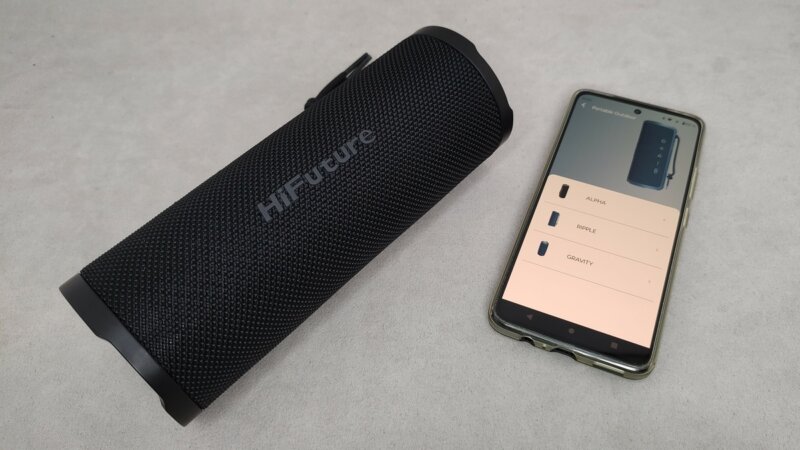
. 1 HiFuture Audio, you can download for Android and for iOS. I couldn’t connect the speaker to the app. Automatic search does not find the speaker. Manual addition does not work. And this is the second speaker of the manufacturer, which cannot be added to the branded app.Read More.
Connection stability — how well the headphones hold onto their Bluetooth signal without dropping out, lagging, or glitching in everyday situations like busy streets, public transport, or even at home with a Wi-Fi router nearby. Good stability means the audio won’t stutter when you turn your head or cut out in crowded areas. Poor stability, on the other hand, will show up as frequent dropouts, stuttering, audio-video sync issues, and problems reconnecting.
. 8 Within 10m – the signal is stable and does not drop out on android. On iOS there were stutters within 2 meters, about 2 times in 1 hour. Bluetooth version 5.3.Read More.
Important features and sensors:
- Multipoint – stated by the manufacturer.
- Automatic shutdown at idle – yes.
- Google Fast Pair support – none.
- There is no support for Swift Pair for Windows.
Design
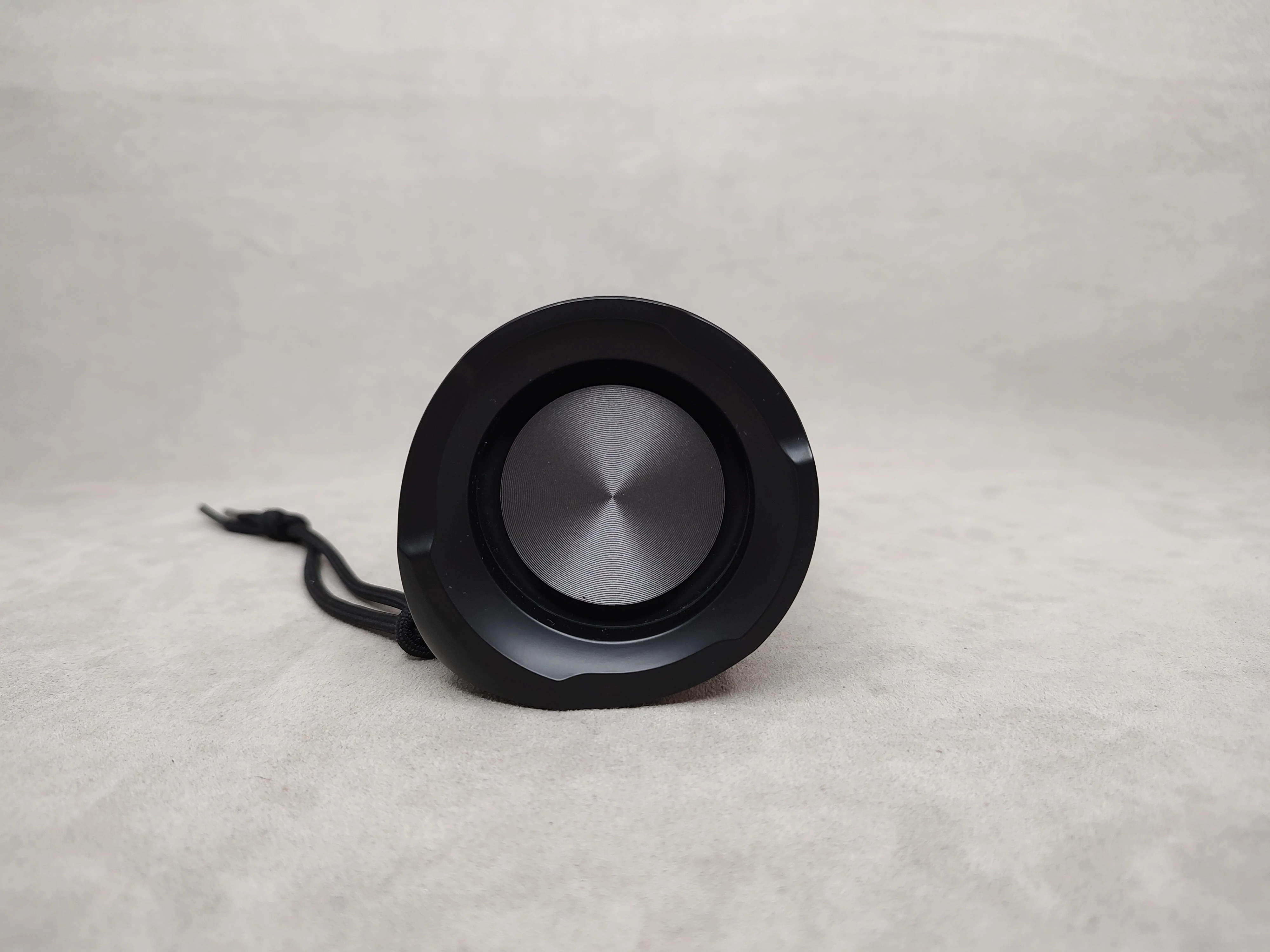
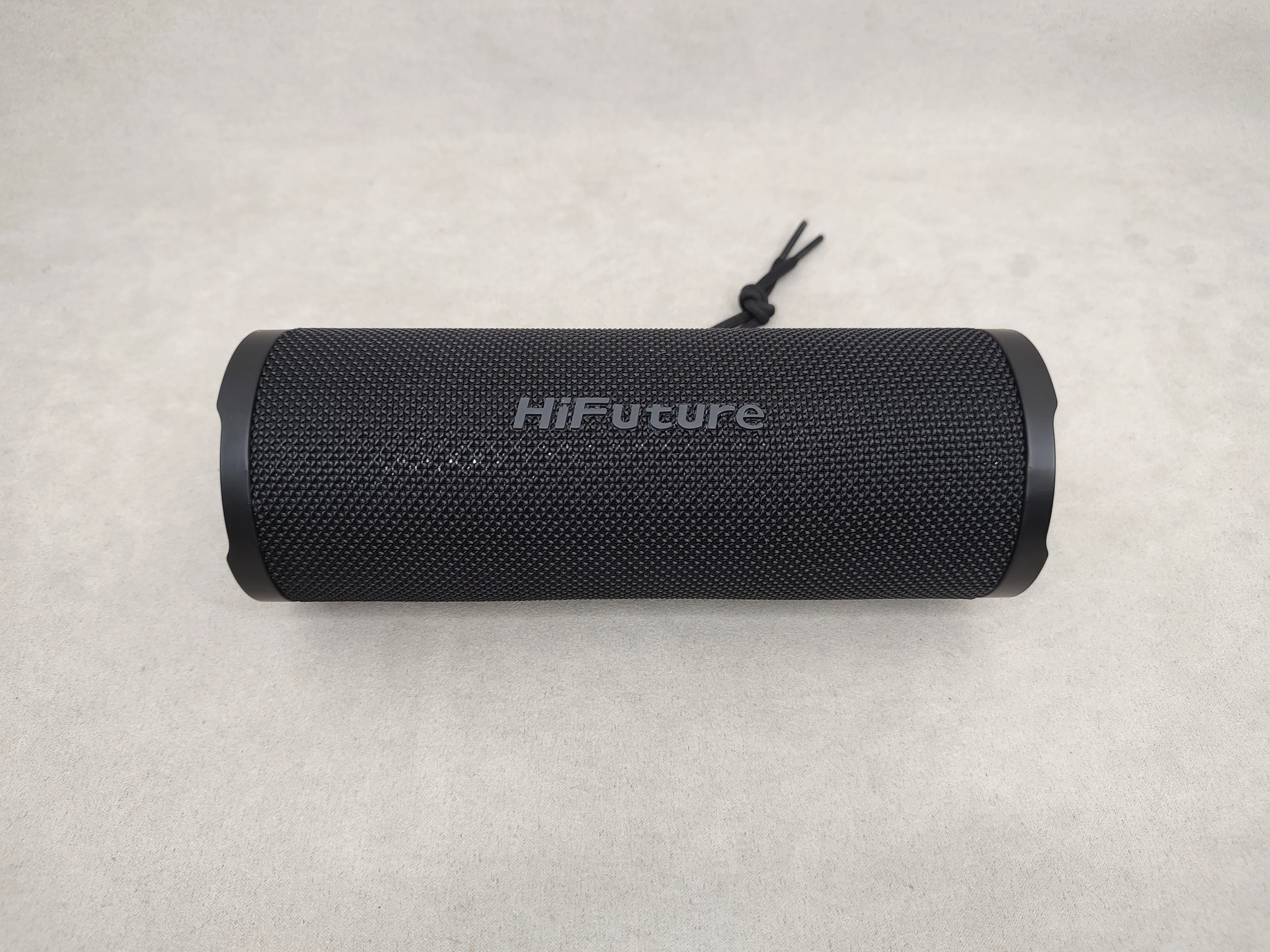
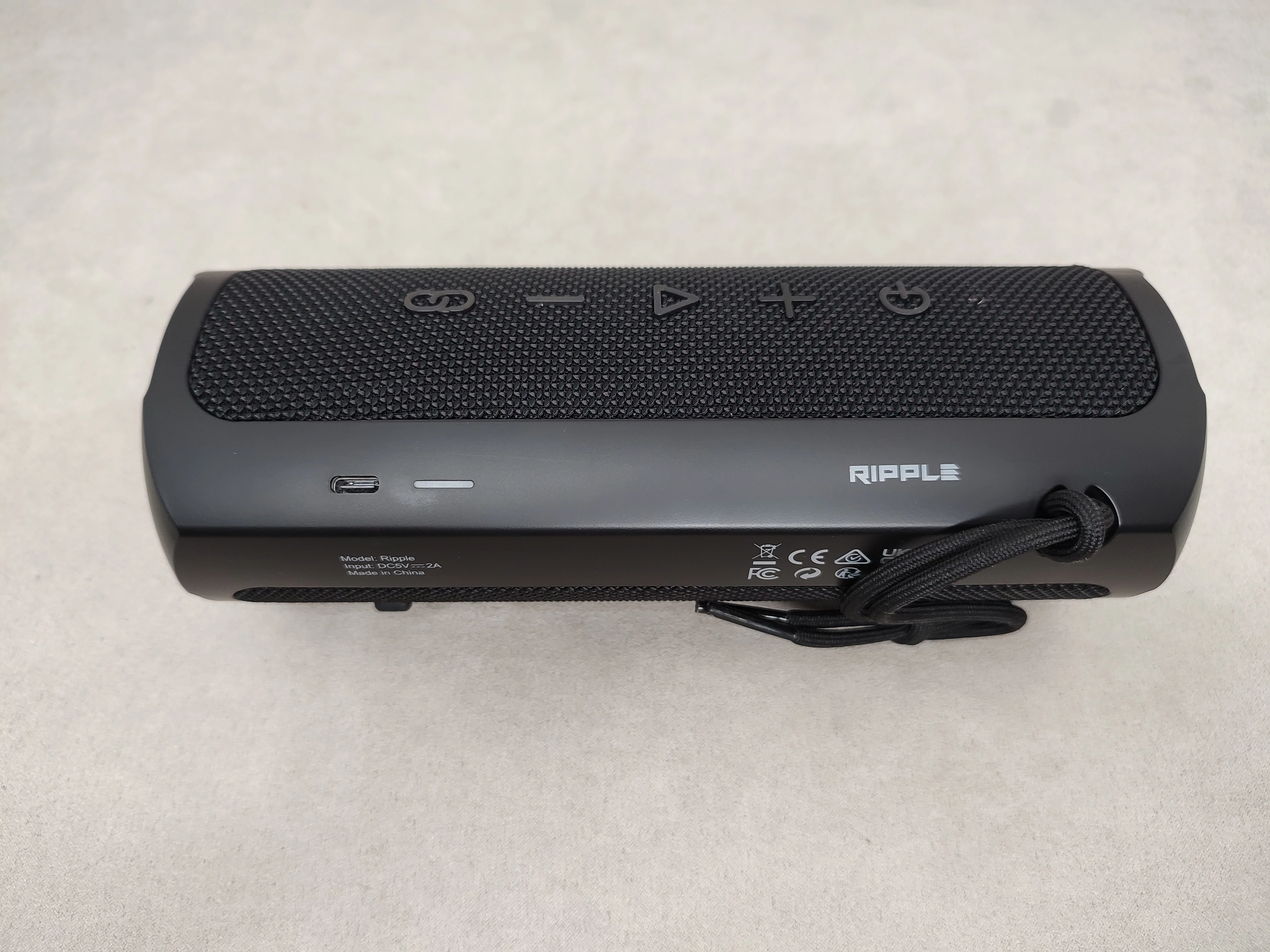
Comfort means how easy it is to use the speaker every day. This includes its weight, if it has a handle, strap, or carabiner for carrying, and how easy the buttons are to press and their quality. A comfortable speaker feels good in your hand, and you can easily take it with you.
. 8 The speaker is comfortable to use and rests well in the hand. There is a lanyard to secure it to your wrist or backpack.Durability is how well a speaker handles daily use and time. This includes the build quality and materials, dust and water resistance (IP rating), the reliability of its ports and speaker grilles, and its resistance to drops. A durable speaker lasts for years without losing quality.
. 8 Dustproof IPX7 – the speaker can withstand immersion in water up to 1 meter. The assembly is neat without visible defects. The speaker frame is made of plastic, the front cover is made of nylon. There are no claims to the materials. Only the plastic is stained and collects fingerprints.Design is the look and how well the speaker is made: how it looks, the quality and feel of the materials, how well it’s put together, and the color options. Good design looks expensive and not cheap. The shape also affects the sound: long models sound directional, and round ones give 360-degree sound.
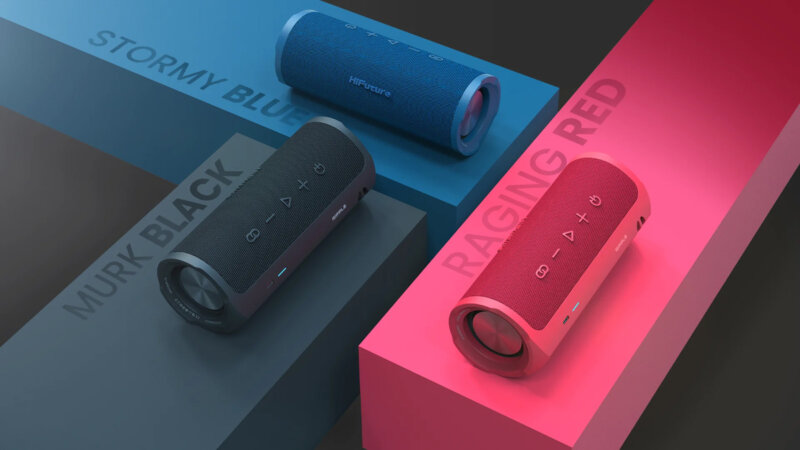
. 8.5 The HiFuture Ripple speaker is available in three colors – blue, black and red. It looks good. Visually it reminds me of JBL Flip speakers of the 4th-5th generation.Bottom line
Is HiFuture Ripple a MyChooz or not? For 1699 UAH – yes, for this price I can safely recommend the speaker. A great option for nature, for summer cottages, for background listening during sports, physical work and so on.
Good portable speaker, with good sound with equalizer. Good volume reserve, assembly without defects, and the charge is enough for a light day. There are no significant disadvantages, except for the attachment to the application. I tried to connect two HiFuture speakers from two phones – it didn’t work. There is also no wired sound transmission.
For which scenarios is HiFuture Ripple suitable?
Read MoreOutdoor activities and travel – yes. With IPx7 protection, water won’t damage the speaker.
Walking and traveling, yes. You can wear the speaker on your belt.
Parties and events – yes. The volume is enough for a company of up to 10-12 people.
Home use – yes. The volume is sufficient for a room of 20-25 m².
For games and movies – with reservations. In games, the sound lag is minimal. In videos without equalizer, the sound lacks transparency and volume.
What are the alternatives?
- Under $70 – TRIBIT XSound Plus 2. Clean sound out of the box, little bass. The speaker is lightweight and compact. IPX7 dustproof.
- Under $100 – Anker SoundCore Motion+. Wider soundstage, more detail and clearer sound out of the box. IPX7 dustproof.
- Under $120 – JBL Flip 7. Nice, melodic sound out of the box. Audio streaming via USB-C and Auracast. IP68 dust and water resistance.
- Up to $170 – JBL Charge 6. Excellent in detail and natural sound, great bass. Audio transmission via USB-C and Auracast. IP68 dustproof.
Be sure to write what you think about the new HiFuture Ripple, I’ll be very interested to chat with you in the comments. Have a great sound and see you on MyChooz, bye!
HiFuture Ripple – Features:
- HiFuture Ripple release date – May 2024
- HiFuture Ripple price at launch is $64
- Design: Portable wireless speaker
- Transmitters: Dynamic low frequency 45 x 80 mm + high frequency 36 x 52 mm, 1x 20 W + 1x 10 W
- Rated power: 30 W
- Bluetooth: 5.3
- Wireless chipset: AC6966B8
- Amplifier and DSP: ACM8625
- Audio decoding: SBC/CVSD
- Support profiles: A2DP1.3/AVRCP1.6/HFP1.7
- Speaker impedance: 4 ohms (plus or minus 15%)
- Battery Type: Lithium-ion polymer 4000 mAh
- Battery life: 80% capacity remaining after 500 cycles
- SPL (Sound Pressure Level): 81 dB / 1 m / 1 W
- Music playback time: 12 hours
- SNR (Signal to Noise Ratio): greater than or equal to 80 dB
- Charging voltage and current: DC 5 V at 2 A
- THD + N (Harmonic + Noise Ratio): less than or equal to 1% (20 W/1 kHz)
- Wireless communication range: 10 m
- Waiting time: 300 days
- Dimensions (L x W x H): 200 x 75 x 82 mm
- Charging time: 2.5 hours
- Water resistance: IPX7
- Charging port: Type C
- Net weight: 620 g
What’s in the box?
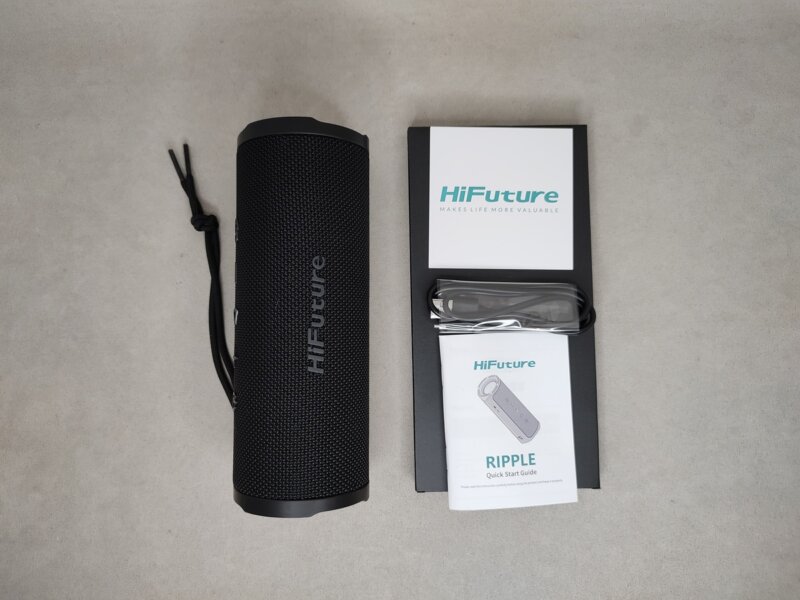
- Column
- USB-C-USB-A cable
- Warranty form
- Instruction
Popular Questions:
HiFuture Ripple – how to connect a wireless speaker?
1. Turn on Bluetooth on your source: phone, tablet, PC or laptop.
2. Open Bluetooth settings and select the “add new device” option.
3. Turn on the speaker. Press the power button for 2-3 seconds.
4. Wait for the speaker to appear in the list of available devices. Select the speaker.
