

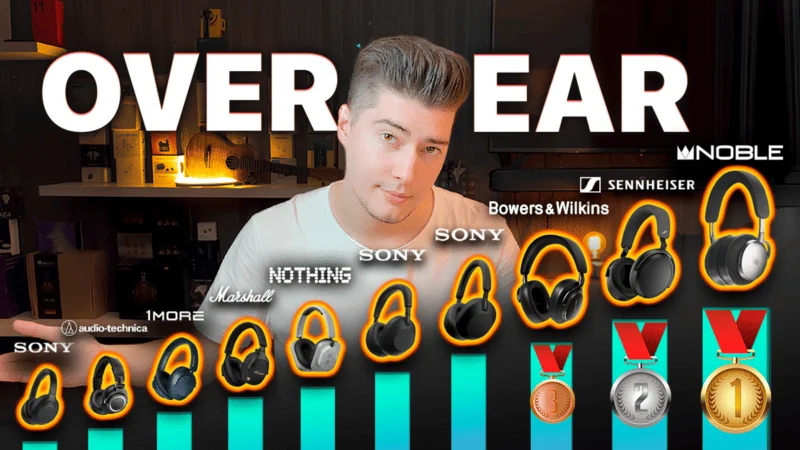
The best over-ear headphones of 2026, ranked by sound quality, comfort, ANC, and value. This Top 10 includes wireless and wired models tested on MyChooz over 12 years, with 50+ models tested in total.
EMMA — Experts + Methodology + MyChoozers + Algorithm.
Every model goes through identical tests; the score is calculated automatically with fixed weights — a spot in the rating cannot be bought.
Top 10 Best Over-Ear Headphones 2026 — Rating:
1. Noble Audio FoKus Apollo 8.87Best over-ear headphones for sound quality with a boom mic.
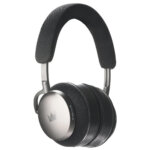
The Noble Audio FoKus Apollo are the best over-ear headphones for sound. They’re especially great for detail retrieval. The main reasons to buy them are the reference-quality sound. The earcups don’t press on your ears. LDAC latency is around 30 ms. They also have a boom mic. It has a switch to quickly turn off all the headphone mics. There aren’t any big downsides. Just consider the price. Also, the highs can be a little harsh. But you can fix that with the EQ.
The overall sound score is calculated using the formula:
Frequency Balance + Detail + Stage + Naturalness / 4 = overall sound score.
. 9.16 These headphones have the best sound for emotion and detail. The bass is deep and not overpowering. Mids are open with minimal loss in clarity. Reference-quality soundstage, great natural timbre, and solid detail retrieval. Imaging stays stable as instruments come and go. The sound has no noticeable artificial timbre or grain. There’s enough detail to hear tiny nuances in recordings. On the downside, the highs lack some softness. Too much percussion in a track can be fatiguing.More details.
The built-in microphone isn’t anything special. You can talk with it, but not in noisy places. There’s also this detachable microphone. Let’s hear how it all sounds.
Overall feature score — this is the overall score for all device features. This score comes from individual feature ratings (battery life, controls, app, connection stability, and others) and shows how easy and smart the device is for daily use.
. 8.64 Active noise cancellation (ANC) blocks about 50% of noise. However, transparency mode is minimally suitable for conversations. Controls are button-based. They offer basic playback and call management. The app is user-friendly. It has a 10-band EQ and personalized sound tuning.More details.
Final build quality score is the overall score for build quality and materials: comfort, durability, and design. It shows how nice the device is to hold and use, and how long it will last.
. 8.50 The earcups don’t press on your ears. You might feel minor fatigue after 3-4 hours of use. The build quality is flawless, and the materials are premium. The headphones look good; I liked them.More details.
- Reference-quality sound
- Top-tier active noise cancellation
- Comfortable fit, with a strong and reliable build quality
- Minimally convenient transparency mode
- The fabric finish collects dust and small debris
2. Sennheiser MOMENTUM 4 Wireless 9.15Best wireless over-ear headphones — in sound and features
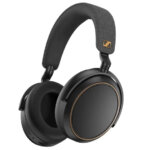
Sennheiser Momentum 4 Wireless are the best wireless over-ear headphones with three main reasons to buy: the best sound under $300, top-tier noise cancellation, and a solid, reliable build. With aptX HD and aptX Adaptive codecs, the sound improvement is only 10-15%, since the audio system already delivers maximum performance on its own. On the downside — the earcup clamping force is above average, so after 1-2 hours of use you’ll need to take a break.
The overall sound score is calculated using the formula:
Frequency Balance + Detail + Stage + Naturalness / 4 = overall sound score.
. 9.55 These headphones have the best sound among full-size models under $300. They have a pleasant bass sound with intimate mids and highs that are bright enough. The sound is spacious and full-bodied, without artificial timbre or noticeable grain. Detail retrieval is good enough to catch micro-details. Minor drawbacks include a slight excess of bass, a lack of highs, and a slight lack of transparency.More details.
Microphone — the quality rating of speech transmission. We test the microphone in 2 main usage scenarios: quiet and noisy environments.
Quiet environment — recording indoors with minimal background noise. Noisy environment — recording outside near a 6-lane road with maximum traffic noise.
. 9.25 In quiet environments: 9.5 In noisy conditions: 9 The headphones have 4 microphones, two on each earcup. Your voice sounds detailed in recordings. In noisy environments, the quality drops, but it remains intelligible.Overall feature score — this is the overall score for all device features. This score comes from individual feature ratings (battery life, controls, app, connection stability, and others) and shows how easy and smart the device is for daily use.
. 9.04 The active noise cancellation is top-tier and doesn’t affect sound quality. The transparency mode is near reference-quality. And with up to 60 hours of battery life, you get a week of active listening. Controls are a mix, mostly gestures on the right earcup. Navigation is convenient, but you’ll need a couple of days to get used to it. The app is useful: you can enable the aptX codec on Android, tune the EQ, and adjust the ambient mode.More details.
Final build quality score is the overall score for build quality and materials: comfort, durability, and design. It shows how nice the device is to hold and use, and how long it will last.
. 8.33 The build quality is strong and reliable. The finish is a bit of a fingerprint magnet. The clamping force is above average. This is fine for 1-2 hours of use. After that, you’ll want to take a break. The headphones look good. They are available in 5 colors.More details.
- Best sound under $300
- Top-tier active noise cancellation and transparency. It’s reference-quality.
- Detailed microphone
- Strong and reliable build quality
- The headphone earcups press
3. Bowers & Wilkins PX8 S2 8.41Large over-ear Bluetooth headphones – stylish and with bright tuning.
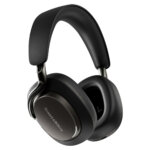
Bowers & Wilkins PX8 S2 are large over-ear Bluetooth headphones. They have deep bass and bright tuning. The main reasons to buy them are the top-tier sound. It’s detailed and natural. They also feature premium quality materials. Plus, the build quality is durable and reliable. This model has no critical flaws.
The overall sound score is calculated using the formula:
Frequency Balance + Detail + Stage + Naturalness / 4 = overall sound score.
. 8.67 The sound is bright with a cool tint. The bass is precise and detailed. Instruments are distinct by their timbre. High-frequency instruments are clear, but they’re harsh and quickly cause fatigue. This is the biggest drawback in the sound. Also, the soundstage felt a bit small. I liked the mids. The sound is open, and the singer feels like they’re performing right in front of you. There’s just a slight lack of transparency. There’s no noticeable artificial timbre or grain in the sound.More details.
Microphone — the quality rating of speech transmission. We test the microphone in 2 main usage scenarios: quiet and noisy environments.
Quiet environment — recording indoors with minimal background noise. Noisy environment — recording outside near a 6-lane road with maximum traffic noise.
. 7.75 In quiet conditions: 8.5 In noisy conditions: 7Overall feature score — this is the overall score for all device features. This score comes from individual feature ratings (battery life, controls, app, connection stability, and others) and shows how easy and smart the device is for daily use.
. 7.98 The active noise cancellation (ANC) suppresses about 40% of noise. You can chat in transparency mode, but the surroundings sound a bit muffled. Button controls handle basic player navigation and call management. In the app, the only useful things are the 5-band EQ and linking music streaming services.More details.
Final build quality score is the overall score for build quality and materials: comfort, durability, and design. It shows how nice the device is to hold and use, and how long it will last.
. 8.40 The headphones have medium clamping force. You’ll want to take a break after about 2-3 hours of use. They use premium materials like leather and metal. The build quality is flawless. The headphones look nice, and you get 2 colors to choose from.More details.
- Top-tier sound: detailed and natural
- Premium quality materials
- Durable and reliable build quality
- Transparency mode and microphone noise cancellation are above average.
4. Sony WH-1000XM5 8.14Best wireless over-ear headphones with noise cancellation 2026
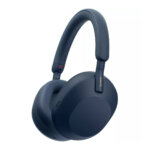
Sony WH-1000XM5 are the best wireless over-ear headphones with noise cancellation in their class. Main reason to buy: best-in-class noise cancellation and transparency mode, signature bass-forward sound, a detailed microphone, and a comfortable fit. With the LDAC codec you get up to 15% better audio quality. One drawback: the hinges can’t handle heavy use and tend to break.
The overall sound score is calculated using the formula:
Frequency Balance + Detail + Stage + Naturalness / 4 = overall sound score.
. 8.13 These headphones have a bass-heavy, enveloping sound. It’s typical for this headphone series. The main strengths are soundstage, natural timbre, and detail retrieval. There’s no artificial timbre or grainy treble. Instruments and effects have good separation in space. The main downside is the lows. There’s a bit too much bass, giving the sound a bassy tint. Bass-heavy tracks sound boomy. Also, vocals lack transparency.More details.
Microphone — the quality rating of speech transmission. We test the microphone in 2 main usage scenarios: quiet and noisy environments.
Quiet environment — recording indoors with minimal background noise. Noisy environment — recording outside near a 6-lane road with maximum traffic noise.
. 7.00 In quiet environments: 8 In noisy environments: 6 These headphones have 8 microphones. Only 4 of them are used for calls. In quiet environments, the recording is detailed. The first few words are muffled, and you can hear faint clicks. In noisy environments, the recording quality is noticeably worse. But you can still make out the words.Overall feature score — this is the overall score for all device features. This score comes from individual feature ratings (battery life, controls, app, connection stability, and others) and shows how easy and smart the device is for daily use.
. 8.53 The active noise cancellation and transparency mode are reference-quality. In our tests, the playback time was 33 hours. This is more than the claimed 30 hours. The controls are a mix. They are mainly touch-based on the earcups. There’s an app with clunky navigation. But it has a convenient EQ setup.More details.
Final build quality score is the overall score for build quality and materials: comfort, durability, and design. It shows how nice the device is to hold and use, and how long it will last.
. 7.60 The headphones are comfortable, and the earcups put minimal pressure on your ears. You’ll want to take a break after about 2 hours. The build quality and materials are solid. But the finish is a fingerprint magnet and needs daily cleaning. The hinges are the weak point in the design. They often break where the earcups swivel. The headphones look good, and you can pick from 5 colors.More details.
- Reference-quality noise cancellation and transparency mode
- Signature bass-forward sound
- Detailed microphone and comfortable fit
- Best automatic EQ tuning
- Fragile hinges
- Fingerprint-magnet finish
5. Sony WH-1000XM6 8.11Solid large Bluetooth headphones — Sony's latest model
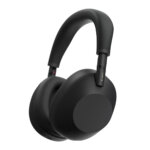
Sony WH-1000XM6 are solid large Bluetooth headphones and the newest model in the series. Main reason to buy: best-in-class noise cancellation and transparency, punchy low-end sound, and the handy “Find My Equalizer” feature that gets your sound dialed in within a couple of taps. LDAC adds 10-12% to overall audio quality. Drawbacks: the ear cups press against your ears and discomfort sets in within the first few minutes; the hinges aren’t built to last and need to be handled with care.
The overall sound score is calculated using the formula:
Frequency Balance + Detail + Stage + Naturalness / 4 = overall sound score.
. 8.48 The sound is bass-heavy, similar to the WH-1000XM4. Vocals sound intimate. You can distinguish the timbre of low and high-frequency instruments. The soundstage is mostly wide. There’s no noticeable artificial timbre or distortion. The sound is comfortable with no major drawbacks. There’s just a slight bass boost. Mids lack a bit of transparency, and they’re not bright enough. But you can fix this easily in the app’s EQ with just a couple of clicks.More details.
Microphone — the quality rating of speech transmission. We test the microphone in 2 main usage scenarios: quiet and noisy environments.
Quiet environment — recording indoors with minimal background noise. Noisy environment — recording outside near a 6-lane road with maximum traffic noise.
. 7.40 In quiet conditions: 7.8 In noisy conditions: 7Overall feature score — this is the overall score for all device features. This score comes from individual feature ratings (battery life, controls, app, connection stability, and others) and shows how easy and smart the device is for daily use.
. 8.68 These headphones have reference-quality ANC and transparency among full-size models. Battery life in the series remains unchanged: 30-40 hours with ANC. Controls are mostly touch-based for music playback and calls. The app is useful, but the multi-level menu structure is inconvenient. The “find your EQ” feature makes it easier to tune the sound from 4-5 tonal options. The signal is stable up to 10m with LDAC codec and high-quality bitrate.More details.
Final build quality score is the overall score for build quality and materials: comfort, durability, and design. It shows how nice the device is to hold and use, and how long it will last.
. 6.33 The fit is uncomfortable. The clamping force is stronger than the previous generation. I can wear these headphones for an hour max. Then I need to take a break. The build quality and materials are solid. The weak point of these headphones is the hinges. They break under heavy use. The design is nice and neat. You can choose from 3 colors.More details.
- Reference-quality active noise cancellation and transparency mode
- Detailed microphone
- Low-frequency sound without overpowering bass
- Headphone earcups press on the ears
- Hinges need careful handling
- Low detail retrieval
6. Nothing Headphone (1) 8.22Nothing's big over-ear headphones

The Nothing Headphone (1) are Nothing’s big over-ear headphones. The main reasons to buy them are the cool design, reference-quality controls, detailed microphone, and top-tier active noise cancellation that rivals leaders like Sony and Bose. With the LDAC codec, you get a 10-15% boost in sound quality. The downsides are average comfort and the need for EQ adjustment. That’s because out of the box, the sound is on par with models under $100.
The overall sound score is calculated using the formula:
Frequency Balance + Detail + Stage + Naturalness / 4 = overall sound score.
. 7.33 This is pretty much what I expected. You can tell these headphones have potential; they can definitely play. But the sound tuning is a bit off. I hope they fix the default EQ with firmware updates. EQ adjustment is a must for this model. We’ll get into that a bit later. It’s not hard. You set it once and forget about it.The main plus for the sound is its natural timbre and how well it responds to EQ. If the EQ couldn’t fix things, these would be a total underdog. With some tuning, you can easily add +1 point out of 10 to the overall score. The main downside is that everything feels a bit lacking: bass, mids, and highs. This makes them lose a lot of detail, and the soundstage feels a bit pushed back. It’s like the sound is coming from behind a wall in the next room. You want it to be right in front of you.
More details.
Microphone — the quality rating of speech transmission. We test the microphone in 2 main usage scenarios: quiet and noisy environments.
Quiet environment — recording indoors with minimal background noise. Noisy environment — recording outside near a 6-lane road with maximum traffic noise.
. 8.50 In quiet conditions: 10 In noisy conditions: 7 In noisy conditions, it’s not perfect, but it’s good.Overall feature score — this is the overall score for all device features. This score comes from individual feature ratings (battery life, controls, app, connection stability, and others) and shows how easy and smart the device is for daily use.
. 9.17 The active noise cancellation is top-tier. It’s in the top 5 among all models. The transparency mode is also excellent. You can easily talk to someone without taking off your headphones. Battery life is great: up to 54 hours with LDAC and up to 80 hours with AAC. The controls are super convenient, reference-quality. Plus, they’re physical buttons and a wheel. The app is also reference-quality, with a user-friendly EQ.More details.
Final build quality score is the overall score for build quality and materials: comfort, durability, and design. It shows how nice the device is to hold and use, and how long it will last.
. 9.00 They’re comfortable; you can wear them for 2-3 hours without discomfort. Durability is also great, even though the finish is a fingerprint magnet. The design is unique, but they look WAY better in real life than in photos.More details.
- Good and balanced sound with EQ
- Microphone – top-tier
- Active noise cancellation and transparency mode – top-tier
- Controls and app – top-tier!
- Battery life – top-tier!
- Build quality – beautiful with some quirks.
- The sound needs EQ adjustment. Out of the box, the sound is on par with models under $100.
- Minor cons: the bass adjustment feature in the app didn’t work.
7. Marshall Monitor III ANC 7.82Headphones for large ears, large size – bright style, soft sound, good microphone
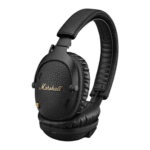
Marshall Monitor III ANC – these are large headphones for large ears with a signature design. The main reasons to buy them are the excellent fit – the earcups don’t press on your ears – clean sound without overpowering bass, and a foldable design that fits into a large pocket. On the downside: they only have basic audio codecs, weak noise cancellation, and a useless app and controls.
The overall sound score is calculated using the formula:
Frequency Balance + Detail + Stage + Naturalness / 4 = overall sound score.
. 7.60 The sound is balanced, with an emphasis on mids and highs. It’s clear and bright, with moderate bass. So, these headphones are great for rock, vocal, and instrumental tracks. The soundstage is spacious, mostly wide. You won’t hear any artificial timbre, but some grainy treble pops up sometimes. Detail retrieval is a weak point. These headphones really need a low-compression codec.More details.
Microphone — the quality rating of speech transmission. We test the microphone in 2 main usage scenarios: quiet and noisy environments.
Quiet environment — recording indoors with minimal background noise. Noisy environment — recording outside near a 6-lane road with maximum traffic noise.
. 8.40 In quiet conditions: 8.8 In noisy conditions: 8Overall feature score — this is the overall score for all device features. This score comes from individual feature ratings (battery life, controls, app, connection stability, and others) and shows how easy and smart the device is for daily use.
. 7.68 The active noise cancellation (ANC) only suppresses light background noise. The transparency mode is comfortable. The controls only let you switch ambient modes, or pause/play tracks. In the app, useful features include Spatial Audio settings and an energy-saving mode.Final build quality score is the overall score for build quality and materials: comfort, durability, and design. It shows how nice the device is to hold and use, and how long it will last.
. 8.60 These are the best headphones for comfort among full-size models. They weigh 250g, and the ear pads are soft and don’t press too hard. You can use them for 5 hours with no sign of fatigue. The build quality is solid and compact; you can fold them up and put them in a large clothing pocket. I really liked the signature and recognizable design.- Clean and bright sound without overpowering bass
- Comfortable fit – 5-6 hours without fatigue
- Recognizable design
- No high-quality codecs
- Noise cancellation blocks light background noise
- Useless controls and app
8. 1MORE Sonoflow Pro HQ51 7.69Best over-ear headphones under $100 — 100-hour battery, LDAC, solid ANC
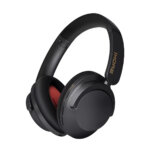
1MORE Sonoflow Pro HQ51 are the best over-ear headphones under $100. Main reason to buy: best sound and noise cancellation in the sub-$100 class, a massive 100-hour battery life, a secure fit that works even for running. The LDAC codec doesn’t noticeably improve audio quality. No dust or water resistance.
The overall sound score is calculated using the formula:
Frequency Balance + Detail + Stage + Naturalness / 4 = overall sound score.
. 7.28 Leans toward the low end. Bass is powerful, punchy, and reasonably textured. The mids pull back a little — there’s a veil between you and the vocalist. Highs can sometimes feel lacking, but nothing deal-breaking. The frequency tuning is pleasant overall, though I’d recommend dialing in the EQ in the companion app — bump the mids and highs to taste, and roll the bass back a touch. The biggest thing for me, though, is the sense of space and depth. This is a 3D picture — wide and deep. The sound isn’t boring, it pulls you in, and you just keep wanting to listen to your favorite tracks.Read More.
Microphone — the quality rating of speech transmission. We test the microphone in 2 main usage scenarios: quiet and noisy environments.
Quiet environment — recording indoors with minimal background noise. Noisy environment — recording outside near a 6-lane road with maximum traffic noise.
. 7.20 In quiet conditions: 7.4 In noisy conditions: 7Read More.
Overall feature score — this is the overall score for all device features. This score comes from individual feature ratings (battery life, controls, app, connection stability, and others) and shows how easy and smart the device is for daily use.
. 7.83 Good quality microphone. Noise cancellation isn’t at Bose or Sony tier, but it earns a solid 7.8 out of 10. It handles low-frequency noise well, mids a bit less so, and highs even less. Transparency mode sits at a 7 — not stellar, but you won’t need to pull the headphones off just to have a conversation. Battery life is 100 hours. No wireless charging. Controls are comfortable but take some getting used to, and they’re physical buttons. That actually made me happy, since touch controls on budget headphones are usually just bad. Here’s the layout. The companion app lets you tune the equalizer, enable the LDAC codec for Android, and reduce audio latency for gaming.Read More.
Final build quality score is the overall score for build quality and materials: comfort, durability, and design. It shows how nice the device is to hold and use, and how long it will last.
. 8.50 Comfortable headphones, 1–2 hours without discomfort. Available in 5 colors. Matte plastic. Build quality is solid — no obvious defects after a month of testing. The design echoes older Sony models: not for everyone, but nothing off-putting either.Read More.
- Best sound under $100
- Best noise cancellation under $100
- Long battery life — up to 100 h.
- Stays firmly on your head — great for running
- Wired audio only via 2.5/3.5 mm jack.
- No dust or water resistance.
- Minor drawbacks: outdated app design, LDAC codec bitrate makes no noticeable difference in sound quality
9. Audio-Technica ATH-M50xBT2 6.32Studio headphones gone wireless — flat sound, rock-solid build, no ANC
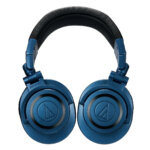
Audio-Technica ATH-M50xBT2 are wireless over-ear headphones with a studio-flat sound signature. Main reason to buy: reference-grade tuning loved by sound engineers, tank-like build quality, and a wired mode that rivals dedicated studio monitors. No active noise cancellation, and the ear pads get hot after an hour.
The overall sound score is calculated using the formula:
Frequency Balance + Detail + Stage + Naturalness / 4 = overall sound score.
. 7.21 Balanced, close to monitor-style without excessive frequency imbalance: moderate bass, transparent mids, and bright highs. The soundstage is spacious with detail mainly in width. The sound is natural with no noticeable synthetic quality, minimal graininess. Resolution is a bit lacking, though with the LDAC codec you get roughly a 10% boost.Read More.
Microphone — the quality rating of speech transmission. We test the microphone in 2 main usage scenarios: quiet and noisy environments.
Quiet environment — recording indoors with minimal background noise. Noisy environment — recording outside near a 6-lane road with maximum traffic noise.
. 6.50 In quiet conditions: 8 In noisy conditions: 5Overall feature score — this is the overall score for all device features. This score comes from individual feature ratings (battery life, controls, app, connection stability, and others) and shows how easy and smart the device is for daily use.
. 5.42 No ANC or transparency mode. Basic player and call controls. Battery life up to 50 hours. In the app you can adjust volume levels and balance, but using the equalizer reduces the sample rate to 48 kHz with the LDAC codec.Read More.
Final build quality score is the overall score for build quality and materials: comfort, durability, and design. It shows how nice the device is to hold and use, and how long it will last.
. 7.67 Uncomfortable — there’s no space inside the ear pads, so the ear cups press against your ears. The build quality is solid and reliable, the plastic is sturdy, like back in the days when manufacturers didn’t cut corners on materials. The looks aren’t impressive, yet the design does stand out compared to Chinese alternatives. Available in 4 colors.Read More.
- Sound close to studio monitor quality.
- Solid and reliable build quality.
- Distinctive design.
- Stable signal and audio latency up to 50 ms.
- Average sound performance.
- No noise cancellation or transparency mode.
- Uncomfortable fit.
10. Sony WH-1000XM4 7.91Popular over-ear headphones for music – Sony's best-selling model (A Legend)
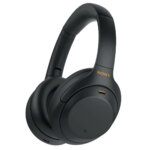
The Sony WH-1000XM4 are popular over-ear headphones for music. They are a true legend among Sony’s full-size headphones. Even though the XM5 and XM6 are out, the XM4 model is still relevant and in demand among Sony fans. For their $235 price, you get quality low-end sound and top-tier noise cancellation. For this money, these are the best over-ear headphones.
The overall sound score is calculated using the formula:
Frequency Balance + Detail + Stage + Naturalness / 4 = overall sound score.
. 7.08 The sound signature is dark. It emphasizes the lows and has smoothed-out highs. The mids are rich and engaging. Vocals stand out. The bass is soft, but it lacks punch. The highs aren’t bright or transparent enough. The soundstage is wide enough, but it’s flat. These are best for electronic music, hip-hop, and pop.More details.
Frequency balance is the distribution of sound energy across the entire audible range (20 Hz – 20 kHz). It’s not about the sum of ranges, but the right ratio where lows, mids, and highs complement each other without conflicting or masking key elements.
Ideal balance: bass provides a solid foundation, mids deliver clarity and vocal presence, and highs add sparkle and detail.
Frequency imbalance occurs when one or two of the three main ranges are excessively emphasized or, conversely, recessed compared to the others.
Low frequencies, or bass (20 Hz – 250 Hz), are the foundation of music, giving sound its depth, weight, and rhythmic base.
Ideal balance delivers clean, powerful, and well-controlled sound.
Excess bass leads to muddy, boomy sound that masks vocals and quickly causes fatigue, making the overall mix indistinct. Insufficient bass makes music thin, weak, and hollow, stripping it of warmth and rhythmic foundation, resulting in a harsh feel in mids and highs.
Midrange frequencies, or mids (250 Hz – 4 kHz), form the core of most musical elements and are the key range for perceiving melodies, vocals, and instruments.
Excess mids, particularly in the upper range, make the sound harsh, nagging, and quickly fatiguing; the mix can sound shouty or “boxy.” Insufficient mids result in an empty, recessed sound where vocals and main instruments lose their presence and seem distant, stripping the music of energy and overall clarity.
. 8 The mids are well-done. They are rich, and more soft than bright. This is the best part of the sound profile. Vocals are noticeably prominent. They sound pretty natural. Overall, the mids are engaging.High frequencies, or treble (4 kHz – 20 kHz), are responsible for brightness, sparkle, detail, and the sense of “air” in a musical mix. This range helps distinguish the finest details such as string overtones, cymbal shimmer, and sibilant sounds in vocals.
Optimal balance makes music lively, clean, and open.
Excess leads to harshness, causes sibilance (overly loud “s” and “sh” sounds), and makes cymbals unpleasantly “grainy” or metallic, quickly fatiguing the ears. Insufficient treble makes the entire mix dull, muffled, and “closed” (veiled). The sound loses its detail and openness — like listening through a thick filter, stripping the music of clarity.
Detail describes how clearly and distinctly the finest sounds in a mix are heard: reverb, overtones, quiet instruments, texture, and subtle percussive sounds (such as light hi-hat taps).
Ideal detail means all subtle sounds are audible, like at a live performance.
Lack of detail: the sound is dull, muffled, and “veiled,” as if passing through a layer of fabric. The musical picture lacks depth, instruments sound flat, and fine nuances are lost.
Excess: the sound becomes unnaturally sharp, aggressive, and “glassy.” It may manifest as excessive highlighting of sibilants and background noise. Such sound quickly causes fatigue. This is often the result of an overemphasis on frequencies above 6 kHz.
Naturalness is the degree of authenticity and realism in sound reproduction. It indicates how accurately voices and musical instruments are reproduced.
Best naturalness: the sound is clean, warm, and lively, without artificial coloration or unwanted artifacts.
Excess: too many distracting sounds — breaths, mechanical noises, rustling, etc.
Lack of naturalness: the sound feels artificial, colored, or plastic. Timbre recognition is lost (instruments don’t sound like they do in real life), becoming flat and fatiguing due to improper equalization or excessive compression.
Soundstage, or stage, is the perceived three-dimensional space where instruments and vocals of a musical composition are positioned. It’s the virtual sound space created by sound engineers during mixing. The stage includes width (left-to-right positioning), depth (sense of distance), and height (sense of instruments above or below the horizontal plane).
The best soundstage makes music spacious, realistic, and allows you to pinpoint every element in space: left or right, closer or farther, above or below your head.
Insufficient stage leads to a monolithic sound — as if everything comes from a single point. It’s hard to identify each instrument’s position in space. Excessive stage creates a feeling of instruments and vocals being too distant, and the musical composition loses its cohesion.
Microphone — the quality rating of speech transmission. We test the microphone in 2 main usage scenarios: quiet and noisy environments.
Quiet environment — recording indoors with minimal background noise. Noisy environment — recording outside near a 6-lane road with maximum traffic noise.
. 8.00 Quiet 8 Noisy 7 The Sony WH-1000XM4 headphones work great as a headset. If you’re talking indoors, people will hear you clearly. Outside, ambient noise will be audible. But your voice will remain clear against it, except in the noisiest spots. Voice transmission is good. But it’s a bit less than you’d expect from a flagship. A big plus: you can turn on transparency mode during calls. This lets you hear your surroundings and yourself.Overall feature score — this is the overall score for all device features. This score comes from individual feature ratings (battery life, controls, app, connection stability, and others) and shows how easy and smart the device is for daily use.
. 9 Thoughtful touch controls with minimal accidental touches. A user-friendly app, Sony Headphones. Reliable Bluetooth connection. Good noise cancellation, comparable to mid-range models around $200. Battery life up to 30 hours with ANC. Good voice pickup from the microphone.More details.

Controls — how conveniently and predictably the earbuds respond to taps and gestures: pause, volume, track switching, mode changes, and voice assistant activation. Good controls don’t require “dialing in,” work consistently, and don’t cause accidental taps; poor controls miss commands, lag, or simply ignore gestures.
. 9 The Sony WH-1000XM4 has well-designed and convenient controls. The entire surface of the right earcup is a touch panel. On the bottom edge of the left earcup, there are two buttons. They are easy to press with your thumb. The touch sensor is moderately sensitive. A single tap isn’t used, so accidental touches are minimal. You also don’t have to repeat gestures multiple times. Everything works on the first try.More details.
Touch sensor and 2 buttons.
Full functionality is at your fingertips.
Smart pause is available.
Voice activation is available.
[\/alert]
Swipe forward/backward – skip tracks.
Swipe up/down – adjust volume. Swipes with a hold also work. The volume will increase or decrease smoothly until you lift your finger.
Double-tap – play/pause, answer/end call.
Place your palm over the earcup – Quick Attention Mode. Music volume drops to minimum, and ambient sounds are fed into the headphones.
[\/su_list]
[\/su_column]
Power. Hold for about 3 seconds – turn on/off. Hold for about 7 seconds – activate Bluetooth pairing mode. Short press – hear battery level.
Customizable “Custom” button. Switches modes: noise cancellation, transparency, all off. In the app, you can reassign this button to call your voice assistant. Hold – calibration mode. In this mode, the headphones analyze your head shape and if you wear glasses. I didn’t notice any difference in sound or noise cancellation before and after. It’s probably a more precise calibration for the wear detection sensor, but I’m not 100% sure. 😉
[\/su_list]
[\/su_column][\/su_row]
The Sony WH-1000XM4 also has a voice activation feature called ‘speak-to-chat’. When you start talking, the music pauses. Transparency mode activates. The microphones pick up your voice, and the feature kicks in. This is handy if you need to quickly reply to someone or ask a question. You don’t need to take off the headphones or place your palm on the touch panel. Just start speaking. This mode works pretty well. It doesn’t react to voices or sounds around you. But it always reacts to your voice. It doesn’t matter if you’re talking, mumbling to yourself, or just yawning loudly. The pause will activate. This feature is more interesting than convenient. I didn’t need it during my testing, but it didn’t bother me either.
Smart pause also works correctly almost all the time. The sensor is in the left earcup. If you take it off your ear, the music pauses. Put it back, and playback resumes. As I mentioned, there were a few errors. I took off the headphones – music stopped. I hung them around my neck (earcups and sensor facing down) – it continued playing. You can disable both features in the app. Let’s talk more about that.
App — the brand’s companion application for adjusting sound, controls, noise cancellation, firmware updates, and additional features. A good app runs smoothly, has a clear layout, and offers real customization options; a poor one glitches, has limited functionality, or feels like a checkbox formality.
. 9 The Sony Headphones app also supports the Sony WF-1000XM4. It recently got a big update. This changed its interface and name a bit. But the overall functionality stayed the same.More details.

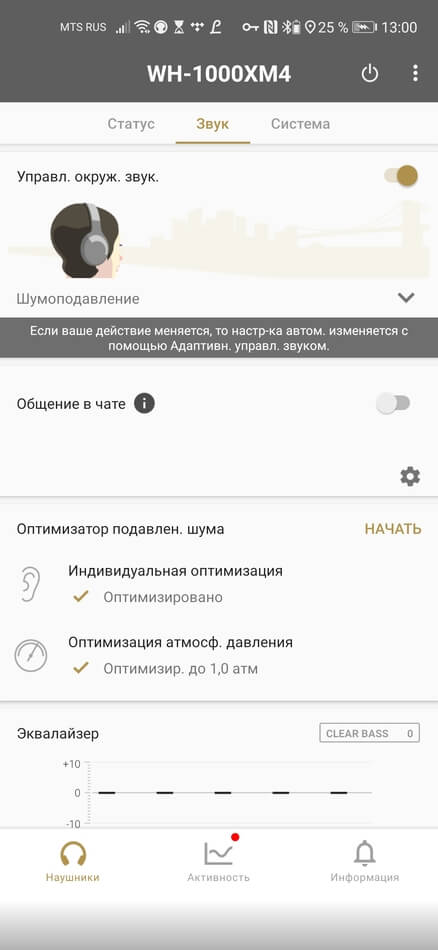
Battery level display in percentages.
Adaptive Sound Control. It automatically selects the right level of noise cancellation or transparency. This depends on ambient sounds and your location.
Noise cancellation and transparency control. There are 20 levels. But there’s only one option for noise cancellation itself. The other levels adjust how much ambient noise gets through. You can also add a voice focus.
Speak-to-chat. That’s the voice activation feature. The translation isn’t perfect, of course. 😉 You can set how long it takes for playback to resume after you stop talking.
EQ. There are several presets and manual adjustment options.
Codec selection. SBC prioritizes connection quality. LDAC prioritizes sound quality. You can then choose the LDAC operating mode in your phone’s Bluetooth settings. If LDAC isn’t available, AAC is considered the sound quality priority.
360 Reality Audio. This emulates spatial audio. It’s available in some apps, but you need a subscription. The package includes a promo code for one of these subscriptions. I wouldn’t say the effect is mind-blowing, but you can feel it. Music doesn’t always sound better with it.
DSEE Extreme. This is Sony’s proprietary real-time sound ‘enhancement’ for compressed files. In my opinion, these enhancers cause more distortion than benefit. What do you think? Share your thoughts in the comments.
Turn smart pause, auto-off, and the touch panel on/off.
Custom button settings.
Connect to two devices. There’s a catch here. In this mode (multipoint), the LDAC codec cannot be used. That’s a bummer.
Voice prompt language selection. There are many options, so it makes sense to set it up for yourself.

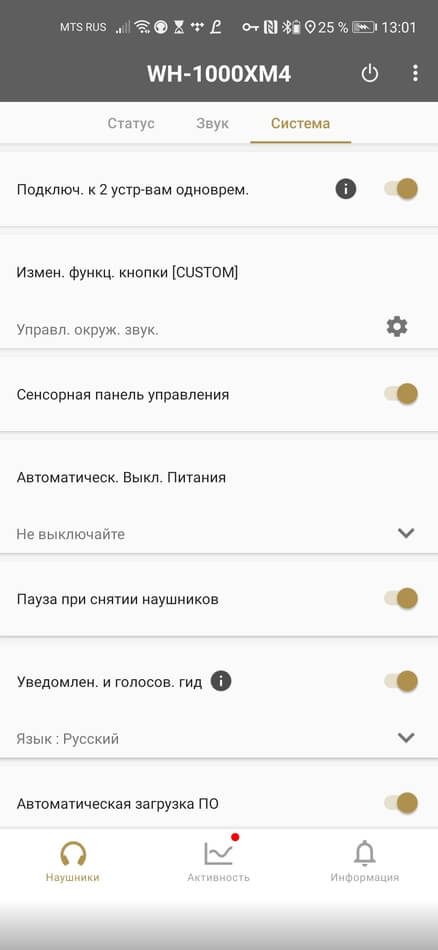
For this experiment, I decided to turn on and keep the Russian language. I don’t recommend it. 😀 Translation gems like “bluetus” can be annoying. But hey, to each their own.
Connection stability is the ability of earbuds to maintain a steady Bluetooth signal without dropouts, delays, or artifacts in typical conditions (street, public transport, apartment with a router). Good stability means the audio doesn’t “crumble” when you turn your head and doesn’t disconnect in crowded places; poor stability shows up as frequent dropouts, stuttering, audio-video desync, and reconnection issues.
. 9 The Sony WH-1000XM4 headphones kept a stable Bluetooth connection for 2 weeks during testing. I had no issues at home within a 10-meter range. Outside, everything was stable, no matter which pocket my phone was in. This was all true for the AAC codec.More details.
/alert]
If you turn on LDAC, things change. This codec has two modes: sound quality priority and connection priority. You choose this in the connected Bluetooth devices menu (the gear icon next to the name). In sound quality priority, you sometimes get artifacts even when your phone is right on the table. Outside, audio dropouts happen often enough that you’ll want to switch to connection priority. In this mode, the connection is almost as reliable as AAC, but the sound quality is better. There’s no video and audio desync even when watching videos.

Noise cancellation is the ability of earbuds to reduce external noise (traffic, street buzz, office) using microphones and signal processing, so you hear music or speech better at normal volume. Quality ANC noticeably reduces low-frequency hum (engines, air conditioners), barely creates ear pressure, and minimally distorts sound; weak ANC only removes part of the noise or creates an unpleasant “vacuum” effect and artifacts.
. 9 The Sony WH-1000XM4 has excellent active noise cancellation. It handles low-frequency hum and many mid-frequency noises really well. On public transport, in the subway, near a busy highway – the ANC makes listening to music comfortable everywhere. The ANC system doesn’t create discomfort, pressure, or anything like that.More details.
In a direct comparison, I feel the Bose Noise Cancelling Headphones 700 have slightly better ANC. It’s more comfortable and a bit better with mid-range frequencies. But the difference is subtle. These two models truly have the best ANC on the market.
The ANC here is adaptive. It “remembers” places you visit often and adjusts the system for them. Basically, all the adaptiveness is an automatic choice between ANC and 20 transparency modes. Some of these modes are especially cool. Many sounds get through so you can understand what’s happening around you, but low-frequency hum is still suppressed. The automatic system works well, but you can turn it off. Then you can activate ANC and maximum transparency whenever you want.

Battery life is the actual working time of earbuds and case on a single charge during typical volume and scenarios (music, video, calls), not just the numbers from advertising. Good battery life lets you comfortably get through a day or more without a charger and doesn’t drop significantly with ANC and high-quality codecs enabled; poor battery life requires frequent recharging and noticeably decreases at higher volume.
. 9 The Sony WH-1000XM4 headphones have long battery life on a single charge. This is true not just by the manufacturer’s claims, but also by my tests. After 15 hours of listening with adaptive ANC and LDAC, the headphones drained about 70%. So, they’ll last 20-25 hours. You definitely won’t need to charge them more than once a week. They have fast charging, and you can listen wired even with an empty battery.More details.
/alert]
You can see how much battery life is left by opening the app. The “charge” level shows up in percentages there. You can also press the power button and hear approximate numbers (something like “more than 70%”). The information is also available in the “standard spot” on your connected device. In the app, you can activate auto-off during idle time to save battery. The only thing, not even a con but a quirk, is that the headphones won’t play music while charging.
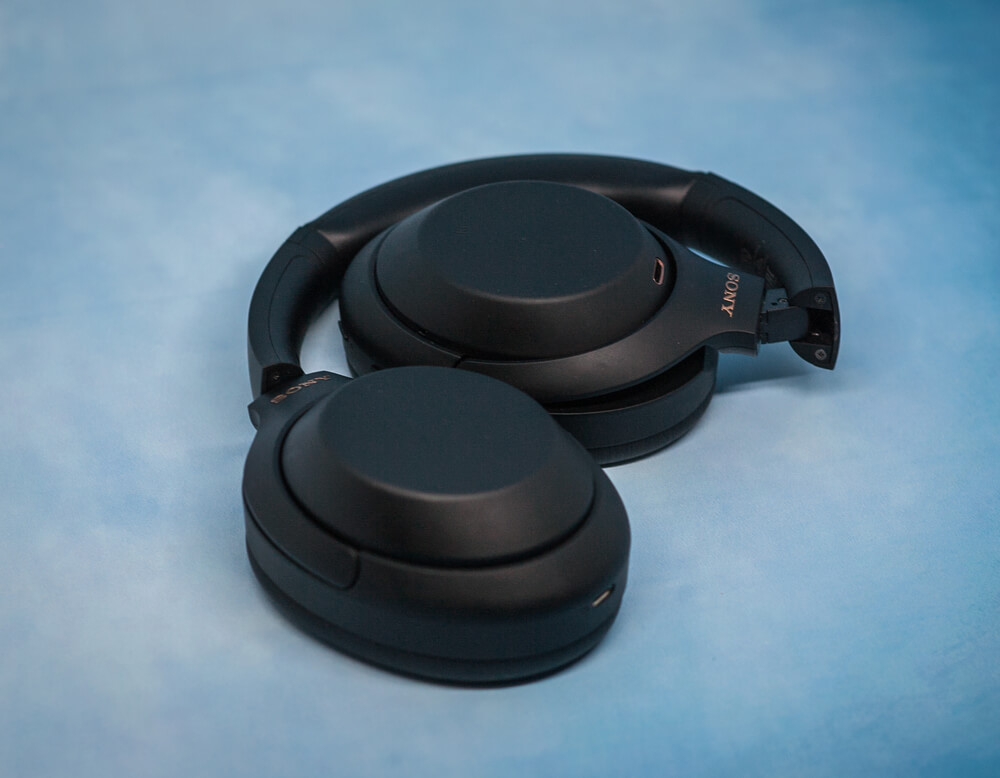
Final build quality score is the overall score for build quality and materials: comfort, durability, and design. It shows how nice the device is to hold and use, and how long it will last.
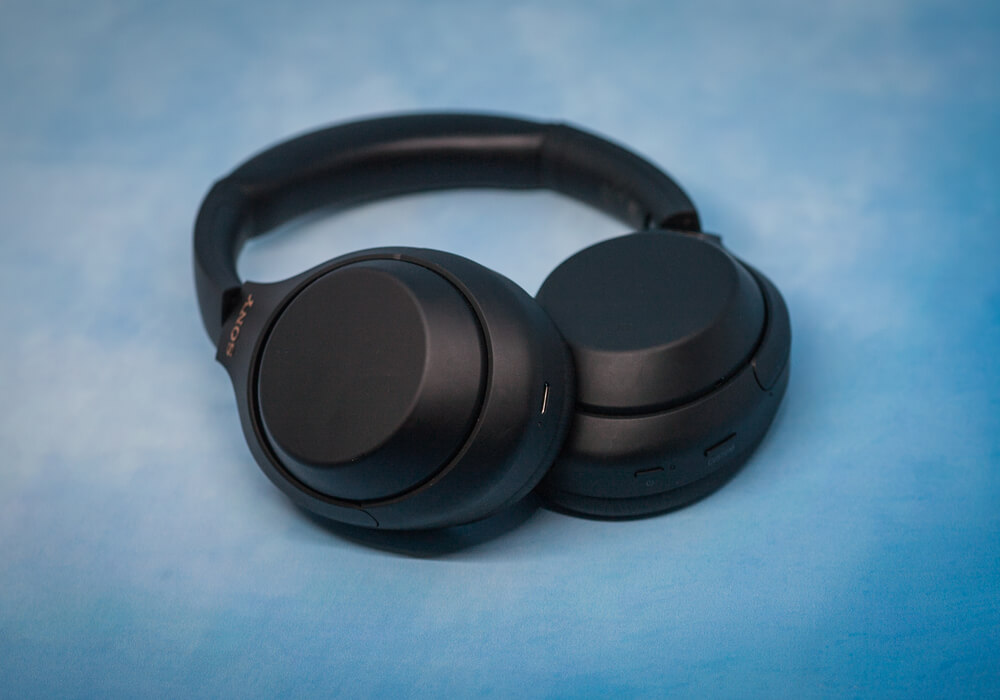
. 8.33 Stylish design, solid build. They have a foldable design. They don’t look bulky on your head. The earcups’ plastic is a fingerprint magnet. The headphones come in two colors: black and platinum silver.More details.

Comfort is how the earbuds feel during extended wear: ear pressure, fit, weight, and ventilation. A comfortable model doesn’t chafe, squeeze the ear canal or head, and doesn’t cause fatigue even after a couple of hours; an uncomfortable one quickly reminds you of itself through pain, heat, or a “plugged” feeling in the ears.
. 9 You can definitely call the Sony WH-1000XM4 headphones comfortable. I wore them for about 2.5 hours at home without any ear fatigue. Outside, I had no discomfort while commuting and walking for an hour and a half. The ear pads are wide enough to fit any ears. I have slight doubts about the depth, though. Some people’s ears might touch the soft “bottom” of the earcups. But these are just guesses; I didn’t have any such issues. The ear pads are soft enough, and so is the headband padding. They don’t rub or irritate.More details.
The clamping force is average for portable headphones. They won’t shift when you’re walking, but they might during a run. The headband adjusts widely. In warm weather, your ears might get warm pretty quickly. But that’s normal for closed-back, over-ear models. Here, the earcups ventilate better than many competitors. When folded, the headphones will fit into any backpack. The earcups also swivel, so you can comfortably wear the headphones around your neck with the ear pads facing down.
Comfort is subjective. My head and ears are pretty “average,” so your experience might be different.


Durability is how well the earbuds and case withstand daily use: plastic and hinge quality, moisture protection, ear tip wear, and reliability of connectors and buttons. High durability means nothing wobbles, peels, or creaks after a year or two; low durability means cracks, play, hinge noise, or contact issues appear within just a couple of months.
. 8 The build quality is solid; there’s nothing to complain about. All materials look durable. I didn’t notice any wobbles, unfinished seams, or creaks. Though in reviews for the Sony WH-1000XM4, you might read that the plastic starts creaking after a couple of months. That didn’t happen during my 2 weeks of testing.More details.
Let me know in the comments how your headphones are holding up after a few months!

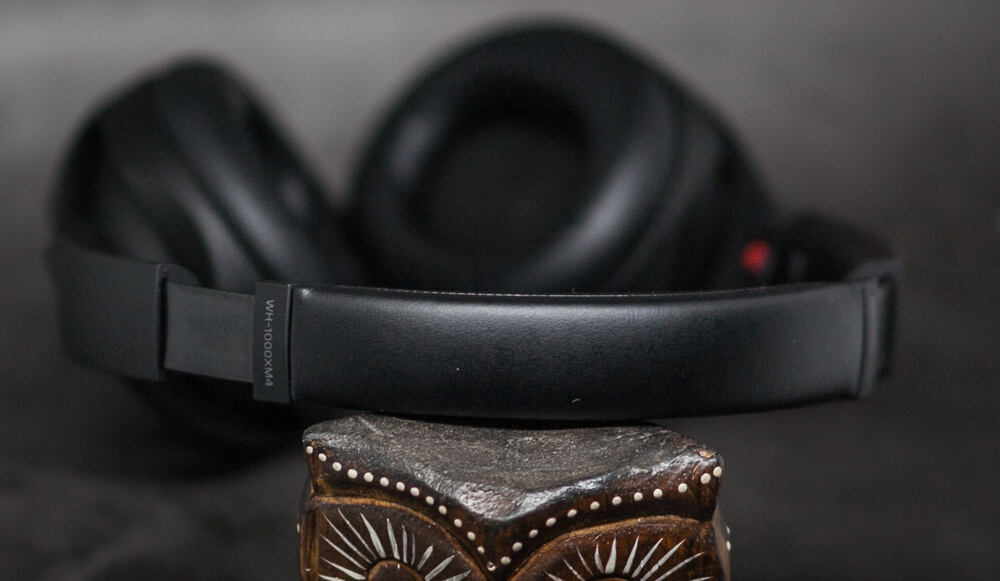
Design is the appearance and thoughtfulness of form: how the earbuds look in your ears, how versatile they are with different styles, and whether they look “cheap.” Good design combines a clean appearance, ergonomic shape, and practical details (non-marking plastic, well-designed case); poor design catches on clothing, quickly gets scratched, and looks out of place.
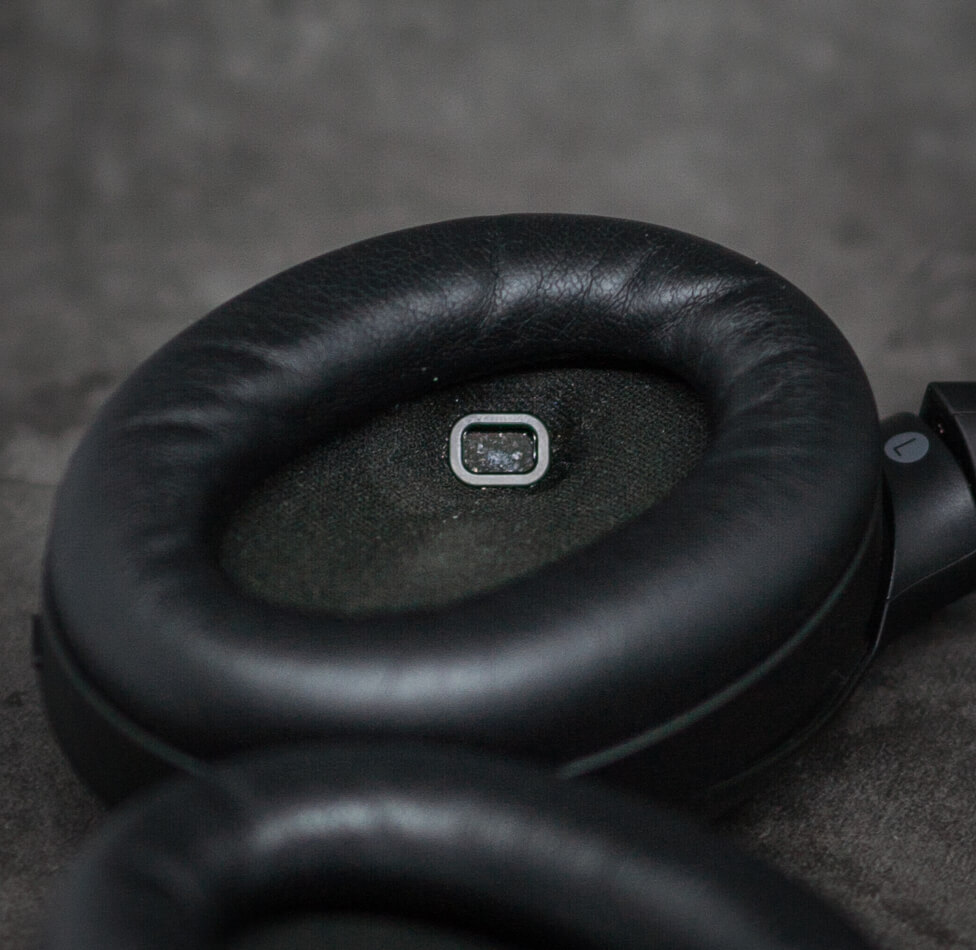
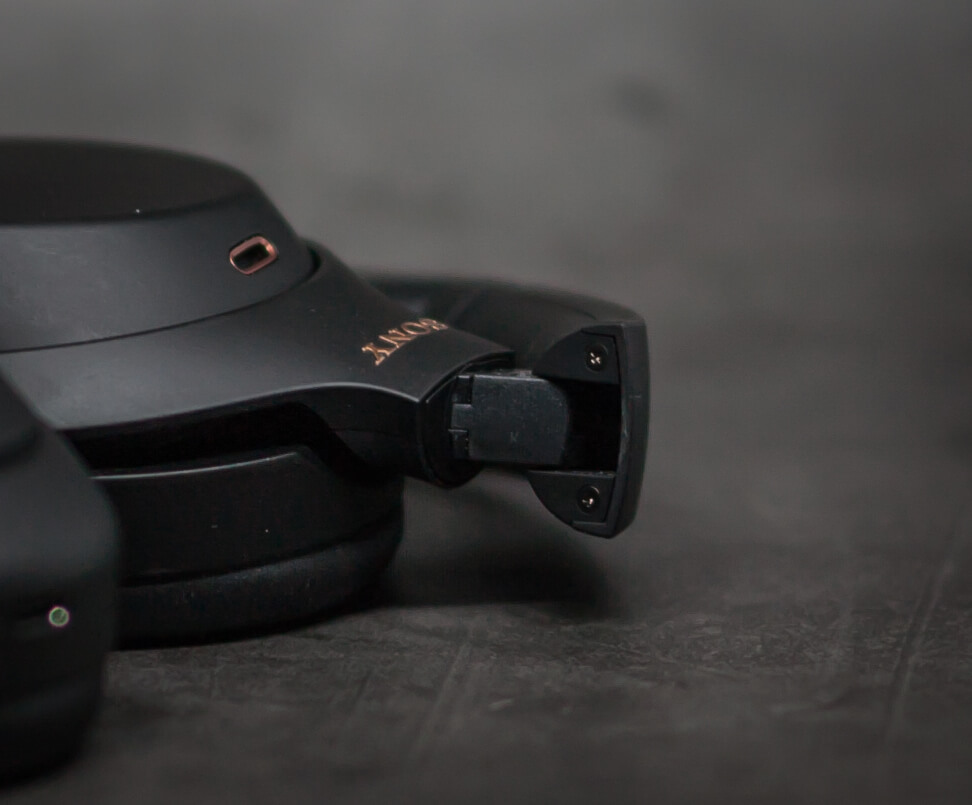
. 8 The headphones look stylish, and the design is recognizable. The main material in the build is matte plastic with a soft-touch coating. It’s high-quality and sturdy. But it’s a fingerprint magnet: fingerprints show up easily, but they wipe off without a problem. The headband is narrow with soft padding, covered in eco-leather, which is what we call faux leather now. The main arch is plastic, but it has metal reinforcement. The earcups fold inward or flat. They are low-profile and oval-shaped. They stick out a bit on the sides of your head, but not too much, looking neat. The ear pads are covered in faux leather and look durable.More details.
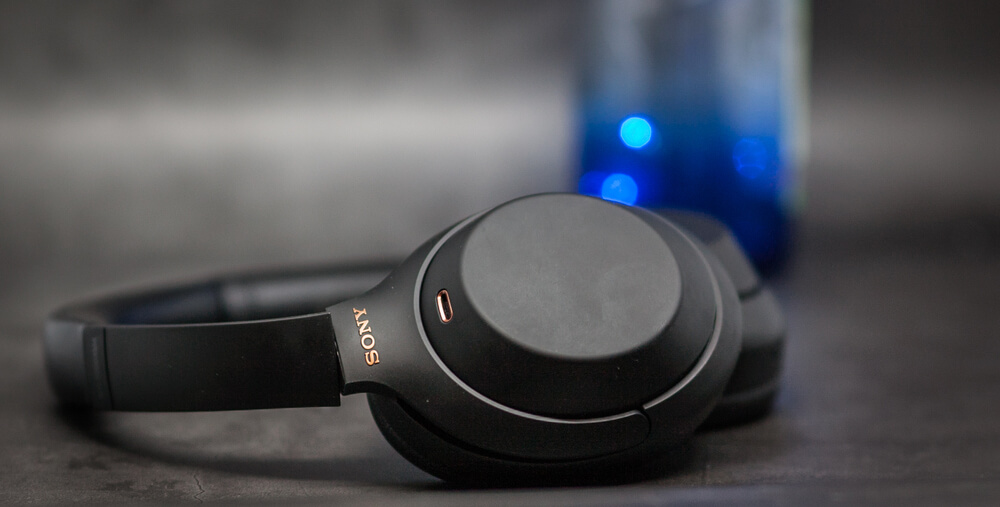
Inside the neat Sony WH-1000XM4 box, I found: the headphones themselves, a charging cable (USB-A to USB-C), an audio cable (3.5 mm to 3.5 mm), an airplane adapter, a hard case, and documentation. The case is sturdy, with a fabric covering, and it has compartments for all the other accessories – a convenient solution. I’m happy that the audio cable has 3.5 mm mini-jacks on both ends; finding a replacement will be easy. But the charging cable was a letdown: it’s short. A longer one would be more convenient for over-ear headphones.
The Sony WH-1000XM4 headphones come in two colors: black (which I had for testing) and platinum silver. Simply put, it’s a black and white classic.
11. Edifier STAX Spirit S5 7.63Best headphones for codec variety
Main reason to buy: a full set of codecs for wireless connectivity, detailed microphone, up to 80 hours of battery life, and natural planar sound. Edifier STAX Spirit S5 offer everything you need for versatile wireless use.
The overall sound score is calculated using the formula:
Frequency Balance + Detail + Stage + Naturalness / 4 = overall sound score.
. 7.67 The sound here is quite debatable; on one hand, natural timbre, detail retrieval, mids, and highs are all very good. On the other hand, there’s a critical lack of bass, even considering they’re planars. And the soundstage is really, really narrow. These headphones are definitely not for everyone.Read More.
Microphone — the quality rating of speech transmission. We test the microphone in 2 main usage scenarios: quiet and noisy environments.
Quiet environment — recording indoors with minimal background noise. Noisy environment — recording outside near a 6-lane road with maximum traffic noise.
. 8.50 In quiet conditions: 9 In noisy conditions: 8 First model I’ve encountered with AptX Voice. The microphone sound is really good.Overall feature score — this is the overall score for all device features. This score comes from individual feature ratings (battery life, controls, app, connection stability, and others) and shows how easy and smart the device is for daily use.
. 7.00 There’s no active noise cancellation, only passive noise isolation. No transparency mode. Stated playback time is up to 80 hours. Controls are standard – buttons. The proprietary app has a 4-band EQ, you can switch the codec and select the bitrate.Read More.
Final build quality score is the overall score for build quality and materials: comfort, durability, and design. It shows how nice the device is to hold and use, and how long it will last.
. 8.50 The headphones are comfortable and non-fatiguing even after three hours of use. The build quality is solid and reliable, no complaints there. The headphones look pretty standard.Read More.
- Sound is accurate and natural
- Microphone is excellent in noisy and quiet environments
- Controls are convenient
- App is decent
- Battery life is 80h, excellent
- Design is comfortable with no major complaints.
- Sound with a narrow soundstage and lack of bass
- Active noise cancellation and transparency mode – they’re not present, only passive
- Minor cons: no auto-pause, only available in black.
12. Beyerdynamic AVENTHO 300 7.54Good over-ear headphones — best overall package
Beyerdynamic AVENTHO 300 are good and reliable over-ear headphones with large ear cushions. Main reason to buy: sturdy plastic build, comfortable fit, detailed sound with natural timbre, and a full set of modern features including multipoint and app support.
The overall sound score is calculated using the formula:
Frequency Balance + Detail + Stage + Naturalness / 4 = overall sound score.
. 7.46 A bit dry, with an emphasis on mids and highs. Low-frequency and high-frequency instruments are discernible, and texture is clear. The artist sings sitting on a chair opposite you, more like shouting in your face, but with a barrier like a half-closed door. The sound is detailed and accurate with minimal artificial timbre. The weakest aspect of these headphones is the soundstage. It lacks spaciousness, like listening to a performance in a small room. However, there is both width and depth. The overall impression is mixed. On one hand, the sound is engaging, but on the other, it feels compressed. It feels like a large stream of data is entering the ears, but the brain can’t process this information fast enough. With the EQ, the sound is cleaner and more spacious, and low-frequency and high-frequency instruments sound more emphasized.Read More.
Microphone — the quality rating of speech transmission. We test the microphone in 2 main usage scenarios: quiet and noisy environments.
Quiet environment — recording indoors with minimal background noise. Noisy environment — recording outside near a 6-lane road with maximum traffic noise.
. 6.35 In quiet conditions: 7.7 In noisy conditions: 5Overall feature score — this is the overall score for all device features. This score comes from individual feature ratings (battery life, controls, app, connection stability, and others) and shows how easy and smart the device is for daily use.
. 7.27 ANC suppresses about 30% of noise, transparency mode is convenient for communication. Battery life in our tests was 86 hours with aptX Adaptive codec. Controls are buttons + touch, convenient and not customizable. The companion app is user-friendly and not overloaded with unnecessary features.Read More.
Final build quality score is the overall score for build quality and materials: comfort, durability, and design. It shows how nice the device is to hold and use, and how long it will last.
. 8.17 The headphones are big and spacious. But the earcups press on the ears, and discomfort starts after 20-30 minutes, and after an hour, you’ll want to take a break. The build and materials of the headphones are top-notch. Reference-quality reliability. They look good, available in black and white.Read More.
- BEST build quality among full-size headphones
- Responsive to EQ tuning — a dozen working presets
- Volume headroom, optimal level 70%
- Soundstage is narrow — lacks spaciousness
- Earcups press on ears, need a break after an hour
- Sound is a bit dry, lacks bass and transparency out of the box
- ANC is weaker than competitors (Sennheiser, Bose, Sony)
13. Bose QuietComfort Ultra Headphones 7.73Best over-ear headphones for noise cancellation under $300
Bose QuietComfort Ultra Headphones are the best over-ear headphones for noise cancellation under $200. These headphones feature the best spatial audio on the market, excellent ANC that blocks virtually everything, and a warm, comfortable sound signature perfect for everyday listening.
The overall sound score is calculated using the formula:
Frequency Balance + Detail + Stage + Naturalness / 4 = overall sound score.
. 7.58 With a good emphasis on bass. There’s a lack of transparency and airiness, so the sound is a bit muffled and not bright enough. Yet, the performer sings for you, standing right in front of you. And the sound is natural, without noticeable artificial timbre, though there’s a bit of grain on the cymbals. Detail retrieval is enough to discern texture, and the soundstage has good instrument separation and width.Read More.
Microphone — the quality rating of speech transmission. We test the microphone in 2 main usage scenarios: quiet and noisy environments.
Quiet environment — recording indoors with minimal background noise. Noisy environment — recording outside near a 6-lane road with maximum traffic noise.
. 7.00 In quiet conditions: 9 In noisy conditions: 5 Recording in quiet conditions is clear, but in noisy conditions, background noise is poorly blocked.Overall feature score — this is the overall score for all device features. This score comes from individual feature ratings (battery life, controls, app, connection stability, and others) and shows how easy and smart the device is for daily use.
. 8.13 The headphones have top-tier active noise cancellation and transparency. The microphone is detailed in quiet conditions, but strong noise blocking is weak. Battery life is up to 18 hours with maximum active noise cancellation. Controls are convenient, with a swipe for volume change. The app is decent; it’s worth downloading for EQ tuning and ANC modes. The connection doesn’t drop within 10 m.Read More.
Final build quality score is the overall score for build quality and materials: comfort, durability, and design. It shows how nice the device is to hold and use, and how long it will last.
. 7.50 The earcups press, and after about an hour, you’ll want to take a break. No dust and water resistance, but the build looks sturdy and reliable. The finish is a fingerprint magnet and tough to clean. You get 5 colors to pick from.Read More.
- Best active noise cancellation up to $200
- Reference-quality transparency
- Top-tier sound via cable
- Reference-quality Spatial Audio
- Needs EQ tuning
- Weak microphone noise cancellation
14. Ugreen Studio Pro 7.37Best budget over-ear wireless headphones — best sound for the price
Ugreen Studio Pro are the best budget over-ear headphones, often dropping to $30-35 during AliExpress sales. Main reason to buy: surprisingly good sound quality for the price, comfortable fit, and solid battery life. A steal for anyone who wants full-size wireless headphones without breaking the bank.
The overall sound score is calculated using the formula:
Frequency Balance + Detail + Stage + Naturalness / 4 = overall sound score.
. 7.13 The headphones have great sound, and definitely the best among budget models. And the headphones sound as good as you tune the EQ. The sound’s main strength is its detailed mids: vocals and instruments sound highly resolved. There’s also good detail retrieval, better than some models up to $70. The sound’s main downside is its natural timbre. The sound is a bit unnatural with a slight artificial timbre and grainy treble. Ugreen Studio Pro is the best option for those looking for versatile headphones for different genres. Considering the price, these are a real hit among budget models up to $40.Read More.
Microphone — the quality rating of speech transmission. We test the microphone in 2 main usage scenarios: quiet and noisy environments.
Quiet environment — recording indoors with minimal background noise. Noisy environment — recording outside near a 6-lane road with maximum traffic noise.
. 7.50 In quiet conditions: 8 In noisy conditions: 7Read More.
Overall feature score — this is the overall score for all device features. This score comes from individual feature ratings (battery life, controls, app, connection stability, and others) and shows how easy and smart the device is for daily use.
. 7.46 Decent functionality, with the 120-hour battery life standing out the most. Effective active noise cancellation and an average microphone. The proprietary app is average with many flaws.Read More.
Final build quality score is the overall score for build quality and materials: comfort, durability, and design. It shows how nice the device is to hold and use, and how long it will last.
. 7.83 Build and materials are solid. The ear cups just squeeze a bit.Подробнее.
- Best sound under $70-80 with EQ
- Reference-quality battery life – up to 120 hours of playback time
- The headphone cups are tight on the ears
- Proprietary app with flaws and needs to be installed manually
15. UGREEN HiTune Max5c 6.87Best cheap over-ear headphones under $30
UGREEN HiTune Max5c ($23) are the best cheap over-ear headphones under $30 among all models. These budget full-size headphones offer surprisingly natural sound, decent build quality, and solid battery life — an unbeatable value at this price point.
The overall sound score is calculated using the formula:
Frequency Balance + Detail + Stage + Naturalness / 4 = overall sound score.
. 7.06 Comfortable, naturally-timbre, lively sound with an emphasis on lows. The bass dominates but doesn’t prevent other frequencies from shining. Mids are rich and punchy. Highs are comfortable but the least developed. With the LDAC codec and wired connection, the sound reaches another level.Read More.
Frequency balance is the distribution of sound energy across the entire audible range (20 Hz – 20 kHz). It’s not about the sum of ranges, but the right ratio where lows, mids, and highs complement each other without conflicting or masking key elements.
Ideal balance: bass provides a solid foundation, mids deliver clarity and vocal presence, and highs add sparkle and detail.
Frequency imbalance occurs when one or two of the three main ranges are excessively emphasized or, conversely, recessed compared to the others.
Low frequencies, or bass (20 Hz – 250 Hz), are the foundation of music, giving sound its depth, weight, and rhythmic base.
Ideal balance delivers clean, powerful, and well-controlled sound.
Excess bass leads to muddy, boomy sound that masks vocals and quickly causes fatigue, making the overall mix indistinct. Insufficient bass makes music thin, weak, and hollow, stripping it of warmth and rhythmic foundation, resulting in a harsh feel in mids and highs.
Midrange frequencies, or mids (250 Hz – 4 kHz), form the core of most musical elements and are the key range for perceiving melodies, vocals, and instruments.
Excess mids, particularly in the upper range, make the sound harsh, nagging, and quickly fatiguing; the mix can sound shouty or “boxy.” Insufficient mids result in an empty, recessed sound where vocals and main instruments lose their presence and seem distant, stripping the music of energy and overall clarity.
. 8 Mids are slightly less prominent than the lows, but nothing hinders their clarity, so they create a balanced atmosphere in harmony with other ranges, beautifully revealing both string instruments and synths, as well as vocals, creating a pleasant, atmospheric sound.High frequencies, or treble (4 kHz – 20 kHz), are responsible for brightness, sparkle, detail, and the sense of “air” in a musical mix. This range helps distinguish the finest details such as string overtones, cymbal shimmer, and sibilant sounds in vocals.
Optimal balance makes music lively, clean, and open.
Excess leads to harshness, causes sibilance (overly loud “s” and “sh” sounds), and makes cymbals unpleasantly “grainy” or metallic, quickly fatiguing the ears. Insufficient treble makes the entire mix dull, muffled, and “closed” (veiled). The sound loses its detail and openness — like listening through a thick filter, stripping the music of clarity.
Detail describes how clearly and distinctly the finest sounds in a mix are heard: reverb, overtones, quiet instruments, texture, and subtle percussive sounds (such as light hi-hat taps).
Ideal detail means all subtle sounds are audible, like at a live performance.
Lack of detail: the sound is dull, muffled, and “veiled,” as if passing through a layer of fabric. The musical picture lacks depth, instruments sound flat, and fine nuances are lost.
Excess: the sound becomes unnaturally sharp, aggressive, and “glassy.” It may manifest as excessive highlighting of sibilants and background noise. Such sound quickly causes fatigue. This is often the result of an overemphasis on frequencies above 6 kHz.
Naturalness is the degree of authenticity and realism in sound reproduction. It indicates how accurately voices and musical instruments are reproduced.
Best naturalness: the sound is clean, warm, and lively, without artificial coloration or unwanted artifacts.
Excess: too many distracting sounds — breaths, mechanical noises, rustling, etc.
Lack of naturalness: the sound feels artificial, colored, or plastic. Timbre recognition is lost (instruments don’t sound like they do in real life), becoming flat and fatiguing due to improper equalization or excessive compression.
Soundstage, or stage, is the perceived three-dimensional space where instruments and vocals of a musical composition are positioned. It’s the virtual sound space created by sound engineers during mixing. The stage includes width (left-to-right positioning), depth (sense of distance), and height (sense of instruments above or below the horizontal plane).
The best soundstage makes music spacious, realistic, and allows you to pinpoint every element in space: left or right, closer or farther, above or below your head.
Insufficient stage leads to a monolithic sound — as if everything comes from a single point. It’s hard to identify each instrument’s position in space. Excessive stage creates a feeling of instruments and vocals being too distant, and the musical composition loses its cohesion.
Microphone — the quality rating of speech transmission. We test the microphone in 2 main usage scenarios: quiet and noisy environments.
Quiet environment — recording indoors with minimal background noise. Noisy environment — recording outside near a 6-lane road with maximum traffic noise.
. 8.00 In quiet conditions: 8 In noisy conditions: 8 The microphone is pretty good, made to a high standard both in its class and overall. You can definitely grab these for long phone calls; people will hear and understand you clearly, whether you’re on a noisy street or in a quiet room.Overall feature score — this is the overall score for all device features. This score comes from individual feature ratings (battery life, controls, app, connection stability, and others) and shows how easy and smart the device is for daily use.
. 6.25 The 43dB active noise cancellation is almost on par with the Sennheiser Momentum 4. Transparency mode lets you hear your surroundings even better than without headphones. Battery life is 75h without ANC, 45h with LDAC. The 4-button controls have everything you need. The UGREEN Home app is functional, but it doesn’t have custom EQ presets. Bluetooth 5.4 doesn’t drop out even through 3 walls.Read More.
Noise cancellation is the ability of earbuds to reduce external noise (traffic, street buzz, office) using microphones and signal processing, so you hear music or speech better at normal volume. Quality ANC noticeably reduces low-frequency hum (engines, air conditioners), barely creates ear pressure, and minimally distorts sound; weak ANC only removes part of the noise or creates an unpleasant “vacuum” effect and artifacts.
. 4 Active noise cancellation is a strong suit for the UGREEN HiTune Max5c. With decent passive noise isolation from the design, adding 43dB of ANC means you can forget about outside noise. It’s almost on par with the Sennheiser Momentum 4, suppressing monotonous noise really well. There are 4 tuning options: Gentle, General, Ultra, and Adaptive.Transparency mode is a feature where earbuds use microphones to “mix in” surrounding sounds so you can hear voices, announcements, and nearby movement without removing the earbuds. A good mode makes external sound natural and clear (without excessive noise and echo), while a poor one turns it into a flat, metallic, or overly quiet background.
. 5 The excellent transparency mode lets you hear ambient sounds even better than without headphones. Talking with transparency on is pretty easy and pleasant, almost like it highlights only the most important sounds.Battery life is the actual working time of earbuds and case on a single charge during typical volume and scenarios (music, video, calls), not just the numbers from advertising. Good battery life lets you comfortably get through a day or more without a charger and doesn’t drop significantly with ANC and high-quality codecs enabled; poor battery life requires frequent recharging and noticeably decreases at higher volume.
. 7 75 hours of playback time without ANC, 45 hours with LDAC. 600 mAh battery. Fast charging — 5 hours of playback time from a 5-minute charge, full charge in 1.5 hours. No wireless charging. After a week of testing, the battery was down to 70%.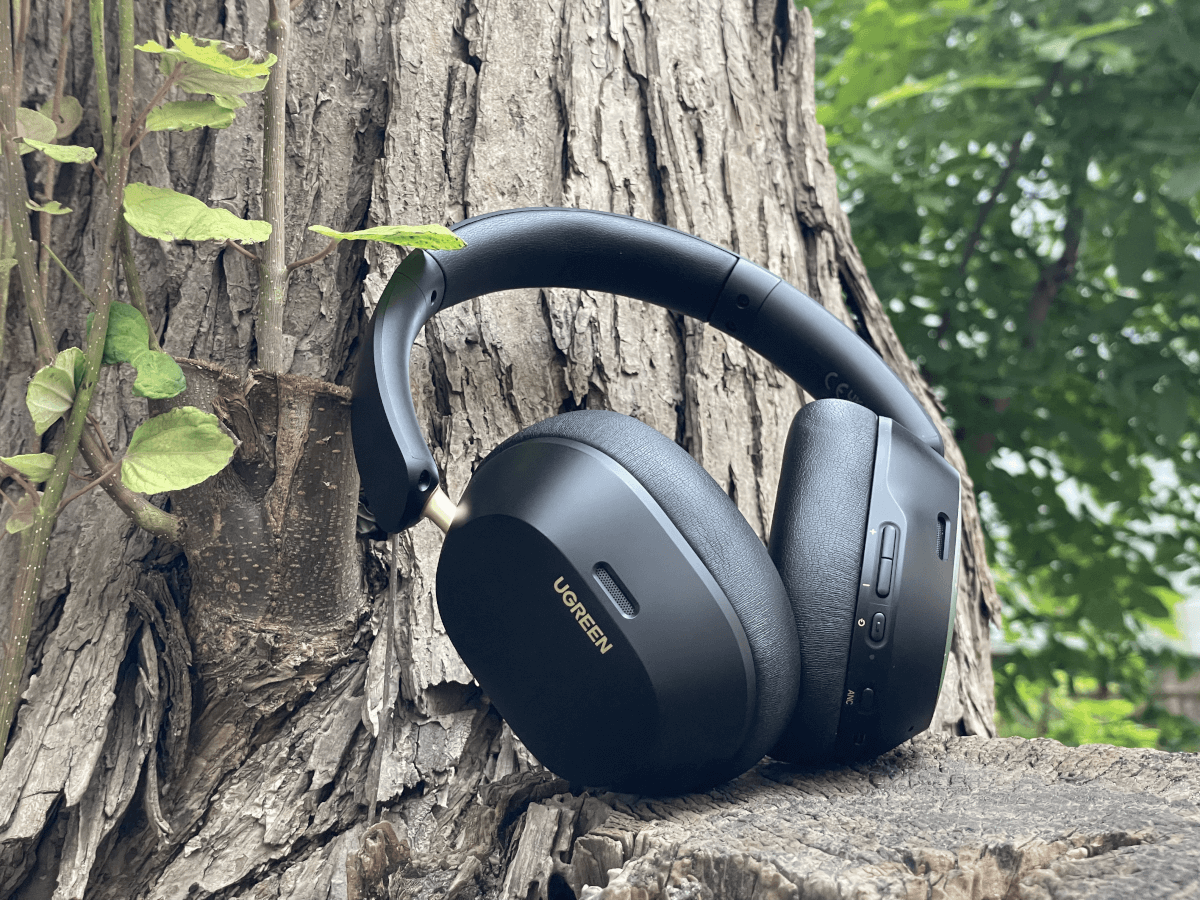
Controls — how conveniently and predictably the earbuds respond to taps and gestures: pause, volume, track switching, mode changes, and voice assistant activation. Good controls don’t require “dialing in,” work consistently, and don’t cause accidental taps; poor controls miss commands, lag, or simply ignore gestures.
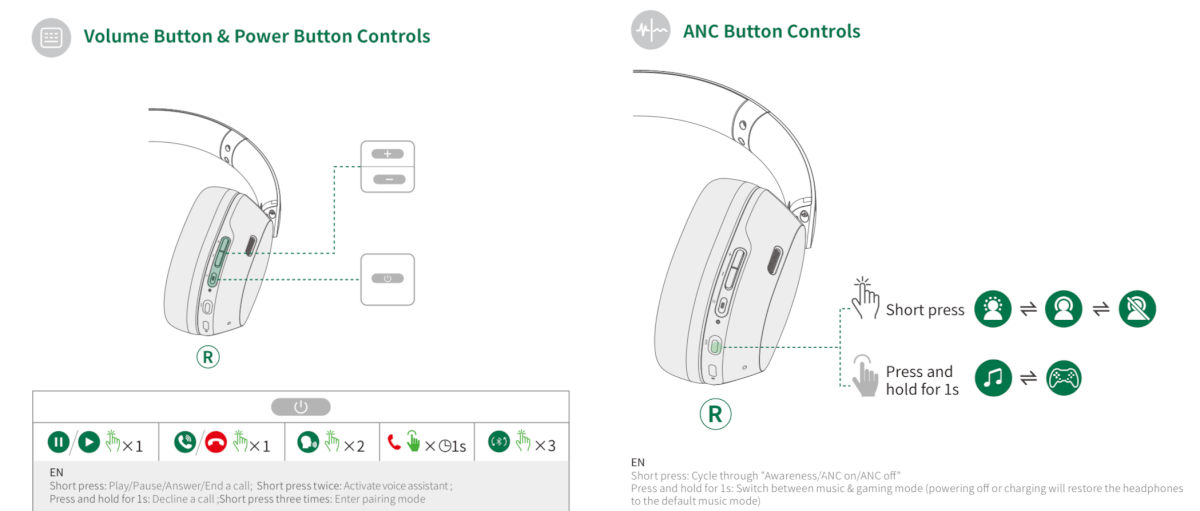
. 8 A block of 4 buttons: volume (+ track skipping when pressed and held), play/pause and call answering, ANC/transparency. The implementation is 9 out of 10; it has everything you need, but it takes a little getting used to.Read More.
The 4-button block ensures convenient controls:
- – Volume up/down, which also lets you switch tracks when you press and hold for 2 seconds
- The headphone power on/off button combines play/pause and answering/ending calls with a short press
- ANC / Transparency button with a single press, configurable in the app to enable Gaming mode and Spatial sound mode.

- The headphones don’t have auto-answer for calls (and honestly, I don’t think anyone uses it anyway).
- Same goes for auto-pause, the headphones don’t have a sensor, but they have a convenient physical button that handles pausing.
App — the brand’s companion application for adjusting sound, controls, noise cancellation, firmware updates, and additional features. A good app runs smoothly, has a clear layout, and offers real customization options; a poor one glitches, has limited functionality, or feels like a checkbox formality.
. 7 UGREEN Home for Android and iOS. It has ANC settings, 8 EQ presets, LDAC activation, and multipoint. No custom EQ preset — only 8 ready-made ones. The app is essential for the full experience.Read More.
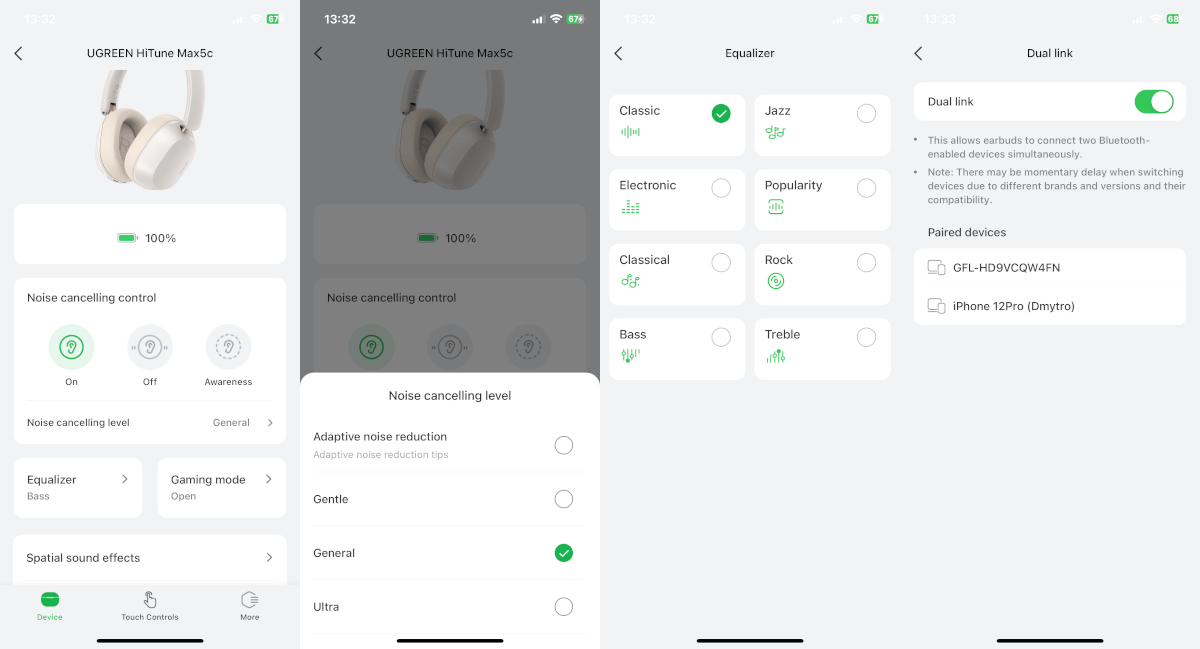
- Battery charge status.
- Control block for active noise cancellation (ANC) and transparency with intensity adjustment.
- EQ preset selection — unfortunately limited to 8 presets with no option to create your own.
I used the “Classic” preset — distortion is minimal with it, highly recommend. - Buttons for enabling Game Mode and Spatial Audio mode.
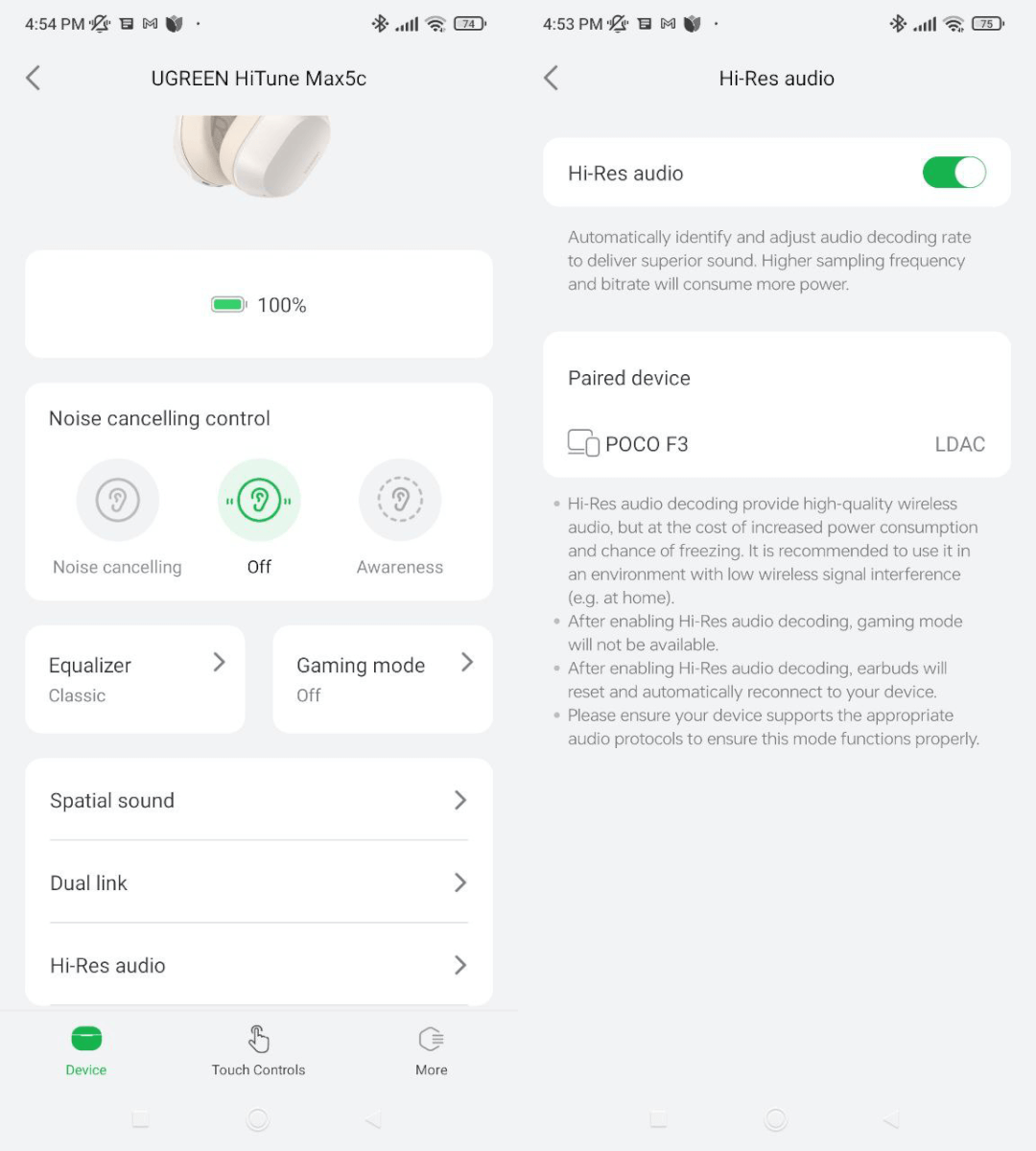
- There’s an option to enable and disable “Dual link” – Multipoint, with a list of paired devices. This feature lets you connect the headphones to 2 devices simultaneously, but LDAC codec connection won’t be available in this mode. You can configure it in the app.
- Hi-Res audio – the section where you separately enable codecс LDAC, simultaneously disabling Multipoint mode, since they cannot work together

- In a separate menu, you can configure the ANC button functions – specify actions for single, double, and press and hold.
- In the third tab, you can customize the device name, choose notification sounds (English or tone), update firmware, reset to defaults, and read the manual.

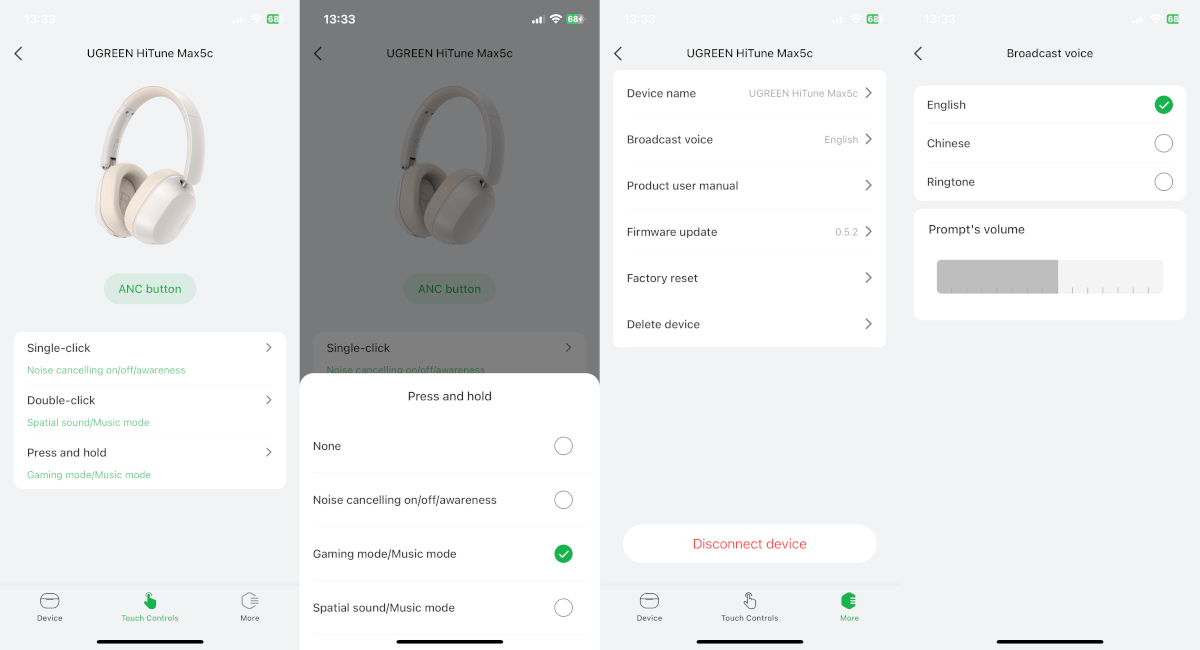
After the first connection, the headphones had the Bass EQ profile set, so the first thing I did was install the app and switch to Classic — essentially, you can’t do without the app here, and overall it’s quite convenient.
The only thing missing is a custom EQ preset and fine-tuning options, which would se
Connection stability is the ability of earbuds to maintain a steady Bluetooth signal without dropouts, delays, or artifacts in typical conditions (street, public transport, apartment with a router). Good stability means the audio doesn’t “crumble” when you turn your head and doesn’t disconnect in crowded places; poor stability shows up as frequent dropouts, stuttering, audio-video desync, and reconnection issues.
. 10 Bluetooth 5.4 ensures maximum connection comfort; the headphones don’t drop out even through 3 walls. Bluetooth version 5.4.Final build quality score is the overall score for build quality and materials: comfort, durability, and design. It shows how nice the device is to hold and use, and how long it will last.
. 7.33 Smart Casual style — they look more expensive than their price. Soft-touch plastic, faux leather, aluminum hinge. Comfortable fit, weight ~250g. Two colors: black and white. Nothing to break, the metal hinge is reliable.Read More.
Comfort is how the earbuds feel during extended wear: ear pressure, fit, weight, and ventilation. A comfortable model doesn’t chafe, squeeze the ear canal or head, and doesn’t cause fatigue even after a couple of hours; an uncomfortable one quickly reminds you of itself through pain, heat, or a “plugged” feeling in the ears.
. 8 Weighing around 250g, they fall into the comfortable category. They can fit any head. You can walk and run with them, only taking them off for exercises where you’re lying down. Earcup size — you won’t have issues with the seal even with larger ears.Durability is how well the earbuds and case withstand daily use: plastic and hinge quality, moisture protection, ear tip wear, and reliability of connectors and buttons. High durability means nothing wobbles, peels, or creaks after a year or two; low durability means cracks, play, hinge noise, or contact issues appear within just a couple of months.
. 7 After several weeks of active testing — small scuffs and scratches on one of the earcups, but they’re not noticeable. The metal hinge dispels any last doubts. There’s nothing to break here.Design is the appearance and thoughtfulness of form: how the earbuds look in your ears, how versatile they are with different styles, and whether they look “cheap.” Good design combines a clean appearance, ergonomic shape, and practical details (non-marking plastic, well-designed case); poor design catches on clothing, quickly gets scratched, and looks out of place.
. 7 Smart Casual style — they look utilitarian and understated. Black matte plastic, faux leather, aluminum hinge — looks more expensive than the price. Available in black and white.- Best sound for $30
- Pleasant, intuitive controls
- Good battery life
- Low latency in Game Mode
- No option to change EQ preset settings
- LDAC codec activation only through the app
- Questionable Spatial Audio feature
