

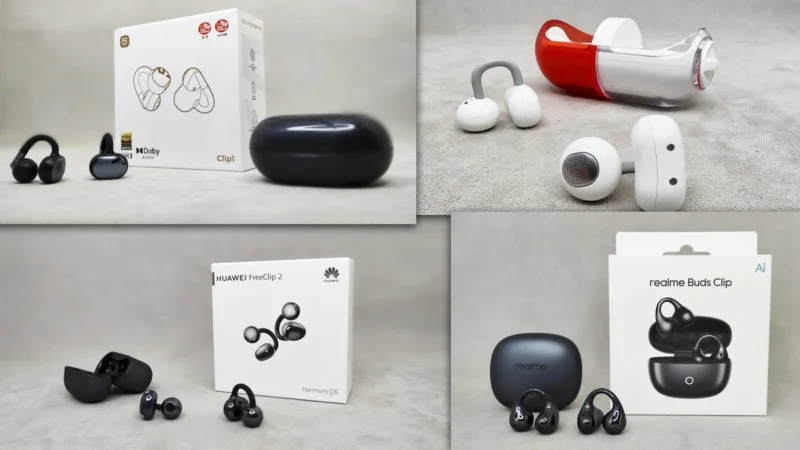
Here is our ranking of the best tested clip-on earbuds. These Bluetooth wireless earbuds are comfortable to wear because the acoustic module sits in your ear like open-fit earbuds. These wireless earbuds stay securely in place, making them an alternative to other wireless earbuds, including in-ear models and some open-fit models. Another benefit of the clip-on design is free airflow: your ears won’t get sweaty in hot weather, and you get a natural transparency mode.
How can you get high-resolution codecs like LDAC, LHDC, aptX Adaptive, aptX Lossless, and others?
Read moreIf your wireless earbuds support a specific codec but your phone, tablet, or PC doesn’t, a USB adapter can help. A device about the size of a standard Bluetooth dongle plugs into your phone or computer’s port. Your earbuds then connect directly to the adapter and receive the audio signal via that compatible codec.
Which adapter to choose?
- QCC Dongle Pro2 — if you need everything at once. The adapter supports LHDC 5.0, LDAC, aptX Adaptive, aptX HD, and aptX Lossless, with LE Audio and Auracast claimed.
- FiiO Air Link — a versatile adapter, just cheaper. Codec support: SBC, aptX, aptX Low Latency, aptX HD, aptX Adaptive, LDAC, and aptX Lossless.
- 1Mii B03Pro is a desktop option that functions as both a transmitter and a receiver. It supports SBC, AAC, aptX, aptX HD, aptX LL, and aptX Adaptive.
- UGREEN BT701 is a compact, versatile option. Supported codecs include Classic Bluetooth: SBC, aptX, aptX HD, aptX Adaptive-LL, and aptX Adaptive-HQ; and LE Audio: Auracast, Unicast-Low Latency, and Unicast-Lossless.
- UGREEN BT501 is a stripped-down version of the BT701. It supports SBC, aptX, aptX Low Latency, aptX HD, and aptX Adaptive.
To learn more about USB adapters, see our guide on the Best Bluetooth Adapters for PC and Earbuds.
EMMA — Experts + Methodology + MyChoozers + Algorithm.
Every model goes through identical tests; the score is calculated automatically with fixed weights — a spot in the rating cannot be bought.
TOP Best Wireless Earbuds — Ranking
1. Huawei FreeClip 2 7.62Best clip-on earbuds
Drivers are the drivers in your headphones that are responsible for creating sound.
DD + PM + BA – means that there are several different types of drivers in these headphones.
DD – “Dynamic Driver” dynamic driver (deep bass, natural sound).
PM – “Planar Magnetic Driver” planar driver (wide soundstage and fast response).
BA – “Balanced Armature Driver” armature driver (accuracy and detail retrieval).
BC – “Bone Conduction Driver” or bone-conduction driver, which transmits vibration to the body of the headphones, transmitting sound through the bone/cartilage to the inner ear.
LDAC – high quality, high speed (Sony).
SBC is the basic Bluetooth standard, low quality.
AAC – Apple standard, good quality, low latency.
aptX – Qualcomm standard, good quality, low latency.
LC3/LC3plus – new Bluetooth LE Audio codecs, efficient compression.
Codecs are audio compression formats that affect sound quality and latency.
Headphone battery life is the playback time without recharging, measured in hours. Manufacturers measure without active noise cancellation (ANC), at medium volume (50-70%) and usually with the AAC codec, as these parameters affect battery consumption. Actual time may vary from 1% to 50%, depending on volume, active noise cancellation features enabled, codec (LDAC or other) and environmental conditions (cold, hot). It is important to consider not only the claimed playback time, but also the charging time and fast charging support.
Bluetooth is a wireless data transmission standard.
Support for new audio technologies.
Improved connection stability.
Reduced power consumption.

The Huawei FreeClip 2 are the best clip-on earbuds among all open-ear models we’ve tested at MyChooz. Why you should buy them: they offer the best sound among OWS models, a comfortable fit, and a natural transparency mode, making them the top alternative to in-ear, open-fit, and ear-hook models. Minor drawbacks include slightly light bass, no active noise cancellation, and a clip-on design that might not suit everyone.
- Best sound among clips
- Detailed microphone
- Comfortable fit among clip-style earbuds
- Open design without active noise cancellation
- The form factor might not appeal
The final sound score is calculated using this formula:
Frequency balance + Detail retrieval + Soundstage + Natural timbre / 4 = Final Sound Score.
. 7.46 The earbuds are a bit light on bass, which is typical for open-ear designs, putting more focus on the mids. Even so, the sound stays dynamic enough for hip-hop and electronic tracks, sounding full and spacious. It feels natural, avoids obvious artificiality, and stays clear with basic codecs, though detail retrieval takes a hit in dense mixes and things get congested.Learn more.
Microphone – We assess speech transmission quality by testing the microphone in two main scenarios: quiet and noisy environments.
Quiet environment – This involves recording indoors with minimal background noise. Noisy environment – This means recording outdoors near a six-lane road with maximum traffic noise.
. 8.00 In quiet environments: 9 In noisy environments: 7Overall feature score — this is the overall score for all device features. This score comes from individual feature ratings (battery life, controls, app, connection stability, and others) and shows how easy and smart the device is for daily use.
. 7.16 There’s no active noise cancellation or transparency mode, but honestly, you don’t miss it. The open-fit design keeps you aware of your surroundings. In our tests, the earbuds lasted 9 hours, and the charging case brought the total to 40 hours. Touch controls are convenient and responsive. The app is stable, offering EQ adjustments, a low-latency mode, and control customization.Learn more.
Final build quality score is the overall score for build quality and materials: comfort, durability, and design. It shows how nice the device is to hold and use, and how long it will last.
. 8.73 These earbuds are lightweight and comfortable, though my ears got a bit tired after about 2 hours. The build is solid with no defects, and the IP57 rating protects against dust and moisture. They look good, available in three color options.Learn more.
2. realme Buds Clip 6.19Best sound in clip-on earbuds under $50
Drivers are the drivers in your headphones that are responsible for creating sound.
DD + PM + BA – means that there are several different types of drivers in these headphones.
DD – “Dynamic Driver” dynamic driver (deep bass, natural sound).
PM – “Planar Magnetic Driver” planar driver (wide soundstage and fast response).
BA – “Balanced Armature Driver” armature driver (accuracy and detail retrieval).
BC – “Bone Conduction Driver” or bone-conduction driver, which transmits vibration to the body of the headphones, transmitting sound through the bone/cartilage to the inner ear.
LDAC – high quality, high speed (Sony).
SBC is the basic Bluetooth standard, low quality.
AAC – Apple standard, good quality, low latency.
aptX – Qualcomm standard, good quality, low latency.
LC3/LC3plus – new Bluetooth LE Audio codecs, efficient compression.
Codecs are audio compression formats that affect sound quality and latency.
Headphone battery life is the playback time without recharging, measured in hours. Manufacturers measure without active noise cancellation (ANC), at medium volume (50-70%) and usually with the AAC codec, as these parameters affect battery consumption. Actual time may vary from 1% to 50%, depending on volume, active noise cancellation features enabled, codec (LDAC or other) and environmental conditions (cold, hot). It is important to consider not only the claimed playback time, but also the charging time and fast charging support.
Bluetooth is a wireless data transmission standard.
Support for new audio technologies.
Improved connection stability.
Reduced power consumption.

The realme Buds Clip are a solid open-ear clip-on option for under $50. Where competitors in this price bracket sound harsh or muffled, the realme buds deliver clean, non-fatiguing audio. These wireless earbuds perform best on mid-centric tracks with minimal instrumentation and prominent vocals, as well as on podcasts and audiobooks. They struggle, however, with complex tracks or wide frequency ranges. The feature set is average, covering basic needs, highlighted by real-time live translation, a clear noise-canceling microphone, and precise controls. Build quality is solid, ensuring a comfortable fit for an affordable pair.
- Comfortable mid-range-focused sound.
- Clear microphone with noise cancellation.
- Build and materials have no flaws.
- Lacks lows and highs.
- Low detail retrieval with basic codecs.
- Sound distorts at 80%+ volume.
The final sound score is calculated using this formula:
Frequency balance + Detail retrieval + Soundstage + Natural timbre / 4 = Final Sound Score.
. 5.88 Mid-range focused, moderately full-bodied, and detailed in straightforward tracks featuring a couple of instruments and vocals. The wireless earbuds handle these tracks easily for everyday background listening, or for podcasts and audiobooks. However, in dynamic tracks with various instruments and effects, the sound gets congested. This kind of sound gets tiring halfway through a track. Lows and highs are lacking. You can crank up the frequencies in the EQ, but the sound turns artificial and burbling on half the tracks.Learn more.
Microphone – We assess speech transmission quality by testing the microphone in two main scenarios: quiet and noisy environments.
Quiet environment – This involves recording indoors with minimal background noise. Noisy environment – This means recording outdoors near a six-lane road with maximum traffic noise.
. 6.90 In quiet environments: 7.8 In noisy environments: 6 Speech is clear in quiet environments with background noise around 35 dB. Microphone gain is sufficient, so you don’t need to shout into the microphone. In noisy environments with a vacuum cleaner running, background noise jumps to 73-75 dB. Speech can be made out if you listen closely, but the vacuum noise is quite prominent in the background.Learn more.
Overall feature score — this is the overall score for all device features. This score comes from individual feature ratings (battery life, controls, app, connection stability, and others) and shows how easy and smart the device is for daily use.
. 5.96 Average and cover the basic needs of wireless earbuds. The only standout features are live and simultaneous translation, along with accurate controls; there were no missed touches during testing.Learn more.
Final build quality score is the overall score for build quality and materials: comfort, durability, and design. It shows how nice the device is to hold and use, and how long it will last.
. 7.33 No complaints, taking the wireless earbuds out of the case is convenient. The only downside is the fingerprint-magnet finish of the wireless earbuds. There is no noticeable discomfort when wearing them, although slight fatigue sets in after an hour of use.Learn more.
3. SoundPEATS Clip1 6.02Solid clip-on earbuds with LDAC under $50
Drivers are the drivers in your headphones that are responsible for creating sound.
DD + PM + BA – means that there are several different types of drivers in these headphones.
DD – “Dynamic Driver” dynamic driver (deep bass, natural sound).
PM – “Planar Magnetic Driver” planar driver (wide soundstage and fast response).
BA – “Balanced Armature Driver” armature driver (accuracy and detail retrieval).
BC – “Bone Conduction Driver” or bone-conduction driver, which transmits vibration to the body of the headphones, transmitting sound through the bone/cartilage to the inner ear.
LDAC – high quality, high speed (Sony).
SBC is the basic Bluetooth standard, low quality.
AAC – Apple standard, good quality, low latency.
aptX – Qualcomm standard, good quality, low latency.
LC3/LC3plus – new Bluetooth LE Audio codecs, efficient compression.
Codecs are audio compression formats that affect sound quality and latency.
Headphone battery life is the playback time without recharging, measured in hours. Manufacturers measure without active noise cancellation (ANC), at medium volume (50-70%) and usually with the AAC codec, as these parameters affect battery consumption. Actual time may vary from 1% to 50%, depending on volume, active noise cancellation features enabled, codec (LDAC or other) and environmental conditions (cold, hot). It is important to consider not only the claimed playback time, but also the charging time and fast charging support.
Bluetooth is a wireless data transmission standard.
Support for new audio technologies.
Improved connection stability.
Reduced power consumption.
Why you should buy them: respectable sound with EQ tweaking, a comfortable fit, and effective microphone noise reduction. The LDAC codec works as intended, yielding a subtle improvement in audio quality. On the downside, the finish is a fingerprint magnet and the feature set is basic. Sound-wise, they are bass-light and lack fine detail.
- Good sound with EQ
- 2-3 hours of use without discomfort
- Effective microphone noise cancellation
- Low bass and detail retrieval
- Battery life does not match specs
- Fingerprint magnet finish
The final sound score is calculated using this formula:
Frequency balance + Detail retrieval + Soundstage + Natural timbre / 4 = Final Sound Score.
. 5.68 The focus is on the mid-range, accompanied by muted highs and a lack of bass. Even with the EQ, you’ll find them barely suitable for background listening. Detail retrieval is low, and the LDAC codec has a minimal impact. The soundstage sits right inside your head, though the open-fit design and minimal Dolby Audio add a bit of spaciousness. Natural timbre is where these earbuds struggle most, leaving you with a synthetic, grainy sound.Read more.
Microphone – We assess speech transmission quality by testing the microphone in two main scenarios: quiet and noisy environments.
Quiet environment – This involves recording indoors with minimal background noise. Noisy environment – This means recording outdoors near a six-lane road with maximum traffic noise.
. 6.75 In quiet conditions: 7.5 In noisy conditions: 6 Speech sounds clear in quiet environments, though it gets tougher to make out when things get noisy. That said, the microphone noise cancellation actually handles background sounds like a handheld vacuum pretty well.Overall feature score — this is the overall score for all device features. This score comes from individual feature ratings (battery life, controls, app, connection stability, and others) and shows how easy and smart the device is for daily use.
. 5.81 Active noise cancellation isn’t available. The transparency mode sounds natural and won’t interfere with your conversations while you’ve got the wireless earbuds on. In testing, battery life ran between 5 and 7 hours depending on the codec, falling short of the 10-hour claim. Touch controls handle 4 actions across both wireless earbuds. The app keeps features to a minimum, though it’s handy for tweaking controls or turning on the LDAC codec.Read more.
Final build quality score is the overall score for build quality and materials: comfort, durability, and design. It shows how nice the device is to hold and use, and how long it will last.
. 7.17 The wireless earbuds offer a comfortable fit with minimal discomfort, though I noticed minor fatigue after a couple of hours of use. Build quality and materials are solid, even if the plastic is thin and a fingerprint magnet. They look good, without being particularly exciting.Read more.
4. MOONDROP PILL 5.83Best clip-on earbuds by design
Drivers are the drivers in your headphones that are responsible for creating sound.
DD + PM + BA – means that there are several different types of drivers in these headphones.
DD – “Dynamic Driver” dynamic driver (deep bass, natural sound).
PM – “Planar Magnetic Driver” planar driver (wide soundstage and fast response).
BA – “Balanced Armature Driver” armature driver (accuracy and detail retrieval).
BC – “Bone Conduction Driver” or bone-conduction driver, which transmits vibration to the body of the headphones, transmitting sound through the bone/cartilage to the inner ear.
LDAC – high quality, high speed (Sony).
SBC is the basic Bluetooth standard, low quality.
AAC – Apple standard, good quality, low latency.
aptX – Qualcomm standard, good quality, low latency.
LC3/LC3plus – new Bluetooth LE Audio codecs, efficient compression.
Codecs are audio compression formats that affect sound quality and latency.
Headphone battery life is the playback time without recharging, measured in hours. Manufacturers measure without active noise cancellation (ANC), at medium volume (50-70%) and usually with the AAC codec, as these parameters affect battery consumption. Actual time may vary from 1% to 50%, depending on volume, active noise cancellation features enabled, codec (LDAC or other) and environmental conditions (cold, hot). It is important to consider not only the claimed playback time, but also the charging time and fast charging support.
Bluetooth is a wireless data transmission standard.
Support for new audio technologies.
Improved connection stability.
Reduced power consumption.
The MOONDROP PILL earbuds are mainly visually interesting. The charging case features an original design that stands out from competitors. Under the hood, these wireless earbuds offer advanced sound settings, though they barely alter the audio quality. As a result, they are really only suited for mid-focused audio like podcasts and audiobooks. That said, they do include a clear microphone with functional noise reduction.
- Original charging case design
- Advanced sound settings
- Clear microphone
- Lacks lows and highs
- Few useful features.
The final sound score is calculated using this formula:
Frequency balance + Detail retrieval + Soundstage + Natural timbre / 4 = Final Sound Score.
. 5.17 They lean heavily on the mids, making the wireless earbuds barely suitable for music. Podcasts, YouTube, and perhaps audiobooks are fine, but more complex genres trip them up. The sound gets muddy, and only the vocals come through clearly. Notably, the wireless earBuds FEature advanced tools for tuning the sound via frequency response. However, the audio system responds poorly to the EQ.Read more.
Microphone – We assess speech transmission quality by testing the microphone in two main scenarios: quiet and noisy environments.
Quiet environment – This involves recording indoors with minimal background noise. Noisy environment – This means recording outdoors near a six-lane road with maximum traffic noise.
. 7.00 In quiet conditions: 8 In noisy conditions: 6 Voices are detailed in a quiet home environment or outside with 35-36 dB of background noise. In a noisy environment (72-73 dB), the microphone’s noise cancellation kicks in after 1-1.5 seconds. About half of the noise is suppressed. You can make out the voice if you listen closely.Read more.
Overall feature score — this is the overall score for all device features. This score comes from individual feature ratings (battery life, controls, app, connection stability, and others) and shows how easy and smart the device is for daily use.
. 5.60 They barely cover basic needs. There’s nothing particularly interesting here, aside from the sound settings in the manufacturer’s app.Read more.
Final build quality score is the overall score for build quality and materials: comfort, durability, and design. It shows how nice the device is to hold and use, and how long it will last.
. 7.83 Sturdy and reliable, with no assembly flaws. For comfort and build, they feel like other affordable clip-on wireless earbuds. The main focus is on the styling. The charging case looks original and interesting, though it’s also noticeably larger than the competition.Read more.
5. TALIX Ultra Open Earbuds X6 4.97Decent clip-on earbuds — the best of the worst
Drivers are the drivers in your headphones that are responsible for creating sound.
DD + PM + BA – means that there are several different types of drivers in these headphones.
DD – “Dynamic Driver” dynamic driver (deep bass, natural sound).
PM – “Planar Magnetic Driver” planar driver (wide soundstage and fast response).
BA – “Balanced Armature Driver” armature driver (accuracy and detail retrieval).
BC – “Bone Conduction Driver” or bone-conduction driver, which transmits vibration to the body of the headphones, transmitting sound through the bone/cartilage to the inner ear.
LDAC – high quality, high speed (Sony).
SBC is the basic Bluetooth standard, low quality.
AAC – Apple standard, good quality, low latency.
aptX – Qualcomm standard, good quality, low latency.
LC3/LC3plus – new Bluetooth LE Audio codecs, efficient compression.
Codecs are audio compression formats that affect sound quality and latency.
Headphone battery life is the playback time without recharging, measured in hours. Manufacturers measure without active noise cancellation (ANC), at medium volume (50-70%) and usually with the AAC codec, as these parameters affect battery consumption. Actual time may vary from 1% to 50%, depending on volume, active noise cancellation features enabled, codec (LDAC or other) and environmental conditions (cold, hot). It is important to consider not only the claimed playback time, but also the charging time and fast charging support.
Bluetooth is a wireless data transmission standard.
Support for new audio technologies.
Improved connection stability.
Reduced power consumption.
For $50, you get audio performance comparable to $20 budget models, minus a companion app, extra features, or codecs. The EQ does little to change overall sound quality. By comparison, the $50 EarFun Clip offers the LDAC codec, a physical control button, an app, IP55 dust and water resistance, and Bluetooth 6.0. The EarFun Clip simply outperforms them across the board at the exact same price.
- Clear microphone
- Effective microphone noise cancellation
- Stable connection.
- Good battery life.
- Low sound quality.
- No dust and water resistance.
- Minor drawbacks include no companion app, a lack of LDAC or aptX support, the absence of multipoint pairing, and imprecise controls.
The final sound score is calculated using this formula:
Frequency balance + Detail retrieval + Soundstage + Natural timbre / 4 = Final Sound Score.
. 3.75 Budget sound out of the box that falls short for casual listening without an EQ. The primary plus of the sound is that it is non-fatiguing. Decent mids. Vocals are clear and recognizable, yet sound like they are coming from the next room. The artist is singing not for me, but for someone else. The drawbacks of the sound are the soundstage, natural timbre, and bass. There is practically no bass in the headphones, as if it is at 10-20% of normal balanced headphones, and low-frequency instruments are inaudible or indistinguishable. There is no soundstage as such, and instrument separation is weak.Read more.
Frequency balance: This refers to how sound energy is distributed across the entire audible range, from 20 Hz to 20 kHz. It’s not just about covering the full spectrum, but about achieving the right proportions so that the lows, mids, and highs work together harmoniously, without clashing or obscuring important details.
The ideal balance means the bass provides a solid foundation, the mids deliver clear and present vocals, and the highs add sparkle and detail. Frequency balance skew occurs when one or two of these main ranges are either overemphasized or noticeably lacking compared to the others.
. 4 Talix Ultra X6 sound with an emphasis on the mids and slightly more on the highs. The bass is dryRead more.
Quantity. Lenny Kravitz — Low. The bass guitar is barely audible and requires active listening. The instrument’s sound emerges and vanishes when the sound should be constant. The electric guitar in the right channel “beeps” from the next room. The drums are dry, the sound is flat and overly punchy.
Quality. Michael Jackson – P.Y.T. The bass synth at the beginning of the track gets lost against the background of other instruments. The sound is not well-resolved.
The midrange (250 Hz to 4 kHz) is where most musical elements live, and it’s crucial for hearing main melodies, vocals, and instruments.
Too many mids, especially in the upper range, make sound harsh, intrusive, and fatiguing fast. The mix can sound shouty or “boxy.” Conversely, a shortage of mids results in a hollow, recessed sound where vocals and main instruments lose their presence and seem distant, draining the music of energy and overall clarity.
. 5 Vocals are clear and recognizable, while coming from afar. You have to crank the volume almost to the maximum, otherwise the words cannot be made out.Read more.
Lenny Kravitz — Low. Vocals come from afar with heavy echo.
Oasis – Dont Go Away. Instruments drown out the vocals.
Michael Jackson – Man in the Mirror. Vocals come from the room across the hall.
Highs, or treble (4 kHz – 20 kHz) – these frequencies are responsible for brightness, sparkle, detail, and that sense of ‘air’ in a music mix. This range helps you pick out the finest details, like string overtones, cymbal shimmer, and sibilant sounds in vocals.
An optimal balance makes music sound lively, clean, and open. Too much, however, leads to unnecessary harshness, causes sibilance (overly loud ‘s’ sounds), and makes cymbals sound unpleasantly ‘grainy’ or metallic, quickly fatiguing your ears. Too little, and the entire mix sounds dull, muffled, and ‘closed-in’ (veiled). The sound loses its detail and openness, feeling like you’re listening through a thick filter that robs the music of clarity.
. 4 Bright and artificial, overdone in quantity. At the same time, they do not cause ear fatigue, rather they are harsh on sibilance and percussion.Read more.
Oasis – Dont Go Away – the tambourine in the verse and chorus is inaudible. The sound resembles a matchbox more.
Daft Punk – Get Lucky, Lose Yourself to Dance – the percussion has grain and weak detail retrieval.
Detail retrieval – this describes how clearly and distinctly you can hear the tiniest sounds in a mix, like reverb, overtones, quiet instruments, texture, and subtle percussion sounds (such as light hi-hat taps).
Ideal detail retrieval – all subtle sounds are audible, just as they would be at a live performance.Lack: The sound is dull, muted, and veiled, as if you’re listening through a layer of fabric. The musical picture lacks depth, instruments sound flat, and subtle nuances get lost.Excess: The sound becomes unnaturally sharp, aggressive, and glassy. This can manifest as an overemphasis on sibilant sounds and background noise. This kind of sound quickly becomes fatiguing, often due to too much treble above 6 kHz.
. 4 The sound gets muddy. Main parts are clear. If there are 4-5 background instruments, then they start crowding each other out.Read more.
Oasis – Dont Go Away – background instruments get lost. The tambourine is inaudible or the sound is more like shaking a matchbox. Drums are pushed far back and sound bubbly. Grain on percussion, cymbals sound distorted into white noise.
Johnny Cash – Hurt – the acoustic guitar sound is artificial, there is vocal distortion on the chorus.
Naturalness— how authentic and realistic the sound is. It indicates how accurately the sound of voices and musical instruments is reproduced.
Best naturalness – the sound is clean, warm, and lively, without artificial coloration or extraneous noises.
Excess – an excessive amount of distracting sounds like sighs, mechanical noises, rustles, etc.
Lack – the sound feels artificial, colored, or plastic. You lose timbre recognition (instruments don’t sound like they do in real life), and the sound becomes flat and fatiguing due to incorrect equalization or excessive compression.
Read more.
Oasis – Dont Go Away. Percussion is grainy, drums sound bubbly, vocal sibilance is harsh.
Soundstage, or stage, refers to the perceived three-dimensional space where instruments and vocals in a musical piece are placed. It’s a virtual soundscape that sound engineers craft during mixing. The stage encompasses width (left-to-right placement), depth (a sense of distance), and height (the feeling of instruments being above or below the horizontal plane).
The best soundstage makes music feel immersive and realistic, letting you pinpoint each element in space—whether it’s to your left or right, closer or further away, or above or below your head. A lack of it results in a monolithic sound, as if everything is coming from a single point, making it difficult to discern the position of each instrument. An excess of it, on the other hand, can make instruments and vocals sound overly distant, causing the musical composition to lose its coherence.
. 3 Minimal instrument separation, the sound comes from almost a single point.Read more.
Michael Jackson – Man in the Mirror – vocals, chorus, and instruments come from a single point.
Yosi Horikawa – Bubbles – all effects sound close.
Microphone – We assess speech transmission quality by testing the microphone in two main scenarios: quiet and noisy environments.
Quiet environment – This involves recording indoors with minimal background noise. Noisy environment – This means recording outdoors near a six-lane road with maximum traffic noise.
. 6.50 In quiet conditions: 7 In noisy conditions: 6 In quiet settings, your recordings sound clear yet slightly muffled. When it gets noisy, speech stays intelligible and the noise cancellation handles things well.Read more.
Active noise cancellation (ANC) lets headphones use microphones and signal processing to cut out external noise like traffic, street hum, or office chatter, so you can hear your music or calls better without cranking the volume. Good ANC significantly cuts low-frequency hum from things like engines or air conditioners, barely presses on your ears, and minimally distorts the sound. Weak ANC, on the other hand, only removes some of the noise or creates an unpleasant “vacuum” effect and artifacts.
. 1 Not available.Transparency mode uses the earbuds’ microphones to pipe in ambient sound, letting you hear announcements, conversations, or traffic without removing them. A good implementation sounds natural and clear, without adding noise or echo, whereas a poor one makes the outside world sound flat, metallic, or unnervingly quiet.
. 9 Natural, physically sounds almost perfect. Still, there is a feeling that something is in your ears.Battery life is the actual playback time you get from the earbuds and their charging case on a single charge during typical volume and usage scenarios (music, video, calls), not just the marketing numbers. Good battery life means you can easily get through a day or several without needing an outlet, and it doesn’t drop significantly with noise cancellation and high-quality codecs enabled. Poor battery life, on the other hand, requires frequent recharging and noticeably decreases when you crank up the volume.
. 5 Claimed – 6.5 hours and 40 hours with the charging case. In reality – 6 hours 49 minutes. Battery life is currently being tested. Fast charging – 10 min = 2 hours of playback. Wireless charging is not available.Controls — how easily and reliably the headphones respond to your presses and gestures for pausing, adjusting volume, switching tracks, changing modes, and activating your voice assistant. Good controls feel intuitive, work without fail, and avoid accidental inputs; bad controls will miss commands, lag, or simply ignore your gestures.
. 6 Touch controls by tapping in the name area. Response to taps is hit-or-miss — a double-tap registers as a single tap, and a triple-tap registers as a double or single tap. Response time to touch is up to 1 second. Controls cannot be reassigned.Read more.
Talix Ultra X6 basic control layout:
Voice assistant. Press and hold the left or right earbud for 3 seconds.
Play / Pause. Double-press the left or right earbud.
Answer call. Double-press the left or right earbud during an incoming call.
Reject call. Press and hold the left or right earbud for 3 seconds during an incoming call.
End call. Double-press the left or right earbud during a call.
Previous track. Triple-press the left earbud.
Next track. Triple-press the right earbud.
Increase volume. Single-press the right earbud.
Decrease volume. Single-press the left earbud.
Power on/off. Earbuds turn off when placed in the charging case and the lid is closed. They turn on when the lid is opened.
The app, which is the proprietary software you use to tweak sound, controls, noise cancellation, firmware updates, and other features. A good app is stable, well-organized, and actually lets you customize things; a bad one glitches, lacks features, or feels like it’s just there for show.
. 1 Unavailable.Connection stability — how well the headphones hold onto their Bluetooth signal without dropping out, lagging, or glitching in everyday situations like busy streets, public transport, or even at home with a Wi-Fi router nearby. Good stability means the audio won’t stutter when you turn your head or cut out in crowded areas. Poor stability, on the other hand, will show up as frequent dropouts, stuttering, audio-video sync issues, and problems reconnecting.
. 7 Within 10m – signal does not drop using the AAC codec. Bluetooth version 5.4Read more.
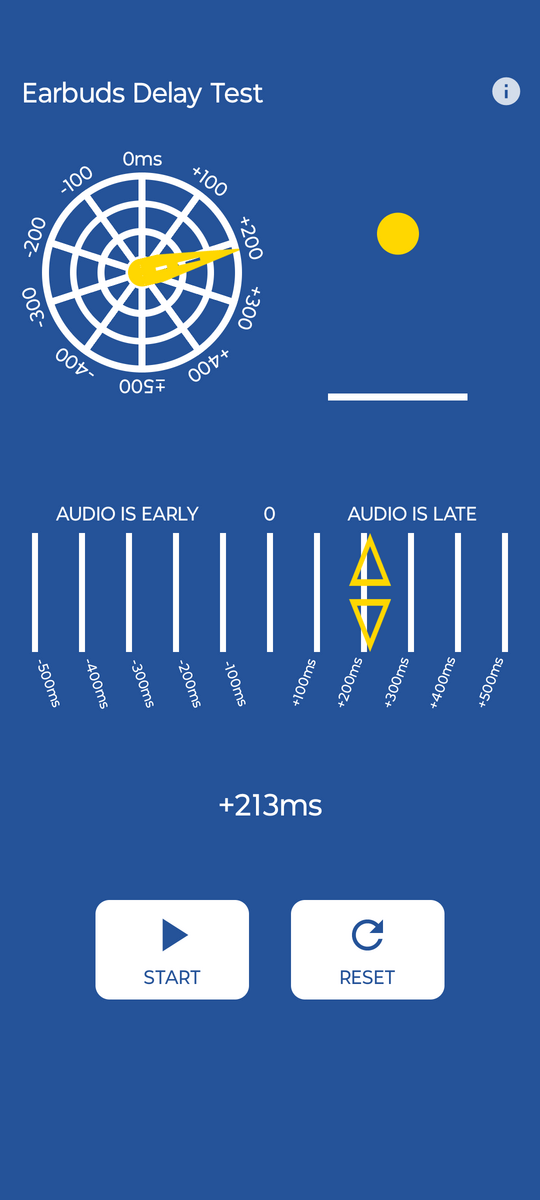
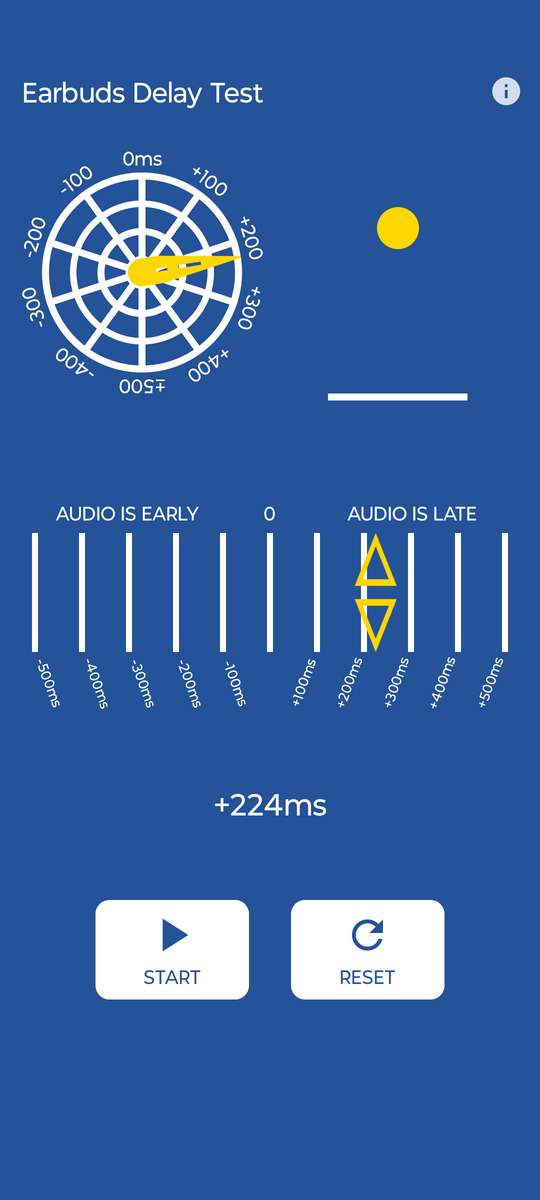
Audio latency check via the Earbuds Delay Test app. (Google Play)
Important features and sensors:
- Multipoint – no.
- Auto-pause when removing earbuds – no.
- Google Fast Pair support – no
- Swift Pair support for Windows – no.
Read more.
Comfort is how the earbuds feel during extended wear: ear pressure, fit, weight, and ventilation. A comfortable model doesn’t chafe, squeeze the ear canal or head, and doesn’t cause fatigue even after a couple of hours; an uncomfortable one quickly reminds you of itself through pain, heat, or a “plugged” feeling in the ears.
. 6 The earbuds are light, and the U-shaped arch is coated in soft, flexible silicone. They don’t rub or press, but I still felt a slight discomfort. I experience this with all budget open-fit earbuds. I fiddled with the earbuds for a long time, trying to find the optimal position in my ears, but I never found it. Everything here is very individual.Read more.
The charging case has a hemispherical shape, is lightweight, and measures 47.4 x 55.2 x 39.2. You’ll feel it in your clothing pocket. The finish is slippery, making it inconvenient to open.
Durability — how well the earbuds and charging case hold up to daily use: This includes the quality of the plastic and hinge, water resistance, wear on the ear tips, and the reliability of connectors and buttons. High durability means nothing is loose, peeling, or cracking after a year or two. Conversely, low durability means you’ll see cracks, looseness, hinge noise, or connection issues after just a couple of months.
. 6.5 Dust and water resistance IP is not stated. The earbuds and the charging case feel sturdy to the touch. The charging case plastic looks ordinary, while the glossy finish is a fingerprint magnet that collects smudges and dust.Design – This covers how the earbuds look and how well-thought-out their shape is. I’m talking about how they appear in your ears, how versatile they are with different outfits, and whether they look cheap. A good design blends a neat appearance with a comfortable shape and practical touches, like non-marking plastic or a well-designed charging case. Conversely, a bad design will snag on your clothes, scratch easily, and just look out of place.
. 6 Talix Ultra X6 are available in four colors: black, which is closer to a graphite color, white, blue, and purple. The appearance is ordinary and doesn’t stand out in any way.