

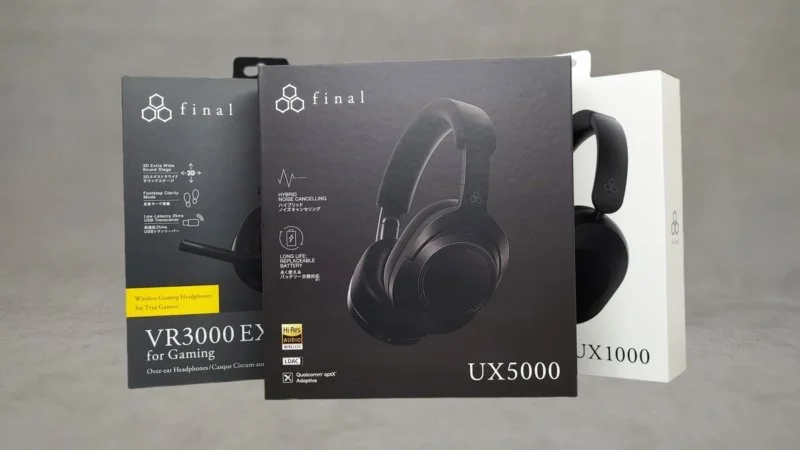
This is our ranking of the best wireless headphones from Final Audio. We’ve included only Bluetooth headphones that we’ve tested here at MyChooz in the over-ear form factor. Your position in this list is based on the scores across all evaluated parameters: sound, features, and build quality.
See how Final Audio headphones stack up in our main rankings:
- TOP 100 Best Headphones
- Best Big Headphones – TOP Over-Ear 2026
- Best Over-Ear Headphones Under $100 2026
- Best Gaming Headphones 2026
EMMA — Experts + Methodology + MyChoozers + Algorithm.
Every model goes through identical tests; the score is calculated automatically with fixed weights — a spot in the rating cannot be bought.
TOP-3 Best Final Audio Wireless Headphones – Ranking
1. Final Audio UX5000 7.46Large wireless headphones with a detachable build
Drivers are the drivers in your headphones that are responsible for creating sound.
DD + PM + BA – means that there are several different types of drivers in these headphones.
DD – “Dynamic Driver” dynamic driver (deep bass, natural sound).
PM – “Planar Magnetic Driver” planar driver (wide soundstage and fast response).
BA – “Balanced Armature Driver” armature driver (accuracy and detail retrieval).
BC – “Bone Conduction Driver” or bone-conduction driver, which transmits vibration to the body of the headphones, transmitting sound through the bone/cartilage to the inner ear.
LDAC – high quality, high speed (Sony).
SBC is the basic Bluetooth standard, low quality.
AAC – Apple standard, good quality, low latency.
aptX – Qualcomm standard, good quality, low latency.
LC3/LC3plus – new Bluetooth LE Audio codecs, efficient compression.
Codecs are audio compression formats that affect sound quality and latency.
Headphone battery life is the playback time without recharging, measured in hours. Manufacturers measure without active noise cancellation (ANC), at medium volume (50-70%) and usually with the AAC codec, as these parameters affect battery consumption. Actual time may vary from 1% to 50%, depending on volume, active noise cancellation features enabled, codec (LDAC or other) and environmental conditions (cold, hot). It is important to consider not only the claimed playback time, but also the charging time and fast charging support.
The Final Audio UX5000 are interesting purely for their sound and build. Sonically, they’re on par with top-tier models, though out of the box, the sound is a bit muted. Some headphones under $100 might even sound more dynamic and engaging. However, a couple of simple EQ tweaks unlock their full potential. With adjustments, they become noticeably more detailed, the soundstage expands, and the headphones are better suited for focused listening. The build quality is robust and well-designed – you can easily replace the ear pads and headband, and there are no issues with battery replacement. On the downside, their features are on par with budget models, lagging about 5 years behind. There are no standout features, just barely functional active noise cancellation, and that’s it.
- Pleasant sound with simple EQ adjustment.
- Sturdy, serviceable construction.
- Poor functionality: low transparency, useless companion app, basic controls.
The final sound score is calculated using this formula:
Frequency balance + Detail retrieval + Soundstage + Natural timbre / 4 = Final Sound Score.
. 8.01 Not bright and transparent enough. At the same time, the bass and percussion are not fatiguing, with no noticeable artificial timbre or grain. Overall, the sound is comfortable; the only things getting in the way are the somewhat muffled presentation and excessive emphasis on the mid-range. The vocalist literally shouts into your ears. With an EQ, the sound is more pleasant and better suited for attentive listening. Final Audio UX5000 land in the MyChooz silver league.Read more.
Microphone – We assess speech transmission quality by testing the microphone in two main scenarios: quiet and noisy environments.
Quiet environment – This involves recording indoors with minimal background noise. Noisy environment – This means recording outdoors near a six-lane road with maximum traffic noise.
. 6.00 In quiet conditions: 8 In noisy conditions: 4Overall feature score — this is the overall score for all device features. This score comes from individual feature ratings (battery life, controls, app, connection stability, and others) and shows how easy and smart the device is for daily use.
. 6.08 Quality and feature set are at a basic level. Comparable to headphones from 5-6 years ago or budget models. The transparency mode is useless, controls are basic, there is no auto-pause, and the proprietary app only features a 10-band EQ. The app itself is useless and inconvenient as well. A free AI model could generate a better program. On the useful side—decent active noise cancellation combined with passive isolation, plus multipoint support. There is also up to 65 hours of battery life, though who is surprised by that?Read more.
Final build quality score is the overall score for build quality and materials: comfort, durability, and design. It shows how nice the device is to hold and use, and how long it will last.
. 8.17 Sturdy and reliable. There are no defects in build quality and materials, and the hinges visually raise no reliability concerns. The headphones are comfortable, although the space inside the earcups for large ears is a bit tight, leaving a certain amount of discomfort—a feeling of confinement. Otherwise, the model is comfortable. The headphones look nice and neat.Read more.
2. Final Audio UX1000 6.76Best Over-Ear Headphones Under $50 – By Sound
Drivers are the drivers in your headphones that are responsible for creating sound.
DD + PM + BA – means that there are several different types of drivers in these headphones.
DD – “Dynamic Driver” dynamic driver (deep bass, natural sound).
PM – “Planar Magnetic Driver” planar driver (wide soundstage and fast response).
BA – “Balanced Armature Driver” armature driver (accuracy and detail retrieval).
BC – “Bone Conduction Driver” or bone-conduction driver, which transmits vibration to the body of the headphones, transmitting sound through the bone/cartilage to the inner ear.
LDAC – high quality, high speed (Sony).
SBC is the basic Bluetooth standard, low quality.
AAC – Apple standard, good quality, low latency.
aptX – Qualcomm standard, good quality, low latency.
LC3/LC3plus – new Bluetooth LE Audio codecs, efficient compression.
Codecs are audio compression formats that affect sound quality and latency.
Headphone battery life is the playback time without recharging, measured in hours. Manufacturers measure without active noise cancellation (ANC), at medium volume (50-70%) and usually with the AAC codec, as these parameters affect battery consumption. Actual time may vary from 1% to 50%, depending on volume, active noise cancellation features enabled, codec (LDAC or other) and environmental conditions (cold, hot). It is important to consider not only the claimed playback time, but also the charging time and fast charging support.

The Final Audio UX1000 surprised me with their sound – a calm presentation, without bloated bass or bright treble. They offer decent out-of-the-box sound with basic codecs and room for tuning. The build is lightweight, comfortable, and they stay securely on your head. Because of this, the headphones are suitable for everyday background listening, audiobooks, or runs. The weak point of these headphones is their features. Beyond basic active noise cancellation and a 70-hour battery life, there’s really nothing else. They don’t even offer a wired connection. Otherwise, the model has no critical flaws.
- Calm sound presentation, without heavy bass or bright highs.
- Lightweight and comfortable build with a secure fit on the head.
- No wired connection or lossless audio codecs.
- Useless functionality: poor transparency mode, no companion app, basic controls.
The final sound score is calculated using this formula:
Frequency balance + Detail retrieval + Soundstage + Natural timbre / 4 = Final Sound Score.
. 7.27 With an emphasis on the mid-range, and slightly subdued lows and highs. The sound from these headphones isn’t impressive, but it’s not off-putting either. It’s more suited for background listening. With an EQ, the sound becomes more interesting, though it doesn’t quite reach the level for deep listening. The Final Audio UX1000 lands in the bronze league on MyChooz.More details.
Microphone – We assess speech transmission quality by testing the microphone in two main scenarios: quiet and noisy environments.
Quiet environment – This involves recording indoors with minimal background noise. Noisy environment – This means recording outdoors near a six-lane road with maximum traffic noise.
. 5.00 In quiet conditions: 5 In noisy conditions: 5 The recorded voice sounds muffled, though speech can be understood if you listen closely. In noisy environments, quality does not change noticeably, except that the sound of a handheld vacuum cleaner can be heard in the background. In both cases, volume is low and the recording is excessively quiet.Overall feature score — this is the overall score for all device features. This score comes from individual feature ratings (battery life, controls, app, connection stability, and others) and shows how easy and smart the device is for daily use.
. 5.17 At a basic level. The only standouts are functional noise cancellation and up to 70 hours of battery life. There is multipoint for 2 devices and physical buttons with basic media player controls. There is nothing else, not even a companion app.Read more.
Final build quality score is the overall score for build quality and materials: comfort, durability, and design. It shows how nice the device is to hold and use, and how long it will last.
. 7.90 Looks sturdy and reliable, with no complaints about the build. The design is foldable, and the earcups fold inward under the headband. The headphones are lightweight and comfortable, though there is slightly too little space inside the earcups for large ears. They hold onto the head firmly and do not fall off during active movement like running or jumping.Read more.
3. Final Audio VR3000 EX 6.05Good gaming headphones for shooters
Drivers are the drivers in your headphones that are responsible for creating sound.
DD + PM + BA – means that there are several different types of drivers in these headphones.
DD – “Dynamic Driver” dynamic driver (deep bass, natural sound).
PM – “Planar Magnetic Driver” planar driver (wide soundstage and fast response).
BA – “Balanced Armature Driver” armature driver (accuracy and detail retrieval).
BC – “Bone Conduction Driver” or bone-conduction driver, which transmits vibration to the body of the headphones, transmitting sound through the bone/cartilage to the inner ear.
LDAC – high quality, high speed (Sony).
SBC is the basic Bluetooth standard, low quality.
AAC – Apple standard, good quality, low latency.
aptX – Qualcomm standard, good quality, low latency.
LC3/LC3plus – new Bluetooth LE Audio codecs, efficient compression.
Codecs are audio compression formats that affect sound quality and latency.
Headphone battery life is the playback time without recharging, measured in hours. Manufacturers measure without active noise cancellation (ANC), at medium volume (50-70%) and usually with the AAC codec, as these parameters affect battery consumption. Actual time may vary from 1% to 50%, depending on volume, active noise cancellation features enabled, codec (LDAC or other) and environmental conditions (cold, hot). It is important to consider not only the claimed playback time, but also the charging time and fast charging support.
The Final Audio VR3000 EX is a gaming model with modest capabilities. It only features a clear microphone and a button with a preset for amplifying footsteps in shooters, and the effect of this tuning is minimal. Essentially, the model relies solely on its build quality and minimal audio latency. There’s no discomfort in either Bluetooth or radio mode. It lacks useful features; the manufacturer is about 10 years behind in development in this area.
- No audio latency.
- Detailed microphone in quiet conditions.
- Solid and reliable build quality.
- Average sound.
- No wired connection and useful features.
- The ear cups press on a large head.
The final sound score is calculated using this formula:
Frequency balance + Detail retrieval + Soundstage + Natural timbre / 4 = Final Sound Score.
. 6.48 Muffled and indistinct. You’ll find yourself always straining to listen, and enjoying music without an EQ is impossible. With the EQ applied, the sound gets more transparent, detailed, and clear. Even so, these headphones just aren’t meant for music. Final Audio VR3000 EX don’t even come close to the MyChooz bronze league.Read more.
Microphone – We assess speech transmission quality by testing the microphone in two main scenarios: quiet and noisy environments.
Quiet environment – This involves recording indoors with minimal background noise. Noisy environment – This means recording outdoors near a six-lane road with maximum traffic noise.
. 7.50 In quiet conditions: 9 In noisy conditions: 6 Through the radio channel, the microphone captures your voice in detail under quiet conditions. Speech remains intelligible in noisy environments. On the flip side, there is no active noise cancellation, so the mic picks up all background noise.Overall feature score — this is the overall score for all device features. This score comes from individual feature ratings (battery life, controls, app, connection stability, and others) and shows how easy and smart the device is for daily use.
. 4.92 You only get the bare minimum: a flip-up microphone, multipoint for 2 devices, up to 55 hours of battery life, plus radio channel and Bluetooth connections. While a modest package like this might have escaped criticism about 5 years ago, today everything listed here feels outdated. Consequently, the headphones don’t offer much of practical use.Read more.
Final build quality score is the overall score for build quality and materials: comfort, durability, and design. It shows how nice the device is to hold and use, and how long it will last.
. 6.67 Solid and dependable, with zero complaints regarding build quality and materials. The headphones look clean and neat. However, the excessive pressure from the ear cups quickly turns from a minor annoyance into noticeable discomfort. After 15 to 20 minutes, you’ll need to take a break, meaning these headphones won’t suit users with larger heads.