

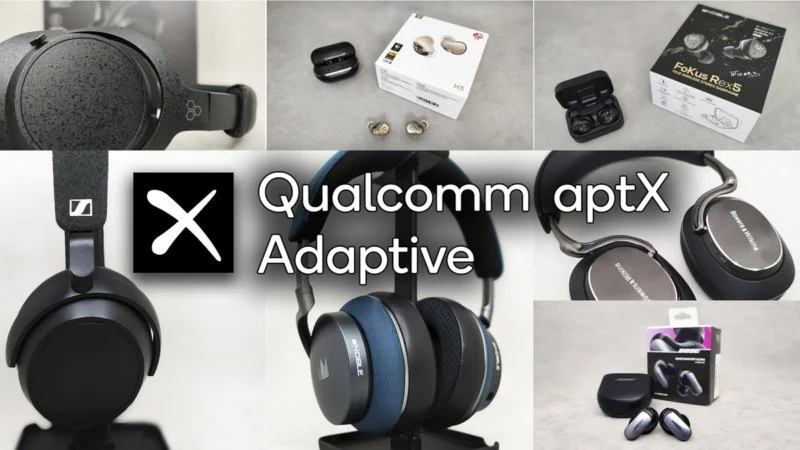
This is the TOP 15 best-tested wireless earbuds and TWS and over-ear headphones featuring AptX Adaptive and AptX Lossless codecs. Both codecs are Qualcomm’s, so only phones and tablets with Snapdragon chips support them. Devices running MediaTek, Samsung’s Exynos, Huawei’s HiSilicon Kirin, and Google’s Tensor platforms won’t support these codecs now or in the foreseeable future.
You can check aptX series codec compatibility for Bluetooth headphones, phones, and other devices on the official Qualcomm website.
Which codec is better: aptX, aptX HD, aptX Adaptive, or aptX Lossless?
More detailsHere’s a comparison table of the main codec parameters:
| Launch year | < 2009 | 2016 | 2018 | 2021 |
| Bitrate | 352 kbps | 576 kbps | 279–420 kbps (dynamic) | ~1.1–1.2 Mbps (dynamic, up to 860 kbps lossy + lossless layer) |
| Bit depth | 16-bit | 24-bit | 16 / 24-bit | 16 / 24-bit |
| Sample rate | 44.1 / 48 kHz | 44.1 / 48 kHz | 44.1 / 48 / 96 kHz | 44.1 / 48 / 96 kHz |
| Compression type | Lossy (4:1) | Lossy (4:1) | Lossy (5:1–10:1, adaptive) | Lossless CD (16/44.1) + lossy Hi-Res |
| Signal latency | ~150–200 ms | ~150–200 ms | ≈ 50–80 ms | ~80 ms |
| aptX Voice | No | No | Yes | Yes |
As you can see from the table, aptX Lossless is the best codec. However, aptX Lossless isn’t a standalone codec but an add-on for aptX Adaptive. You won’t find sound quality settings in Android, and aptX Lossless only activates under specific conditions:
- Your phone and headphones must support Snapdragon Sound.
- You need clear airwaves with no Bluetooth or Wi-Fi interference.
- The aptX Lossless option must be enabled, if your phone even has such a setting.
If these conditions aren’t met, and you only have one chip with aptX Lossless support, your audio will stream via the aptX Adaptive codec. aptX Adaptive also activates when interference is present. Often, nearby Wi-Fi hotspots in apartment buildings are enough to trigger it.
More about audio codecs.
How to get aptX Adaptive or aptX Lossless?
More detailsIf your headphones support the required codec but your phone, tablet, or PC doesn’t, you can use a USB adapter. These adapters, about the size of a Bluetooth dongle, plug into your phone or PC’s port. Your headphones then connect to the adapter, receiving the signal with the appropriate codec.
Which adapter to choose?
- QCC Dongle Pro2 – if you need it all at once. The adapter supports: LHDC 5.0, LDAC, aptX Adaptive, aptX HD, aptX Lossless; LE Audio and Auracast are declared.
- FiiO Air Link – a universal adapter, only cheaper. Codec support: SBC, aptX, aptX Low Latency, aptX HD, aptX Adaptive, LDAC, and aptX Lossless.
- 1Mii B03Pro: A desktop transmitter/receiver. Supports SBC, AAC, aptX, aptX HD, aptX LL, and aptX Adaptive.
- UGREEN BT701: A compact, universal option. Supports Classic Bluetooth: SBC, aptX, aptX HD, aptX Adaptive-LL, aptX Adaptive-HQ. LE Audio: Auracast, Unicast-Low Latency, Unicast-Lossless.
- UGREEN BT501: A simplified version of the BT701. Supports SBC, aptX, aptX Low Latency, aptX HD, and aptX Adaptive.
Check out more USB adapters in our ranking — Best Bluetooth Adapters for Computers and Headphones.
EMMA — Experts + Methodology + MyChoozers + Algorithm.
Every model goes through identical tests; the score is calculated automatically with fixed weights — a spot in the rating cannot be bought.
TOP 15: Best Wireless Headphones with AptX Adaptive and AptX Lossless Codecs – Ranking
1. Sennheiser MOMENTUM 4 Wireless 9.09Best wireless over-ear headphones – for sound and features
Drivers are the drivers in your headphones that are responsible for creating sound.
DD + PM + BA – means that there are several different types of drivers in these headphones.
DD – “Dynamic Driver” dynamic driver (deep bass, natural sound).
PM – “Planar Magnetic Driver” planar driver (wide soundstage and fast response).
BA – “Balanced Armature Driver” armature driver (accuracy and detail retrieval).
BC – “Bone Conduction Driver” or bone-conduction driver, which transmits vibration to the body of the headphones, transmitting sound through the bone/cartilage to the inner ear.
LDAC – high quality, high speed (Sony).
SBC is the basic Bluetooth standard, low quality.
AAC – Apple standard, good quality, low latency.
aptX – Qualcomm standard, good quality, low latency.
LC3/LC3plus – new Bluetooth LE Audio codecs, efficient compression.
Codecs are audio compression formats that affect sound quality and latency.
Headphone battery life is the playback time without recharging, measured in hours. Manufacturers measure without active noise cancellation (ANC), at medium volume (50-70%) and usually with the AAC codec, as these parameters affect battery consumption. Actual time may vary from 1% to 50%, depending on volume, active noise cancellation features enabled, codec (LDAC or other) and environmental conditions (cold, hot). It is important to consider not only the claimed playback time, but also the charging time and fast charging support.
Bluetooth is a wireless data transmission standard.
Support for new audio technologies.
Improved connection stability.
Reduced power consumption.
Sennheiser Momentum 4 Wireless — these are the best wireless over-ear headphones, with three main selling points: excellent sound under $300, top-tier noise cancellation, and a durable, reliable build. With aptX HD and aptX Adaptive, the sound improvement is only about 10-15% because the sound system already performs at its peak. On the downside, they have above-average clamping force and require a short break-in period after 1-2 hours of use.
- Best sound under $300
- Top-tier noise cancellation and reference-level transparency.
- Detailed microphone
- Sturdy and reliable build
- Ear cups press too firmly
The final sound score is calculated using this formula:
Frequency balance + Detail retrieval + Soundstage + Natural timbre / 4 = Final Sound Score.
. 9.55 These headphones deliver the best sound quality of any over-ear model under $300. You get a pleasing bass-heavy sound with an intimate mid-range and moderately bright highs. The soundstage is spacious and full-bodied, completely free of artificial timbre or noticeable grain. Detail retrieval is sharp enough to catch micro-details. A few minor drawbacks include a slight excess in the bass, a shortfall in the highs, and a touch less transparency.Read more.
Microphone – We assess speech transmission quality by testing the microphone in two main scenarios: quiet and noisy environments.
Quiet environment – This involves recording indoors with minimal background noise. Noisy environment – This means recording outdoors near a six-lane road with maximum traffic noise.
. 9.25 In quiet conditions: 9.5 In noisy conditions: 9 These headphones feature 4 microphones, with 2 in each ear cup. Voice on recordings sounds detailed. In noisy environments, quality drops a bit while staying clear.Overall feature score — this is the overall score for all device features. This score comes from individual feature ratings (battery life, controls, app, connection stability, and others) and shows how easy and smart the device is for daily use.
. 8.83 Active noise cancellation is top-tier and leaves sound quality untouched. The transparency mode comes close to reference-quality. Up to 60 hours of battery life will easily carry you through a week of active listening. Controls are hybrid and mostly gesture-based on the right ear cup. Navigation feels convenient, though it takes a couple of days to get the hang of it. The app is useful: you can turn on the aptX codec on Android, tweak the EQ, and adjust the ambient mode.Read more.
Final build quality score is the overall score for build quality and materials: comfort, durability, and design. It shows how nice the device is to hold and use, and how long it will last.
. 8.33 Build quality feels sturdy and reliable, though the finish picks up fingerprints rather easily. The clamping force is above average, which is fine for 1 to 2 hours of use before you feel the need to take a break. The headphones look good and come in 5 colors.Read more.
2. Noble Audio Fokus REX5 8.43Best wireless TWS earbuds – #1 for sound quality
Drivers are the drivers in your headphones that are responsible for creating sound.
DD + PM + BA – means that there are several different types of drivers in these headphones.
DD – “Dynamic Driver” dynamic driver (deep bass, natural sound).
PM – “Planar Magnetic Driver” planar driver (wide soundstage and fast response).
BA – “Balanced Armature Driver” armature driver (accuracy and detail retrieval).
BC – “Bone Conduction Driver” or bone-conduction driver, which transmits vibration to the body of the headphones, transmitting sound through the bone/cartilage to the inner ear.
LDAC – high quality, high speed (Sony).
SBC is the basic Bluetooth standard, low quality.
AAC – Apple standard, good quality, low latency.
aptX – Qualcomm standard, good quality, low latency.
LC3/LC3plus – new Bluetooth LE Audio codecs, efficient compression.
Codecs are audio compression formats that affect sound quality and latency.
Headphone battery life is the playback time without recharging, measured in hours. Manufacturers measure without active noise cancellation (ANC), at medium volume (50-70%) and usually with the AAC codec, as these parameters affect battery consumption. Actual time may vary from 1% to 50%, depending on volume, active noise cancellation features enabled, codec (LDAC or other) and environmental conditions (cold, hot). It is important to consider not only the claimed playback time, but also the charging time and fast charging support.
Bluetooth is a wireless data transmission standard.
Support for new audio technologies.
Improved connection stability.
Reduced power consumption.
Noble Audio Fokus REX5: These are the best wireless TWS earbuds and rank #1 for sound quality on MyChooz. The main reason to buy them is their reference-level sound in key areas: detail retrieval, naturalness, and soundstage. They outperformed the Technics EAH-AZ100 in sound, and the five drivers in each earbud aren’t just for show. You will need to tweak the sound with an equalizer, though. We’ll cover sound tuning and ear tip selection in the full review. Downsides include noise cancellation, transparency, and microphone quality that are on par with models under $100.
Overall, these earbuds are for anyone seeking the absolute best in-ear TWS earbuds with uncompromisingly superior sound.
- Best sound quality, reference-quality detail retrieval among true wireless models
- Metal charging case and earbud body
- 2 EQs with combinable settings; Audiodo personal sound tuning
- Fit relies heavily on ear tips. You have to adjust the earbuds if the ear tips don’t fit right
- Earbuds quickly cool down in cold weather
- Average feature set
The final sound score is calculated using this formula:
Frequency balance + Detail retrieval + Soundstage + Natural timbre / 4 = Final Sound Score.
. 9.29 Noble FoKus REX5 provided the highest sound quality among all earbuds I’ve ever heard. It is now the reference, 0.5 points better than the Technics EAH-AZ100. But not a reference in every single aspect. The overall picture is wide, detailed, bright, and clean, with a 3D effect. Among the strengths: reference-grade midrange, reference-grade detail retrieval, and soundstage for earbuds. There are flaws in the sound, the main one being that high frequencies sometimes start to get piercing.Read more.
Microphone – We assess speech transmission quality by testing the microphone in two main scenarios: quiet and noisy environments.
Quiet environment – This involves recording indoors with minimal background noise. Noisy environment – This means recording outdoors near a six-lane road with maximum traffic noise.
. 7.50 In quiet conditions: 8 In noisy conditions: 7Overall feature score — this is the overall score for all device features. This score comes from individual feature ratings (battery life, controls, app, connection stability, and others) and shows how easy and smart the device is for daily use.
. 7.40 Active noise cancellation suppresses light background noise, while transparency mode is barely adequate for a comfortable conversation. Battery life in our tests ranged from 4.5 to 7.5 hours depending on the codec used. Touch controls support 3 actions: play/pause, track switching, and volume control. The app keeps things simple: it includes 2 EQs and a personal sound tuning feature.Read more.
Final build quality score is the overall score for build quality and materials: comfort, durability, and design. It shows how nice the device is to hold and use, and how long it will last.
. 7.83 It is important to pick the right ear tips for these earbuds since the primary hold relies on them. Otherwise, the earbuds are comfortable, and there is no discomfort after 2 hours of use. The build is metal, with no complaints about manufacturing or materials. The appearance is neat and appealing, and the vibrant color scheme is not off-putting.Read more.
3. Bowers & Wilkins PX8 S2 8.41Large over-ear Bluetooth headphones – stylish and with a bright sound
Drivers are the drivers in your headphones that are responsible for creating sound.
DD + PM + BA – means that there are several different types of drivers in these headphones.
DD – “Dynamic Driver” dynamic driver (deep bass, natural sound).
PM – “Planar Magnetic Driver” planar driver (wide soundstage and fast response).
BA – “Balanced Armature Driver” armature driver (accuracy and detail retrieval).
BC – “Bone Conduction Driver” or bone-conduction driver, which transmits vibration to the body of the headphones, transmitting sound through the bone/cartilage to the inner ear.
LDAC – high quality, high speed (Sony).
SBC is the basic Bluetooth standard, low quality.
AAC – Apple standard, good quality, low latency.
aptX – Qualcomm standard, good quality, low latency.
LC3/LC3plus – new Bluetooth LE Audio codecs, efficient compression.
Codecs are audio compression formats that affect sound quality and latency.
Headphone battery life is the playback time without recharging, measured in hours. Manufacturers measure without active noise cancellation (ANC), at medium volume (50-70%) and usually with the AAC codec, as these parameters affect battery consumption. Actual time may vary from 1% to 50%, depending on volume, active noise cancellation features enabled, codec (LDAC or other) and environmental conditions (cold, hot). It is important to consider not only the claimed playback time, but also the charging time and fast charging support.
Bluetooth is a wireless data transmission standard.
Support for new audio technologies.
Improved connection stability.
Reduced power consumption.
Bowers & Wilkins PX8 S2: These large over-ear Bluetooth headphones offer deep bass and a bright sound profile. The main reason to buy them is their top-tier sound – detailed and natural, combined with premium materials and a robust, reliable construction. This model has no critical drawbacks.
- Top-tier sound — detailed and natural
- Premium quality materials
- Sturdy and reliable build
- Transparency mode and microphone noise cancellation above average.
The final sound score is calculated using this formula:
Frequency balance + Detail retrieval + Soundstage + Natural timbre / 4 = Final Sound Score.
. 8.67 High-frequency with a cold tint. Bass is accurate and detailed, and instruments are distinguishable by timbre. High-frequency instruments are clear, just harsh and quickly fatiguing — this is the most significant flaw in the sound. Furthermore, the soundstage felt insufficiently spacious. Mids are pleasant — the sound is open, and the vocalist sings right in front of you, with a minimal lack of transparency. There is no noticeable artificiality or grain in the sound.Read more.
Microphone – We assess speech transmission quality by testing the microphone in two main scenarios: quiet and noisy environments.
Quiet environment – This involves recording indoors with minimal background noise. Noisy environment – This means recording outdoors near a six-lane road with maximum traffic noise.
. 7.75 In quiet conditions: 8.5 In noisy conditions: 7Overall feature score — this is the overall score for all device features. This score comes from individual feature ratings (battery life, controls, app, connection stability, and others) and shows how easy and smart the device is for daily use.
. 7.98 Noise cancellation suppresses up to about 40% of noise. In transparency mode, you can chat, although surroundings are slightly muffled. Button controls for basic player navigation and call management. In the proprietary app, the only useful features are a 5-band EQ and linking music streaming services.Read more.
Final build quality score is the overall score for build quality and materials: comfort, durability, and design. It shows how nice the device is to hold and use, and how long it will last.
. 8.40 The headphones feature medium clamp force on the ear cups, and you will want to take a break after roughly 2-3 hours of use. Premium quality materials — leather and metal, no complaints about the build. The headphones look nice, with 2 colors to choose from.Read more.
4. Sennheiser Momentum True Wireless 4 8.17Wireless Bluetooth headphones for $299 — balanced sound and features
Drivers are the drivers in your headphones that are responsible for creating sound.
DD + PM + BA – means that there are several different types of drivers in these headphones.
DD – “Dynamic Driver” dynamic driver (deep bass, natural sound).
PM – “Planar Magnetic Driver” planar driver (wide soundstage and fast response).
BA – “Balanced Armature Driver” armature driver (accuracy and detail retrieval).
BC – “Bone Conduction Driver” or bone-conduction driver, which transmits vibration to the body of the headphones, transmitting sound through the bone/cartilage to the inner ear.
LDAC – high quality, high speed (Sony).
SBC is the basic Bluetooth standard, low quality.
AAC – Apple standard, good quality, low latency.
aptX – Qualcomm standard, good quality, low latency.
LC3/LC3plus – new Bluetooth LE Audio codecs, efficient compression.
Codecs are audio compression formats that affect sound quality and latency.
Headphone battery life is the playback time without recharging, measured in hours. Manufacturers measure without active noise cancellation (ANC), at medium volume (50-70%) and usually with the AAC codec, as these parameters affect battery consumption. Actual time may vary from 1% to 50%, depending on volume, active noise cancellation features enabled, codec (LDAC or other) and environmental conditions (cold, hot). It is important to consider not only the claimed playback time, but also the charging time and fast charging support.
Bluetooth is a wireless data transmission standard.
Support for new audio technologies.
Improved connection stability.
Reduced power consumption.
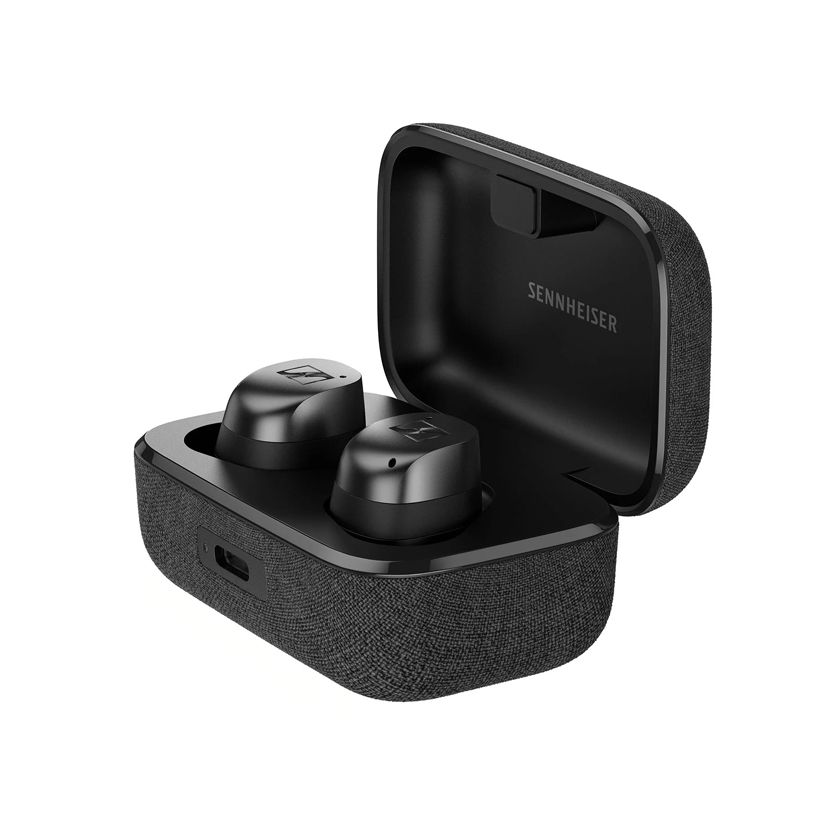
Sennheiser Momentum True Wireless 4 are wireless Bluetooth earbuds for those who have the aptX codec on their phone and prefer a balanced sound that isn’t overly bass-heavy. The sound is natural and detailed, with a decent soundstage. Bass is punchy and natural, and the highs are bright, though they can sometimes be a bit much on certain tracks. They offer good ANC, excellent transparency mode, good microphones, an excellent app, controls, and battery life. If you’re after balanced sound, the Sennheiser Momentum True Wireless 4 are great wireless earbuds you’ll enjoy.
- Pleasant and engaging sound
- Sturdy and reliable build
- Top-tier transparency mode
- Background noise in transparency mode and a rustling sound.
- “Bud” form factor won’t suit everyone in terms of comfort.
The final sound score is calculated using this formula:
Frequency balance + Detail retrieval + Soundstage + Natural timbre / 4 = Final Sound Score.
. 8.19 This is the best option for those looking for a balance of analytical sound and musicality. Best suited for genres: classical, folk, blues, jazz, instrumentals, vocals, etc. The sound turned out top-tier, excellent, though not quite the absolute best. The headphones made it into the 8+ rating league. Sennheiser took steps in the right direction compared to the 3rd version. After properly choosing your ear tips and using the aptX Adaptive codec, you will get sound that you will thoroughly enjoy.Read more.
Microphone – We assess speech transmission quality by testing the microphone in two main scenarios: quiet and noisy environments.
Quiet environment – This involves recording indoors with minimal background noise. Noisy environment – This means recording outdoors near a six-lane road with maximum traffic noise.
. 8.00 In quiet conditions: 9 In noisy conditions: 7Overall feature score — this is the overall score for all device features. This score comes from individual feature ratings (battery life, controls, app, connection stability, and others) and shows how easy and smart the device is for daily use.
. 8.21 Active noise cancellation mostly suppresses low-frequency noise, and the transparency mode is comfortable. Playback time is 7.5 hours and 30 hours with the charging case. Touch controls handle 4 actions for each headphone: for media and ambient control. The app is convenient, functional, and regularly updated.Read more.
Final build quality score is the overall score for build quality and materials: comfort, durability, and design. It shows how nice the device is to hold and use, and how long it will last.
. 8.07 The headphones are large, and the bud form factor won’t suit everyone. No complaints about build quality and materials, the construction is sturdy and reliable. They look good, without causing much excitement. Choice of 4 colors.Read more.
5. Bose QuietComfort Ultra Earbuds 8.10Best wireless headphones with noise cancellation – for sports
Drivers are the drivers in your headphones that are responsible for creating sound.
DD + PM + BA – means that there are several different types of drivers in these headphones.
DD – “Dynamic Driver” dynamic driver (deep bass, natural sound).
PM – “Planar Magnetic Driver” planar driver (wide soundstage and fast response).
BA – “Balanced Armature Driver” armature driver (accuracy and detail retrieval).
BC – “Bone Conduction Driver” or bone-conduction driver, which transmits vibration to the body of the headphones, transmitting sound through the bone/cartilage to the inner ear.
LDAC – high quality, high speed (Sony).
SBC is the basic Bluetooth standard, low quality.
AAC – Apple standard, good quality, low latency.
aptX – Qualcomm standard, good quality, low latency.
LC3/LC3plus – new Bluetooth LE Audio codecs, efficient compression.
Codecs are audio compression formats that affect sound quality and latency.
Headphone battery life is the playback time without recharging, measured in hours. Manufacturers measure without active noise cancellation (ANC), at medium volume (50-70%) and usually with the AAC codec, as these parameters affect battery consumption. Actual time may vary from 1% to 50%, depending on volume, active noise cancellation features enabled, codec (LDAC or other) and environmental conditions (cold, hot). It is important to consider not only the claimed playback time, but also the charging time and fast charging support.
Bluetooth is a wireless data transmission standard.
Support for new audio technologies.
Improved connection stability.
Reduced power consumption.
Bose QuietComfort Ultra Earbuds — the best noise-canceling earbuds of 2025 among TWS models and a benchmark on mychooz.com. The main reasons to buy: benchmark noise cancellation, pleasant bassy sound, a comfortable fit for sports, and the best spatial audio mode. With the aptX Adaptive codec, sound quality improves by up to 15%. Downsides include poor microphone noise cancellation and an inconvenient proprietary app.
- Reference-quality active noise cancellation (ANC) among true wireless earbuds
- Top-tier low-frequency sound
- Best Spatial Audio performance
- Comfortable fit for running and sports
- Poor microphone active noise cancellation (ANC)
- Clunky app
- IPx4 dust and water resistance. No case protection.
The final sound score is calculated using this formula:
Frequency balance + Detail retrieval + Soundstage + Natural timbre / 4 = Final Sound Score.
. 8.26 Bass-heavy, with a slight excess of bass and mids. You can tweak the sound in the app EQ to get a comfortable listening experience. Vocals and instruments are clear, with no noticeable digital processing or grain. The soundstage only feels somewhat enclosed, just a bit wider than your head. Still, you get width and depth with good instrument separation.Read more.
Microphone – We assess speech transmission quality by testing the microphone in two main scenarios: quiet and noisy environments.
Quiet environment – This involves recording indoors with minimal background noise. Noisy environment – This means recording outdoors near a six-lane road with maximum traffic noise.
. 6.50 In quiet conditions: 9 In noisy conditions: 4 Each earbud has 4 microphones and features active noise cancellation (ANC). In a quiet room, recordings are detailed and clear, with a slight echo. In noisy conditions with a handheld vacuum cleaner, the voice is unintelligible, as the ANC struggles. An additional road noise test will follow later.Overall feature score — this is the overall score for all device features. This score comes from individual feature ratings (battery life, controls, app, connection stability, and others) and shows how easy and smart the device is for daily use.
. 7.92 The earBuds FEature reference-quality active noise cancellation (ANC), and the transparency mode is on par with the reference. Claimed battery life is 6 hours and 24 hours with the charging case. Controls are convenient, allowing you to perform basic playback actions. The app is clunky, and features are duplicated 2-3 times. Connection stability is solid, though with aptX Adaptive, occasional dropouts happen at a distance of 8-9 meters.Read more.
Final build quality score is the overall score for build quality and materials: comfort, durability, and design. It shows how nice the device is to hold and use, and how long it will last.
. 8.00 The earbuds fit snugly in your ears and do not fall out while running or working out. After 2-3 hours of use, minor fatigue sets in. No complaints about materials and build quality, except for the glossy finish which is a fingerprint magnet and gets dirty quickly. The earbuds look good, though they do not spark any particular excitement.Read more.
6. EarFun Air Pro 4 Plus 8.09BEST TWS Earbuds Under $100 with LDAC and AptX Codecs
Drivers are the drivers in your headphones that are responsible for creating sound.
DD + PM + BA – means that there are several different types of drivers in these headphones.
DD – “Dynamic Driver” dynamic driver (deep bass, natural sound).
PM – “Planar Magnetic Driver” planar driver (wide soundstage and fast response).
BA – “Balanced Armature Driver” armature driver (accuracy and detail retrieval).
BC – “Bone Conduction Driver” or bone-conduction driver, which transmits vibration to the body of the headphones, transmitting sound through the bone/cartilage to the inner ear.
LDAC – high quality, high speed (Sony).
SBC is the basic Bluetooth standard, low quality.
AAC – Apple standard, good quality, low latency.
aptX – Qualcomm standard, good quality, low latency.
LC3/LC3plus – new Bluetooth LE Audio codecs, efficient compression.
Codecs are audio compression formats that affect sound quality and latency.
Headphone battery life is the playback time without recharging, measured in hours. Manufacturers measure without active noise cancellation (ANC), at medium volume (50-70%) and usually with the AAC codec, as these parameters affect battery consumption. Actual time may vary from 1% to 50%, depending on volume, active noise cancellation features enabled, codec (LDAC or other) and environmental conditions (cold, hot). It is important to consider not only the claimed playback time, but also the charging time and fast charging support.
Bluetooth is a wireless data transmission standard.
Support for new audio technologies.
Improved connection stability.
Reduced power consumption.
The main reason to buy: detailed sound with superb vocal reproduction and excellent naturalness. The app offers sound customization. They include LDAC and 3 aptX codecs, plus a translator for 146 languages and dialects. The earbuds are sensitive to EQ settings, so you’ll want to adjust the sound. In many aspects, these earbuds outperform the Realme Buds Air 7 Pro, which is significant. Downsides: average noise cancellation and transparency, and the controls might not be to your liking.
- Detailed sound
- Sound settings: 10-band EQ, preset modes, custom tuning
- Translator for 165 languages and dialects
- LDAC and 3 aptX Bluetooth codecs
- Treble is a bit harsh
- The balanced armature driver occasionally resonates
- Battery life is shorter than claimed
The final sound score is calculated using this formula:
Frequency balance + Detail retrieval + Soundstage + Natural timbre / 4 = Final Sound Score.
. 8.33 The strong suit of the EarFun Air Pro 4 Plus is its stunning vocal delivery across almost any track. If you want an emotional, lively, and soul-stirring performance, the Air Pro 4 Plus delivers. Natural timbre is also top-notch despite a slightly cool tint from the balanced armature driver. Among the weaknesses, I would point out the narrow soundstage, which leads to minor yet noticeable issues with detail retrieval and proper instrument separation across the soundstage. The headphones also lack a bit of bass, which is easily fixed via the EQ, with rock being the best preset for it.Read more.
Microphone – We assess speech transmission quality by testing the microphone in two main scenarios: quiet and noisy environments.
Quiet environment – This involves recording indoors with minimal background noise. Noisy environment – This means recording outdoors near a six-lane road with maximum traffic noise.
. 7.50 In quiet conditions: 8 In noisy conditions: 7Overall feature score — this is the overall score for all device features. This score comes from individual feature ratings (battery life, controls, app, connection stability, and others) and shows how easy and smart the device is for daily use.
. 7.63 Active noise cancellation works well, suppressing about 40-50% of low-frequency noise. Transparency mode provides good audibility. When talking through the headphones, you get a plugged-ear sensation, and your own voice heavily echoes inside your head via bone conduction. Battery life in our tests reached up to 10 hours using the codec, plus an extra 30 hours with the case. Touch controls support 4 taps per earbud. The companion app is user-friendly and features a translator supporting 146 languages and dialects.Read more.
Final build quality score is the overall score for build quality and materials: comfort, durability, and design. It shows how nice the device is to hold and use, and how long it will last.
. 8.17 The headphones are comfortable, with minor fatigue setting in after a couple of hours of use. No complaints about build quality and materials. The headphones look nice without eliciting any special excitement. Available in 3 colors.Read more.
7. CREATIVE Aurvana Ace 2 7.97Best TWS Earbuds Under $100 with AptX Lossless and AptX Adaptive Codecs
Drivers are the drivers in your headphones that are responsible for creating sound.
DD + PM + BA – means that there are several different types of drivers in these headphones.
DD – “Dynamic Driver” dynamic driver (deep bass, natural sound).
PM – “Planar Magnetic Driver” planar driver (wide soundstage and fast response).
BA – “Balanced Armature Driver” armature driver (accuracy and detail retrieval).
BC – “Bone Conduction Driver” or bone-conduction driver, which transmits vibration to the body of the headphones, transmitting sound through the bone/cartilage to the inner ear.
LDAC – high quality, high speed (Sony).
SBC is the basic Bluetooth standard, low quality.
AAC – Apple standard, good quality, low latency.
aptX – Qualcomm standard, good quality, low latency.
LC3/LC3plus – new Bluetooth LE Audio codecs, efficient compression.
Codecs are audio compression formats that affect sound quality and latency.
Headphone battery life is the playback time without recharging, measured in hours. Manufacturers measure without active noise cancellation (ANC), at medium volume (50-70%) and usually with the AAC codec, as these parameters affect battery consumption. Actual time may vary from 1% to 50%, depending on volume, active noise cancellation features enabled, codec (LDAC or other) and environmental conditions (cold, hot). It is important to consider not only the claimed playback time, but also the charging time and fast charging support.
Bluetooth is a wireless data transmission standard.
Support for new audio technologies.
Improved connection stability.
Reduced power consumption.
The main reason to buy: top-tier sound with an equalizer for analytical listeners and various music genres. They feature the aptX Lossless codec, a pleasant aesthetic, and good noise cancellation with the right ear tips. Significant drawbacks include weak functionality: a mediocre transparency mode, inconvenient controls, a limited app, no auto-pause, and no dual connection.
- Top-tier sound with EQ
- Good active noise cancellation if you pick the right ear tips
- Average transparency mode
- Inconvenient controls
- The only truly useful feature in the app is the EQ.
- No auto-pause and no multipoint connection
The final sound score is calculated using this formula:
Frequency balance + Detail retrieval + Soundstage + Natural timbre / 4 = Final Sound Score.
. 8.63 The headphones offer bright highs, natural timbre, and a good soundstage. On the downside, they lack punchy, textured bass and have recessed mids, making vocals sound distant. While the model has EQ potential, even a preset can’t fully fix the midrange issue.Read more.
Microphone – We assess speech transmission quality by testing the microphone in two main scenarios: quiet and noisy environments.
Quiet environment – This involves recording indoors with minimal background noise. Noisy environment – This means recording outdoors near a six-lane road with maximum traffic noise.
. 7.00 In quiet conditions: 8 In noisy conditions: 6Overall feature score — this is the overall score for all device features. This score comes from individual feature ratings (battery life, controls, app, connection stability, and others) and shows how easy and smart the device is for daily use.
. 6.92 Active noise cancellation effectively blocks background noise if you use the right ear tips. However, transparency mode is average and not ideal for conversations. Battery life in our tests reached up to 6 hours for the headphones and 28 hours with the charging case. The touch controls require three taps per headphone, which is inconvenient, and the app is basic.Read more.
Final build quality score is the overall score for build quality and materials: comfort, durability, and design. It shows how nice the device is to hold and use, and how long it will last.
. 7.90 The fit is good, and the headphones don’t cause pressure, though minor fatigue sets in after 30-40 minutes. Build quality is average; the plastic thickness feels a bit thin. There are no defects, but micro-scratches appear within the first week. Only one color option is available: transparent copper.Read more.
8. Bose QuietComfort Ultra Headphones 7.73Best Over-Ear Headphones for Noise Cancellation Under $300
Drivers are the drivers in your headphones that are responsible for creating sound.
DD + PM + BA – means that there are several different types of drivers in these headphones.
DD – “Dynamic Driver” dynamic driver (deep bass, natural sound).
PM – “Planar Magnetic Driver” planar driver (wide soundstage and fast response).
BA – “Balanced Armature Driver” armature driver (accuracy and detail retrieval).
BC – “Bone Conduction Driver” or bone-conduction driver, which transmits vibration to the body of the headphones, transmitting sound through the bone/cartilage to the inner ear.
LDAC – high quality, high speed (Sony).
SBC is the basic Bluetooth standard, low quality.
AAC – Apple standard, good quality, low latency.
aptX – Qualcomm standard, good quality, low latency.
LC3/LC3plus – new Bluetooth LE Audio codecs, efficient compression.
Codecs are audio compression formats that affect sound quality and latency.
Headphone battery life is the playback time without recharging, measured in hours. Manufacturers measure without active noise cancellation (ANC), at medium volume (50-70%) and usually with the AAC codec, as these parameters affect battery consumption. Actual time may vary from 1% to 50%, depending on volume, active noise cancellation features enabled, codec (LDAC or other) and environmental conditions (cold, hot). It is important to consider not only the claimed playback time, but also the charging time and fast charging support.
Bluetooth is a wireless data transmission standard.
Support for new audio technologies.
Improved connection stability.
Reduced power consumption.
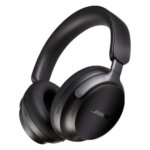
Bose QuietComfort Ultra Headphones: These are the best over-ear headphones for noise cancellation under $200. They offer the best spatial audio, a benchmark transparency mode, and detailed sound via cable. With the aptX Adaptive codec, sound improvement reaches up to 20%. Downsides include the need for EQ adjustment, with recommendations provided in the review.
- Best active noise cancellation under $200
- Reference-level transparency
- Top-tier wired sound
- Reference spatial audio
- EQ tuning required for best sound
- Weak microphone noise suppression
The final sound score is calculated using this formula:
Frequency balance + Detail retrieval + Soundstage + Natural timbre / 4 = Final Sound Score.
. 7.58 The sound leans heavily on bass emphasis. A lack of transparency and airiness leaves the audio somewhat muffled and insufficiently bright, yet the artist sings right in front of you as if standing close. The sound remains natural and free of glaring artificial timbre, apart from a touch of grain on the cymbals. Detail retrieval suffices to render texture, and the soundstage boasts good instrument separation and width.Read more.
Microphone – We assess speech transmission quality by testing the microphone in two main scenarios: quiet and noisy environments.
Quiet environment – This involves recording indoors with minimal background noise. Noisy environment – This means recording outdoors near a six-lane road with maximum traffic noise.
. 7.00 In quiet conditions: 9 In noisy conditions: 5 Recording in quiet environments stays clear, while noisy environments see poor suppression of background noise.Overall feature score — this is the overall score for all device features. This score comes from individual feature ratings (battery life, controls, app, connection stability, and others) and shows how easy and smart the device is for daily use.
. 8.13 These headphones pack top-tier active noise cancellation and transparency alongside a detailed microphone for quiet environments and weak suppression of loud noise. Battery life stretches up to 18 hours with maximum active noise cancellation enabled. Controls are convenient thanks to volume swipe gestures, and the companion app is decent enough to warrant downloading for EQ and ANC adjustments, while the connection remains stable within 10 m.Read more.
Final build quality score is the overall score for build quality and materials: comfort, durability, and design. It shows how nice the device is to hold and use, and how long it will last.
. 7.50 The ear cups clamp down tightly, prompting you to take a break after an hour. Dust and water resistance isn’t stated, the build looks sturdy and reliable, and the finish acts as a fingerprint magnet that proves difficult to clean, though they are available in 5 colors.Read more.
9. EarFun Air Pro 4 7.66Best TWS Earbuds with 2 Codec Families – LDAC and aptX Lossless
Drivers are the drivers in your headphones that are responsible for creating sound.
DD + PM + BA – means that there are several different types of drivers in these headphones.
DD – “Dynamic Driver” dynamic driver (deep bass, natural sound).
PM – “Planar Magnetic Driver” planar driver (wide soundstage and fast response).
BA – “Balanced Armature Driver” armature driver (accuracy and detail retrieval).
BC – “Bone Conduction Driver” or bone-conduction driver, which transmits vibration to the body of the headphones, transmitting sound through the bone/cartilage to the inner ear.
LDAC – high quality, high speed (Sony).
SBC is the basic Bluetooth standard, low quality.
AAC – Apple standard, good quality, low latency.
aptX – Qualcomm standard, good quality, low latency.
LC3/LC3plus – new Bluetooth LE Audio codecs, efficient compression.
Codecs are audio compression formats that affect sound quality and latency.
Headphone battery life is the playback time without recharging, measured in hours. Manufacturers measure without active noise cancellation (ANC), at medium volume (50-70%) and usually with the AAC codec, as these parameters affect battery consumption. Actual time may vary from 1% to 50%, depending on volume, active noise cancellation features enabled, codec (LDAC or other) and environmental conditions (cold, hot). It is important to consider not only the claimed playback time, but also the charging time and fast charging support.
Bluetooth is a wireless data transmission standard.
Support for new audio technologies.
Improved connection stability.
Reduced power consumption.
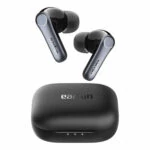
EarFun Air Pro 4 — the best TWS earbuds featuring two popular audio codec families: LDAC and aptX Lossless. The main reason to buy: a well-balanced model without critical flaws. They offer a bronze-league sound level with tuning potential, benchmark battery life, a user-friendly app, and include LDAC and aptX codecs, plus a spacious charging case. Downsides include a bright out-of-the-box sound, the proprietary app uses up to 1 GB of RAM, and poor microphone noise cancellation.
- Good sound with tuning potential
- LDAC and aptX codecs
- Reference-quality battery life
- Spacious case
- Out of the box, the high-frequency tuning is bright.
- The EarFun Audio app uses 1 GB of RAM on Android.
- Poor microphone in noisy conditions
The final sound score is calculated using this formula:
Frequency balance + Detail retrieval + Soundstage + Natural timbre / 4 = Final Sound Score.
. 7.63 The sound’s main strengths are its flat presentation, good natural timbre, and detail retrieval. The primary weakness is bright highs, which can become fatiguing during long listening sessions. The sound signature is slightly colored and a bit unnatural, with a slight deficiency in the low end and detail loss in busy tracks.Read more.
Microphone – We assess speech transmission quality by testing the microphone in two main scenarios: quiet and noisy environments.
Quiet environment – This involves recording indoors with minimal background noise. Noisy environment – This means recording outdoors near a six-lane road with maximum traffic noise.
. 5.85 In quiet conditions: 7.7 In noisy conditions: 4 The microphone provides detailed voice reproduction in quiet conditions, with occasional barely noticeable clicks. In noisy environments, your voice is significantly suppressed.Overall feature score — this is the overall score for all device features. This score comes from individual feature ratings (battery life, controls, app, connection stability, and others) and shows how easy and smart the device is for daily use.
. 7.33 Active noise cancellation blocks about 40-50% of low-frequency noise. In transparency mode, outside sounds come through, but talking is inconvenient. Playback time in our tests exceeded the claimed figures, reaching up to 11 h 29 min and 58 hours total with the charging case. Touch controls feature 4 taps per earbud. The app is convenient, yet poorly optimized and uses up to 1 GB of RAM.Read more.
Final build quality score is the overall score for build quality and materials: comfort, durability, and design. It shows how nice the device is to hold and use, and how long it will last.
. 8.23 The earbuds are comfortable with the included ear tips, though minor fatigue sets in after an hour. No complaints about build quality and materials, though the coating attracts some fingerprints and the seams are visible at the joints. Both the earbuds and the case feel sturdy in your hands. They also look good and come in 5 different colors.Read more.
10. Edifier STAX Spirit S5 7.63Best Headphones for Number of Audio Codecs
Drivers are the drivers in your headphones that are responsible for creating sound.
DD + PM + BA – means that there are several different types of drivers in these headphones.
DD – “Dynamic Driver” dynamic driver (deep bass, natural sound).
PM – “Planar Magnetic Driver” planar driver (wide soundstage and fast response).
BA – “Balanced Armature Driver” armature driver (accuracy and detail retrieval).
BC – “Bone Conduction Driver” or bone-conduction driver, which transmits vibration to the body of the headphones, transmitting sound through the bone/cartilage to the inner ear.
LDAC – high quality, high speed (Sony).
SBC is the basic Bluetooth standard, low quality.
AAC – Apple standard, good quality, low latency.
aptX – Qualcomm standard, good quality, low latency.
LC3/LC3plus – new Bluetooth LE Audio codecs, efficient compression.
Codecs are audio compression formats that affect sound quality and latency.
Headphone battery life is the playback time without recharging, measured in hours. Manufacturers measure without active noise cancellation (ANC), at medium volume (50-70%) and usually with the AAC codec, as these parameters affect battery consumption. Actual time may vary from 1% to 50%, depending on volume, active noise cancellation features enabled, codec (LDAC or other) and environmental conditions (cold, hot). It is important to consider not only the claimed playback time, but also the charging time and fast charging support.
Bluetooth is a wireless data transmission standard.
Support for new audio technologies.
Improved connection stability.
Reduced power consumption.
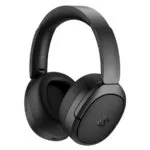
The main reason to buy: a full set of codecs for wireless connection, a detailed microphone, up to 80 hours of playback, and a user-friendly app. Downsides include dull sound, no active noise cancellation, or transparency mode.
- The sound is precise and natural
- The microphone is great in noise and quiet
- The controls are comfortable
- The app is decent
- Battery life is 80 hours, excellent
- Build quality feels solid, with no major complaints.
- Sound has a narrow soundstage and a lack of bass
- Active noise cancellation (ANC) and transparency mode are absent; it’s passive isolation only.
- Minor downsides include no auto-pause and availability only in black.
The final sound score is calculated using this formula:
Frequency balance + Detail retrieval + Soundstage + Natural timbre / 4 = Final Sound Score.
. 7.67 The sound here is quite controversial: on one hand, everything is very good regarding naturalness, detail, mids, and highs. On the other hand, there is a critical lack of bass, even considering these are planars. And a really, really narrow soundstage. These headphones are definitely not for everyone.Read more.
Microphone – We assess speech transmission quality by testing the microphone in two main scenarios: quiet and noisy environments.
Quiet environment – This involves recording indoors with minimal background noise. Noisy environment – This means recording outdoors near a six-lane road with maximum traffic noise.
. 8.50 In quiet conditions: 9 In noisy conditions: 8 The first model I encounter featuring aptX Voice. Microphone sound is genuinely good.Overall feature score — this is the overall score for all device features. This score comes from individual feature ratings (battery life, controls, app, connection stability, and others) and shows how easy and smart the device is for daily use.
. 7.00 Active noise cancellation is absent, with only passive noise isolation. Transparency mode is absent. Claimed battery life is up to 80 hours. Standard button controls. The companion app features a 4-band EQ, lets you switch codecs, and select bitrates.Read more.
Final build quality score is the overall score for build quality and materials: comfort, durability, and design. It shows how nice the device is to hold and use, and how long it will last.
. 8.50 The headphones are comfortable and do not cause fatigue after three hours of use. Build is solid and reliable, no complaints. The headphones look ordinary.Read more.
11. SoundPeats H3 7.61Best Affordable Wireless Headphones Under $100
Drivers are the drivers in your headphones that are responsible for creating sound.
DD + PM + BA – means that there are several different types of drivers in these headphones.
DD – “Dynamic Driver” dynamic driver (deep bass, natural sound).
PM – “Planar Magnetic Driver” planar driver (wide soundstage and fast response).
BA – “Balanced Armature Driver” armature driver (accuracy and detail retrieval).
BC – “Bone Conduction Driver” or bone-conduction driver, which transmits vibration to the body of the headphones, transmitting sound through the bone/cartilage to the inner ear.
LDAC – high quality, high speed (Sony).
SBC is the basic Bluetooth standard, low quality.
AAC – Apple standard, good quality, low latency.
aptX – Qualcomm standard, good quality, low latency.
LC3/LC3plus – new Bluetooth LE Audio codecs, efficient compression.
Codecs are audio compression formats that affect sound quality and latency.
Headphone battery life is the playback time without recharging, measured in hours. Manufacturers measure without active noise cancellation (ANC), at medium volume (50-70%) and usually with the AAC codec, as these parameters affect battery consumption. Actual time may vary from 1% to 50%, depending on volume, active noise cancellation features enabled, codec (LDAC or other) and environmental conditions (cold, hot). It is important to consider not only the claimed playback time, but also the charging time and fast charging support.
Bluetooth is a wireless data transmission standard.
Support for new audio technologies.
Improved connection stability.
Reduced power consumption.
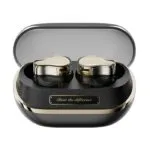
The SoundPeats H3 offer pleasant and detailed sound, but only after EQ adjustment. Out of the box, the sound is excessively bassy and quickly becomes fatiguing. I’m not sure who would enjoy this sound; it feels like the company just cranked up the bass instead of tuning it. The weak point is their features – they’re very basic. They even pale in comparison to some budget models that offer triple multipoint, a translator, or 10+ hours of battery life. The build quality is faultless, though nothing particularly outstanding. And the stem-less design is an acquired taste. Overall, these headphones are only for music, and only if you adjust the equalizer.
- Detailed sound with deep bass after tuning the EQ.
- Microphone noise cancellation close to flagship tier.
- Boomey sound out of the box.
- Awkward controls and useless transparency mode.
- Bulky earbud and charging case design.
The final sound score is calculated using this formula:
Frequency balance + Detail retrieval + Soundstage + Natural timbre / 4 = Final Sound Score.
. 8.18 They’re top-tier, but you need to unlock their potential yourself with an equalizer. The out-of-the-box tuning is excessively bassy and quickly becomes fatiguing. In bass-heavy tracks, it’s a continuous rumble lacking clarity and airiness. However, the sound is precise and discernible. These headphones confidently enter the MyChooz silver league. If you slightly reduce the bass in the equalizer or try a couple of presets, the sound moves closer to the gold league. Higher up the ranking, competition comes from models with planar drivers and xMEMS, which have advantages over armature drivers. Even so, the SoundPEATS H3 are pleasantly surprising in sound quality and hold your attention after EQ adjustment.More details.
Microphone – We assess speech transmission quality by testing the microphone in two main scenarios: quiet and noisy environments.
Quiet environment – This involves recording indoors with minimal background noise. Noisy environment – This means recording outdoors near a six-lane road with maximum traffic noise.
. 7.50 In quiet conditions: 8 In noisy conditions: 7 Speech is clear in quiet conditions. Noise cancellation works poorly and catches any background noise. However, a strong noise source is blocked effectively. Speech is clear, though heavily muffled.Overall feature score — this is the overall score for all device features. This score comes from individual feature ratings (battery life, controls, app, connection stability, and others) and shows how easy and smart the device is for daily use.
. 6.83 The weak point of the earbuds. Active noise cancellation is the only useful feature. With the right ear tips, it suppresses light office noise, and the mode is comfortable without putting pressure on eardrums. Battery life matches the specs, and the connection is stable. The mic noise cancellation is also nice. The rest is useless: the app is useless, controls are imprecise, and transparency mode is uncomfortable.Read more.
Final build quality score is the overall score for build quality and materials: comfort, durability, and design. It shows how nice the device is to hold and use, and how long it will last.
. 7.33 The earbuds are comfortable if you pick the right ear tips. Otherwise, the earBuds FEel like they are about to fall out. Build quality and materials are without faults. The earbuds look good, nothing too exciting.Read more.
12. Xiaomi Buds 5 Pro 7.57In-ear headphones with noise cancellation – good for Android
Drivers are the drivers in your headphones that are responsible for creating sound.
DD + PM + BA – means that there are several different types of drivers in these headphones.
DD – “Dynamic Driver” dynamic driver (deep bass, natural sound).
PM – “Planar Magnetic Driver” planar driver (wide soundstage and fast response).
BA – “Balanced Armature Driver” armature driver (accuracy and detail retrieval).
BC – “Bone Conduction Driver” or bone-conduction driver, which transmits vibration to the body of the headphones, transmitting sound through the bone/cartilage to the inner ear.
LDAC – high quality, high speed (Sony).
SBC is the basic Bluetooth standard, low quality.
AAC – Apple standard, good quality, low latency.
aptX – Qualcomm standard, good quality, low latency.
LC3/LC3plus – new Bluetooth LE Audio codecs, efficient compression.
Codecs are audio compression formats that affect sound quality and latency.
Headphone battery life is the playback time without recharging, measured in hours. Manufacturers measure without active noise cancellation (ANC), at medium volume (50-70%) and usually with the AAC codec, as these parameters affect battery consumption. Actual time may vary from 1% to 50%, depending on volume, active noise cancellation features enabled, codec (LDAC or other) and environmental conditions (cold, hot). It is important to consider not only the claimed playback time, but also the charging time and fast charging support.
Bluetooth is a wireless data transmission standard.
Support for new audio technologies.
Improved connection stability.
Reduced power consumption.
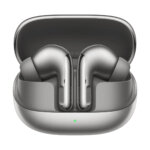
The main reason to buy: top-tier active noise cancellation, a top-tier microphone in quiet conditions, and a built-in voice recorder. Downsides include sound quality that’s only slightly above average and inconvenient controls. The translator and enhanced bitrate only work on some Xiaomi phones. Also, the charging case feels like it’s worth about $20-25.
- Top-tier active noise cancellation
- Top-tier microphone in quiet conditions
- Built-in voice recorder
- Sound quality is slightly above average
- Inconvenient controls
- Translator and several other features are only available on select Xiaomi devices
The final sound score is calculated using this formula:
Frequency balance + Detail retrieval + Soundstage + Natural timbre / 4 = Final Sound Score.
. 7.25 The earbuds feature decent mids and highs, natural timbre, and detail retrieval. The main drawback of the sound signature is a heavy emphasis on the lows and a narrow soundstage. The sound is somewhat unnatural with a bass-heavy tone. This can be partially fixed using the EQ.Read more.
Microphone – We assess speech transmission quality by testing the microphone in two main scenarios: quiet and noisy environments.
Quiet environment – This involves recording indoors with minimal background noise. Noisy environment – This means recording outdoors near a six-lane road with maximum traffic noise.
. 7.75 In quiet conditions: 9 In noisy conditions: 6.5Overall feature score — this is the overall score for all device features. This score comes from individual feature ratings (battery life, controls, app, connection stability, and others) and shows how easy and smart the device is for daily use.
. 8.00 Active noise cancellation is top-tier and falls just slightly short of reference models. The transparency mode is worse, though you can still have a conversation. Battery life in our tests reached up to 8 hours and 48 minutes for the earbuds and 42 hours with the charging case. Controls support 5 actions per earbud, executed via pinch gestures on the stem — which is inconvenient. The companion app is not overloaded with junk features and includes useful ones, such as a voice recorder.Read more.
Final build quality score is the overall score for build quality and materials: comfort, durability, and design. It shows how nice the device is to hold and use, and how long it will last.
. 7.73 The earbuds are comfortable with the included ear tips. Fatigue sets in after a couple of hours. Build quality and materials are solid — though the case feels a bit “flimsy”, and the materials clearly feel cost-cut. The earbuds look good without causing any particular excitement.Read more.
13. Beyerdynamic AVENTHO 300 7.54Good over-ear headphones – based on a sum of criteria
Drivers are the drivers in your headphones that are responsible for creating sound.
DD + PM + BA – means that there are several different types of drivers in these headphones.
DD – “Dynamic Driver” dynamic driver (deep bass, natural sound).
PM – “Planar Magnetic Driver” planar driver (wide soundstage and fast response).
BA – “Balanced Armature Driver” armature driver (accuracy and detail retrieval).
BC – “Bone Conduction Driver” or bone-conduction driver, which transmits vibration to the body of the headphones, transmitting sound through the bone/cartilage to the inner ear.
LDAC – high quality, high speed (Sony).
SBC is the basic Bluetooth standard, low quality.
AAC – Apple standard, good quality, low latency.
aptX – Qualcomm standard, good quality, low latency.
LC3/LC3plus – new Bluetooth LE Audio codecs, efficient compression.
Codecs are audio compression formats that affect sound quality and latency.
Headphone battery life is the playback time without recharging, measured in hours. Manufacturers measure without active noise cancellation (ANC), at medium volume (50-70%) and usually with the AAC codec, as these parameters affect battery consumption. Actual time may vary from 1% to 50%, depending on volume, active noise cancellation features enabled, codec (LDAC or other) and environmental conditions (cold, hot). It is important to consider not only the claimed playback time, but also the charging time and fast charging support.
Bluetooth is a wireless data transmission standard.
Support for new audio technologies.
Improved connection stability.
Reduced power consumption.
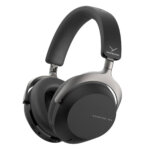
Beyerdynamic AVENTHO 300: These are good and reliable over-ear headphones with large earcups. The main reason to buy them: durable plastic earcups and metal hinges. They’re an ideal option if you’re considering headphones for 3-5+ years of active use. There’s plenty of volume headroom, and at 70% volume, music is loud. In our tests, the model lasted 86 hours with the aptX Adaptive codec. Downsides include average sound quality and strong clamping force from the earcups.
- BEST build reliability among over-ear headphones
- Responds well to EQ tuning with a dozen usable presets
- Plenty of headroom, optimal volume level 70%
- Soundstage is congested — lacks volume
- Ear cups press against the ears, need a break after an hour
- Sound is a bit dry, lacks bass and clarity out of the box
- Noise cancellation is weaker than competitors like Sennheiser, Bose, and Sony
The final sound score is calculated using this formula:
Frequency balance + Detail retrieval + Soundstage + Natural timbre / 4 = Final Sound Score.
. 7.46 A bit dry, with an emphasis on the mids and highs. Low-frequency and high-frequency instruments can be distinguished, and the texture comes through. The vocalist sounds like they are sitting on a chair right in front of you, or rather shouting in your face, but with a half-closed door in the way. The sound is detailed and accurate with minimal artificiality. The weakest point of the headphones is the soundstage. There is little sense of space, as if you are listening to a performance in a small room. At the same time, imaging is present in both width and depth. The overall impression is mixed. On the one hand, the sound is engaging, but on the other, it feels congested. It feels like a massive stream of data is being fed into your ears, but your brain doesn’t have time to process all that information. With the EQ enabled, the sound is cleaner and more spacious, and the low- and high-frequency instruments sound more pronounced.Read more.
Microphone – We assess speech transmission quality by testing the microphone in two main scenarios: quiet and noisy environments.
Quiet environment – This involves recording indoors with minimal background noise. Noisy environment – This means recording outdoors near a six-lane road with maximum traffic noise.
. 6.35 In quiet conditions: 7.7 In noisy conditions: 5Overall feature score — this is the overall score for all device features. This score comes from individual feature ratings (battery life, controls, app, connection stability, and others) and shows how easy and smart the device is for daily use.
. 7.27 Active noise cancellation blocks roughly 30% of noise, and the transparency mode is convenient for conversations. Battery life in our tests reached 86 hours using the aptX Adaptive codec. Controls rely on a combination of buttons and touch panels, which are convenient though not customizable. The companion app is user-friendly and not overloaded with unnecessary features.Read more.
Final build quality score is the overall score for build quality and materials: comfort, durability, and design. It shows how nice the device is to hold and use, and how long it will last.
. 8.17 The headphones are large and roomy. At the same time, the ear cups press against the ears and discomfort arises after 20-30 minutes, and after an hour you want to take a break. Build quality and materials are top-notch with reference-grade reliability. They look good and come in black and white.Read more.
14. Xiaomi Buds 6 7.47Open-fit earbuds with map search
Drivers are the drivers in your headphones that are responsible for creating sound.
DD + PM + BA – means that there are several different types of drivers in these headphones.
DD – “Dynamic Driver” dynamic driver (deep bass, natural sound).
PM – “Planar Magnetic Driver” planar driver (wide soundstage and fast response).
BA – “Balanced Armature Driver” armature driver (accuracy and detail retrieval).
BC – “Bone Conduction Driver” or bone-conduction driver, which transmits vibration to the body of the headphones, transmitting sound through the bone/cartilage to the inner ear.
LDAC – high quality, high speed (Sony).
SBC is the basic Bluetooth standard, low quality.
AAC – Apple standard, good quality, low latency.
aptX – Qualcomm standard, good quality, low latency.
LC3/LC3plus – new Bluetooth LE Audio codecs, efficient compression.
Codecs are audio compression formats that affect sound quality and latency.
Headphone battery life is the playback time without recharging, measured in hours. Manufacturers measure without active noise cancellation (ANC), at medium volume (50-70%) and usually with the AAC codec, as these parameters affect battery consumption. Actual time may vary from 1% to 50%, depending on volume, active noise cancellation features enabled, codec (LDAC or other) and environmental conditions (cold, hot). It is important to consider not only the claimed playback time, but also the charging time and fast charging support.
Bluetooth is a wireless data transmission standard.
Support for new audio technologies.
Improved connection stability.
Reduced power consumption.

Xiaomi Buds 6 are essentially a copy of the previous generation with a couple of exceptions: better sound balance, less sensitivity to the sound source, and more comfortable noise cancellation. Controls and microphone are minimally improved – on par with benchmarks. Although the previous generation isn’t worse. Everything else is unchanged or purely cosmetic, and battery life has even decreased. Voice recorder capabilities haven’t changed at all, and there’s a translator for Xiaomi devices. Therefore, the previous generation looks more advantageous, especially considering the $120-160 price point.
- Voice recorder with 180 min. of recording time.
- Find earbuds via Apple Find My and Find Hub.
- Microphone close to reference quality
- Low sound detail retrieval.
- Translator works only on Xiaomi devices.
- The noise cancellation mode feels weak, and there is no transparency mode.
The final sound score is calculated using this formula:
Frequency balance + Detail retrieval + Soundstage + Natural timbre / 4 = Final Sound Score.
. 7.44 Everything sounds a bit muffled, lacking transparency right across the frequency spectrum. Detail retrieval is good enough to pick out main and background parts, but listening to anything else takes real focus. Its strongest point is its naturalness, since sound flaws are tough to spot. Xiaomi Buds 6 currently sit in the MyChooz bronze league, meaning a couple of strong competitors could easily push them down the rankings.Read more.
Microphone – We assess speech transmission quality by testing the microphone in two main scenarios: quiet and noisy environments.
Quiet environment – This involves recording indoors with minimal background noise. Noisy environment – This means recording outdoors near a six-lane road with maximum traffic noise.
. 9.25 In quiet conditions: 9.5 In noisy conditions: 9 The microphone matches the performance of the previous generation, though you will notice a genuine improvement in noisy environments thanks to better voice isolation.Read more.
Overall feature score — this is the overall score for all device features. This score comes from individual feature ratings (battery life, controls, app, connection stability, and others) and shows how easy and smart the device is for daily use.
. 7.24 Performance lands squarely in the average tier. There’s no transparency mode, and noise cancellation is only average—assuming you manage to wedge the earbuds tightly against your ear canals. Controls feel slightly improved over the previous generation, while the standout perks include a solid microphone, a built-in voice recorder with call recording, a handy app, and a reliable connection.Read more.
Final build quality score is the overall score for build quality and materials: comfort, durability, and design. It shows how nice the device is to hold and use, and how long it will last.
. 7.90 Lightweight and compact with no manufacturing flaws, though the finish acts like a magnet for fingerprints and smudges show up easily. Both the case and earbuds also tend to feel slippery when your hands are dry. Still, the earbuds remain comfortable and don’t cause any strain even after a couple of hours of continuous use.Read more.
15. Final Audio UX5000 7.46Large wireless headphones with a detachable design
Drivers are the drivers in your headphones that are responsible for creating sound.
DD + PM + BA – means that there are several different types of drivers in these headphones.
DD – “Dynamic Driver” dynamic driver (deep bass, natural sound).
PM – “Planar Magnetic Driver” planar driver (wide soundstage and fast response).
BA – “Balanced Armature Driver” armature driver (accuracy and detail retrieval).
BC – “Bone Conduction Driver” or bone-conduction driver, which transmits vibration to the body of the headphones, transmitting sound through the bone/cartilage to the inner ear.
LDAC – high quality, high speed (Sony).
SBC is the basic Bluetooth standard, low quality.
AAC – Apple standard, good quality, low latency.
aptX – Qualcomm standard, good quality, low latency.
LC3/LC3plus – new Bluetooth LE Audio codecs, efficient compression.
Codecs are audio compression formats that affect sound quality and latency.
Headphone battery life is the playback time without recharging, measured in hours. Manufacturers measure without active noise cancellation (ANC), at medium volume (50-70%) and usually with the AAC codec, as these parameters affect battery consumption. Actual time may vary from 1% to 50%, depending on volume, active noise cancellation features enabled, codec (LDAC or other) and environmental conditions (cold, hot). It is important to consider not only the claimed playback time, but also the charging time and fast charging support.
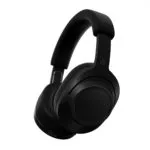
Final Audio UX5000 are interesting solely for their sound and design. In terms of sound, the headphones are on par with top models, although out of the box the sound is muffled, and some models under $100 might seem more dynamic and engaging. Unlocking their potential requires a couple of simple EQ adjustments. Then they become noticeably more detailed, the soundstage feels wider, and the headphones handle thoughtful listening better. The headphone construction is robust and well-thought-out – earcups and headband can be easily replaced, and there will be no problems replacing the battery. However, in terms of functionality, the UX5000 are on par with budget models and lag about 5 years behind. There are no strong points, barely functional active noise cancellation, and that’s it.
- Pleasant sound with simple EQ adjustment.
- Sturdy, serviceable construction.
- Poor functionality: low transparency, useless companion app, basic controls.
The final sound score is calculated using this formula:
Frequency balance + Detail retrieval + Soundstage + Natural timbre / 4 = Final Sound Score.
. 8.01 Not bright and transparent enough. At the same time, the bass and percussion are not fatiguing, with no noticeable artificial timbre or grain. Overall, the sound is comfortable; the only things getting in the way are the somewhat muffled presentation and excessive emphasis on the mid-range. The vocalist literally shouts into your ears. With an EQ, the sound is more pleasant and better suited for attentive listening. Final Audio UX5000 land in the MyChooz silver league.Read more.
Microphone – We assess speech transmission quality by testing the microphone in two main scenarios: quiet and noisy environments.
Quiet environment – This involves recording indoors with minimal background noise. Noisy environment – This means recording outdoors near a six-lane road with maximum traffic noise.
. 6.00 In quiet conditions: 8 In noisy conditions: 4Overall feature score — this is the overall score for all device features. This score comes from individual feature ratings (battery life, controls, app, connection stability, and others) and shows how easy and smart the device is for daily use.
. 6.08 Quality and feature set are at a basic level. Comparable to headphones from 5-6 years ago or budget models. The transparency mode is useless, controls are basic, there is no auto-pause, and the proprietary app only features a 10-band EQ. The app itself is useless and inconvenient as well. A free AI model could generate a better program. On the useful side—decent active noise cancellation combined with passive isolation, plus multipoint support. There is also up to 65 hours of battery life, though who is surprised by that?Read more.
Final build quality score is the overall score for build quality and materials: comfort, durability, and design. It shows how nice the device is to hold and use, and how long it will last.
. 8.17 Sturdy and reliable. There are no defects in build quality and materials, and the hinges visually raise no reliability concerns. The headphones are comfortable, although the space inside the earcups for large ears is a bit tight, leaving a certain amount of discomfort—a feeling of confinement. Otherwise, the model is comfortable. The headphones look nice and neat.Read more.
See more headphones in our overall ranking MyChooz TOP 100 Headphones