

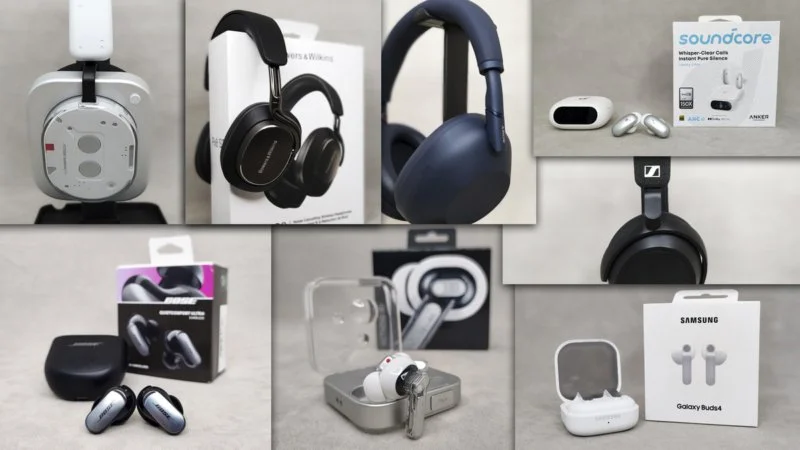
A dynamic driver delivers a natural, cohesive sound across the entire frequency range. These drivers add weight to a composition and serve as the foundation for hybrid multi-driver setups. Most models offer deep, powerful bass with a distinct sense of air pressure on the eardrums, unlike other popular drivers like balanced armature, micro-planar, or xMEMS. While those drivers provide fast response, accuracy, and detail, they often produce a dry, sterile sound better suited for the mid and high frequencies.
This list features 15 of the best wireless headphones with dynamic drivers. You’ll find models in three main form factors: over-ear, and TWS (both in-ear and open-fit).
Dynamic Drivers: Pros and Cons.
More detailsMain Advantages
- Powerful, deep bass. The diaphragm’s movement in a dynamic driver creates airflow, resulting in a natural, physically tangible low-frequency response. This is why dynamic drivers are favored in headphones and speakers designed for bass-heavy sound.
- Natural sound. Dynamic drivers produce a more lively sound compared to balanced armature and other types, where overly precise sound can quickly become fatiguing.
- Affordable price. Optimized production processes help keep headphone prices down. Dynamic drivers are the most common choice in budget models, though some manufacturers artificially inflate prices.
- Easier tuning. Models with a single dynamic driver are simpler to tune during development, as there’s no need for a crossover filter to split the audio signal for multiple drivers. Incorrect frequency division can lead to audible gaps, overlap in the transition zone, or phase distortion.
- Efficient operation. Headphones with dynamic drivers don’t require a powerful amplifier.
Main Disadvantages
- Distortion at high volumes. Distortion is often noticeable at high volumes, especially in less expensive headphone models.
- Less detail in high frequencies. Typically, there’s a lack of airiness in the highs, and percussion can sound muffled, particularly in budget models.
- Slow transient response. The driver diaphragm’s acceleration and decay are slower compared to balanced armature or planar drivers. This can impact clarity and attack speed in tracks with complex arrangements, often resulting in a muddy sound in budget models.
- Larger construction size. Dynamic driver diameters range from 6 to 13 mm, with 10-13 mm being most common. The driver itself, including the diaphragm, magnets, and other components, is about 2-4 mm thick in TWS earbuds and up to 13 mm in larger models. This limits the sound chamber size in TWS. For comparison, balanced armature and xMEMS drivers are roughly 5×3 mm and 3.2×1.2 mm, respectively. A TWS could fit four balanced armature drivers instead of one dynamic driver.
- Wide quality variation. The low cost and mass production of dynamic driver technology have led to a broad spectrum of prices and quality. Dynamic wireless headphones can range from a couple of dollars to several thousand. Entry-level models with hybrid or exclusively balanced armature drivers typically start at $50-70 and often exceed $100. Budget hybrid models are usually more expensive and offer higher quality. For example, Realme Buds Air 7 Pro or EarFun Air Pro 4 Plus.
How to achieve high-resolution audio with wireless headphones: LDAC, LHDC, aptX Adaptive, aptX Lossless, and more?
More detailsIf your headphones support the necessary codec but your phone, tablet, or PC doesn’t, you can use a USB adapter. These adapters, about the size of a Bluetooth dongle, plug into your phone or PC’s port. Your headphones then connect to the adapter, receiving the signal with the desired codec.
Which adapter to choose?
- QCC Dongle Pro2 – if you want it all at once. The adapter supports: LHDC 5.0, LDAC, aptX Adaptive, aptX HD, aptX Lossless; LE Audio and Auracast are claimed.
- FiiO Air Link – a universal adapter, but cheaper. Codec support: SBC, aptX, aptX Low Latency, aptX HD, aptX Adaptive, LDAC, and aptX Lossless.
- 1Mii B03Pro: A desktop solution featuring both a transmitter and receiver. Supports SBC, AAC, aptX, aptX HD, aptX LL, and aptX Adaptive.
- UGREEN BT701: A compact, universal option. Codec support includes Classic Bluetooth (SBC, aptX, aptX HD, aptX Adaptive-LL, aptX Adaptive-HQ) and LE Audio (Auracast, Unicast-Low Latency, Unicast-Lossless).
- UGREEN BT501: A simplified version of the BT701. Supports SBC, aptX, aptX Low Latency, aptX HD, and aptX Adaptive.
Check out our ranking for more details on USB adapters — Best Bluetooth Adapters for Computers and Headphones.
EMMA — Experts + Methodology + MyChoozers + Algorithm.
Every model goes through identical tests; the score is calculated automatically with fixed weights — a spot in the rating cannot be bought.
TOP-15 Best Dynamic Driver Wireless Headphones – Ranking
1. Sennheiser MOMENTUM 4 Wireless 9.09Best Wireless Over-Ear Headphones – For Sound and Features
Drivers are the drivers in your headphones that are responsible for creating sound.
DD + PM + BA – means that there are several different types of drivers in these headphones.
DD – “Dynamic Driver” dynamic driver (deep bass, natural sound).
PM – “Planar Magnetic Driver” planar driver (wide soundstage and fast response).
BA – “Balanced Armature Driver” armature driver (accuracy and detail retrieval).
BC – “Bone Conduction Driver” or bone-conduction driver, which transmits vibration to the body of the headphones, transmitting sound through the bone/cartilage to the inner ear.
LDAC – high quality, high speed (Sony).
SBC is the basic Bluetooth standard, low quality.
AAC – Apple standard, good quality, low latency.
aptX – Qualcomm standard, good quality, low latency.
LC3/LC3plus – new Bluetooth LE Audio codecs, efficient compression.
Codecs are audio compression formats that affect sound quality and latency.
Headphone battery life is the playback time without recharging, measured in hours. Manufacturers measure without active noise cancellation (ANC), at medium volume (50-70%) and usually with the AAC codec, as these parameters affect battery consumption. Actual time may vary from 1% to 50%, depending on volume, active noise cancellation features enabled, codec (LDAC or other) and environmental conditions (cold, hot). It is important to consider not only the claimed playback time, but also the charging time and fast charging support.
Bluetooth is a wireless data transmission standard.
Support for new audio technologies.
Improved connection stability.
Reduced power consumption.
Sennheiser Momentum 4 Wireless: These are the best large wireless headphones, with three main selling points: superior sound quality under $300, excellent noise cancellation, and a robust, reliable construction. While they support aptX HD and aptX Adaptive codecs, the sound improvement is only about 10-15% because the sound system already performs at its peak. One drawback is the above-average clamping force from the earcups, which may require breaks after 1-2 hours of use.
- Best sound under $300
- Top-tier noise cancellation and reference-level transparency.
- Detailed microphone
- Sturdy and reliable build
- Ear cups press too firmly
The final sound score is calculated using this formula:
Frequency balance + Detail retrieval + Soundstage + Natural timbre / 4 = Final Sound Score.
. 9.55 These headphones deliver the best sound quality of any over-ear model under $300. You get a pleasing bass-heavy sound with an intimate mid-range and moderately bright highs. The soundstage is spacious and full-bodied, completely free of artificial timbre or noticeable grain. Detail retrieval is sharp enough to catch micro-details. A few minor drawbacks include a slight excess in the bass, a shortfall in the highs, and a touch less transparency.Read more.
Microphone – We assess speech transmission quality by testing the microphone in two main scenarios: quiet and noisy environments.
Quiet environment – This involves recording indoors with minimal background noise. Noisy environment – This means recording outdoors near a six-lane road with maximum traffic noise.
. 9.25 In quiet conditions: 9.5 In noisy conditions: 9 These headphones feature 4 microphones, with 2 in each ear cup. Voice on recordings sounds detailed. In noisy environments, quality drops a bit while staying clear.Overall feature score — this is the overall score for all device features. This score comes from individual feature ratings (battery life, controls, app, connection stability, and others) and shows how easy and smart the device is for daily use.
. 8.83 Active noise cancellation is top-tier and leaves sound quality untouched. The transparency mode comes close to reference-quality. Up to 60 hours of battery life will easily carry you through a week of active listening. Controls are hybrid and mostly gesture-based on the right ear cup. Navigation feels convenient, though it takes a couple of days to get the hang of it. The app is useful: you can turn on the aptX codec on Android, tweak the EQ, and adjust the ambient mode.Read more.
Final build quality score is the overall score for build quality and materials: comfort, durability, and design. It shows how nice the device is to hold and use, and how long it will last.
. 8.33 Build quality feels sturdy and reliable, though the finish picks up fingerprints rather easily. The clamping force is above average, which is fine for 1 to 2 hours of use before you feel the need to take a break. The headphones look good and come in 5 colors.Read more.
2. Technics EAH-AZ100 8.88Best Wireless Headphones 2026 – With the Best Sound Under $350
Drivers are the drivers in your headphones that are responsible for creating sound.
DD + PM + BA – means that there are several different types of drivers in these headphones.
DD – “Dynamic Driver” dynamic driver (deep bass, natural sound).
PM – “Planar Magnetic Driver” planar driver (wide soundstage and fast response).
BA – “Balanced Armature Driver” armature driver (accuracy and detail retrieval).
BC – “Bone Conduction Driver” or bone-conduction driver, which transmits vibration to the body of the headphones, transmitting sound through the bone/cartilage to the inner ear.
LDAC – high quality, high speed (Sony).
SBC is the basic Bluetooth standard, low quality.
AAC – Apple standard, good quality, low latency.
aptX – Qualcomm standard, good quality, low latency.
LC3/LC3plus – new Bluetooth LE Audio codecs, efficient compression.
Codecs are audio compression formats that affect sound quality and latency.
Headphone battery life is the playback time without recharging, measured in hours. Manufacturers measure without active noise cancellation (ANC), at medium volume (50-70%) and usually with the AAC codec, as these parameters affect battery consumption. Actual time may vary from 1% to 50%, depending on volume, active noise cancellation features enabled, codec (LDAC or other) and environmental conditions (cold, hot). It is important to consider not only the claimed playback time, but also the charging time and fast charging support.
Bluetooth is a wireless data transmission standard.
Support for new audio technologies.
Improved connection stability.
Reduced power consumption.
The Technics EAH-AZ100 are the best wireless headphones for sound among all TWS models under $350, making them the primary reason to purchase them. They rank second for sound quality among all TWS models and first overall when considering the combination of sound, features, and build quality. This model has no critical flaws.
- Reference-quality sound among true wireless earbuds
- Comfortable and pleasant build
- Average active noise cancellation
- Non-critical cons: Slight lack of vocal intimacy. Minor flaws in the app and design. Average microphone
The final sound score is calculated using this formula:
Frequency balance + Detail retrieval + Soundstage + Natural timbre / 4 = Final Sound Score.
. 9.31 Reference-quality. The main pro of the sound is its natural timbre, soundstage, detail retrieval, and highs. The main con is a slightly recessed mid-range and vocals as a result. Plus a minimal lack of bass quantity and quality.Read more.
Microphone – We assess speech transmission quality by testing the microphone in two main scenarios: quiet and noisy environments.
Quiet environment – This involves recording indoors with minimal background noise. Noisy environment – This means recording outdoors near a six-lane road with maximum traffic noise.
. 8.00 Got better than the AZ80. In quiet environments: 8 In noisy environments: 8Overall feature score — this is the overall score for all device features. This score comes from individual feature ratings (battery life, controls, app, connection stability, and others) and shows how easy and smart the device is for daily use.
. 8.08 Active noise cancellation is enough to suppress road noise, it is better than average. Transparency is great, talking to someone will be comfortable. Battery life is excellent at 10 hours and 28 hours with the charging case, with LDAC + ANC under the same conditions — 7 and 18 hours respectively. Touch controls are convenient, but take some getting used to. The app is great, in it I recommend choosing the LDAC codec and tuning the EQ.Read more.
Final build quality score is the overall score for build quality and materials: comfort, durability, and design. It shows how nice the device is to hold and use, and how long it will last.
. 9.00 Comfortable, durable, and nice-looking. As for comfort, they are comfortable, with a slight feeling of the wireless earbuds in your ears. The charging case is compact. Reliable build. IPx4 dust and water resistance for the wireless earbuds only. The wireless earbuds look nice, although nothing special.Read more.
3. Apple Airpods Pro 3 8.64Best Wireless Headphones for iPhone and Apple Devices
Drivers are the drivers in your headphones that are responsible for creating sound.
DD + PM + BA – means that there are several different types of drivers in these headphones.
DD – “Dynamic Driver” dynamic driver (deep bass, natural sound).
PM – “Planar Magnetic Driver” planar driver (wide soundstage and fast response).
BA – “Balanced Armature Driver” armature driver (accuracy and detail retrieval).
BC – “Bone Conduction Driver” or bone-conduction driver, which transmits vibration to the body of the headphones, transmitting sound through the bone/cartilage to the inner ear.
LDAC – high quality, high speed (Sony).
SBC is the basic Bluetooth standard, low quality.
AAC – Apple standard, good quality, low latency.
aptX – Qualcomm standard, good quality, low latency.
LC3/LC3plus – new Bluetooth LE Audio codecs, efficient compression.
Codecs are audio compression formats that affect sound quality and latency.
Headphone battery life is the playback time without recharging, measured in hours. Manufacturers measure without active noise cancellation (ANC), at medium volume (50-70%) and usually with the AAC codec, as these parameters affect battery consumption. Actual time may vary from 1% to 50%, depending on volume, active noise cancellation features enabled, codec (LDAC or other) and environmental conditions (cold, hot). It is important to consider not only the claimed playback time, but also the charging time and fast charging support.
Bluetooth is a wireless data transmission standard.
Support for new audio technologies.
Improved connection stability.
Reduced power consumption.
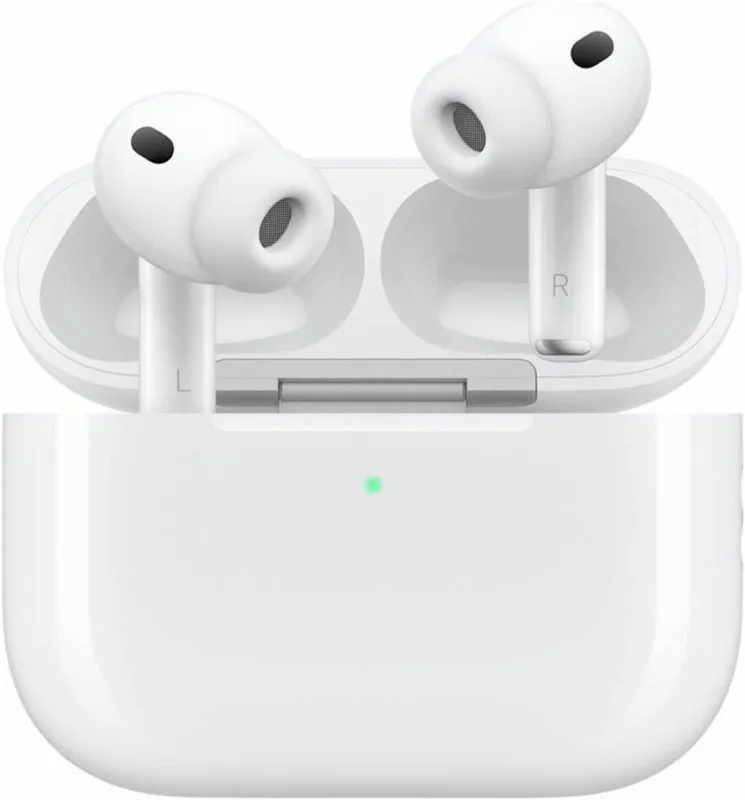
Apple AirPods Pro 3 – the best true wireless earbuds for Apple devices. They offer near-flagship sound, a reference-quality microphone, active noise cancellation, transparency mode, and great controls. The model has no critical drawbacks, though the fit might not be perfect for everyone, and some features only work with Apple devices.
- Near-flagship sound quality — vastly superior to the 2 Pro.
- Microphone is a benchmark
- Noise cancellation and transparency mode operate at benchmark levels.
- Controls are benchmark-level
- Battery life increased by 2 hours, reaching up to 8 hours with ANC active.
- Comfortable and sleek design
- Comfort has improved across the model line, though it won’t suit everyone.
- The app and other features work exclusively on Apple devices.
- Minor drawbacks: the case scratches very quickly.
The final sound score is calculated using this formula:
Frequency balance + Detail retrieval + Soundstage + Natural timbre / 4 = Final Sound Score.
. 8.50 With EQ tuning, you can push the score up to a 9. You get excellent sound quality on par with top models from Sony, Sennheiser, Bose, and others. The strong suit is a significant boost in detail retrieval, soundstage, and naturalness. The tuning closely resembles the AirPods Pro 2, but it’s as if the window you’re looking through has been enlarged and thoroughly cleaned. Finally, you get a sound profile you don’t have to feel ashamed of. That’s a huge leap of +1.5 points compared to the Pro 2. It still doesn’t quite reach the level of the Realme Buds Air 7 Pro, Huawei Freebuds 4 Pro, or the reference Technics EAH-AZ100, but it’s getting close.Read more.
Microphone – We assess speech transmission quality by testing the microphone in two main scenarios: quiet and noisy environments.
Quiet environment – This involves recording indoors with minimal background noise. Noisy environment – This means recording outdoors near a six-lane road with maximum traffic noise.
. 9.00 In quiet conditions: 10 In noisy conditions: 8 The microphone delivers simply stunning quality, setting a new benchmark. At first, I thought I had accidentally recorded sound using the iPhone instead. The “voice isolation” feature is available, which improves voice quality in noisy conditions by cutting out background sounds.Overall feature score — this is the overall score for all device features. This score comes from individual feature ratings (battery life, controls, app, connection stability, and others) and shows how easy and smart the device is for daily use.
. 9.00 Active noise cancellation, transparency mode, and controls all match reference-quality. Battery life reaches up to 8 hours for the earbuds and up to 24 hours with the charging case when you turn off ANC and spatial audio. There is no app; all features are built directly into the OS, so Android users will need to configure the earbuds through third-party apps.Read more.
Final build quality score is the overall score for build quality and materials: comfort, durability, and design. It shows how nice the device is to hold and use, and how long it will last.
. 8.43 The earbuds offer an ideal fit with zero fatigue even after 5 hours of use. However, the design won’t suit everyone, so it’s a good idea to try them on before buying. Build quality draws no complaints, just like previous generations, but the glossy plastic scratches immediately. You’re better off putting a case cover on right away. The design is minimalist with nothing extra.Read more.
4. ANKER SoundCore Liberty 5 Pro 8.51BEST TRUE WIRELESS EARBUDS FOR FUNCTIONALITY
Drivers are the drivers in your headphones that are responsible for creating sound.
DD + PM + BA – means that there are several different types of drivers in these headphones.
DD – “Dynamic Driver” dynamic driver (deep bass, natural sound).
PM – “Planar Magnetic Driver” planar driver (wide soundstage and fast response).
BA – “Balanced Armature Driver” armature driver (accuracy and detail retrieval).
BC – “Bone Conduction Driver” or bone-conduction driver, which transmits vibration to the body of the headphones, transmitting sound through the bone/cartilage to the inner ear.
LDAC – high quality, high speed (Sony).
SBC is the basic Bluetooth standard, low quality.
AAC – Apple standard, good quality, low latency.
aptX – Qualcomm standard, good quality, low latency.
LC3/LC3plus – new Bluetooth LE Audio codecs, efficient compression.
Codecs are audio compression formats that affect sound quality and latency.
Headphone battery life is the playback time without recharging, measured in hours. Manufacturers measure without active noise cancellation (ANC), at medium volume (50-70%) and usually with the AAC codec, as these parameters affect battery consumption. Actual time may vary from 1% to 50%, depending on volume, active noise cancellation features enabled, codec (LDAC or other) and environmental conditions (cold, hot). It is important to consider not only the claimed playback time, but also the charging time and fast charging support.
Bluetooth is a wireless data transmission standard.
Support for new audio technologies.
Improved connection stability.
Reduced power consumption.
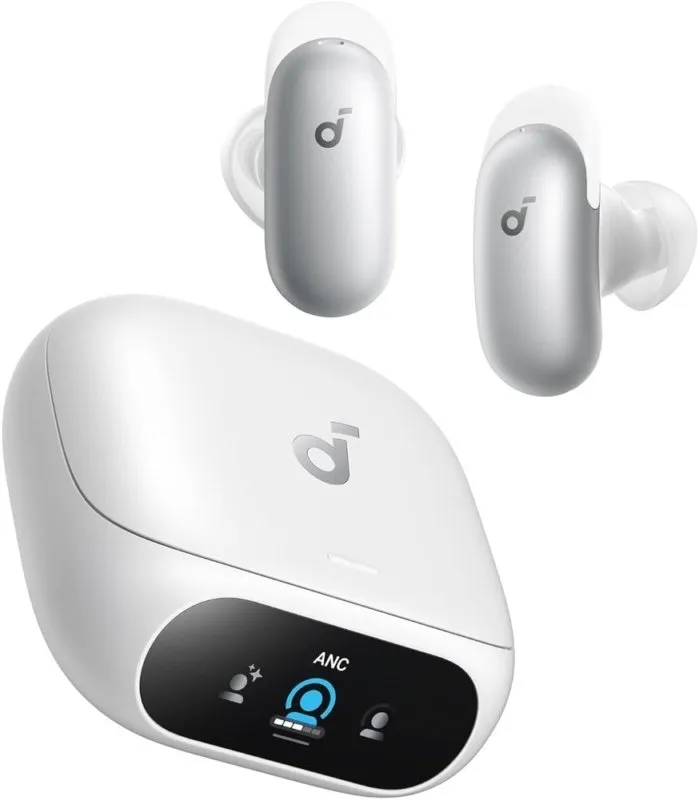
The SoundCore Liberty 5 Pro focuses on features comparable to top-tier models in each category. Collectively, they stand out as a leader, closely following the Liberty 5 Pro Max. If features are your priority, the Liberty 5 Pro or 5 Pro Max are excellent choices. The sound quality is decent but doesn’t particularly stand out, providing a comfortable background for everyday listening. Improvements over the Liberty 4 Pro are minimal, and the results of the 3 Pro are simply unattainable.
- Comfortable balanced sound.
- Reference functionality.
- Comfortable fit.
- The sound is marginally better than the previous generation.
- The companion app consumes up to 1.9 GB of RAM.
The final sound score is calculated using this formula:
Frequency balance + Detail retrieval + Soundstage + Natural timbre / 4 = Final Sound Score.
. 8.25 Traditionally with a bass emphasis, although the amount of lows is smaller compared to past generations. Out of the box, the sound is not boring and not harsh. Comfortable background sound for everyday listening. Moderately detailed and natural. And pulling the score down are a lack of clarity and soundstage. This is roughly like coming to a concert and listening to the performance backstage or sitting in the very last side seats. Ordinary sound without critical flaws, moderately pleasant and melodic, particularly with EQ tuning. Liberty 5 Pro – enter the silver league of MyChooz.Read more.
Microphone – We assess speech transmission quality by testing the microphone in two main scenarios: quiet and noisy environments.
Quiet environment – This involves recording indoors with minimal background noise. Noisy environment – This means recording outdoors near a six-lane road with maximum traffic noise.
. 9.75 In quiet environments: 9.5 In noisy environments: 10 In quiet conditions the voice is detailed and distinct, distortion is minimal. In noisy conditions with a handheld vacuum cleaner in the background, the voice is unnatural, more processed. At the same time background noise is isolated, and speech is distinct.Read more.
Overall feature score — this is the overall score for all device features. This score comes from individual feature ratings (battery life, controls, app, connection stability, and others) and shows how easy and smart the device is for daily use.
. 9.19 A strong point of the wireless earbuds and by all parameters minimally inferior to the references. The only cons are the RAM usage by the proprietary app – up to 1.9 GB, on average 1.5 GB. That is a lot, for comparison the app for Noble wireless earbuds uses approximately 110 MB.Read more.
Final build quality score is the overall score for build quality and materials: comfort, durability, and design. It shows how nice the device is to hold and use, and how long it will last.
. 8.17 Durable and free of visible flaws, right on par with the previous generation. The wireless earbuds have less gloss and show fewer fingerprints, though the charging case screen picks up smudges much more easily. The wireless earbuds are comfortable, don’t press against your ears, and sit snugly. Both the charging case and wireless earbuds look good—I liked the design.Read more.
5. Nothing Ear ( 3 ) 2025 8.44Beautiful wireless headphones for your phone – with a microphone in the case
Drivers are the drivers in your headphones that are responsible for creating sound.
DD + PM + BA – means that there are several different types of drivers in these headphones.
DD – “Dynamic Driver” dynamic driver (deep bass, natural sound).
PM – “Planar Magnetic Driver” planar driver (wide soundstage and fast response).
BA – “Balanced Armature Driver” armature driver (accuracy and detail retrieval).
BC – “Bone Conduction Driver” or bone-conduction driver, which transmits vibration to the body of the headphones, transmitting sound through the bone/cartilage to the inner ear.
LDAC – high quality, high speed (Sony).
SBC is the basic Bluetooth standard, low quality.
AAC – Apple standard, good quality, low latency.
aptX – Qualcomm standard, good quality, low latency.
LC3/LC3plus – new Bluetooth LE Audio codecs, efficient compression.
Codecs are audio compression formats that affect sound quality and latency.
Headphone battery life is the playback time without recharging, measured in hours. Manufacturers measure without active noise cancellation (ANC), at medium volume (50-70%) and usually with the AAC codec, as these parameters affect battery consumption. Actual time may vary from 1% to 50%, depending on volume, active noise cancellation features enabled, codec (LDAC or other) and environmental conditions (cold, hot). It is important to consider not only the claimed playback time, but also the charging time and fast charging support.
Bluetooth is a wireless data transmission standard.
Support for new audio technologies.
Improved connection stability.
Reduced power consumption.
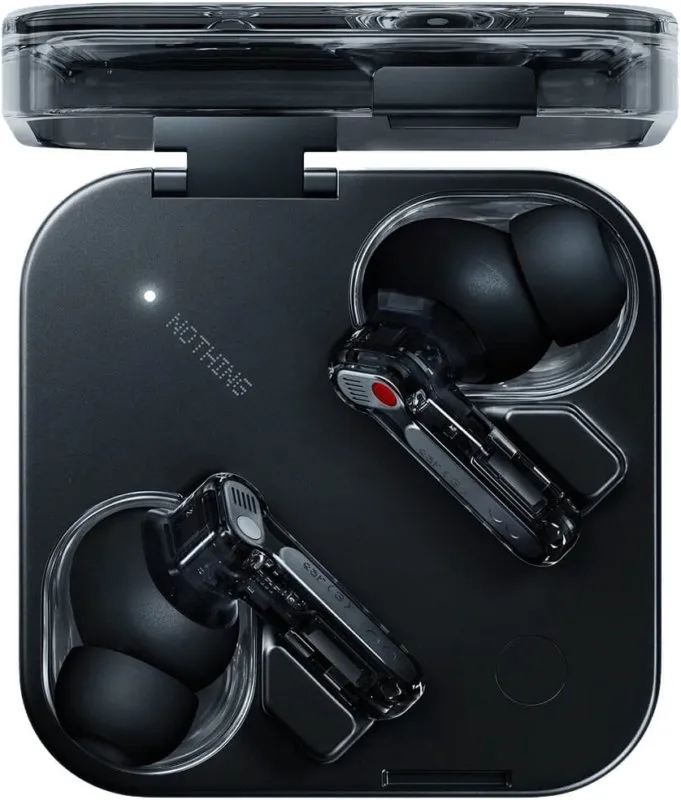
Nothing Ear ( 3 ) 2025 – beautiful wireless headphones with top-tier build quality and features. The main reason to buy: top-tier sound, but it’s important to update the firmware; out of the box, the frequency balance and directional microphone in the case for communication in noisy places. Downsides: average noise cancellation and transparency.
- Top-tier sound
- Detailed microphone with excellent voice isolation
- Reference-quality proprietary app
- Average noise cancellation and transparency
- Bright sound before firmware update
- Inflated price on certain marketplaces
The final sound score is calculated using this formula:
Frequency balance + Detail retrieval + Soundstage + Natural timbre / 4 = Final Sound Score.
. 8.38 The main plus of the sound is the mids and naturalness, offering close and transparent vocals. The sound is slightly unnatural, but free of artificial timbre, paired with good, detailed bass.The main downside of the sound is bright highs. This kind of sound causes fatigue, particularly on tracks with abundant percussion. Therefore, updating the firmware is important because it makes the sound balance more pleasant.
Read more.
Microphone – We assess speech transmission quality by testing the microphone in two main scenarios: quiet and noisy environments.
Quiet environment – This involves recording indoors with minimal background noise. Noisy environment – This means recording outdoors near a six-lane road with maximum traffic noise.
. 8.80 In quiet conditions: 8.6 In noisy conditions: 9 In quiet conditions, the balance drifts a bit, and noise cancellation removes background noise. At the same time, your voice is easy to understand. In noisy conditions, you get excellent voice isolation and complete noise blocking. At times your voice sounds a bit muffled, though speech is not hard to parse.Read more.
Overall feature score — this is the overall score for all device features. This score comes from individual feature ratings (battery life, controls, app, connection stability, and others) and shows how easy and smart the device is for daily use.
. 8.28 Noise cancellation and transparency are barely usable, making them the weakest side of the earbuds. Playback time in our tests reaches up to 9.5 hours, and up to 38 hours with the case, taking the codec into account. You get convenient pinch controls on the earbud stem and a reference-quality app for usability and features.Read more.
Final build quality score is the overall score for build quality and materials: comfort, durability, and design. It shows how nice the device is to hold and use, and how long it will last.
. 8.83 The earbuds are comfortable, fatigue sets in after 2 hours. The build is sturdy and reliable, with no defects. The appearance is excellent and stands out from competitors.Read more.
6. Bowers & Wilkins PX8 S2 8.41Large over-ear Bluetooth headphones – stylish and with bright sound
Drivers are the drivers in your headphones that are responsible for creating sound.
DD + PM + BA – means that there are several different types of drivers in these headphones.
DD – “Dynamic Driver” dynamic driver (deep bass, natural sound).
PM – “Planar Magnetic Driver” planar driver (wide soundstage and fast response).
BA – “Balanced Armature Driver” armature driver (accuracy and detail retrieval).
BC – “Bone Conduction Driver” or bone-conduction driver, which transmits vibration to the body of the headphones, transmitting sound through the bone/cartilage to the inner ear.
LDAC – high quality, high speed (Sony).
SBC is the basic Bluetooth standard, low quality.
AAC – Apple standard, good quality, low latency.
aptX – Qualcomm standard, good quality, low latency.
LC3/LC3plus – new Bluetooth LE Audio codecs, efficient compression.
Codecs are audio compression formats that affect sound quality and latency.
Headphone battery life is the playback time without recharging, measured in hours. Manufacturers measure without active noise cancellation (ANC), at medium volume (50-70%) and usually with the AAC codec, as these parameters affect battery consumption. Actual time may vary from 1% to 50%, depending on volume, active noise cancellation features enabled, codec (LDAC or other) and environmental conditions (cold, hot). It is important to consider not only the claimed playback time, but also the charging time and fast charging support.
Bluetooth is a wireless data transmission standard.
Support for new audio technologies.
Improved connection stability.
Reduced power consumption.
The Bowers & Wilkins PX8 S2 are large over-ear Bluetooth headphones featuring deep bass and a bright sound signature. The primary reasons to buy are the top-tier sound – detailed and natural – along with premium materials and a robust, reliable build. This model has no critical flaws.
- Top-tier sound — detailed and natural
- Premium quality materials
- Sturdy and reliable build
- Transparency mode and microphone noise cancellation above average.
The final sound score is calculated using this formula:
Frequency balance + Detail retrieval + Soundstage + Natural timbre / 4 = Final Sound Score.
. 8.67 High-frequency with a cold tint. Bass is accurate and detailed, and instruments are distinguishable by timbre. High-frequency instruments are clear, just harsh and quickly fatiguing — this is the most significant flaw in the sound. Furthermore, the soundstage felt insufficiently spacious. Mids are pleasant — the sound is open, and the vocalist sings right in front of you, with a minimal lack of transparency. There is no noticeable artificiality or grain in the sound.Read more.
Microphone – We assess speech transmission quality by testing the microphone in two main scenarios: quiet and noisy environments.
Quiet environment – This involves recording indoors with minimal background noise. Noisy environment – This means recording outdoors near a six-lane road with maximum traffic noise.
. 7.75 In quiet conditions: 8.5 In noisy conditions: 7Overall feature score — this is the overall score for all device features. This score comes from individual feature ratings (battery life, controls, app, connection stability, and others) and shows how easy and smart the device is for daily use.
. 7.98 Noise cancellation suppresses up to about 40% of noise. In transparency mode, you can chat, although surroundings are slightly muffled. Button controls for basic player navigation and call management. In the proprietary app, the only useful features are a 5-band EQ and linking music streaming services.Read more.
Final build quality score is the overall score for build quality and materials: comfort, durability, and design. It shows how nice the device is to hold and use, and how long it will last.
. 8.40 The headphones feature medium clamp force on the ear cups, and you will want to take a break after roughly 2-3 hours of use. Premium quality materials — leather and metal, no complaints about the build. The headphones look nice, with 2 colors to choose from.Read more.
7. Nothing Headphone (1) 8.22Large over-ear Nothing headphones
Drivers are the drivers in your headphones that are responsible for creating sound.
DD + PM + BA – means that there are several different types of drivers in these headphones.
DD – “Dynamic Driver” dynamic driver (deep bass, natural sound).
PM – “Planar Magnetic Driver” planar driver (wide soundstage and fast response).
BA – “Balanced Armature Driver” armature driver (accuracy and detail retrieval).
BC – “Bone Conduction Driver” or bone-conduction driver, which transmits vibration to the body of the headphones, transmitting sound through the bone/cartilage to the inner ear.
LDAC – high quality, high speed (Sony).
SBC is the basic Bluetooth standard, low quality.
AAC – Apple standard, good quality, low latency.
aptX – Qualcomm standard, good quality, low latency.
LC3/LC3plus – new Bluetooth LE Audio codecs, efficient compression.
Codecs are audio compression formats that affect sound quality and latency.
Headphone battery life is the playback time without recharging, measured in hours. Manufacturers measure without active noise cancellation (ANC), at medium volume (50-70%) and usually with the AAC codec, as these parameters affect battery consumption. Actual time may vary from 1% to 50%, depending on volume, active noise cancellation features enabled, codec (LDAC or other) and environmental conditions (cold, hot). It is important to consider not only the claimed playback time, but also the charging time and fast charging support.
Bluetooth is a wireless data transmission standard.
Support for new audio technologies.
Improved connection stability.
Reduced power consumption.
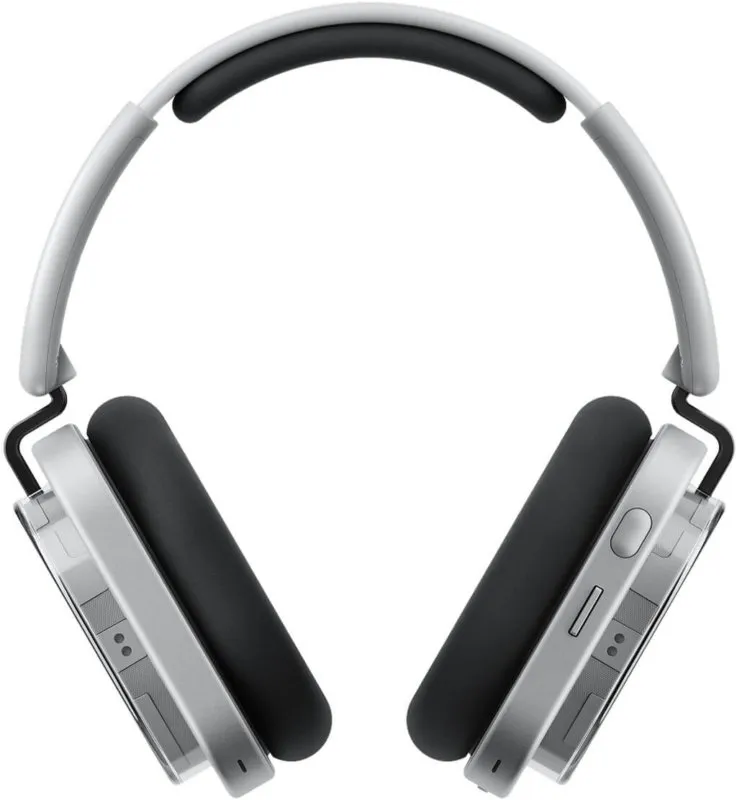
Nothing Headphone (1) – these are large, over-ear headphones from Nothing. The main draw is the cool design and excellent controls, a detailed microphone, and top-tier noise cancellation on par with Sony and Bose. Using the LDAC codec provides a noticeable quality boost. Downsides are average comfort and the necessity of EQ adjustment, as the out-of-the-box sound is comparable to models under $100.
- Good and even sound with EQ
- Microphone – top-tier
- Active noise cancellation and transparency mode are top-tier.
- Controls and app – top-tier!
- Battery life – top-tier!
- Build – beautiful with nuances.
- The sound requires EQ tuning, out of the box it’s at the level of sub-$100 models.
- Minor flaws: the bass adjustment feature in the app didn’t work.
The final sound score is calculated using this formula:
Frequency balance + Detail retrieval + Soundstage + Natural timbre / 4 = Final Sound Score.
. 7.33 Roughly this result is what I expected. You can hear that the headphones are capable of playing, that there is potential. But the sound was tuned a bit incorrectly. I hope the default EQ gets fixed via firmware updates. In this model, EQ tuning is simply a must. Which we will handle shortly. It is not difficult, you do it once and forget it.The main plus of the sound is naturalness and responsiveness to EQ. If the EQ did not fix the situation, this model would be an underdog. With tuning, you can safely add +1 point out of 10 to the final score. The main downside of the sound is that EVERYTHING lacks just a little bit. Bass, mids, highs. Because of which a lot is lost in detail retrieval, plus the soundstage is a bit pushed back. This is sound behind a wall in the next room. And you want it to be right in front of you.
Read more.
Microphone – We assess speech transmission quality by testing the microphone in two main scenarios: quiet and noisy environments.
Quiet environment – This involves recording indoors with minimal background noise. Noisy environment – This means recording outdoors near a six-lane road with maximum traffic noise.
. 8.50 In quiet conditions: 10 In noisy conditions: 7 In noisy conditions, it handles not ideally, but well.Overall feature score — this is the overall score for all device features. This score comes from individual feature ratings (battery life, controls, app, connection stability, and others) and shows how easy and smart the device is for daily use.
. 9.17 Top-tier noise cancellation, made it into the TOP 5 among all models. Transparency mode is also excellent, allowing you to freely talk to a companion without taking off the headphones. Battery life is excellent, up to 54 hours of playback with the LDAC codec and up to 80 hours with the AAC codec. Controls are very convenient, reference-quality, and moreover they are physical, button-based, and feature a wheel. The app is also reference-quality, with a convenient equalizer.Read more.
Final build quality score is the overall score for build quality and materials: comfort, durability, and design. It shows how nice the device is to hold and use, and how long it will last.
. 9.00 Comfortable, you can wear them for 2-3 hours without discomfort, and build quality is also great, even though the coating is a fingerprint magnet. The design is unique, but in person they look MUCH better than in photos.Read more.
8. Sennheiser Momentum True Wireless 4 8.17Wireless Bluetooth headphones for $299 — balanced sound and features
Drivers are the drivers in your headphones that are responsible for creating sound.
DD + PM + BA – means that there are several different types of drivers in these headphones.
DD – “Dynamic Driver” dynamic driver (deep bass, natural sound).
PM – “Planar Magnetic Driver” planar driver (wide soundstage and fast response).
BA – “Balanced Armature Driver” armature driver (accuracy and detail retrieval).
BC – “Bone Conduction Driver” or bone-conduction driver, which transmits vibration to the body of the headphones, transmitting sound through the bone/cartilage to the inner ear.
LDAC – high quality, high speed (Sony).
SBC is the basic Bluetooth standard, low quality.
AAC – Apple standard, good quality, low latency.
aptX – Qualcomm standard, good quality, low latency.
LC3/LC3plus – new Bluetooth LE Audio codecs, efficient compression.
Codecs are audio compression formats that affect sound quality and latency.
Headphone battery life is the playback time without recharging, measured in hours. Manufacturers measure without active noise cancellation (ANC), at medium volume (50-70%) and usually with the AAC codec, as these parameters affect battery consumption. Actual time may vary from 1% to 50%, depending on volume, active noise cancellation features enabled, codec (LDAC or other) and environmental conditions (cold, hot). It is important to consider not only the claimed playback time, but also the charging time and fast charging support.
Bluetooth is a wireless data transmission standard.
Support for new audio technologies.
Improved connection stability.
Reduced power consumption.
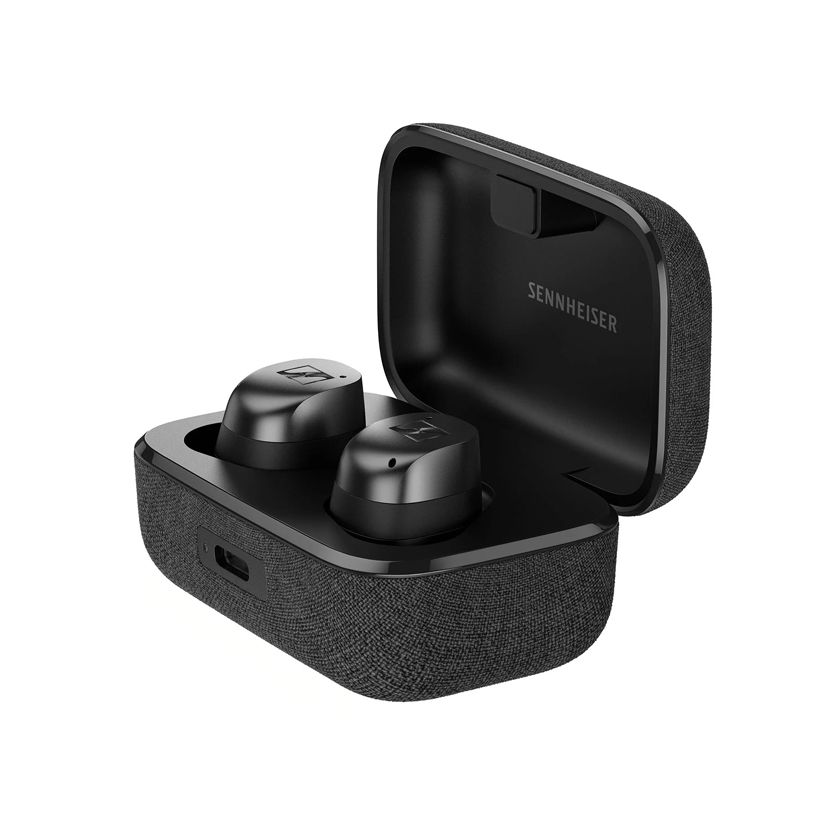
Sennheiser Momentum True Wireless 4 – these wireless Bluetooth earbuds are ideal for those with aptX support on their phone who prefer balanced sound without excessive bass. They offer natural, detailed sound with a decent soundstage, punchy natural bass, and bright highs that can occasionally be a bit much on certain tracks. You also get good ANC, excellent transparency mode, a good microphone, an excellent app, controls, and battery life. If balanced sound is your priority, the Sennheiser Momentum True Wireless 4 are a great choice.
- Pleasant and engaging sound
- Sturdy and reliable build
- Top-tier transparency mode
- Background noise in transparency mode and a rustling sound.
- “Bud” form factor won’t suit everyone in terms of comfort.
The final sound score is calculated using this formula:
Frequency balance + Detail retrieval + Soundstage + Natural timbre / 4 = Final Sound Score.
. 8.19 This is the best option for those looking for a balance of analytical sound and musicality. Best suited for genres: classical, folk, blues, jazz, instrumentals, vocals, etc. The sound turned out top-tier, excellent, though not quite the absolute best. The headphones made it into the 8+ rating league. Sennheiser took steps in the right direction compared to the 3rd version. After properly choosing your ear tips and using the aptX Adaptive codec, you will get sound that you will thoroughly enjoy.Read more.
Microphone – We assess speech transmission quality by testing the microphone in two main scenarios: quiet and noisy environments.
Quiet environment – This involves recording indoors with minimal background noise. Noisy environment – This means recording outdoors near a six-lane road with maximum traffic noise.
. 8.00 In quiet conditions: 9 In noisy conditions: 7Overall feature score — this is the overall score for all device features. This score comes from individual feature ratings (battery life, controls, app, connection stability, and others) and shows how easy and smart the device is for daily use.
. 8.21 Active noise cancellation mostly suppresses low-frequency noise, and the transparency mode is comfortable. Playback time is 7.5 hours and 30 hours with the charging case. Touch controls handle 4 actions for each headphone: for media and ambient control. The app is convenient, functional, and regularly updated.Read more.
Final build quality score is the overall score for build quality and materials: comfort, durability, and design. It shows how nice the device is to hold and use, and how long it will last.
. 8.07 The headphones are large, and the bud form factor won’t suit everyone. No complaints about build quality and materials, the construction is sturdy and reliable. They look good, without causing much excitement. Choice of 4 colors.Read more.
9. Sony WH-1000XM5 8.14Best wireless over-ear headphones with noise cancellation 2026
Drivers are the drivers in your headphones that are responsible for creating sound.
DD + PM + BA – means that there are several different types of drivers in these headphones.
DD – “Dynamic Driver” dynamic driver (deep bass, natural sound).
PM – “Planar Magnetic Driver” planar driver (wide soundstage and fast response).
BA – “Balanced Armature Driver” armature driver (accuracy and detail retrieval).
BC – “Bone Conduction Driver” or bone-conduction driver, which transmits vibration to the body of the headphones, transmitting sound through the bone/cartilage to the inner ear.
LDAC – high quality, high speed (Sony).
SBC is the basic Bluetooth standard, low quality.
AAC – Apple standard, good quality, low latency.
aptX – Qualcomm standard, good quality, low latency.
LC3/LC3plus – new Bluetooth LE Audio codecs, efficient compression.
Codecs are audio compression formats that affect sound quality and latency.
Headphone battery life is the playback time without recharging, measured in hours. Manufacturers measure without active noise cancellation (ANC), at medium volume (50-70%) and usually with the AAC codec, as these parameters affect battery consumption. Actual time may vary from 1% to 50%, depending on volume, active noise cancellation features enabled, codec (LDAC or other) and environmental conditions (cold, hot). It is important to consider not only the claimed playback time, but also the charging time and fast charging support.
Bluetooth is a wireless data transmission standard.
Support for new audio technologies.
Improved connection stability.
Reduced power consumption.
Sony WH-1000XM5 — the best wireless over-ear headphones with noise cancellation. Key advantages include reference-level noise cancellation and transparency, signature low-frequency sound, a detailed microphone, and a comfortable fit. Using the LDAC codec can improve sound quality by up to 15%. A drawback is that the hinges may not withstand intensive use and can break.
- Reference-quality noise cancellation and transparency.
- Signature low-frequency sound
- Detailed microphone and comfortable fit
- Best automatic EQ tuning
- Fragile hinges
- Fingerprint-attracting coating
The final sound score is calculated using this formula:
Frequency balance + Detail retrieval + Soundstage + Natural timbre / 4 = Final Sound Score.
. 8.13 The headphones feature a low-frequency, all-encompassing sound signature typical of the headphone series. The main pluses of the sound are the soundstage, natural timbre, and detail retrieval. There is no artificiality or grain, and there is clear instrument and spatial effect separation. The main downside of the sound is the lows. There is a slight excess in quantity, giving the sound a bassy tint, and bass-heavy tracks sound a bit boomy. Plus, the vocals lack transparency.Read more.
Microphone – We assess speech transmission quality by testing the microphone in two main scenarios: quiet and noisy environments.
Quiet environment – This involves recording indoors with minimal background noise. Noisy environment – This means recording outdoors near a six-lane road with maximum traffic noise.
. 7.00 In quiet conditions: 8 In noisy conditions: 6 The headphones feature 8 microphones, though only 4 are used for calls. In quiet environments, the recording is detailed, the first words are muted, and faint clicking sounds can be heard. In noisy environments, the recording quality is noticeably worse, but you can still make out the words.Overall feature score — this is the overall score for all device features. This score comes from individual feature ratings (battery life, controls, app, connection stability, and others) and shows how easy and smart the device is for daily use.
. 8.53 Active noise cancellation and transparency are of reference-quality. Playback time in our tests is 33 hours, against the claimed 30. Controls are a mix, mostly using touch gestures on the earcup. There is a companion app with awkward navigation and a convenient EQ.Read more.
Final build quality score is the overall score for build quality and materials: comfort, durability, and design. It shows how nice the device is to hold and use, and how long it will last.
. 7.60 The headphones are comfortable, the earcups apply minimal pressure to the ears, and you’ll want to take a break after about 2 hours. No complaints about build and materials. Only the coating is a fingerprint magnet and requires daily care. The weak spot in the design is the hinges, with frequent breakages at the earcup swivel point. The headphones look good, choice of 5 colors.Read more.
10. Sony WH-1000XM6 8.11Good large Bluetooth headphones – a new model from Sony
Drivers are the drivers in your headphones that are responsible for creating sound.
DD + PM + BA – means that there are several different types of drivers in these headphones.
DD – “Dynamic Driver” dynamic driver (deep bass, natural sound).
PM – “Planar Magnetic Driver” planar driver (wide soundstage and fast response).
BA – “Balanced Armature Driver” armature driver (accuracy and detail retrieval).
BC – “Bone Conduction Driver” or bone-conduction driver, which transmits vibration to the body of the headphones, transmitting sound through the bone/cartilage to the inner ear.
LDAC – high quality, high speed (Sony).
SBC is the basic Bluetooth standard, low quality.
AAC – Apple standard, good quality, low latency.
aptX – Qualcomm standard, good quality, low latency.
LC3/LC3plus – new Bluetooth LE Audio codecs, efficient compression.
Codecs are audio compression formats that affect sound quality and latency.
Headphone battery life is the playback time without recharging, measured in hours. Manufacturers measure without active noise cancellation (ANC), at medium volume (50-70%) and usually with the AAC codec, as these parameters affect battery consumption. Actual time may vary from 1% to 50%, depending on volume, active noise cancellation features enabled, codec (LDAC or other) and environmental conditions (cold, hot). It is important to consider not only the claimed playback time, but also the charging time and fast charging support.
Bluetooth is a wireless data transmission standard.
Support for new audio technologies.
Improved connection stability.
Reduced power consumption.
Sony WH-1000XM6 – solid large Bluetooth headphones and the latest in the series. They offer reference noise cancellation and transparency, a low-frequency sound profile, and the convenient proprietary “find my EQ” feature, which simplifies sound tuning to just a couple of clicks. The LDAC codec can improve overall sound quality by up to 10-12%. Downsides include earcups that press on the ears, causing discomfort from the first minutes of use, and hinges that are not durable and require careful handling.
- Reference-level noise cancellation and transparency
- Detailed microphone
- Low-frequency sound without excessive bass
- Earcups press against the ears
- Hinges require careful handling
- Lack of detail retrieval
The final sound score is calculated using this formula:
Frequency balance + Detail retrieval + Soundstage + Natural timbre / 4 = Final Sound Score.
. 8.48 Low-frequency sound, similar in signature to the WH-1000XM4. Vocals sound close, timbres of low and high-frequency instruments are distinguishable. Soundstage processing is mostly in width, with no noticeable artificiality or distortion. Comfortable sound without significant downsides. There is only a slight excess of bass, a lack of transparency in the mids, and a shortage of brightness. Although even this can be fixed in the built-in equalizer in a “couple” of clicks.Read more.
Microphone – We assess speech transmission quality by testing the microphone in two main scenarios: quiet and noisy environments.
Quiet environment – This involves recording indoors with minimal background noise. Noisy environment – This means recording outdoors near a six-lane road with maximum traffic noise.
. 7.40 In quiet conditions: 7.8 In noisy conditions: 7Overall feature score — this is the overall score for all device features. This score comes from individual feature ratings (battery life, controls, app, connection stability, and others) and shows how easy and smart the device is for daily use.
. 8.68 The headphones feature reference-level active noise cancellation and transparency among over-ear models. Battery life in the series remains unchanged – 30-40 hours with noise cancellation enabled. Controls are mostly touch-based for music and calls. The companion app is useful, though the multi-level menu structure is awkward, and with the “find your EQ” feature it’s easier to tune the sound out of 4-5 options of different tonality. The signal is stable at distances up to 10 m using the LDAC codec at the Quality bitrate setting.Read more.
Final build quality score is the overall score for build quality and materials: comfort, durability, and design. It shows how nice the device is to hold and use, and how long it will last.
. 6.33 Awkward, the headphone clamping force is stronger than the previous generation. My maximum time in the headphones is an hour, then I need to take a break. No complaints about build and materials. The weak spot of the headphones is the hinges, which break under heavy use. Design is nice and neat. Choice of 3 colors.Read more.
11. Bose QuietComfort Ultra Earbuds 8.10Best Wireless Noise-Cancelling Headphones – for Sports
Drivers are the drivers in your headphones that are responsible for creating sound.
DD + PM + BA – means that there are several different types of drivers in these headphones.
DD – “Dynamic Driver” dynamic driver (deep bass, natural sound).
PM – “Planar Magnetic Driver” planar driver (wide soundstage and fast response).
BA – “Balanced Armature Driver” armature driver (accuracy and detail retrieval).
BC – “Bone Conduction Driver” or bone-conduction driver, which transmits vibration to the body of the headphones, transmitting sound through the bone/cartilage to the inner ear.
LDAC – high quality, high speed (Sony).
SBC is the basic Bluetooth standard, low quality.
AAC – Apple standard, good quality, low latency.
aptX – Qualcomm standard, good quality, low latency.
LC3/LC3plus – new Bluetooth LE Audio codecs, efficient compression.
Codecs are audio compression formats that affect sound quality and latency.
Headphone battery life is the playback time without recharging, measured in hours. Manufacturers measure without active noise cancellation (ANC), at medium volume (50-70%) and usually with the AAC codec, as these parameters affect battery consumption. Actual time may vary from 1% to 50%, depending on volume, active noise cancellation features enabled, codec (LDAC or other) and environmental conditions (cold, hot). It is important to consider not only the claimed playback time, but also the charging time and fast charging support.
Bluetooth is a wireless data transmission standard.
Support for new audio technologies.
Improved connection stability.
Reduced power consumption.
Bose QuietComfort Ultra Earbuds are the best noise-cancelling in-ear TWS models of 2025 and a benchmark on mychooz.com. Key reasons to buy include benchmark noise cancellation, pleasant bass sound, a comfortable fit for sports, and the best spatial audio mode. With the aptX Adaptive codec, sound quality improves by up to 15%. Downsides include poor microphone noise cancellation and an inconvenient proprietary app.
- Reference-quality active noise cancellation (ANC) among true wireless earbuds
- Top-tier low-frequency sound
- Best Spatial Audio performance
- Comfortable fit for running and sports
- Poor microphone active noise cancellation (ANC)
- Clunky app
- IPx4 dust and water resistance. No case protection.
The final sound score is calculated using this formula:
Frequency balance + Detail retrieval + Soundstage + Natural timbre / 4 = Final Sound Score.
. 8.26 Bass-heavy, with a slight excess of bass and mids. You can tweak the sound in the app EQ to get a comfortable listening experience. Vocals and instruments are clear, with no noticeable digital processing or grain. The soundstage only feels somewhat enclosed, just a bit wider than your head. Still, you get width and depth with good instrument separation.Read more.
Microphone – We assess speech transmission quality by testing the microphone in two main scenarios: quiet and noisy environments.
Quiet environment – This involves recording indoors with minimal background noise. Noisy environment – This means recording outdoors near a six-lane road with maximum traffic noise.
. 6.50 In quiet conditions: 9 In noisy conditions: 4 Each earbud has 4 microphones and features active noise cancellation (ANC). In a quiet room, recordings are detailed and clear, with a slight echo. In noisy conditions with a handheld vacuum cleaner, the voice is unintelligible, as the ANC struggles. An additional road noise test will follow later.Overall feature score — this is the overall score for all device features. This score comes from individual feature ratings (battery life, controls, app, connection stability, and others) and shows how easy and smart the device is for daily use.
. 7.92 The earbuds feature reference-quality active noise cancellation (ANC), and the transparency mode is on par with the reference. Claimed battery life is 6 hours and 24 hours with the charging case. Controls are convenient, allowing you to perform basic playback actions. The app is clunky, and features are duplicated 2-3 times. Connection stability is solid, though with aptX Adaptive, occasional dropouts happen at a distance of 8-9 meters.Read more.
Final build quality score is the overall score for build quality and materials: comfort, durability, and design. It shows how nice the device is to hold and use, and how long it will last.
. 8.00 The earbuds fit snugly in your ears and do not fall out while running or working out. After 2-3 hours of use, minor fatigue sets in. No complaints about materials and build quality, except for the glossy finish which is a fingerprint magnet and gets dirty quickly. The earbuds look good, though they do not spark any particular excitement.Read more.
12. Samsung Galaxy Buds 4 8.10Best in-ear earbuds 2026 – for Samsung and Android
Drivers are the drivers in your headphones that are responsible for creating sound.
DD + PM + BA – means that there are several different types of drivers in these headphones.
DD – “Dynamic Driver” dynamic driver (deep bass, natural sound).
PM – “Planar Magnetic Driver” planar driver (wide soundstage and fast response).
BA – “Balanced Armature Driver” armature driver (accuracy and detail retrieval).
BC – “Bone Conduction Driver” or bone-conduction driver, which transmits vibration to the body of the headphones, transmitting sound through the bone/cartilage to the inner ear.
LDAC – high quality, high speed (Sony).
SBC is the basic Bluetooth standard, low quality.
AAC – Apple standard, good quality, low latency.
aptX – Qualcomm standard, good quality, low latency.
LC3/LC3plus – new Bluetooth LE Audio codecs, efficient compression.
Codecs are audio compression formats that affect sound quality and latency.
Headphone battery life is the playback time without recharging, measured in hours. Manufacturers measure without active noise cancellation (ANC), at medium volume (50-70%) and usually with the AAC codec, as these parameters affect battery consumption. Actual time may vary from 1% to 50%, depending on volume, active noise cancellation features enabled, codec (LDAC or other) and environmental conditions (cold, hot). It is important to consider not only the claimed playback time, but also the charging time and fast charging support.
Bluetooth is a wireless data transmission standard.
Support for new audio technologies.
Improved connection stability.
Reduced power consumption.
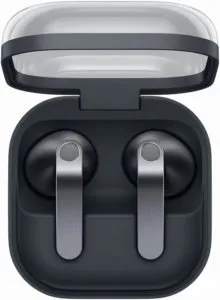
Samsung Galaxy Buds 4 – the best in-ear earbuds for 2026 based on overall criteria and sound quality. They work well with Samsung, iPhone, and Android devices. These compact earbuds are versatile for home, outdoors, the gym, and work, though they have a weak microphone. The main limitation is within the Samsung ecosystem, where you’ll only get the top SSC codec, impacting sound detail, and many useful features are exclusive to Samsung devices. However, you can achieve pleasant, detailed sound on any source using basic AAC or SBC codecs, and they still rank #1. Connection with a Samsung phone is more of a bonus than a limitation.
- Balanced sound with an emphasis on mids.
- Top-tier transparency mode and active noise cancellation (ANC) among open-fit earbuds.
- Samsung ecosystem: translator, Spatial Audio, seamless switching, etc.
- Maximum sound quality only with Samsung flagships.
- Key ecosystem features require flagship devices.
- No dedicated app for iOS.
The final sound score is calculated using this formula:
Frequency balance + Detail retrieval + Soundstage + Natural timbre / 4 = Final Sound Score.
. 8.13 The main strong point of the sound is the wide soundstage and intimate, emotional vocals, which are key highlights of these earbuds. Another strong point is engagement—this sound never gets boring, and you want to listen to it for hours. There are no glaring weaknesses. However, there are just average criteria: a balanced, not quite powerful bass. Moderate highs with weak naturalness. Overall, average naturalness and detail retrieval. But considering the open-fit format, this is the best sound available today when summing up all parameters. Volume at 80-90% is enough; headroom is less than one would want, but listening is comfortable.Read more.
Microphone – We assess speech transmission quality by testing the microphone in two main scenarios: quiet and noisy environments.
Quiet environment – This involves recording indoors with minimal background noise. Noisy environment – This means recording outdoors near a six-lane road with maximum traffic noise.
. 7.00 In quiet conditions: 7 In noisy conditions: 7 Noticeably unchanged in overall quality compared to the buds 3 version. The earbuds are below average for the market regarding microphone quality, especially in noisy conditions—it is better to switch to your phone, but in quiet environments, you can chat comfortably.Overall feature score — this is the overall score for all device features. This score comes from individual feature ratings (battery life, controls, app, connection stability, and others) and shows how easy and smart the device is for daily use.
. 7.58 Feature-wise, the earbuds excel in active noise cancellation (ANC) for open-fit earbuds, and they also feature a reference-quality transparency mode. Good controls with swipes up and down for volume and pinching the stem to manage playback, active noise cancellation (ANC) / transparency, and calls. There is an app for Android, but none for iOS. Stable connection with Bluetooth version 6.1. Battery life is 5-6 hours for the earbuds themselves, sitting at the lower boundary of the standard. Other weaknesses: no control customization, and maximum features require flagship Samsung devices—translator, Spatial Audio, multipoint, etc.Read more.
Final build quality score is the overall score for build quality and materials: comfort, durability, and design. It shows how nice the device is to hold and use, and how long it will last.
. 8.83 The earbuds are comfortable to use, small, and lightweight. The fit is comfortable—in Vladimir Papazov’s tests. In Alexander Moyseenko’s tests, there was discomfort when the sound nozzle pressed against the base of the ear canal. The build is sturdy and reliable, with downsides limited to a drop in dust and water resistance from IP57 to IP54 and a fingerprint-magnet glossy finish. The earbuds look good, better than the 3rd generation.Read more.
13. Apple AirPods 4 ANC 8.05Best In-Ear Earbuds for iPhone
Drivers are the drivers in your headphones that are responsible for creating sound.
DD + PM + BA – means that there are several different types of drivers in these headphones.
DD – “Dynamic Driver” dynamic driver (deep bass, natural sound).
PM – “Planar Magnetic Driver” planar driver (wide soundstage and fast response).
BA – “Balanced Armature Driver” armature driver (accuracy and detail retrieval).
BC – “Bone Conduction Driver” or bone-conduction driver, which transmits vibration to the body of the headphones, transmitting sound through the bone/cartilage to the inner ear.
LDAC – high quality, high speed (Sony).
SBC is the basic Bluetooth standard, low quality.
AAC – Apple standard, good quality, low latency.
aptX – Qualcomm standard, good quality, low latency.
LC3/LC3plus – new Bluetooth LE Audio codecs, efficient compression.
Codecs are audio compression formats that affect sound quality and latency.
Headphone battery life is the playback time without recharging, measured in hours. Manufacturers measure without active noise cancellation (ANC), at medium volume (50-70%) and usually with the AAC codec, as these parameters affect battery consumption. Actual time may vary from 1% to 50%, depending on volume, active noise cancellation features enabled, codec (LDAC or other) and environmental conditions (cold, hot). It is important to consider not only the claimed playback time, but also the charging time and fast charging support.
Bluetooth is a wireless data transmission standard.
Support for new audio technologies.
Improved connection stability.
Reduced power consumption.
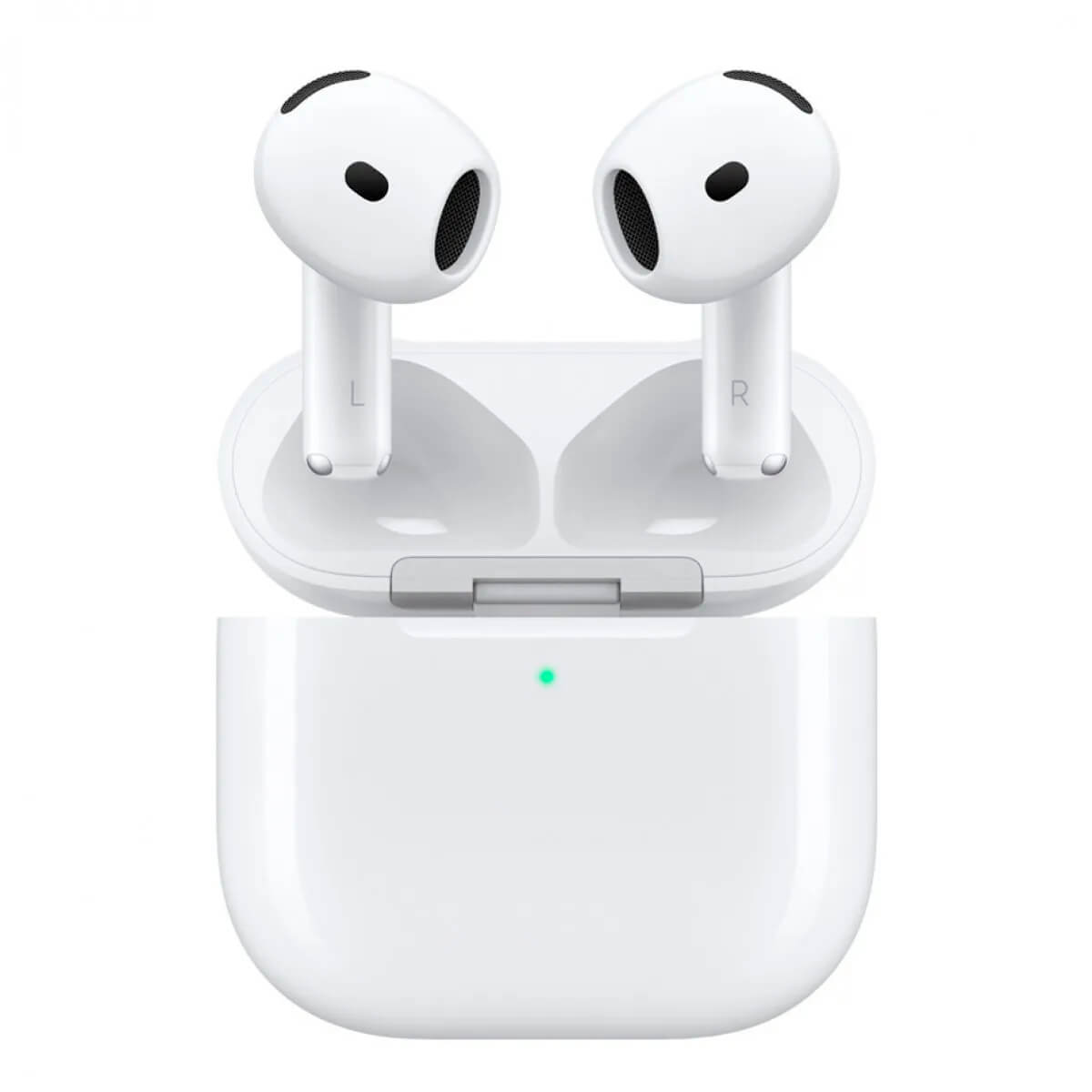
Apple AirPods 4 ANC – the best in-ear earbuds for iPhone and Apple devices. They provide good sound, Spatial Audio, and Adaptive EQ, along with good battery life, a decent microphone, and noise cancellation. They will work with Android, but like with Samsung and Huawei, the Apple ecosystem presents limitations. Some features like the proprietary assistant, app, EQ settings, and Spatial Audio will be unavailable.
- The sound is soft and musical, ranking top-tier for open-fit earbuds.
- Microphone of excellent quality
- Active noise cancellation and transparency mode are the best among open-fit earbuds.
- Comfortable and beautiful design.
- No volume control.
- The app is available only on iOS, leaving functionality stripped-down on Android.
- Battery life is only 4 hours with ANC enabled and 20 hours total with the case.
- Non-critical cons: the glossy finish scratches quickly, and there is no cable included in the box.
The final sound score is calculated using this formula:
Frequency balance + Detail retrieval + Soundstage + Natural timbre / 4 = Final Sound Score.
. 7.56 Among open-fit earbuds, this is first-class sound. Soft, voluminous, enveloping, and comfortable, allowing you to relax and lose yourself in your favorite music. I really liked the sound. If we take the current reference like the Samsung Galaxy Buds 4 or the previous Huawei FreeBuds 6, those models edge ahead slightly in points. The main plus of the sound is the spaciousness and overall harmony; it is soft and pleasant, you never get tired of it, and it draws you in. The main minus of the sound is that naturalness could be better, and vocals closer. However, this is not critical.Read more.
Microphone – We assess speech transmission quality by testing the microphone in two main scenarios: quiet and noisy environments.
Quiet environment – This involves recording indoors with minimal background noise. Noisy environment – This means recording outdoors near a six-lane road with maximum traffic noise.
. 9.00 In quiet conditions: 10 In noisy conditions: 8Overall feature score — this is the overall score for all device features. This score comes from individual feature ratings (battery life, controls, app, connection stability, and others) and shows how easy and smart the device is for daily use.
. 8.00 Noise cancellation is at a reference level for open-fit earbuds, feeling almost like in-ear earbuds. An unbelievable level. Transparency mode is perfect and reference-grade, making it feel as if you aren’t wearing earbuds. Battery life is poor: 5 hours and 30 minutes without ANC, and 4 hours and 20 minutes with ANC is low. Controls are convenient via stem pinches, but there is no volume control through swipes. The app is great for iOS, but there is no app for Android.Read more.
Final build quality score is the overall score for build quality and materials: comfort, durability, and design. It shows how nice the device is to hold and use, and how long it will last.
. 9.33 They are very comfortable for 2 to 3 hours without discomfort. Durability is fine overall, except the earbuds scratch very easily. The design follows the Apple style and looks beautiful. The charging case is the smallest I have ever seen, and the earbuds themselves are miniature. I have no complaints about the build quality.Read more.
14. Sony WF-1000XM5 7.98Best Wireless Headphones — for Noise Cancellation
Drivers are the drivers in your headphones that are responsible for creating sound.
DD + PM + BA – means that there are several different types of drivers in these headphones.
DD – “Dynamic Driver” dynamic driver (deep bass, natural sound).
PM – “Planar Magnetic Driver” planar driver (wide soundstage and fast response).
BA – “Balanced Armature Driver” armature driver (accuracy and detail retrieval).
BC – “Bone Conduction Driver” or bone-conduction driver, which transmits vibration to the body of the headphones, transmitting sound through the bone/cartilage to the inner ear.
LDAC – high quality, high speed (Sony).
SBC is the basic Bluetooth standard, low quality.
AAC – Apple standard, good quality, low latency.
aptX – Qualcomm standard, good quality, low latency.
LC3/LC3plus – new Bluetooth LE Audio codecs, efficient compression.
Codecs are audio compression formats that affect sound quality and latency.
Headphone battery life is the playback time without recharging, measured in hours. Manufacturers measure without active noise cancellation (ANC), at medium volume (50-70%) and usually with the AAC codec, as these parameters affect battery consumption. Actual time may vary from 1% to 50%, depending on volume, active noise cancellation features enabled, codec (LDAC or other) and environmental conditions (cold, hot). It is important to consider not only the claimed playback time, but also the charging time and fast charging support.
Bluetooth is a wireless data transmission standard.
Support for new audio technologies.
Improved connection stability.
Reduced power consumption.
Sony WF-1000XM5 – these are the best wireless noise-cancelling headphones for 2026, despite being released in 2023. They feature a low-frequency sound profile with slightly recessed mids and subdued highs lacking presence. The main drawback is their less-than-comfortable design.
- Top-tier low-frequency sound
- Top-tier active noise cancellation and transparency
- Battery capacity hasn’t changed in 2 years
- Without properly fitted ear tips, noise cancellation works worse
- The bud form factor may not fit everyone
The final sound score is calculated using this formula:
Frequency balance + Detail retrieval + Soundstage + Natural timbre / 4 = Final Sound Score.
. 7.97 Bass-heavy, moderately bright, spacious, and soft. They predominate without overpowering the mids and highs. The bass is tight, pleasant, and velvety. Vocals are easily readable and require no effort; everything sounds upfront, natural, harmonious, and pleasant. High frequencies lack a bit in quantity. Detail retrieval is excellent, making every instrument easy to distinguish. The soundstage is wider than your head, and the sound is natural with no artificial timbre or grain.Read more.
Microphone – We assess speech transmission quality by testing the microphone in two main scenarios: quiet and noisy environments.
Quiet environment – This involves recording indoors with minimal background noise. Noisy environment – This means recording outdoors near a six-lane road with maximum traffic noise.
. 7.00 In quiet conditions: 8 In noisy conditions: 6 Good, same as in Sony WF-1000XM4, with zero sound differences.Overall feature score — this is the overall score for all device features. This score comes from individual feature ratings (battery life, controls, app, connection stability, and others) and shows how easy and smart the device is for daily use.
. 8.00 Active noise cancellation is on par with top models, and with the right ear tips, these earbuds can compete with reference models. The transparency mode is convenient, making it comfortable to chat while wearing the earbuds. Battery life in our tests reached up to 10 hours with the codec enabled and 29 hours with the charging case. Touch controls offer 4 actions for the left earbud and 5 actions for the right earbud. The app is feature-rich with useful settings, though the menu structure is illogical and takes time to learn.Read more.
Final build quality score is the overall score for build quality and materials: comfort, durability, and design. It shows how nice the device is to hold and use, and how long it will last.
. 8.00 The earbuds are comfortable, and a couple of hours without discomfort is guaranteed. That said, it is important to choose the right ear tips since the primary fit in the ears relies on them. No complaints about build quality, though the finish is a fingerprint magnet and scratches easily. The earbuds look nice, without being particularly exciting. Available in 3 colors.Read more.
15. Huawei Freebuds 5 7.90Best In-Ear Earbuds for Android Under $80
Drivers are the drivers in your headphones that are responsible for creating sound.
DD + PM + BA – means that there are several different types of drivers in these headphones.
DD – “Dynamic Driver” dynamic driver (deep bass, natural sound).
PM – “Planar Magnetic Driver” planar driver (wide soundstage and fast response).
BA – “Balanced Armature Driver” armature driver (accuracy and detail retrieval).
BC – “Bone Conduction Driver” or bone-conduction driver, which transmits vibration to the body of the headphones, transmitting sound through the bone/cartilage to the inner ear.
LDAC – high quality, high speed (Sony).
SBC is the basic Bluetooth standard, low quality.
AAC – Apple standard, good quality, low latency.
aptX – Qualcomm standard, good quality, low latency.
LC3/LC3plus – new Bluetooth LE Audio codecs, efficient compression.
Codecs are audio compression formats that affect sound quality and latency.
Headphone battery life is the playback time without recharging, measured in hours. Manufacturers measure without active noise cancellation (ANC), at medium volume (50-70%) and usually with the AAC codec, as these parameters affect battery consumption. Actual time may vary from 1% to 50%, depending on volume, active noise cancellation features enabled, codec (LDAC or other) and environmental conditions (cold, hot). It is important to consider not only the claimed playback time, but also the charging time and fast charging support.
Bluetooth is a wireless data transmission standard.
Support for new audio technologies.
Improved connection stability.
Reduced power consumption.
Huawei Freebuds 5 – the best in-ear earbuds for Android under $80. Their price has dropped in 2026, and for the money, they offer the best sound available. Released in 2023, they remain relevant. The sound and microphone are close to reference quality, and you can wear them for a couple of hours without discomfort.
- Top-tier sound among open-fit earbuds
- Microphone on par with the reference model
- Unique design and 2 hours of use without discomfort
- Boxy sound out of the box.
- Slight white noise with noise cancellation enabled.
The final sound score is calculated using this formula:
Frequency balance + Detail retrieval + Soundstage + Natural timbre / 4 = Final Sound Score.
. 8.01 With the LDAC codec, sound improves by up to 30%. The earbuds feature a bass-heavy sound profile, slightly recessed mids, and subdued highs. I did not notice any blatant artificial timbre, and grain is kept to a minimum. The sound is spacious and full-bodied, with good instrument separation across the soundstage. Detail retrieval is good, though parsing instrument textures is harder compared to top models. It lacks sonic expressiveness, a bit of brightness, and airiness, without which this kind of sound gets old fast. EQ tuning compensates for some of these shortcomings.Read more.
Microphone – We assess speech transmission quality by testing the microphone in two main scenarios: quiet and noisy environments.
Quiet environment – This involves recording indoors with minimal background noise. Noisy environment – This means recording outdoors near a six-lane road with maximum traffic noise.
. 8.75 In quiet conditions: 9.5 In noisy conditions: 8 Clean and detailed recording without external noise. In noisy conditions, speech remains highly resolved, and noise cancellation does not suppress noise instantly.Overall feature score — this is the overall score for all device features. This score comes from individual feature ratings (battery life, controls, app, connection stability, and others) and shows how easy and smart the device is for daily use.
. 7.00 Active noise cancellation reduces PC or laptop background noise. Transparency mode is absent. Playback time in our tests differs slightly from the manufacturer’s specs. The control sensor on the earbuds responds everywhere, and the volume is changed by swiping up and down. The companion app is convenient and well-thought-out.Read more.
Final build quality score is the overall score for build quality and materials: comfort, durability, and design. It shows how nice the device is to hold and use, and how long it will last.
. 9.00 The earbuds feature a comfortable fit, with minor fatigue setting in after a couple of hours of use. No complaints about build quality and materials. The earbud design is unique, with 3 colors to choose from.