

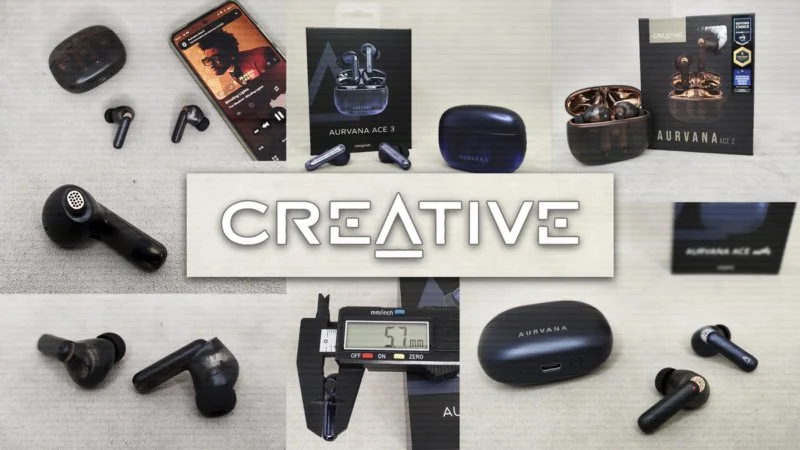
This is a rating of the three best wireless earbuds from Creative in the TWS form factor, tested on MyChooz. The models in this rating use a hybrid sound system with a dynamic driver and an xMEMS driver. These Bluetooth earbuds offer top-tier sound. Creative tunes the xMEMS driver better than SoundPEATS earbuds, resulting in more pleasant and melodious audio. The downside for Creative TWS earbuds is average functionality, with the manufacturer lagging 2-3 years behind in some features.
Creative doesn’t have a proprietary ecosystem or specific sound source adaptations. This means you get access to all the earbuds’ features and capabilities. The earbuds support the LDAC or aptX codec family, so you won’t have compatibility issues on Android devices. If needed, you can always get the right codec for your phone or PC with a wireless adapter.
About the Creative Brand.
Learn moreFounding. Creative Technology, better known as Creative or Creative Labs, was founded on July 1, 1981, in Singapore by entrepreneur Sim Wong Hoo and his schoolmate Ng Kai Wa. It started as a computer repair workshop. The founders also developed hardware independently. Their first successful product was a memory expansion card for the Apple II PC. By the mid-80s, they shifted to modifying PCs for the Chinese market, experimenting with hardware speech synthesis and sound playback on PCs.
In 1987, their experience led to the creation of the first sound card, the Creative Music System (C/MS). Two years later, the Sound Blaster sound card debuted, launching an entire series of popular sound cards for Windows.
Focus. The company specializes in audio technologies and multimedia for consumers, targeting gamers, audiophiles, and content creators:
- Computer speakers.
- Portable Bluetooth speakers.
- Earbuds and headsets.
- Discrete and external sound cards (DACs and amplifiers).
- Gaming soundbars and audio cards for streamers.
- Super X-Fi (SXFI) spatial sound technology.
- Audio transmitters supporting various audio codecs.
Sound Profile. The tonal balance varies across different earbud models; there’s no single recognizable sound signature. Typically, the earbuds emphasize low frequencies.
Sound Tuning. The proprietary Creative app is available for Android and iOS. It features a 10-band manual equalizer and adjustable low/high frequency balance, along with EQ presets. Some models, like the Aurvana Ace Mimi, support personalized sound tuning.
Let’s dive deeper into the LDAC codec, which is relevant for all low-compression codecs: its compatibility, actual sound quality improvement, and where it works best.
Learn moreSony developed the LDAC codec, and it’s used in most of the company’s proprietary audio gear.
Compatibility. The LDAC codec is the second most common audio codec on Android after AAC and SBC. LDAC offers less compressed, more detailed sound, with the best quality achieved using the “quality” preset at a bitrate of 909/990 Kbps. The codec was introduced in Android 8.0 and is supported by most phones and tablets, except for some models where the manufacturer has removed it or it’s hardware-locked. Therefore, in 99.9% of cases, an Android source will be compatible with earbuds FEaturing the LDAC codec.
Impact on Sound: Expectation vs. Reality. Many potential owners of earbuds with the LDAC codec mistakenly believe its presence guarantees high-quality sound. The formula “source with LDAC” + “earbuds with LDAC” = “quality sound” doesn’t always hold true. The codec acts as a data packer, and the better its parameters, the fewer data losses occur during unpacking. The actual sound system is crucial: the type and number of drivers, driver design, DAC and amplifiers, acoustic design, and other hardware/software parameters. If any part of this system has a flaw, like cost-cutting on components or a design issue, the codec’s effectiveness is reduced. Simply put, if the sound system can’t handle it, the codec won’t make a difference.
Where does the LDAC codec make a difference? Typically, you won’t notice a significant improvement with earbuds under $50, or the improvement is minimal. A noticeable difference is more common in earbuds priced at $100+.
The sound quality improvement, and don’t be surprised by this, is often noticeable in mid-range and higher-priced models. This is because lower production costs often mean more limitations. However, a high price tag doesn’t always guarantee superior quality; some models have high markups that go to shareholders or celebrities. Therefore, exceptions exist in both cheaper and more expensive models.
Real Improvement with LDAC Codec. Based on my experience testing earbuds with various driver types and designs, the improvement ranges from 1-3% to 15-20%. These figures are approximate, as testing relies on listening. I haven’t encountered any devices specifically for measuring this kind of quality improvement.
It’s important to understand two key points. First, the LDAC codec enhances detail. It doesn’t improve naturalness or the soundstage, nor does it alter the sound balance.
Second, the percentage increase varies for each pair of earbuds. A 15-20% improvement in earbuds scoring 5-6 out of 10 is not comparable to a 3-5% improvement in earbuds scoring 8-9. Therefore, when you see a high percentage increase attributed to the codec, it’s worth considering the overall sound score of the earbuds.
Which codec is better – LDAC or LHDC?
Learn moreLDAC is better in terms of availability, while LHDC is better in terms of capabilities.
| Maximum bitrate | Up to 990 kbps | Up to 900 kbps (V 3/4), up to 1000 kbps (v5) |
| Maximum frequency / Bitrate | 24 bit / 96 kHz | 24 bit / 96 kHz (v3/v4), up to 24 bit / 192 kHz (v5) |
| Bitrate control | 330 / 660 / 990 kbps, adaptive bitrate – 330-990 kbps. | 400 / 500 / 900 / 1000 kbps, adaptive bitrate – 128-1000 kbps. |
| Audio latency | ~160–200 ms | ~200 ms (there is an LLAC / LHDC LL low latency mode up to 30 ms |
| Integration into Android | Native support from Android 8.0+ | Basic structure in AOSP from Android 10, native support v5 from Android 17 |
| Lossless mode | No | LHDC 5.0 claims lossless |
The characteristics of both codecs are comparable, with LHDC having a slight edge. It offers more adjustable parameters, a higher sampling frequency, and includes LHDC lossless and low latency switches.
However, LDAC is far more prevalent. Since it’s been available since Android 8.0+, compatibility is rarely an issue. More earbuds on the market support LDAC across various price points, and there are more USB adapters with LDAC support. In contrast, only two USB adapters support LHDC, and only one works without problems. Still, LHDC might catch up to and even surpass LDAC in prevalence in the future, thanks to more flexible licensing and minimal royalty fees that will quickly popularize it among manufacturers.
When it comes to signal stability, both codecs are on the same level.
In terms of sound, both codecs deliver similar quality, and you’d need to listen very closely to discern the difference, assuming the earbuds support both LDAC and LHDC. Therefore, it’s best to focus on the sound system first, then consider the codec. More about codecs.
Which codec is better – aptX, aptX HD, aptX Adaptive, or aptX Lossless?
Learn moreHere’s a comparative table of the main codec parameters:
| Launch year | < 2009 | 2016 | 2018 | 2021 |
| Bitrate | 352 kbps | 576 kbps | 279–420 kbps (dynamic) | ~1.1–1.2 Mbps (dynamic, up to 860 kbps lossy + lossless layer) |
| Bit depth | 16-bit | 24-bit | 16 / 24-bit | 16 / 24-bit |
| Sampling frequency | 44.1 / 48 kHz | 44.1 / 48 kHz | 44.1 / 48 / 96 kHz | 44.1 / 48 / 96 kHz |
| Compression type | Lossy (4:1) | Lossy (4:1) | Lossy (5:1–10:1, adaptive) | Lossless CD (16/44.1) + lossy Hi-Res |
| Signal latency | ~150–200 ms | ~150–200 ms | ≈ 50–80 ms | ~80 ms |
| aptX Voice | No | No | Yes | Yes |
Looking at the table, aptX Lossless is clearly the best codec. However, aptX Lossless isn’t a standalone codec but an add-on to aptX Adaptive. There’s no direct selection for sound quality parameters in Android settings, and aptX Lossless only activates under specific conditions:
- Support for Snapdragon Sound by both the phone and earbuds.
- Clear airwaves – no Bluetooth and Wi-Fi interference.
- The aptX Lossless option is enabled (if available in your phone’s settings).
If these conditions aren’t met, and you only have one SoC with aptX Lossless support, the audio will transmit via the aptX Adaptive codec. aptX Adaptive also activates in the presence of interference, which can be as simple as nearby Wi-Fi hotspots in apartment buildings.
More about audio codecs.
How can you get the LDAC, aptX Adaptive, or aptX Lossless codec?
Learn moreIf your earbuds support a specific codec but your phone, tablet, or PC doesn’t, you can use a USB adapter. This device, about the size of a Bluetooth adapter, plugs into your phone or PC’s port. Your earbuds then connect to the adapter, receiving the signal with the desired codec.
Which adapter to choose?
- QCC Dongle Pro2 – if you want it all at once. The adapter supports: LHDC 5.0, LDAC, aptX Adaptive, aptX HD, aptX Lossless; LE Audio and Auracast are declared.
- FiiO Air Link – a universal adapter, just cheaper. Codec support: SBC, aptX, aptX Low Latency, aptX HD, aptX Adaptive, LDAC, and aptX Lossless.
- 1Mii B03Pro – a desktop option with both transmitter and receiver. It supports: SBC, AAC, aptX, aptX HD, aptX LL, and aptX Adaptive.
- UGREEN BT701: A compact, universal option. Codec support includes Classic Bluetooth (SBC, aptX, aptX HD, aptX Adaptive-LL, aptX Adaptive-HQ) and LE Audio (Auracast, Unicast-Low Latency, Unicast-Lossless).
- UGREEN BT501: A simplified version of the BT701. Supports SBC, aptX, aptX Low Latency, aptX HD, and aptX Adaptive.
Check out our ranking for more details on USB adapters — Best Bluetooth Adapters for Computers and Earbuds.
EMMA — Experts + Methodology + MyChoozers + Algorithm.
Every model goes through identical tests; the score is calculated automatically with fixed weights — a spot in the rating cannot be bought.
TOP-3 Best CREATIVE Wireless Earbuds – Rating
1. CREATIVE Aurvana Ace 2 7.97Best TWS earbuds under $100 with AptX Lossless and AptX Adaptive Codecs
Drivers are the drivers in your headphones that are responsible for creating sound.
DD + PM + BA – means that there are several different types of drivers in these headphones.
DD – “Dynamic Driver” dynamic driver (deep bass, natural sound).
PM – “Planar Magnetic Driver” planar driver (wide soundstage and fast response).
BA – “Balanced Armature Driver” armature driver (accuracy and detail retrieval).
BC – “Bone Conduction Driver” or bone-conduction driver, which transmits vibration to the body of the headphones, transmitting sound through the bone/cartilage to the inner ear.
LDAC – high quality, high speed (Sony).
SBC is the basic Bluetooth standard, low quality.
AAC – Apple standard, good quality, low latency.
aptX – Qualcomm standard, good quality, low latency.
LC3/LC3plus – new Bluetooth LE Audio codecs, efficient compression.
Codecs are audio compression formats that affect sound quality and latency.
Headphone battery life is the playback time without recharging, measured in hours. Manufacturers measure without active noise cancellation (ANC), at medium volume (50-70%) and usually with the AAC codec, as these parameters affect battery consumption. Actual time may vary from 1% to 50%, depending on volume, active noise cancellation features enabled, codec (LDAC or other) and environmental conditions (cold, hot). It is important to consider not only the claimed playback time, but also the charging time and fast charging support.
Bluetooth is a wireless data transmission standard.
Support for new audio technologies.
Improved connection stability.
Reduced power consumption.
Key selling point: top-tier sound with an equalizer suitable for analytical listeners and various music genres. It includes the aptX Lossless codec, has a pleasant appearance, and offers good noise cancellation with the right ear tips. Significant downsides include limited functionality: an average transparency mode, inconvenient controls, restricted app features, no auto-pause, and no dual connection.
- Top-tier sound with EQ
- Good active noise cancellation if you pick the right ear tips
- Average transparency mode
- Inconvenient controls
- The only truly useful feature in the app is the EQ.
- No auto-pause and no multipoint connection
The final sound score is calculated using this formula:
Frequency balance + Detail retrieval + Soundstage + Natural timbre / 4 = Final Sound Score.
. 8.63 The headphones offer bright highs, natural timbre, and a good soundstage. On the downside, they lack punchy, textured bass and have recessed mids, making vocals sound distant. While the model has EQ potential, even a preset can’t fully fix the midrange issue.Read more.
Microphone – We assess speech transmission quality by testing the microphone in two main scenarios: quiet and noisy environments.
Quiet environment – This involves recording indoors with minimal background noise. Noisy environment – This means recording outdoors near a six-lane road with maximum traffic noise.
. 7.00 In quiet conditions: 8 In noisy conditions: 6Overall feature score — this is the overall score for all device features. This score comes from individual feature ratings (battery life, controls, app, connection stability, and others) and shows how easy and smart the device is for daily use.
. 6.92 Active noise cancellation effectively blocks background noise if you use the right ear tips. However, transparency mode is average and not ideal for conversations. Battery life in our tests reached up to 6 hours for the headphones and 28 hours with the charging case. The touch controls require three taps per headphone, which is inconvenient, and the app is basic.Read more.
Final build quality score is the overall score for build quality and materials: comfort, durability, and design. It shows how nice the device is to hold and use, and how long it will last.
. 7.90 The fit is good, and the headphones don’t cause pressure, though minor fatigue sets in after 30-40 minutes. Build quality is average; the plastic thickness feels a bit thin. There are no defects, but micro-scratches appear within the first week. Only one color option is available: transparent copper.Read more.
2. Creative Aurvana Ace Mimi 7.94Best in-ear TWS earbuds – with personalized sound tuning
Drivers are the drivers in your headphones that are responsible for creating sound.
DD + PM + BA – means that there are several different types of drivers in these headphones.
DD – “Dynamic Driver” dynamic driver (deep bass, natural sound).
PM – “Planar Magnetic Driver” planar driver (wide soundstage and fast response).
BA – “Balanced Armature Driver” armature driver (accuracy and detail retrieval).
BC – “Bone Conduction Driver” or bone-conduction driver, which transmits vibration to the body of the headphones, transmitting sound through the bone/cartilage to the inner ear.
LDAC – high quality, high speed (Sony).
SBC is the basic Bluetooth standard, low quality.
AAC – Apple standard, good quality, low latency.
aptX – Qualcomm standard, good quality, low latency.
LC3/LC3plus – new Bluetooth LE Audio codecs, efficient compression.
Codecs are audio compression formats that affect sound quality and latency.
Headphone battery life is the playback time without recharging, measured in hours. Manufacturers measure without active noise cancellation (ANC), at medium volume (50-70%) and usually with the AAC codec, as these parameters affect battery consumption. Actual time may vary from 1% to 50%, depending on volume, active noise cancellation features enabled, codec (LDAC or other) and environmental conditions (cold, hot). It is important to consider not only the claimed playback time, but also the charging time and fast charging support.
Bluetooth is a wireless data transmission standard.
Support for new audio technologies.
Improved connection stability.
Reduced power consumption.
Key selling point: excellent out-of-the-box sound, personalized tuning that boosts quality, a detailed microphone in quiet conditions, and the LDAC codec. Downsides: average functionality, including a weak transparency mode and active noise cancellation, aggressive microphone noise cancellation that degrades voice transmission, inconvenient controls, and limited app features. Therefore, if you’re considering these earbuds, it’s primarily for listening.
- Flagship sound with sound personalization
- Top-tier microphone in quiet conditions
- Sound sterility
- No microphone noise cancellation
- Minor flaws: case scuffs visible after a week
The final sound score is calculated using this formula:
Frequency balance + Detail retrieval + Soundstage + Natural timbre / 4 = Final Sound Score.
. 8.54 The main highlight of the sound is its clean, fast, and detailed presentation, featuring transparent mids and highs. Mimi personalization improves vocal clarity. The downsides include lightweight bass, limited sub-bass depth, a wide soundstage with weak depth rendering, and an analytical, slightly sterile sound. Tweaking the EQ and sound personalization lets you squeeze out up to another 0.5 points.Learn more.
Microphone – We assess speech transmission quality by testing the microphone in two main scenarios: quiet and noisy environments.
Quiet environment – This involves recording indoors with minimal background noise. Noisy environment – This means recording outdoors near a six-lane road with maximum traffic noise.
. 6.50 In quiet conditions: 8 In noisy conditions: 5 In quiet environments, quality is high, and the voice sounds clean and natural. In noisy spots, the noise-canceling algorithm handles things moderately well: ambient sounds are muffled, but some noise still leaks through, and the timbre turns slightly flat.Overall feature score — this is the overall score for all device features. This score comes from individual feature ratings (battery life, controls, app, connection stability, and others) and shows how easy and smart the device is for daily use.
. 7.01 Noise cancellation and transparency are average, suitable for daily use. Playback time in our tests is 5-6 hours taking the codec into account. Controls cover 3 actions per earbud plus basic media playback. The app offers a minimum of useful features, with codec selection and sound personalization being the most important ones.Learn more.
Final build quality score is the overall score for build quality and materials: comfort, durability, and design. It shows how nice the device is to hold and use, and how long it will last.
. 7.83 The earbuds are lightweight, causing no discomfort after 3-4 hours of use. Build quality and materials are solid, though it’s best to grab a case cover. After a week of use, scuffs are visible. I liked the look with the copper accents.Learn more.
3. CREATIVE Aurvana Ace 3 7.91Wireless TWS Earbuds with Incredible SOUND on Steroids, but Weak Features and Average Build
Drivers are the drivers in your headphones that are responsible for creating sound.
DD + PM + BA – means that there are several different types of drivers in these headphones.
DD – “Dynamic Driver” dynamic driver (deep bass, natural sound).
PM – “Planar Magnetic Driver” planar driver (wide soundstage and fast response).
BA – “Balanced Armature Driver” armature driver (accuracy and detail retrieval).
BC – “Bone Conduction Driver” or bone-conduction driver, which transmits vibration to the body of the headphones, transmitting sound through the bone/cartilage to the inner ear.
LDAC – high quality, high speed (Sony).
SBC is the basic Bluetooth standard, low quality.
AAC – Apple standard, good quality, low latency.
aptX – Qualcomm standard, good quality, low latency.
LC3/LC3plus – new Bluetooth LE Audio codecs, efficient compression.
Codecs are audio compression formats that affect sound quality and latency.
Headphone battery life is the playback time without recharging, measured in hours. Manufacturers measure without active noise cancellation (ANC), at medium volume (50-70%) and usually with the AAC codec, as these parameters affect battery consumption. Actual time may vary from 1% to 50%, depending on volume, active noise cancellation features enabled, codec (LDAC or other) and environmental conditions (cold, hot). It is important to consider not only the claimed playback time, but also the charging time and fast charging support.
Bluetooth is a wireless data transmission standard.
Support for new audio technologies.
Improved connection stability.
Reduced power consumption.
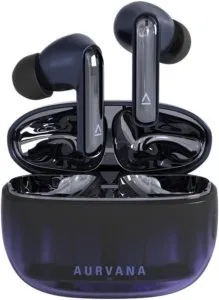
ARE CREATIVE Aurvana Ace3 for $150 a MyChooz or not? For the sound quality of this model, you can overlook the poor features and average build. I did, and yes, it’s my MyChooz. With sound personalization, it becomes sound on steroids and simply blows everyone else away in terms of quality. The only catch is that this personalization won’t work for everyone because the app on Android works inconsistently across different phones, meaning not everyone will be able to enhance the sound. It works for everyone on iPhone. However, even without tuning, the sound is very high quality, gold league level.
Objectively speaking, if you care about well-implemented features, convenient controls, a functional app, stable connection without audio dropouts, and an excellent microphone – look elsewhere. But the sound, oh what an awesome SOUND! It’s a shame Creative messed up the features so badly. If they had improved the functionality and made an adequate build, not like those $40 Chinese Redmi earbuds, these would have been a bestseller. As it is, it’s a tough compromise, sacrificing everything else for the sake of sound.
Main reason to buy: detailed and natural treble sound. Comfortable in-ear fit with the included ear tips. Main reason not to buy: you might get a defective unit like ours with a non-working app, and without the app, you can’t enable the LDAC codec. Also, the earbuds have noticeable audio latency, a mediocre transparency mode, and inconvenient controls.
- Detailed and natural high frequencies
- Comfortable fit with included ear tips
- Noise cancellation blocks up to 50% of noise
- You might run into defective units like ours with a broken app
- Poor transparency mode
- Clunky controls
- Rare but recurring connection dropouts
The final sound score is calculated using this formula:
Frequency balance + Detail retrieval + Soundstage + Natural timbre / 4 = Final Sound Score.
. 8.90 Sound is bright, featuring balanced lows and close mids. The strong suit here is close vocals and mid-range, sounding fantastic. Vocal lovers and anyone seeking high emotional engagement will thoroughly enjoy this model. The main downside is a narrow soundstage, barely wider than your head—I expected more.Learn more.
Microphone – We assess speech transmission quality by testing the microphone in two main scenarios: quiet and noisy environments.
Quiet environment – This involves recording indoors with minimal background noise. Noisy environment – This means recording outdoors near a six-lane road with maximum traffic noise.
. 7.00 In quiet conditions: 8 In noisy conditions: 6Overall feature score — this is the overall score for all device features. This score comes from individual feature ratings (battery life, controls, app, connection stability, and others) and shows how easy and smart the device is for daily use.
. 6.54 Noise cancellation suppresses up to 50% of low-frequency noise, and transparency mode feels uncomfortable. Battery life matches our test results, and wireless charging is present. Touch controls handle 6 actions, but they feel clumsy with about a one-second response delay. The app launches, but you cannot select anything except control settings.Learn more.
Final build quality score is the overall score for build quality and materials: comfort, durability, and design. It shows how nice the device is to hold and use, and how long it will last.
. 7.50 The model is comfortable and causes no noticeable discomfort after a couple of hours of use. Build quality and materials are solid, matching previous generations. They look nice without being overly exciting.