

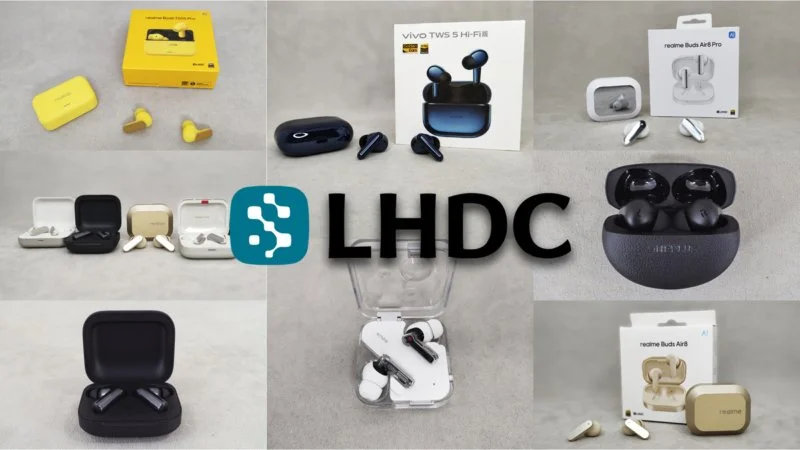
This is the top 11 best-tested wireless earbuds with the LHDC codec – both TWS and over-ear models. Android 17 supports the LHDC codec at the system level, just like LDAC. You’ll get the codec after updating from Android 16 to 17, unless your phone or tablet manufacturer has specifically blocked it. In that case, a USB adapter for your phone or PC that supports the codec is your best bet.
For the codec to work, your mobile device needs to support it. Some manufacturers list codec support on their official websites. A more universal method is to check within the Bluetooth Codec Changer app. This app lets you change Bluetooth headphone codec settings and view supported codecs for various devices from its database.
Learn more about LHDC codec.
Learn moreLHDC (Low Latency High-Definition Audio Codec) is a Bluetooth codec from Savitech, developed with the Hi-Res Wireless Audio (HWA) association. It’s the main direct competitor to LDAC and aptX Adaptive.
LHDC was announced in 2017, two years after LDAC. The latest version, LHDC 5.0, offers sound quality up to 1000 kbps and 24-bit/192 kHz.
Which USB adapter to use for headphones with the LHDC codec?
Learn moreAny USB adapter will work, but your headphones will only use the basic AAC and SBC codecs. As of August 2026, only two USB adapters can run the LHDC codec: the LHDC One and the QCC Dongle Pro2. You should consider the QCC Dongle Pro2, as the LHDC One only works on about 1 in 10 devices.
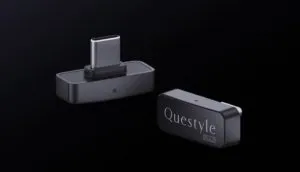
The most interesting thing about the QCC Dongle Pro2
- Chip:Qualcomm S5 second-generation audio platform, with claimed Snapdragon Sound support.
- Bluetooth 6.1: the previous Dongle Pro had version 5.4.
- Codecs:LHDC 5.0, LDAC, aptX Adaptive, aptX HD, aptX Lossless; LE Audio and Auracast are also claimed.
- Game Mode: latency from 20 ms (claimed).
- Without drivers:iPhone/iPad, Mac, Windows, Android, Switch, and PS5 (according to the brand).
See more about USB adapters in our ranking: Best Bluetooth Adapters for Computers and Headphones.
Which codec is better – LDAC or LHDC?
Learn moreLDAC is more widely available, while LHDC offers more capabilities.
| Maximum bitrate | Up to 990 kbps | Up to 900 kbps (V 3/4), up to 1000 kbps (v5) |
| Maximum frequency / Bitrate | 24 bit / 96 kHz | 24 bit / 96 kHz (v3/v4), up to 24 bit / 192 kHz (v5) |
| Bitrate control | 330 / 660 / 990 kbps, adaptive bitrate – 330-990 kbps. | 400 / 500 / 900 / 1000 kbps, adaptive bitrate – 128-1000 kbps. |
| Audio latency | ~160–200 ms | ~200 ms (there is an LLAC / LHDC LL mode with low latency up to 30 ms |
| Integration into Android | Native support with Android 8.0+ | Basic structure in AOSP from Android 10, native support v5 from Android 17 |
| Lossless mode | No | LHDC 5.0 claims lossless |
The specs for both codecs are comparable, leaning slightly in favor of LHDC. You get more available settings, a higher sampling rate, and switches for LHDC lossless and audio latency reduction.
However, LDAC is far more prevalent. The codec has been around since Android 8.0+, so compatibility isn’t an issue. More headphones across various price points support LDAC, and more USB adapters do too. For comparison, only two USB adapters support LHDC, and only one works reliably. That said, LHDC might catch up to and even surpass LDAC in prevalence in the future, thanks to more flexible licensing and minimal royalties for manufacturers.
When it comes to signal stability, both codecs are on the same level.
In terms of sound, both codecs provide similar quality, and you’d have to listen very closely to tell the difference, assuming your headphones support both LDAC and LHDC. Therefore, you should prioritize the sound system itself, then consider the codec. Learn more about codecs.
EMMA — Experts + Methodology + MyChoozers + Algorithm.
Every model goes through identical tests; the score is calculated automatically with fixed weights — a spot in the rating cannot be bought.
TOP-11: Best Wireless Headphones with LHDC Codec (2026) – Ranking
1. OnePlus Buds 4 8.47Best wireless headphones with bass sound – new for 2025
Drivers are the drivers in your headphones that are responsible for creating sound.
DD + PM + BA – means that there are several different types of drivers in these headphones.
DD – “Dynamic Driver” dynamic driver (deep bass, natural sound).
PM – “Planar Magnetic Driver” planar driver (wide soundstage and fast response).
BA – “Balanced Armature Driver” armature driver (accuracy and detail retrieval).
BC – “Bone Conduction Driver” or bone-conduction driver, which transmits vibration to the body of the headphones, transmitting sound through the bone/cartilage to the inner ear.
LDAC – high quality, high speed (Sony).
SBC is the basic Bluetooth standard, low quality.
AAC – Apple standard, good quality, low latency.
aptX – Qualcomm standard, good quality, low latency.
LC3/LC3plus – new Bluetooth LE Audio codecs, efficient compression.
Codecs are audio compression formats that affect sound quality and latency.
Headphone battery life is the playback time without recharging, measured in hours. Manufacturers measure without active noise cancellation (ANC), at medium volume (50-70%) and usually with the AAC codec, as these parameters affect battery consumption. Actual time may vary from 1% to 50%, depending on volume, active noise cancellation features enabled, codec (LDAC or other) and environmental conditions (cold, hot). It is important to consider not only the claimed playback time, but also the charging time and fast charging support.
Bluetooth is a wireless data transmission standard.
Support for new audio technologies.
Improved connection stability.
Reduced power consumption.

The OnePlus Buds 4 are the best wireless earbuds for bass out of the box in 2026. They deliver impressive bass without needing EQ tuning. While they’re slightly behind the Realme Buds Air 7 Pro in sound, they make up for it with features and build quality. This model has no critical flaws. LHDC 5.0 codec support and a Snapdragon mobile platform source are recommended, as the sound is noticeably worse on MediaTek.
- Top-tier bass sound without needing EQ tweaks
- Comfortable fit
- Sound improves with the golden hearing profile
- Minor downsides: translator only works on OnePlus phones
- LHDC 5.0 codec support is recommended
- Sound quality is worse on MediaTek devices compared to Snapdragon
The final sound score is calculated using this formula:
Frequency balance + Detail retrieval + Soundstage + Natural timbre / 4 = Final Sound Score.
. 8.58 The emphasis is on pleasant bass and the highs. Top-tier sound, reasonably natural without noticeable artificiality or grain. There is enough detail retrieval to pick apart instrument textures, even in busy tracks with complex arrangements. The soundstage is spacious with clean separation between vocals and instruments. Downsides include an abundance of bass that overly crowds the stage and reduces transparency in the mids. There is also a slight lack of detail and texture in the sound.Read more.
Microphone – We assess speech transmission quality by testing the microphone in two main scenarios: quiet and noisy environments.
Quiet environment – This involves recording indoors with minimal background noise. Noisy environment – This means recording outdoors near a six-lane road with maximum traffic noise.
. 8.50 In quiet conditions: 9 In noisy conditions: 8 No changes from the OnePlus Buds 3 version, identical to the Oppo Enco Free 4. An additional wind test (the 3rd one) was included per request.Overall feature score — this is the overall score for all device features. This score comes from individual feature ratings (battery life, controls, app, connection stability, and others) and shows how easy and smart the device is for daily use.
. 8.33 ANC effectively suppresses background noise, and you can chat comfortably in transparency mode. Earbud battery life reached up to 11 hours in our tests, and up to 56 hours with the charging case depending on the codec. Touch controls support 5 actions per earbud, including swipes. The companion app is user-friendly without fluff, featuring a 22-language translator for OnePlus phones.Read more.
Final build quality score is the overall score for build quality and materials: comfort, durability, and design. It shows how nice the device is to hold and use, and how long it will last.
. 8.40 Your ears do not get tired with the stock ear tips after 2-3 hours of use. The construction is sturdy and reliable, and the matte finish gives the earbuds a nice look. That said, there is nothing groundbreaking about the design, and the initial excitement fades by the second week of use.Read more.
2. Realme Buds Air 7 Pro 8.47Best budget wireless headphones by SOUND 2025 — under $300
Drivers are the drivers in your headphones that are responsible for creating sound.
DD + PM + BA – means that there are several different types of drivers in these headphones.
DD – “Dynamic Driver” dynamic driver (deep bass, natural sound).
PM – “Planar Magnetic Driver” planar driver (wide soundstage and fast response).
BA – “Balanced Armature Driver” armature driver (accuracy and detail retrieval).
BC – “Bone Conduction Driver” or bone-conduction driver, which transmits vibration to the body of the headphones, transmitting sound through the bone/cartilage to the inner ear.
LDAC – high quality, high speed (Sony).
SBC is the basic Bluetooth standard, low quality.
AAC – Apple standard, good quality, low latency.
aptX – Qualcomm standard, good quality, low latency.
LC3/LC3plus – new Bluetooth LE Audio codecs, efficient compression.
Codecs are audio compression formats that affect sound quality and latency.
Headphone battery life is the playback time without recharging, measured in hours. Manufacturers measure without active noise cancellation (ANC), at medium volume (50-70%) and usually with the AAC codec, as these parameters affect battery consumption. Actual time may vary from 1% to 50%, depending on volume, active noise cancellation features enabled, codec (LDAC or other) and environmental conditions (cold, hot). It is important to consider not only the claimed playback time, but also the charging time and fast charging support.
Bluetooth is a wireless data transmission standard.
Support for new audio technologies.
Improved connection stability.
Reduced power consumption.
The Realme Buds Air 7 Pro are the best budget wireless earbuds for sound. They offer the best sound among TWS earbuds under $300, with a live and synchronized translation that isn’t tied to your phone manufacturer. Downsides include a potentially large fit for some ears and numerous complaints about the model’s reliability on our social media. Despite this, the model is the most popular among our social media users.
- Best sound in true wireless earbuds under $300
- Live and simultaneous translation
- Reference-grade battery life
- User complaints regarding reliability
- Average active noise cancellation (ANC) and transparency
The final sound score is calculated using this formula:
Frequency balance + Detail retrieval + Soundstage + Natural timbre / 4 = Final Sound Score.
. 9.00 With the LHDC 5.0 codec — on par with some models priced up to $300. The earbuds offer an optimal frequency balance. A spacious soundstage with width and depth. Moderately detailed and natural sound. Early batches of the Chinese version have an excess of high frequencies, but the global version lacks this issue.Read more.
Microphone – We assess speech transmission quality by testing the microphone in two main scenarios: quiet and noisy environments.
Quiet environment – This involves recording indoors with minimal background noise. Noisy environment – This means recording outdoors near a six-lane road with maximum traffic noise.
. 8.00 In quiet conditions: 9 In noisy conditions: 7Overall feature score — this is the overall score for all device features. This score comes from individual feature ratings (battery life, controls, app, connection stability, and others) and shows how easy and smart the device is for daily use.
. 7.75 ANC and transparency are average. Battery life in our tests reached up to 10 hours depending on the codec. Touch controls handle basic media playback and calls. The companion app is user-friendly and features an equalizer, personal sound tuning, and a translator.Read more.
Final build quality score is the overall score for build quality and materials: comfort, durability, and design. It shows how nice the device is to hold and use, and how long it will last.
. 8.20 Earbud fit is decent. 2-3 hours of use without discomfort. No complaints about build quality and materials. They look good; I liked the design. Available in 4 colors.Read more.
3. Realme Buds Air 8 Pro 8.31Top headphones with connection to 3 devices
Drivers are the drivers in your headphones that are responsible for creating sound.
DD + PM + BA – means that there are several different types of drivers in these headphones.
DD – “Dynamic Driver” dynamic driver (deep bass, natural sound).
PM – “Planar Magnetic Driver” planar driver (wide soundstage and fast response).
BA – “Balanced Armature Driver” armature driver (accuracy and detail retrieval).
BC – “Bone Conduction Driver” or bone-conduction driver, which transmits vibration to the body of the headphones, transmitting sound through the bone/cartilage to the inner ear.
LDAC – high quality, high speed (Sony).
SBC is the basic Bluetooth standard, low quality.
AAC – Apple standard, good quality, low latency.
aptX – Qualcomm standard, good quality, low latency.
LC3/LC3plus – new Bluetooth LE Audio codecs, efficient compression.
Codecs are audio compression formats that affect sound quality and latency.
Headphone battery life is the playback time without recharging, measured in hours. Manufacturers measure without active noise cancellation (ANC), at medium volume (50-70%) and usually with the AAC codec, as these parameters affect battery consumption. Actual time may vary from 1% to 50%, depending on volume, active noise cancellation features enabled, codec (LDAC or other) and environmental conditions (cold, hot). It is important to consider not only the claimed playback time, but also the charging time and fast charging support.
Bluetooth is a wireless data transmission standard.
Support for new audio technologies.
Improved connection stability.
Reduced power consumption.
The main selling points are excellent sound with the AAC codec, triple multipoint, a top-tier microphone, translator functionality, and a built-in voice assistant. The downsides are that the LHDC codec might not work before the headphones are released, the glossy accents attract fingerprints, and the sound quality is worse than the previous generation.
- Top-tier and engaging sound
- Live simultaneous translation, voice assistant
- Simultaneous connection to three devices
- LHDC codec does not work
- Glossy finish gets dirty quickly
The final sound score is calculated using this formula:
Frequency balance + Detail retrieval + Soundstage + Natural timbre / 4 = Final Sound Score.
. 8.25 Realme Buds Air 8 Pro are good earbuds if considered completely apart from the Realme Buds Air lineup. I liked the sound. If you view this model as a continuation of the 7 Pro series, the 8 Pro sounds worse by 0.67 out of 10. On the latest firmware 1.1.0.85 using the LHDC 5.0 codec, the 8 Pro falls short in 4 out of 6 criteria, while tying in 2. The main drops are in the mids, detail retrieval, and soundstage (-1 each). Highs lose 0.5 due to a lack of quantity, while bass and timbre remain on par with the 7 Pro.The difference in sound is significant when compared head-to-head. If you listen to the 8 Pro in solo mode, it produces great sound that you enjoy and no flaws particularly stand out. But when you start comparing, it becomes clear within the first 10 seconds that the 7 Pro is better. In the end, if you place both models on a table, I would choose the 7 Pro without hesitation. A wider soundstage, closer and more transparent vocals, more detail retrieval, and overall the 7 Pro feels like the fresher model while the 8 Pro feels like last year’s.
Read more.
Microphone – We assess speech transmission quality by testing the microphone in two main scenarios: quiet and noisy environments.
Quiet environment – This involves recording indoors with minimal background noise. Noisy environment – This means recording outdoors near a six-lane road with maximum traffic noise.
. 9.50 In quiet conditions: 9 In noisy conditions: 10 The microphone has improved compared to the 7 Pro — it functions exceptionally well in noisy conditions.Overall feature score — this is the overall score for all device features. This score comes from individual feature ratings (battery life, controls, app, connection stability, and others) and shows how easy and smart the device is for daily use.
. 8.60 Active noise cancellation blocks out light background noise. After turning on, transparency mode works on par with top-tier models, but after 5 seconds it sharply degrades. Battery life in our tests reached 11.5 hours and 48 hours with the case. Touch controls support 3 actions per earbud plus volume adjustment swipes. The official app includes sound and control settings, notably dynamic audio and a golden sound profile.Read more.
Final build quality score is the overall score for build quality and materials: comfort, durability, and design. It shows how nice the device is to hold and use, and how long it will last.
. 8.00 Comfortable, the default bundled ear tips fit well. No discomfort after a couple of hours of use. Build is free of defects, with visually and tactically high-quality materials. The experience is only spoiled by the fingerprint-prone gloss. Effectively, they made a mirror finish that gets covered in smudges at the mere thought of it, requiring you to wipe it down every time. I liked the look of the earbuds and case. Available in white and black.Read more.
4. OnePlus Buds Pro 3 8.27Best wireless headphones in 2024 – a legendary model
Drivers are the drivers in your headphones that are responsible for creating sound.
DD + PM + BA – means that there are several different types of drivers in these headphones.
DD – “Dynamic Driver” dynamic driver (deep bass, natural sound).
PM – “Planar Magnetic Driver” planar driver (wide soundstage and fast response).
BA – “Balanced Armature Driver” armature driver (accuracy and detail retrieval).
BC – “Bone Conduction Driver” or bone-conduction driver, which transmits vibration to the body of the headphones, transmitting sound through the bone/cartilage to the inner ear.
LDAC – high quality, high speed (Sony).
SBC is the basic Bluetooth standard, low quality.
AAC – Apple standard, good quality, low latency.
aptX – Qualcomm standard, good quality, low latency.
LC3/LC3plus – new Bluetooth LE Audio codecs, efficient compression.
Codecs are audio compression formats that affect sound quality and latency.
Headphone battery life is the playback time without recharging, measured in hours. Manufacturers measure without active noise cancellation (ANC), at medium volume (50-70%) and usually with the AAC codec, as these parameters affect battery consumption. Actual time may vary from 1% to 50%, depending on volume, active noise cancellation features enabled, codec (LDAC or other) and environmental conditions (cold, hot). It is important to consider not only the claimed playback time, but also the charging time and fast charging support.
Bluetooth is a wireless data transmission standard.
Support for new audio technologies.
Improved connection stability.
Reduced power consumption.
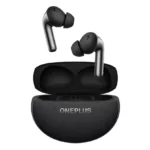
The OnePlus Buds Pro 3 are the best TWS wireless earbuds of 2024. After the release of the OnePlus Buds 4, buying the Pro 3 is pointless because the 4th version offers better sound. The Pro 3’s sound score is 8.5/10, which is still very good considering the $120 price. I’m including this model to clarify the position of one of my favorite recommendations that many of you asked about. The OnePlus Buds Pro 4, which we all anticipated this year, never materialized; we’ll see what they bring in 2026.
- Top-tier sound among TWS
- Not demanding on the mobile platform—Snapdragon or MTK
- Full support for the LHDC 3.0 audio codec
- Poor transparency mode
- OnePlus Buds 4 exist—better and cheaper
The final sound score is calculated using this formula:
Frequency balance + Detail retrieval + Soundstage + Natural timbre / 4 = Final Sound Score.
. 8.43 Moderately low-frequency sound. At the same time bright, with slightly recessed mids, and most importantly with the correct frequency balance. The kind of setup where you pick the right size ear tips, put them in your ears, and enjoy your favorite music. The EQ has decent presets; I recommend trying the Clarity preset. The sound is detailed, natural in timbre, and features a wide soundstage.Read more.
Microphone – We assess speech transmission quality by testing the microphone in two main scenarios: quiet and noisy environments.
Quiet environment – This involves recording indoors with minimal background noise. Noisy environment – This means recording outdoors near a six-lane road with maximum traffic noise.
. 8.40 In quiet conditions: 8.8 In noisy conditions: 8 The manufacturer claims that the AI Clear Call algorithm protects calls from wind and background noise thanks to three built-in microphones and a wind-resistant design. Surprisingly, it works.Overall feature score — this is the overall score for all device features. This score comes from individual feature ratings (battery life, controls, app, connection stability, and others) and shows how easy and smart the device is for daily use.
. 8.05 ANC suppresses light background noise, transparency is poor and unsuitable for use. Playback time is up to 10 hours and 43 hours with the case. Touch controls feature standard actions for managing calls and the player. The app is convenient and not overloaded with unnecessary features.Read more.
Final build quality score is the overall score for build quality and materials: comfort, durability, and design. It shows how nice the device is to hold and use, and how long it will last.
. 8.17 The earbuds are comfortable, as long as you pick the right ear tips. Build quality is solid and reliable. I liked the look of the earbuds and the case. Available in 2 colors: black and white.Read more.
5. Realme Buds Air 8 8.25Best budget TWS headphones under $50
Drivers are the drivers in your headphones that are responsible for creating sound.
DD + PM + BA – means that there are several different types of drivers in these headphones.
DD – “Dynamic Driver” dynamic driver (deep bass, natural sound).
PM – “Planar Magnetic Driver” planar driver (wide soundstage and fast response).
BA – “Balanced Armature Driver” armature driver (accuracy and detail retrieval).
BC – “Bone Conduction Driver” or bone-conduction driver, which transmits vibration to the body of the headphones, transmitting sound through the bone/cartilage to the inner ear.
LDAC – high quality, high speed (Sony).
SBC is the basic Bluetooth standard, low quality.
AAC – Apple standard, good quality, low latency.
aptX – Qualcomm standard, good quality, low latency.
LC3/LC3plus – new Bluetooth LE Audio codecs, efficient compression.
Codecs are audio compression formats that affect sound quality and latency.
Headphone battery life is the playback time without recharging, measured in hours. Manufacturers measure without active noise cancellation (ANC), at medium volume (50-70%) and usually with the AAC codec, as these parameters affect battery consumption. Actual time may vary from 1% to 50%, depending on volume, active noise cancellation features enabled, codec (LDAC or other) and environmental conditions (cold, hot). It is important to consider not only the claimed playback time, but also the charging time and fast charging support.
Bluetooth is a wireless data transmission standard.
Support for new audio technologies.
Improved connection stability.
Reduced power consumption.
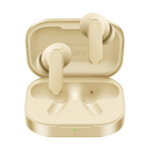
The main selling points are pleasant bass sound that rivals top and silver-league models, triple multipoint, a translator, and a built-in voice assistant. They also offer a comfortable fit and attractive design, with potential for class-leading battery life. Downsides include an average transparency mode and mediocre control implementation.
- Pleasant bass-heavy sound
- Triple multipoint, translator, and voice assistant.
- Comfortable fit and appealing look.
- Mediocre transparency mode and average noise cancellation
- Noticeable artificial timbre in the sound
The final sound score is calculated using this formula:
Frequency balance + Detail retrieval + Soundstage + Natural timbre / 4 = Final Sound Score.
. 8.19 The overall sound presentation strongly resembles the Realme Buds 7 Pro. I thought the Realme Buds Air 8 would be 7 Pro on a budget, but these are definitely high graphics settings, whereas the 7 Pro are ultra graphics settings, to borrow video game terminology. The overall difference in quality is about 0.5 points out of 10. The model has no weak points, and its sound is among its strong points. For $43, this is an absolute mind-blower, give me 3 pairs. The model confidently lands in the silver league of 8-9 points, which for a $40 model is unheard of.Read more.
Microphone – We assess speech transmission quality by testing the microphone in two main scenarios: quiet and noisy environments.
Quiet environment – This involves recording indoors with minimal background noise. Noisy environment – This means recording outdoors near a six-lane road with maximum traffic noise.
. 8.50 In quiet conditions: 8.5 In noisy conditions: 8.5Overall feature score — this is the overall score for all device features. This score comes from individual feature ratings (battery life, controls, app, connection stability, and others) and shows how easy and smart the device is for daily use.
. 8.15 Active noise cancellation suppresses background noise well. The transparency mode lets you hear your surroundings clearly, but talking is uncomfortable. Playback time in our tests is 14 hours and 51 hours with the charging case. Touch controls rely on 3 gestures per earbud, with no accidental presses. The app lets you tweak the sound, enable the LHDC codec, and features a translator and built-in voice assistant.Read more.
Final build quality score is the overall score for build quality and materials: comfort, durability, and design. It shows how nice the device is to hold and use, and how long it will last.
. 8.57 The earbuds are comfortable, and with the included ear tips, there is no discomfort after a couple of hours of listening. Build quality and materials are solid. I liked the earbud design, with 3 colors to choose from.Read more.
6. Nothing Ear 2024 7.96Best TWS headphones under $100 by design — with a good microphone for calls
Drivers are the drivers in your headphones that are responsible for creating sound.
DD + PM + BA – means that there are several different types of drivers in these headphones.
DD – “Dynamic Driver” dynamic driver (deep bass, natural sound).
PM – “Planar Magnetic Driver” planar driver (wide soundstage and fast response).
BA – “Balanced Armature Driver” armature driver (accuracy and detail retrieval).
BC – “Bone Conduction Driver” or bone-conduction driver, which transmits vibration to the body of the headphones, transmitting sound through the bone/cartilage to the inner ear.
LDAC – high quality, high speed (Sony).
SBC is the basic Bluetooth standard, low quality.
AAC – Apple standard, good quality, low latency.
aptX – Qualcomm standard, good quality, low latency.
LC3/LC3plus – new Bluetooth LE Audio codecs, efficient compression.
Codecs are audio compression formats that affect sound quality and latency.
Headphone battery life is the playback time without recharging, measured in hours. Manufacturers measure without active noise cancellation (ANC), at medium volume (50-70%) and usually with the AAC codec, as these parameters affect battery consumption. Actual time may vary from 1% to 50%, depending on volume, active noise cancellation features enabled, codec (LDAC or other) and environmental conditions (cold, hot). It is important to consider not only the claimed playback time, but also the charging time and fast charging support.
Bluetooth is a wireless data transmission standard.
Support for new audio technologies.
Improved connection stability.
Reduced power consumption.
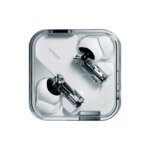
The main selling points are pleasant low-frequency sound, a distinctive design, convenient controls, and an excellent proprietary app. They support LHDC 5 and LDAC codecs. Downsides include average active noise cancellation and transparency, plus microphone noise cancellation.
- Pleasant low-frequency sound
- Standout design
- LHDC 5 and LDAC codecs are present
- Reference-quality app
- Average active noise cancellation (ANC) and transparency mode.
- Muffled sound, EQ tuning needed
- Poor microphone active noise cancellation (ANC)
The final sound score is calculated using this formula:
Frequency balance + Detail retrieval + Soundstage + Natural timbre / 4 = Final Sound Score.
. 8.08 Balanced specs, but the low end is overly prominent. The main drawback of the sound is a dip in the mids along with a slight veil and detachment from the performer, particularly during busy instrumental passages.Read more.
Microphone – We assess speech transmission quality by testing the microphone in two main scenarios: quiet and noisy environments.
Quiet environment – This involves recording indoors with minimal background noise. Noisy environment – This means recording outdoors near a six-lane road with maximum traffic noise.
. 7.00 In quiet conditions: 8 In noisy conditions: 6Overall feature score — this is the overall score for all device features. This score comes from individual feature ratings (battery life, controls, app, connection stability, and others) and shows how easy and smart the device is for daily use.
. 7.50 Active noise cancellation (ANC) works by slightly suppressing background noise. Transparency mode is uncomfortable and unsuitable for use. Battery life in our tests falls 1-2 hours short of the claims, reaching up to 7.5 hours for the earbuds and up to 38 hours with the charging case. Stem-pinch controls offer 4 actions per earbud. The reference-quality app includes useful features with nothing extra.Read more.
Final build quality score is the overall score for build quality and materials: comfort, durability, and design. It shows how nice the device is to hold and use, and how long it will last.
. 8.33 The earbuds are comfortable with the included ear tips, and fatigue sets in after roughly 2 hours. The build is sturdy and reliable, and the assembly is free of defects. The appearance is excellent and stands out against competitors, with 2 colors to choose from.Read more.
7. OnePlus Buds 3 7.96The best TWS headphones 2026 under $100 – by sound, features, and build
Drivers are the drivers in your headphones that are responsible for creating sound.
DD + PM + BA – means that there are several different types of drivers in these headphones.
DD – “Dynamic Driver” dynamic driver (deep bass, natural sound).
PM – “Planar Magnetic Driver” planar driver (wide soundstage and fast response).
BA – “Balanced Armature Driver” armature driver (accuracy and detail retrieval).
BC – “Bone Conduction Driver” or bone-conduction driver, which transmits vibration to the body of the headphones, transmitting sound through the bone/cartilage to the inner ear.
LDAC – high quality, high speed (Sony).
SBC is the basic Bluetooth standard, low quality.
AAC – Apple standard, good quality, low latency.
aptX – Qualcomm standard, good quality, low latency.
LC3/LC3plus – new Bluetooth LE Audio codecs, efficient compression.
Codecs are audio compression formats that affect sound quality and latency.
Headphone battery life is the playback time without recharging, measured in hours. Manufacturers measure without active noise cancellation (ANC), at medium volume (50-70%) and usually with the AAC codec, as these parameters affect battery consumption. Actual time may vary from 1% to 50%, depending on volume, active noise cancellation features enabled, codec (LDAC or other) and environmental conditions (cold, hot). It is important to consider not only the claimed playback time, but also the charging time and fast charging support.
Bluetooth is a wireless data transmission standard.
Support for new audio technologies.
Improved connection stability.
Reduced power consumption.
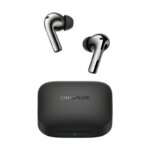
The OnePlus Buds 3 are the best budget wireless earbuds under $50 in 2026. They offer the best balanced sound in this price range, a detailed microphone, and comfort for extended use. With LHDC 3-5 codecs, you can expect up to a 15% improvement in sound quality. Downsides are average noise cancellation and transparency.
- Best balanced sound under $50
- Detailed microphone
- LHDC 3 and 5 codec support
- Average active noise cancellation (ANC) and transparency
- Fingerprint-prone finish on the wireless earbuds and charging case
The final sound score is calculated using this formula:
Frequency balance + Detail retrieval + Soundstage + Natural timbre / 4 = Final Sound Score.
. 7.68 The wireless earBuds FEature a pleasant and balanced sound. Full-bodied and punchy bass without being overdone. Transparent mids and moderately bright highs. The sound is spacious, detailed, and natural. Overall, you can enjoy the music without needing an EQ on any source.Read more.
Microphone – We assess speech transmission quality by testing the microphone in two main scenarios: quiet and noisy environments.
Quiet environment – This involves recording indoors with minimal background noise. Noisy environment – This means recording outdoors near a six-lane road with maximum traffic noise.
. 8.30 In quiet conditions: 8.6 In noisy conditions: 8 The manufacturer claims that the AI Clear Call algorithm protects calls from wind and background noise thanks to three built-in microphones and a wind-resistant design. Surprisingly, it works.Overall feature score — this is the overall score for all device features. This score comes from individual feature ratings (battery life, controls, app, connection stability, and others) and shows how easy and smart the device is for daily use.
. 8.18 The wireless earbuds offer average noise cancellation and transparency. Battery life in our tests reached 8 hr 43 min and 35 hours total with the charging case. Controls are convenient, letting you manage media playback and calls. The companion app sets a benchmark — NothingX: featuring sound and control customization, personal sound tuning, and spatial audio.Read more.
Final build quality score is the overall score for build quality and materials: comfort, durability, and design. It shows how nice the device is to hold and use, and how long it will last.
. 8.33 The wireless earBuds FEature a comfortable fit, though with the stock ear tips, ears get tired after 3+ hours of use. The build is sturdy and reliable, though it’s a fingerprint magnet and shows smudges easily. The design is nice.Read more.
8. VIVO TWS 5 Hi-Fi 7.85Best TWS headphones for Noise Cancellation under $200
Drivers are the drivers in your headphones that are responsible for creating sound.
DD + PM + BA – means that there are several different types of drivers in these headphones.
DD – “Dynamic Driver” dynamic driver (deep bass, natural sound).
PM – “Planar Magnetic Driver” planar driver (wide soundstage and fast response).
BA – “Balanced Armature Driver” armature driver (accuracy and detail retrieval).
BC – “Bone Conduction Driver” or bone-conduction driver, which transmits vibration to the body of the headphones, transmitting sound through the bone/cartilage to the inner ear.
LDAC – high quality, high speed (Sony).
SBC is the basic Bluetooth standard, low quality.
AAC – Apple standard, good quality, low latency.
aptX – Qualcomm standard, good quality, low latency.
LC3/LC3plus – new Bluetooth LE Audio codecs, efficient compression.
Codecs are audio compression formats that affect sound quality and latency.
Headphone battery life is the playback time without recharging, measured in hours. Manufacturers measure without active noise cancellation (ANC), at medium volume (50-70%) and usually with the AAC codec, as these parameters affect battery consumption. Actual time may vary from 1% to 50%, depending on volume, active noise cancellation features enabled, codec (LDAC or other) and environmental conditions (cold, hot). It is important to consider not only the claimed playback time, but also the charging time and fast charging support.
Bluetooth is a wireless data transmission standard.
Support for new audio technologies.
Improved connection stability.
Reduced power consumption.
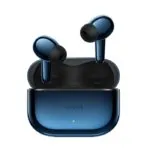
These headphones stand out for their active noise cancellation and battery life, which are on par with top manufacturers. Their microphone performance in noisy conditions is also comparable to reference models. Features include triple multipoint and support for LHDC and LDAC codecs. The sound is present but benefits from a burn-in period and EQ tuning. However, the headphones have average detail retrieval and a narrow soundstage that can’t be fixed with sound settings.
- Low-frequency sound.
- Top-tier active noise cancellation and battery life
- Triple multipoint
- Microphone in noisy conditions on par with reference models
- Low detail retrieval and narrow soundstage
- Poor transparency mode
- Fingerprint-prone glossy plastic
The final sound score is calculated using this formula:
Frequency balance + Detail retrieval + Soundstage + Natural timbre / 4 = Final Sound Score.
. 7.56 The sound emphasizes lows and highs, with strong highs that aren’t noticeably artificial or grainy. Vocals are intimate and clear, with good naturalness. Weaknesses include detail retrieval – there’s a lack of clarity, making textures hard to discern. The soundstage is narrow, with audio sounding like it’s inside your head. Some of these drawbacks can be addressed with an equalizer, leading to a pleasant, engaging sound. The VIVO TWS 5 Hi-Fi falls into the bronze league, but with sound improvements, it approaches the silver league.Learn more.
Microphone – We assess speech transmission quality by testing the microphone in two main scenarios: quiet and noisy environments.
Quiet environment – This involves recording indoors with minimal background noise. Noisy environment – This means recording outdoors near a six-lane road with maximum traffic noise.
. 9.40 In quiet conditions: 8.8 In noisy conditions: 10 Vocals are clear in quiet environments, with faint clicking sounds audible in some spots. In noisy environments with a handheld vacuum cleaner, the microphone isolates the voice without degrading vocal quality. There is a significant quality upgrade compared to the previous generation.Overall feature score — this is the overall score for all device features. This score comes from individual feature ratings (battery life, controls, app, connection stability, and others) and shows how easy and smart the device is for daily use.
. 8.34 An optimal and modern feature set that includes everything necessary, such as 3-device multipoint. The standout feature is active noise cancellation (ANC), which outperforms the Sony WF-1000XM5 and Soundcore Liberty 5. The microphone noise cancellation suppresses loud noises without distorting speech, performing at the level of reference models. Battery life matches the top tier. The weak points are transparency mode and controls, which perform at the level of $50-60 models.Read more.
Final build quality score is the overall score for build quality and materials: comfort, durability, and design. It shows how nice the device is to hold and use, and how long it will last.
. 7.83 Just like other earbuds in this price category. Standard design, with no complaints regarding build quality and construction. However, the glossy plastic is excessively fingerprint-prone and slippery.Read more.
9. Realme Buds Air 7 7.65Best inexpensive wireless headphones under $30
Drivers are the drivers in your headphones that are responsible for creating sound.
DD + PM + BA – means that there are several different types of drivers in these headphones.
DD – “Dynamic Driver” dynamic driver (deep bass, natural sound).
PM – “Planar Magnetic Driver” planar driver (wide soundstage and fast response).
BA – “Balanced Armature Driver” armature driver (accuracy and detail retrieval).
BC – “Bone Conduction Driver” or bone-conduction driver, which transmits vibration to the body of the headphones, transmitting sound through the bone/cartilage to the inner ear.
LDAC – high quality, high speed (Sony).
SBC is the basic Bluetooth standard, low quality.
AAC – Apple standard, good quality, low latency.
aptX – Qualcomm standard, good quality, low latency.
LC3/LC3plus – new Bluetooth LE Audio codecs, efficient compression.
Codecs are audio compression formats that affect sound quality and latency.
Headphone battery life is the playback time without recharging, measured in hours. Manufacturers measure without active noise cancellation (ANC), at medium volume (50-70%) and usually with the AAC codec, as these parameters affect battery consumption. Actual time may vary from 1% to 50%, depending on volume, active noise cancellation features enabled, codec (LDAC or other) and environmental conditions (cold, hot). It is important to consider not only the claimed playback time, but also the charging time and fast charging support.
Bluetooth is a wireless data transmission standard.
Support for new audio technologies.
Improved connection stability.
Reduced power consumption.
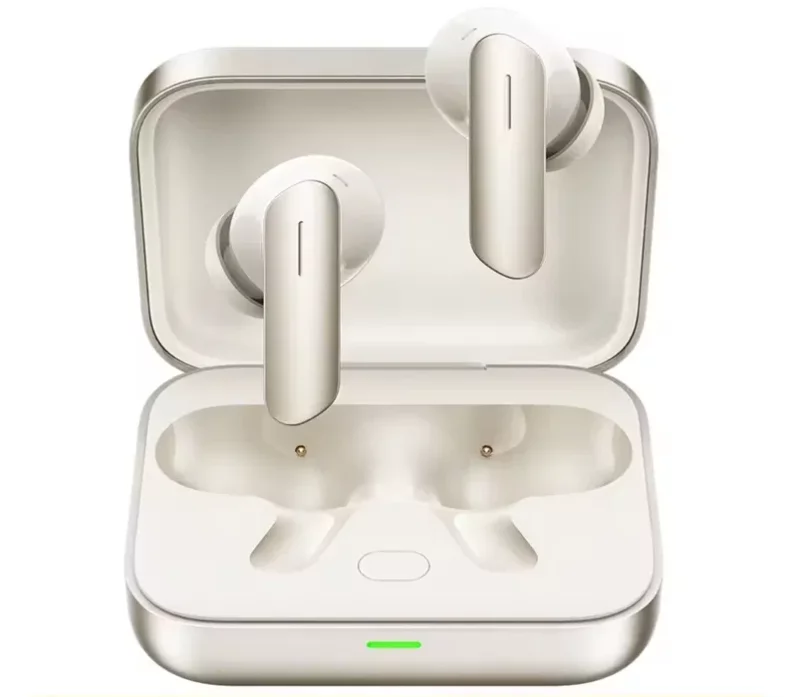
The Realme Buds Air 7 are the best inexpensive wireless earbuds under $30 for sound, build quality, and battery life. They offer the best sound in this price range, support the LHDC 3 codec, have a detailed microphone, and effective noise cancellation and transparency. With the LHDC 3-5.0 codec, you get a 10-15% quality improvement, noticeable in high and low frequencies.
- Best sound under $30
- Comfortable fit, usable for hours
- Clear microphone
- Uncomfortable to talk in transparency mode
- Noise cancellation only suppresses low-frequency noise
The final sound score is calculated using this formula:
Frequency balance + Detail retrieval + Soundstage + Natural timbre / 4 = Final Sound Score.
. 7.21 The sound is balanced with a slight deficiency across every range, specifically showing a minor lack of bass, cohesion, and naturalness. Even so, the sound quality has improved over the previous generation, offering a soundstage slightly wider than your head and good detail that benefits from focused listening, along with naturalness free of obvious artificiality.Read more.
Microphone – We assess speech transmission quality by testing the microphone in two main scenarios: quiet and noisy environments.
Quiet environment – This involves recording indoors with minimal background noise. Noisy environment – This means recording outdoors near a six-lane road with maximum traffic noise.
. 7.50 In quiet conditions: 8 In noisy conditions: 7Overall feature score — this is the overall score for all device features. This score comes from individual feature ratings (battery life, controls, app, connection stability, and others) and shows how easy and smart the device is for daily use.
. 7.67 The noise cancellation of the earbuds mainly suppresses background low-frequency noise, but the transparency mode isn’t comfortable. You get great battery life of up to 13 hours using the AAC codec. The controls are convenient and let you perform basic actions, except for rewinding tracks. The app is convenient, though the system frequently asks you to log back into your account.Read more.
Final build quality score is the overall score for build quality and materials: comfort, durability, and design. It shows how nice the device is to hold and use, and how long it will last.
. 8.73 The earbuds are comfortable, and you can use them for a long time without discomfort, easily for 2-3 hours. I liked the materials and build quality, with no visible defects. The appearance is pleasant and better than the previous generation.Read more.
10. Edifier STAX Spirit S5 7.63Best headphones by number of audio codecs
Drivers are the drivers in your headphones that are responsible for creating sound.
DD + PM + BA – means that there are several different types of drivers in these headphones.
DD – “Dynamic Driver” dynamic driver (deep bass, natural sound).
PM – “Planar Magnetic Driver” planar driver (wide soundstage and fast response).
BA – “Balanced Armature Driver” armature driver (accuracy and detail retrieval).
BC – “Bone Conduction Driver” or bone-conduction driver, which transmits vibration to the body of the headphones, transmitting sound through the bone/cartilage to the inner ear.
LDAC – high quality, high speed (Sony).
SBC is the basic Bluetooth standard, low quality.
AAC – Apple standard, good quality, low latency.
aptX – Qualcomm standard, good quality, low latency.
LC3/LC3plus – new Bluetooth LE Audio codecs, efficient compression.
Codecs are audio compression formats that affect sound quality and latency.
Headphone battery life is the playback time without recharging, measured in hours. Manufacturers measure without active noise cancellation (ANC), at medium volume (50-70%) and usually with the AAC codec, as these parameters affect battery consumption. Actual time may vary from 1% to 50%, depending on volume, active noise cancellation features enabled, codec (LDAC or other) and environmental conditions (cold, hot). It is important to consider not only the claimed playback time, but also the charging time and fast charging support.
Bluetooth is a wireless data transmission standard.
Support for new audio technologies.
Improved connection stability.
Reduced power consumption.
The main selling points are a full suite of codecs for wireless connection, a detailed microphone, up to 80 hours of battery life, and a convenient app. Downsides include a boring sound profile and the lack of active noise cancellation or transparency.
- The sound is precise and natural
- The microphone is great in noise and quiet
- The controls are comfortable
- The app is decent
- Battery life is 80 hours, excellent
- Build quality feels solid, with no major complaints.
- Sound has a narrow soundstage and a lack of bass
- Active noise cancellation (ANC) and transparency mode are absent; it’s passive isolation only.
- Minor downsides include no auto-pause and availability only in black.
The final sound score is calculated using this formula:
Frequency balance + Detail retrieval + Soundstage + Natural timbre / 4 = Final Sound Score.
. 7.67 The sound here is quite controversial: on one hand, everything is very good regarding naturalness, detail, mids, and highs. On the other hand, there is a critical lack of bass, even considering these are planars. And a really, really narrow soundstage. These headphones are definitely not for everyone.Read more.
Microphone – We assess speech transmission quality by testing the microphone in two main scenarios: quiet and noisy environments.
Quiet environment – This involves recording indoors with minimal background noise. Noisy environment – This means recording outdoors near a six-lane road with maximum traffic noise.
. 8.50 In quiet conditions: 9 In noisy conditions: 8 The first model I encounter featuring aptX Voice. Microphone sound is genuinely good.Overall feature score — this is the overall score for all device features. This score comes from individual feature ratings (battery life, controls, app, connection stability, and others) and shows how easy and smart the device is for daily use.
. 7.00 Active noise cancellation is absent, with only passive noise isolation. Transparency mode is absent. Claimed battery life is up to 80 hours. Standard button controls. The companion app features a 4-band EQ, lets you switch codecs, and select bitrates.Read more.
Final build quality score is the overall score for build quality and materials: comfort, durability, and design. It shows how nice the device is to hold and use, and how long it will last.
. 8.50 The headphones are comfortable and do not cause fatigue after three hours of use. Build is solid and reliable, no complaints. The headphones look ordinary.Read more.
11. realme Buds T500 Pro 7.29Inexpensive high-quality wireless headphones
Drivers are the drivers in your headphones that are responsible for creating sound.
DD + PM + BA – means that there are several different types of drivers in these headphones.
DD – “Dynamic Driver” dynamic driver (deep bass, natural sound).
PM – “Planar Magnetic Driver” planar driver (wide soundstage and fast response).
BA – “Balanced Armature Driver” armature driver (accuracy and detail retrieval).
BC – “Bone Conduction Driver” or bone-conduction driver, which transmits vibration to the body of the headphones, transmitting sound through the bone/cartilage to the inner ear.
LDAC – high quality, high speed (Sony).
SBC is the basic Bluetooth standard, low quality.
AAC – Apple standard, good quality, low latency.
aptX – Qualcomm standard, good quality, low latency.
LC3/LC3plus – new Bluetooth LE Audio codecs, efficient compression.
Codecs are audio compression formats that affect sound quality and latency.
Headphone battery life is the playback time without recharging, measured in hours. Manufacturers measure without active noise cancellation (ANC), at medium volume (50-70%) and usually with the AAC codec, as these parameters affect battery consumption. Actual time may vary from 1% to 50%, depending on volume, active noise cancellation features enabled, codec (LDAC or other) and environmental conditions (cold, hot). It is important to consider not only the claimed playback time, but also the charging time and fast charging support.
Bluetooth is a wireless data transmission standard.
Support for new audio technologies.
Improved connection stability.
Reduced power consumption.
The realme Buds T500 Pro improve on the T310 in all aspects. Essentially, the T500 is like the Air 7 but adds a translator, triple multipoint, and battery life close to the Air 8. However, the T500’s out-of-the-box sound balance is below average and doesn’t compare to the Air 7. With an equalizer, the sound is roughly on par, though the Air 7 feels better due to its sound system’s efficiency. Functionality, comfort, and design see only minimal increases.
- Bass-heavy sound.
- Translator and triple multipoint
- Top-tier battery life.
- Top-tier microphone.
- Boomey sound without EQ tuning
- Poor transparency mode
The final sound score is calculated using this formula:
Frequency balance + Detail retrieval + Soundstage + Natural timbre / 4 = Final Sound Score.
. 6.92 Out of the box, they are excessively bassy, throwing off balance after 5-10 minutes of listening. The bass drowns out other frequencies, and with such poor balance tuning, a dense mix becomes a muddy mess. The headphones barely reach the MyChooz bronze league even with the LHDC 5.0 codec. However, there’s potential for sound tuning; reducing the bass in the equalizer is enough for a pleasant sound. With minimal EQ adjustments, they can compete with last year’s TWS leader under $30.Learn more.
Microphone – We assess speech transmission quality by testing the microphone in two main scenarios: quiet and noisy environments.
Quiet environment – This involves recording indoors with minimal background noise. Noisy environment – This means recording outdoors near a six-lane road with maximum traffic noise.
. 8.25 In quiet conditions: 8.5 In noisy conditions: 8 The microphone handles quiet and noisy environments well. In noisy environments, the voice sounds boomy while remaining intelligible.Overall feature score — this is the overall score for all device features. This score comes from individual feature ratings (battery life, controls, app, connection stability, and others) and shows how easy and smart the device is for daily use.
. 7.49 Good for the budget segment. Strengths: battery life and connectivity. Features multipoint for 3 devices and a translator. Weaknesses: noise cancellation, transparency, and controls. Furthermore, transparency mode is not usable.Read more.
Final build quality score is the overall score for build quality and materials: comfort, durability, and design. It shows how nice the device is to hold and use, and how long it will last.
. 7.93 The earbuds are comfortable and compact. It feels comfortable with the included ear tips. The charging case is compact, and the construction feels solid and reliable in hand. Both the earbuds and case look nice, I liked them.