

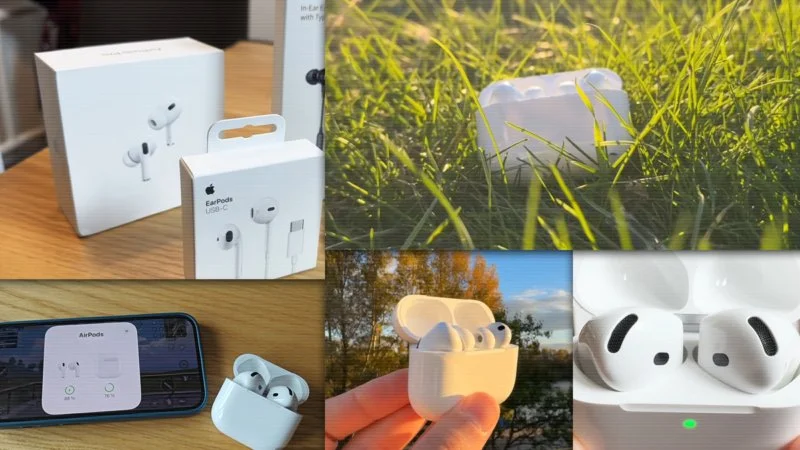
In our TOP-4 rating, we’ve tested current models of Apple earbuds – both wireless (TWS) and wired. Wireless Apple earbuds integrate tightly with Apple’s ecosystem, offering limited functionality with devices from other manufacturers. The primary hurdle with Apple Bluetooth earbuds is setup, as all configurations are managed within the operating system of Apple devices. Multipoint connectivity also isn’t supported yet, only working with Apple devices.
About the Apple Brand.
Learn moreFounding. Steve Jobs, Steve Wozniak, and Ronald Wayne founded the company in 1976 in Cupertino, California. Apple initially focused on personal computers, but later expanded its product line. Today, Apple offers:
Smartphones
- iPhone (including Pro, Pro Max, Air, regular, and mini/plus versions across different years)
Tablets
- iPad
- iPad Air
- iPad mini
- iPad Pro
Computers
- MacBook Air
- MacBook Pro
- iMac
- Mac mini
- Mac Studio
- Mac Pro
Wearable devices
- Apple Watch (including Series, SE, Ultra)
- AirPods (AirPods, AirPods Pro, AirPods Max)
TV and media
- Apple TV (media player)
- HomePod / HomePod mini (smart speakers)
Accessories
- Apple Pencil
- Magic Keyboard, Magic Mouse, Magic Trackpad
- Chargers, cables, cases
Software and services
- iOS, iPadOS, macOS, watchOS, tvOS (operating systems)
- App Store
- Apple Music, Apple TV+, Apple Arcade, iCloud, Apple Pay, Apple Fitness+, Apple News+, Apple Books, Apple Card (USA), Apple One (bundle subscription)
Sound Delivery. The sound profile is balanced and versatile, designed for comfortable extended listening and appealing to a broad audience.
EMMA — Experts + Methodology + MyChoozers + Algorithm.
Every model goes through identical tests; the score is calculated automatically with fixed weights — a spot in the rating cannot be bought.
TOP-4 Best Apple Wireless Earbuds – Rating
1. Apple Airpods Pro 3 8.64Best wireless earbuds for iPhone and Apple devices
Drivers are the drivers in your headphones that are responsible for creating sound.
DD + PM + BA – means that there are several different types of drivers in these headphones.
DD – “Dynamic Driver” dynamic driver (deep bass, natural sound).
PM – “Planar Magnetic Driver” planar driver (wide soundstage and fast response).
BA – “Balanced Armature Driver” armature driver (accuracy and detail retrieval).
BC – “Bone Conduction Driver” or bone-conduction driver, which transmits vibration to the body of the headphones, transmitting sound through the bone/cartilage to the inner ear.
LDAC – high quality, high speed (Sony).
SBC is the basic Bluetooth standard, low quality.
AAC – Apple standard, good quality, low latency.
aptX – Qualcomm standard, good quality, low latency.
LC3/LC3plus – new Bluetooth LE Audio codecs, efficient compression.
Codecs are audio compression formats that affect sound quality and latency.
Headphone battery life is the playback time without recharging, measured in hours. Manufacturers measure without active noise cancellation (ANC), at medium volume (50-70%) and usually with the AAC codec, as these parameters affect battery consumption. Actual time may vary from 1% to 50%, depending on volume, active noise cancellation features enabled, codec (LDAC or other) and environmental conditions (cold, hot). It is important to consider not only the claimed playback time, but also the charging time and fast charging support.
Bluetooth is a wireless data transmission standard.
Support for new audio technologies.
Improved connection stability.
Reduced power consumption.
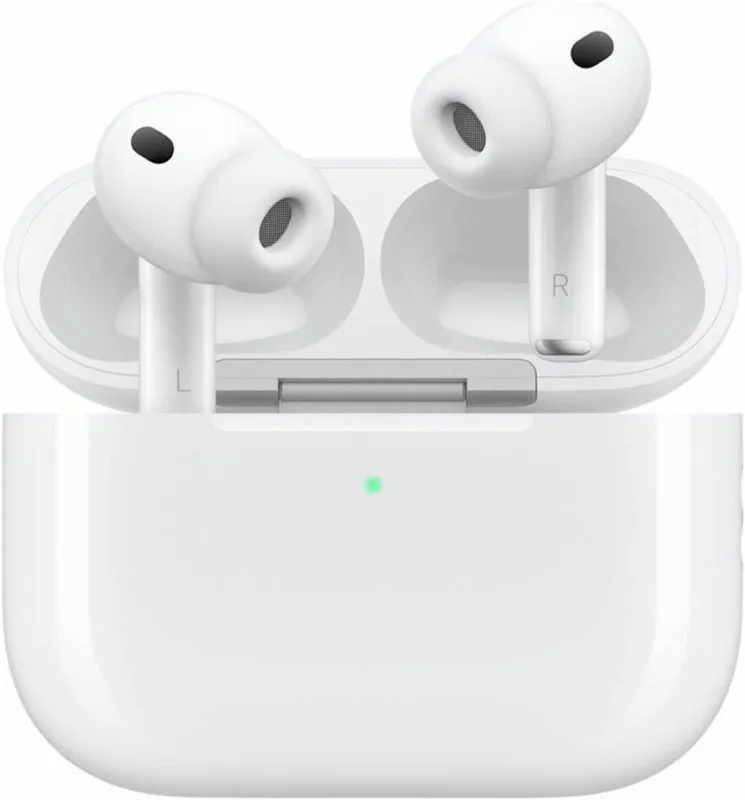
Apple Airpods Pro 3 – the best TWS earbuds for Apple devices. They offer near-flagship sound, a reference microphone, active noise cancellation, transparency mode, and robust controls. While they have no critical flaws, the fit might not be perfect for everyone, and some features are exclusive to Apple devices.
- Near-flagship sound quality — vastly superior to the 2 Pro.
- Microphone is a benchmark
- Noise cancellation and transparency mode operate at benchmark levels.
- Controls are benchmark-level
- Battery life increased by 2 hours, reaching up to 8 hours with ANC active.
- Comfortable and sleek design
- Comfort has improved across the model line, though it won’t suit everyone.
- The app and other features work exclusively on Apple devices.
- Minor drawbacks: the case scratches very quickly.
The final sound score is calculated using this formula:
Frequency balance + Detail retrieval + Soundstage + Natural timbre / 4 = Final Sound Score.
. 8.50 With EQ tuning, you can push the score up to a 9. You get excellent sound quality on par with top models from Sony, Sennheiser, Bose, and others. The strong suit is a significant boost in detail retrieval, soundstage, and naturalness. The tuning closely resembles the AirPods Pro 2, but it’s as if the window you’re looking through has been enlarged and thoroughly cleaned. Finally, you get a sound profile you don’t have to feel ashamed of. That’s a huge leap of +1.5 points compared to the Pro 2. It still doesn’t quite reach the level of the Realme Buds Air 7 Pro, Huawei Freebuds 4 Pro, or the reference Technics EAH-AZ100, but it’s getting close.Read more.
Microphone – We assess speech transmission quality by testing the microphone in two main scenarios: quiet and noisy environments.
Quiet environment – This involves recording indoors with minimal background noise. Noisy environment – This means recording outdoors near a six-lane road with maximum traffic noise.
. 9.00 In quiet conditions: 10 In noisy conditions: 8 The microphone delivers simply stunning quality, setting a new benchmark. At first, I thought I had accidentally recorded sound using the iPhone instead. The “voice isolation” feature is available, which improves voice quality in noisy conditions by cutting out background sounds.Overall feature score — this is the overall score for all device features. This score comes from individual feature ratings (battery life, controls, app, connection stability, and others) and shows how easy and smart the device is for daily use.
. 9.00 Active noise cancellation, transparency mode, and controls all match reference-quality. Battery life reaches up to 8 hours for the earbuds and up to 24 hours with the charging case when you turn off ANC and spatial audio. There is no app; all features are built directly into the OS, so Android users will need to configure the earbuds through third-party apps.Read more.
Final build quality score is the overall score for build quality and materials: comfort, durability, and design. It shows how nice the device is to hold and use, and how long it will last.
. 8.43 The earbuds offer an ideal fit with zero fatigue even after 5 hours of use. However, the design won’t suit everyone, so it’s a good idea to try them on before buying. Build quality draws no complaints, just like previous generations, but the glossy plastic scratches immediately. You’re better off putting a case cover on right away. The design is minimalist with nothing extra.Read more.
2. Apple AirPods 4 ANC 8.05Best Open-Fit Earbuds for iPhone
Drivers are the drivers in your headphones that are responsible for creating sound.
DD + PM + BA – means that there are several different types of drivers in these headphones.
DD – “Dynamic Driver” dynamic driver (deep bass, natural sound).
PM – “Planar Magnetic Driver” planar driver (wide soundstage and fast response).
BA – “Balanced Armature Driver” armature driver (accuracy and detail retrieval).
BC – “Bone Conduction Driver” or bone-conduction driver, which transmits vibration to the body of the headphones, transmitting sound through the bone/cartilage to the inner ear.
LDAC – high quality, high speed (Sony).
SBC is the basic Bluetooth standard, low quality.
AAC – Apple standard, good quality, low latency.
aptX – Qualcomm standard, good quality, low latency.
LC3/LC3plus – new Bluetooth LE Audio codecs, efficient compression.
Codecs are audio compression formats that affect sound quality and latency.
Headphone battery life is the playback time without recharging, measured in hours. Manufacturers measure without active noise cancellation (ANC), at medium volume (50-70%) and usually with the AAC codec, as these parameters affect battery consumption. Actual time may vary from 1% to 50%, depending on volume, active noise cancellation features enabled, codec (LDAC or other) and environmental conditions (cold, hot). It is important to consider not only the claimed playback time, but also the charging time and fast charging support.
Bluetooth is a wireless data transmission standard.
Support for new audio technologies.
Improved connection stability.
Reduced power consumption.
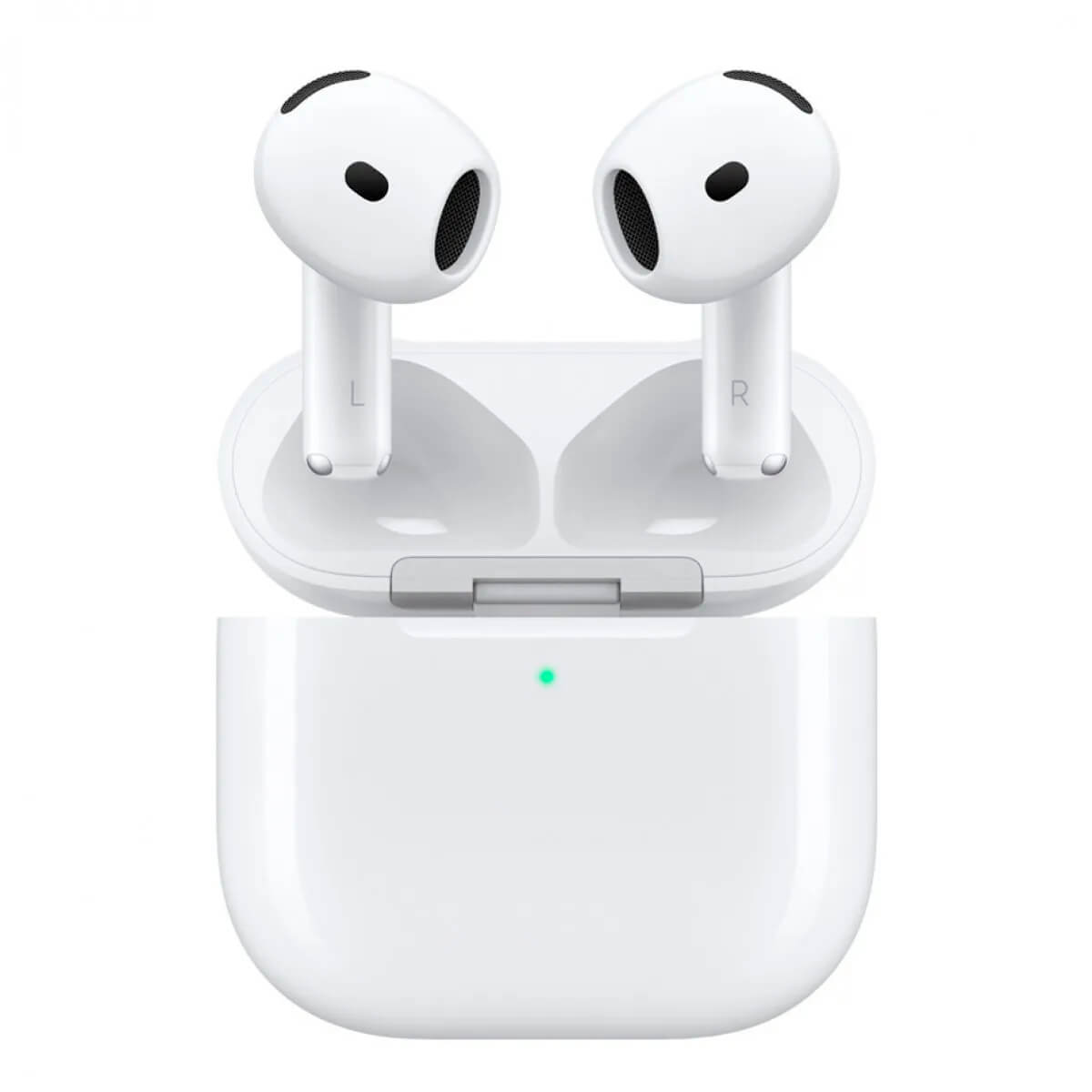
Apple AirPods 4 ANC – the best open-fit earbuds for iPhone and Apple devices. You get good sound, spatial audio, and adaptive EQ. The earbuds boast good battery life, a solid microphone, and effective noise cancellation. They’ll work with Android, but like with Samsung and Huawei devices, the main drawback is the Apple ecosystem, which limits access to certain features. These include the proprietary assistant, app, EQ settings, spatial audio, and more.
- The sound is soft and musical, ranking top-tier for open-fit earbuds.
- Microphone of excellent quality
- Active noise cancellation and transparency mode are the best among open-fit earbuds.
- Comfortable and beautiful design.
- No volume control.
- The app is available only on iOS, leaving functionality stripped-down on Android.
- Battery life is only 4 hours with ANC enabled and 20 hours total with the case.
- Non-critical cons: the glossy finish scratches quickly, and there is no cable included in the box.
The final sound score is calculated using this formula:
Frequency balance + Detail retrieval + Soundstage + Natural timbre / 4 = Final Sound Score.
. 7.56 Among open-fit earbuds, this is first-class sound. Soft, voluminous, enveloping, and comfortable, allowing you to relax and lose yourself in your favorite music. I really liked the sound. If we take the current reference like the Samsung Galaxy Buds 4 or the previous Huawei FreeBuds 6, those models edge ahead slightly in points. The main plus of the sound is the spaciousness and overall harmony; it is soft and pleasant, you never get tired of it, and it draws you in. The main minus of the sound is that naturalness could be better, and vocals closer. However, this is not critical.Read more.
Microphone – We assess speech transmission quality by testing the microphone in two main scenarios: quiet and noisy environments.
Quiet environment – This involves recording indoors with minimal background noise. Noisy environment – This means recording outdoors near a six-lane road with maximum traffic noise.
. 9.00 In quiet conditions: 10 In noisy conditions: 8Overall feature score — this is the overall score for all device features. This score comes from individual feature ratings (battery life, controls, app, connection stability, and others) and shows how easy and smart the device is for daily use.
. 8.00 Noise cancellation is at a reference level for open-fit earbuds, feeling almost like in-ear earbuds. An unbelievable level. Transparency mode is perfect and reference-grade, making it feel as if you aren’t wearing earbuds. Battery life is poor: 5 hours and 30 minutes without ANC, and 4 hours and 20 minutes with ANC is low. Controls are convenient via stem pinches, but there is no volume control through swipes. The app is great for iOS, but there is no app for Android.Read more.
Final build quality score is the overall score for build quality and materials: comfort, durability, and design. It shows how nice the device is to hold and use, and how long it will last.
. 9.33 They are very comfortable for 2 to 3 hours without discomfort. Durability is fine overall, except the earbuds scratch very easily. The design follows the Apple style and looks beautiful. The charging case is the smallest I have ever seen, and the earbuds themselves are miniature. I have no complaints about the build quality.Read more.
3. Apple Airpods Pro 2 7.55Best Earbuds for iPhone
Drivers are the drivers in your headphones that are responsible for creating sound.
DD + PM + BA – means that there are several different types of drivers in these headphones.
DD – “Dynamic Driver” dynamic driver (deep bass, natural sound).
PM – “Planar Magnetic Driver” planar driver (wide soundstage and fast response).
BA – “Balanced Armature Driver” armature driver (accuracy and detail retrieval).
BC – “Bone Conduction Driver” or bone-conduction driver, which transmits vibration to the body of the headphones, transmitting sound through the bone/cartilage to the inner ear.
LDAC – high quality, high speed (Sony).
SBC is the basic Bluetooth standard, low quality.
AAC – Apple standard, good quality, low latency.
aptX – Qualcomm standard, good quality, low latency.
LC3/LC3plus – new Bluetooth LE Audio codecs, efficient compression.
Codecs are audio compression formats that affect sound quality and latency.
Headphone battery life is the playback time without recharging, measured in hours. Manufacturers measure without active noise cancellation (ANC), at medium volume (50-70%) and usually with the AAC codec, as these parameters affect battery consumption. Actual time may vary from 1% to 50%, depending on volume, active noise cancellation features enabled, codec (LDAC or other) and environmental conditions (cold, hot). It is important to consider not only the claimed playback time, but also the charging time and fast charging support.
Bluetooth is a wireless data transmission standard.
Support for new audio technologies.
Improved connection stability.
Reduced power consumption.
Apple Airpods Pro 2 – arguably the best TWS earbuds for iPhone and Apple devices after the Pro 3. They deliver a pleasant sound with a slight emphasis on low frequencies. Sound quality dips slightly on non-Apple devices via the AAC codec. Functionality is top-tier, including transparency mode, noise cancellation, microphone quality, and settings. However, the proprietary ecosystem limits sound adjustments to Apple hardware only. Build quality is good, though the glossy finish attracts fingerprints and scratches easily, making a case for the charging case a wise immediate purchase.
- Sound with V-shaped frequency response
- Microphone, noise cancellation, and transparency modes are top-tier.
- Convenient controls and compact design
- Device switching, animations, and other features are exclusive to Apple devices.
- Earbuds and case scratch easily
The final sound score is calculated using this formula:
Frequency balance + Detail retrieval + Soundstage + Natural timbre / 4 = Final Sound Score.
. 7.46 The sound is balanced, with pleasant lows but a slight dip in the mids and highs. It’s passable but doesn’t reach the top tier. The mids lack clarity, sounding a bit muddy, and the lows and highs aren’t as natural as they could be. The soundstage is somewhat narrow, naturalness is average, and detail retrieval is average. Despite these shortcomings, the sound is engaging, and you quickly get used to it.Learn more.
Frequency balance: This refers to how sound energy is distributed across the entire audible range, from 20 Hz to 20 kHz. It’s not just about covering the full spectrum, but about achieving the right proportions so that the lows, mids, and highs work together harmoniously, without clashing or obscuring important details.
The ideal balance means the bass provides a solid foundation, the mids deliver clear and present vocals, and the highs add sparkle and detail. Frequency balance skew occurs when one or two of these main ranges are either overemphasized or noticeably lacking compared to the others.
. 7.33 Sound features a slight emphasis on the lows, with recessed mids and lacking highs.Low frequencies, or bass (20 Hz – 250 Hz), form the foundation of music, giving sound depth, weight, and a rhythmic basis.
The ideal balance results in clear, powerful, and well-rounded sound. An **excess** of low frequencies, however, makes music sound muddy and boomy, masks vocals, and quickly fatigues the listener, leading to indistinct overall sound. Conversely, a **shortage** makes music sound thin, weak, and empty, robbing it of warmth and rhythmic foundation, which in turn causes harshness in the mids and highs.
. 8 Pleasant and prominent, but slightly muddy and smeared.The midrange (250 Hz to 4 kHz) is where most musical elements live, and it’s crucial for hearing main melodies, vocals, and instruments.
Too many mids, especially in the upper range, make sound harsh, intrusive, and fatiguing fast. The mix can sound shouty or “boxy.” Conversely, a shortage of mids results in a hollow, recessed sound where vocals and main instruments lose their presence and seem distant, draining the music of energy and overall clarity.
. 8 Slightly recessed.Highs, or treble (4 kHz – 20 kHz) – these frequencies are responsible for brightness, sparkle, detail, and that sense of ‘air’ in a music mix. This range helps you pick out the finest details, like string overtones, cymbal shimmer, and sibilant sounds in vocals.
An optimal balance makes music sound lively, clean, and open. Too much, however, leads to unnecessary harshness, causes sibilance (overly loud ‘s’ sounds), and makes cymbals sound unpleasantly ‘grainy’ or metallic, quickly fatiguing your ears. Too little, and the entire mix sounds dull, muffled, and ‘closed-in’ (veiled). The sound loses its detail and openness, feeling like you’re listening through a thick filter that robs the music of clarity.
. 6 This is a weak point for the Airpods Pro 2; they are significantly lacking.Detail retrieval – this describes how clearly and distinctly you can hear the tiniest sounds in a mix, like reverb, overtones, quiet instruments, texture, and subtle percussion sounds (such as light hi-hat taps).
Ideal detail retrieval – all subtle sounds are audible, just as they would be at a live performance.Lack: The sound is dull, muted, and veiled, as if you’re listening through a layer of fabric. The musical picture lacks depth, instruments sound flat, and subtle nuances get lost.Excess: The sound becomes unnaturally sharp, aggressive, and glassy. This can manifest as an overemphasis on sibilant sounds and background noise. This kind of sound quickly becomes fatiguing, often due to too much treble above 6 kHz.
. 7.5 Primary parts are heard effortlessly, secondary parts are audible but blend slightly with the main ones, and tertiary sounds are lost.Naturalness— how authentic and realistic the sound is. It indicates how accurately the sound of voices and musical instruments is reproduced.
Best naturalness – the sound is clean, warm, and lively, without artificial coloration or extraneous noises.
Excess – an excessive amount of distracting sounds like sighs, mechanical noises, rustles, etc.
Lack – the sound feels artificial, colored, or plastic. You lose timbre recognition (instruments don’t sound like they do in real life), and the sound becomes flat and fatiguing due to incorrect equalization or excessive compression.
Soundstage, or stage, refers to the perceived three-dimensional space where instruments and vocals in a musical piece are placed. It’s a virtual soundscape that sound engineers craft during mixing. The stage encompasses width (left-to-right placement), depth (a sense of distance), and height (the feeling of instruments being above or below the horizontal plane).
The best soundstage makes music feel immersive and realistic, letting you pinpoint each element in space—whether it’s to your left or right, closer or further away, or above or below your head. A lack of it results in a monolithic sound, as if everything is coming from a single point, making it difficult to discern the position of each instrument. An excess of it, on the other hand, can make instruments and vocals sound overly distant, causing the musical composition to lose its coherence.
. 8 Wider than your head, creating a virtual soundstage. While the earbuds don’t set records, there’s a sense of presence, akin to surround sound.Microphone – We assess speech transmission quality by testing the microphone in two main scenarios: quiet and noisy environments.
Quiet environment – This involves recording indoors with minimal background noise. Noisy environment – This means recording outdoors near a six-lane road with maximum traffic noise.
. 8.25 In quiet conditions: 9.5 In noisy conditions: 7Overall feature score — this is the overall score for all device features. This score comes from individual feature ratings (battery life, controls, app, connection stability, and others) and shows how easy and smart the device is for daily use.
. 7.5 Top-tier. Strong points include active noise cancellation, transparency mode, and controls. Battery life is average, comparable to most TWS models. Weaknesses include the app and connectivity. Integration with the proprietary ecosystem restricts full customization and multipoint use.Learn more.
Active noise cancellation (ANC) lets headphones use microphones and signal processing to cut out external noise like traffic, street hum, or office chatter, so you can hear your music or calls better without cranking the volume. Good ANC significantly cuts low-frequency hum from things like engines or air conditioners, barely presses on your ears, and minimally distorts the sound. Weak ANC, on the other hand, only removes some of the noise or creates an unpleasant “vacuum” effect and artifacts.
. 8.5 Software-based. It suppresses about half the ambient sound, with stronger performance on the low end and weaker on the mids and highs.Transparency mode uses the earbuds’ microphones to pipe in ambient sound, letting you hear announcements, conversations, or traffic without removing them. A good implementation sounds natural and clear, without adding noise or echo, whereas a poor one makes the outside world sound flat, metallic, or unnervingly quiet.
. 9 Software-based. The surroundings are clear, allowing for free communication while wearing the earbuds.Battery life is the actual playback time you get from the earbuds and their charging case on a single charge during typical volume and usage scenarios (music, video, calls), not just the marketing numbers. Good battery life means you can easily get through a day or several without needing an outlet, and it doesn’t drop significantly with noise cancellation and high-quality codecs enabled. Poor battery life, on the other hand, requires frequent recharging and noticeably decreases when you crank up the volume.
. 5 Stated battery life is up to 5 hours for the earbuds and up to 30 hours with the charging case. Wireless charging is supported. I did not measure the full battery life.Controls — how easily and reliably the headphones respond to your presses and gestures for pausing, adjusting volume, switching tracks, changing modes, and activating your voice assistant. Good controls feel intuitive, work without fail, and avoid accidental inputs; bad controls will miss commands, lag, or simply ignore your gestures.
. 8 You can control playback by squeezing the stem. A single press plays/pauses or manages calls. Two presses skip to the next track, and three presses go to the previous track. A long press activates noise cancellation or transparency mode. Swiping up or down adjusts volume. Gestures like nodding or shaking can be used to answer or end calls.The app, which is the proprietary software you use to tweak sound, controls, noise cancellation, firmware updates, and other features. A good app is stable, well-organized, and actually lets you customize things; a bad one glitches, lacks features, or feels like it’s just there for show.
. 5 Available only for Apple devices within the system. Includes ambient sound and audio control, plus spatial and personalized sound settings.Learn more.
Earbud Audio Settings:
Spatial Audio:
General Settings:
Includes ear tip fit adjustment and hearing protection features:
Connection stability — how well the headphones hold onto their Bluetooth signal without dropping out, lagging, or glitching in everyday situations like busy streets, public transport, or even at home with a Wi-Fi router nearby. Good stability means the audio won’t stutter when you turn your head or cut out in crowded areas. Poor stability, on the other hand, will show up as frequent dropouts, stuttering, audio-video sync issues, and problems reconnecting.
. 7 The signal is stable up to 10 meters. Bluetooth version 5.3.Important Features and Sensors:
- Multipoint: No. Auto Switching: Automatic switching between Apple devices.
- Auto-pause when removing earbuds – yes.
- Google Fast Pair support – no.
- Swift Pair support for Windows – no.
Final build quality score is the overall score for build quality and materials: comfort, durability, and design. It shows how nice the device is to hold and use, and how long it will last.
. 7.83 Build quality is good, but the glossy plastic is a fingerprint magnet and scratches easily. The earbuds are comfortable for extended wear, and the case fits unobtrusively in pockets.Learn more.
Comfort is how the earbuds feel during extended wear: ear pressure, fit, weight, and ventilation. A comfortable model doesn’t chafe, squeeze the ear canal or head, and doesn’t cause fatigue even after a couple of hours; an uncomfortable one quickly reminds you of itself through pain, heat, or a “plugged” feeling in the ears.
. 8 The earbuds are comfortable with no issues. The case is compact and fits easily into clothing pockets.Durability — how well the earbuds and charging case hold up to daily use: This includes the quality of the plastic and hinge, water resistance, wear on the ear tips, and the reliability of connectors and buttons. High durability means nothing is loose, peeling, or cracking after a year or two. Conversely, low durability means you’ll see cracks, looseness, hinge noise, or connection issues after just a couple of months.
. 7.5 Dust and water resistance – IP54: offers limited protection against dust and water splashes. Build quality and materials are fine, though the glossy casing attracts fingerprints and scratches easily. It’s advisable to buy a case for the charging case immediately, as scratches appear within the first 2-3 days.Design – This covers how the earbuds look and how well-thought-out their shape is. I’m talking about how they appear in your ears, how versatile they are with different outfits, and whether they look cheap. A good design blends a neat appearance with a comfortable shape and practical touches, like non-marking plastic or a well-designed charging case. Conversely, a bad design will snag on your clothes, scratch easily, and just look out of place.
. 8 Apple Airpods Pro 2 come in the classic white color and have a clean, minimalist design.4. Apple EarPodsWired earbuds for iPhone – with Type C / Lightning / 3.5 mm connection
Drivers are the drivers in your headphones that are responsible for creating sound.
DD + PM + BA – means that there are several different types of drivers in these headphones.
DD – “Dynamic Driver” dynamic driver (deep bass, natural sound).
PM – “Planar Magnetic Driver” planar driver (wide soundstage and fast response).
BA – “Balanced Armature Driver” armature driver (accuracy and detail retrieval).
BC – “Bone Conduction Driver” or bone-conduction driver, which transmits vibration to the body of the headphones, transmitting sound through the bone/cartilage to the inner ear.
LDAC – high quality, high speed (Sony).
SBC is the basic Bluetooth standard, low quality.
AAC – Apple standard, good quality, low latency.
aptX – Qualcomm standard, good quality, low latency.
LC3/LC3plus – new Bluetooth LE Audio codecs, efficient compression.
Codecs are audio compression formats that affect sound quality and latency.
Headphone battery life is the playback time without recharging, measured in hours. Manufacturers measure without active noise cancellation (ANC), at medium volume (50-70%) and usually with the AAC codec, as these parameters affect battery consumption. Actual time may vary from 1% to 50%, depending on volume, active noise cancellation features enabled, codec (LDAC or other) and environmental conditions (cold, hot). It is important to consider not only the claimed playback time, but also the charging time and fast charging support.
Bluetooth is a wireless data transmission standard.
Support for new audio technologies.
Improved connection stability.
Reduced power consumption.
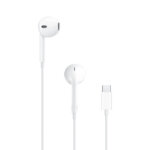
Apple EarPods – universal wired earbuds for iPhone. These are excellent $19 earbuds with virtually no competitors in their price range. Buying the new Apple EarPods Type C wired earbuds makes sense only if you have an iPhone 15 or plan to connect them to a Type C port on your laptop, phone, or tablet. My EarPods did not work with an iPhone 14 Pro, even with a third-party USB Type-C to Lightning adapter.
The sound of Apple EarPods is open, more voluminous, and spacious than in the Apple Airpods Pro 2. While they support the advertised 24-bit/48 kHz, the difference compared to 16-bit/44 kHz is practically unnoticeable; these aren’t earbuds where that quality level makes a significant impact. Therefore, the information about 24-bit/48 kHz and Lossless quality seems more like marketing. The sound is largely the same as in Apple EarPods with Lightning or a 3.5 mm jack.
See full review — Apple EarPods.
See the rating of the best wired earbuds.
- Good and even sound for $19
- Clear microphone
- Convenient controls
- Thin wire and seams in the build
- Low frequencies are balanced and barely dominate the mids and highs.
- Mid frequencies are slightly recessed, with vocals somewhat hidden behind the lows and highs.
- High frequencies are not bright; they are balanced and don’t particularly stand out.
- Soundstage, detail retrieval, and naturalness are wide and much more spacious than in the Airpods Pro 2. Imaging is also good, clearly distinguishing between closer and further sounds, and left and right. Instruments in the mix are easily discernible; bass and drums are clearly audible, guitar and vocals aren’t lost, and additional percussion effects are also noticeable.